
In our production of grey cast iron components, we encountered a persistent issue with internal defects in thick-walled castings, specifically a pulley casting. This grey cast iron pulley, with significant variations in wall thickness, consistently exhibited shrinkage porosity and cavities in its bulky sections, such as the gear teeth grooves and inner ring, leading to a low product qualification rate. These defects, often hidden beneath the surface and only revealed during machining, compromised the mechanical properties and service life of the pulley, resulting in substantial economic losses. This article delves into a comprehensive analysis of the root causes behind these internal defects in grey cast iron castings and outlines the effective countermeasures we implemented to resolve them.
Grey cast iron is widely utilized in industrial applications due to its excellent castability, machinability, and damping capacity. However, the production of sound, thick-walled grey cast iron castings presents unique challenges, primarily related to solidification and feeding. The formation of graphite during eutectic solidification induces an expansion that can partially compensate for the shrinkage of the iron liquid, a phenomenon known as graphitization expansion. In thick sections, where thermal gradients are less pronounced, this self-feeding mechanism can be insufficient if the casting design, process parameters, or metallurgical factors are not optimally controlled. Our investigation focuses on leveraging this understanding to improve the quality of our grey cast iron pulley.
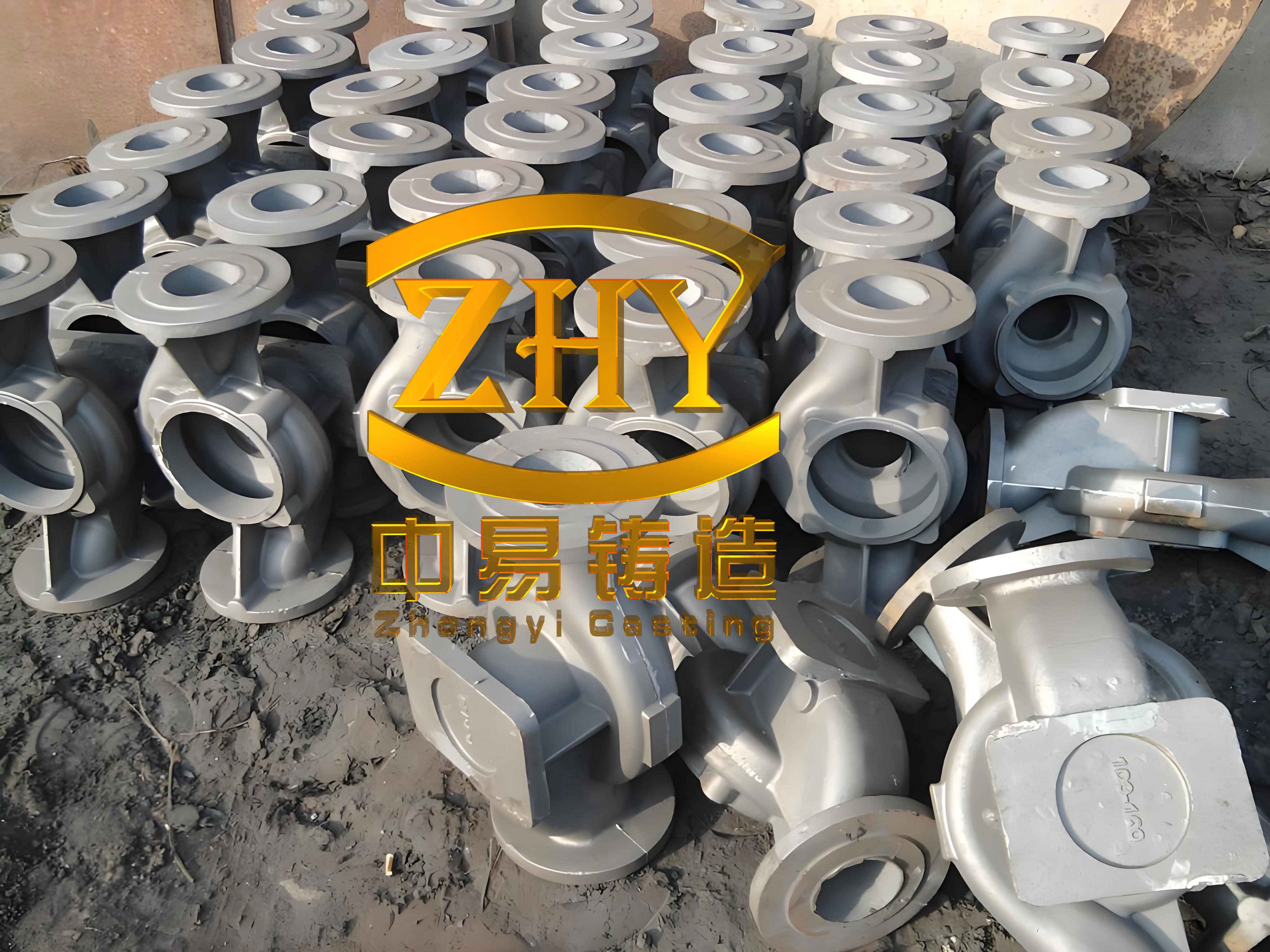
The pulley casting in question is a rotary body component with an intricate design featuring an outer ring, an inner hub, and connecting ribs between them. The geometry inherently creates multiple isolated hot spots, which are prime locations for defect formation. The fundamental specifications and requirements for this grey cast iron casting are summarized in the table below.
| Parameter | Value | Description |
|---|---|---|
| Material Grade | HT250 (Grey Cast Iron) | A common grade of grey cast iron with a nominal tensile strength of 250 MPa. |
| Overall Dimensions | Ø560 mm × 120 mm | The external轮廓尺寸 of the casting. |
| Weight (As-cast) | 76 kg | Total weight of the finished casting. |
| Wall Thickness Variation | 20 mm (min) to 71 mm (max) | Indicates significant thickness disparity. |
| Maximum Hot Spot Diameter | 78 mm | Calculated using inscribed circle method for the thickest junction. |
| Mechanical Properties (on specimen) | Tensile Strength: 180-248 MPa Hardness: 170-241 HB |
Required本体性能 for the grey cast iron. |
| Metallographic Structure | Graphite: Type A, Size 3-6 Pearlite: ≥95% |
Microstructural requirements typical for high-quality grey cast iron. |
The chemical composition is a critical factor governing the properties and castability of grey cast iron. The initial target composition range for our grey cast iron pulley is presented below.
| Element | Carbon (C) | Silicon (Si) | Manganese (Mn) | Sulfur (S) | Phosphorus (P) |
|---|---|---|---|---|---|
| Target Range | 3.15 – 3.25 | 1.90 – 2.40 | 0.30 – 0.75 | 0.04 – 0.16 | ≤ 0.10 |
The carbon equivalent (CE) is a paramount parameter for predicting the behavior of grey cast iron during solidification. It is calculated using the formula:
$$ CE = C + \frac{1}{3}(Si + P) $$
For our initial composition, with median values of C=3.20%, Si=2.15%, and P=0.08%, the carbon equivalent is approximately:
$$ CE = 3.20 + \frac{1}{3}(2.15 + 0.08) \approx 3.20 + 0.74 = 3.94\% $$
This places the grey cast iron in a slightly hypoeutectic range. A higher CE generally improves fluidity and self-feeding capability but must be balanced against strength requirements.
The original casting process employed a high-pressure molding line with green sand molds. The molding arrangement was two castings per mold, with a gating system incorporating a filter. Key process parameters are listed in the following table.
| Process Parameter | Setting / Value |
|---|---|
| Molding Method | High-Pressure Green Sand Molding |
| Mold Hardness (B-scale) | Approximately 90 |
| Mold Moisture Content | 2.8 – 3.5% |
| Pouring Temperature | ~1450 °C |
| Inoculant Addition | 0.4% (FeSi based) |
| Gating System | Filter-equipped, single ingate per casting |
The initial gating design featured an ingate with a cross-sectional area of approximately 276 mm² (46 mm wide × 6 mm high), which was positioned directly opposite one of the thick connecting ribs of the pulley. This layout inadvertently exacerbated the thermal condition at that hot spot.
Despite sound external appearance, sectioning of the cast grey cast iron pulleys revealed scattered shrinkage cavities and porosity within the machined gear tooth grooves and the inner ring hub. The defects were characterized as macro-porosities and micro-shrinkage, often interdendritic in nature. Statistical analysis of defect locations showed a high correlation with areas adjacent to the ingates and the geometric hot spots. This defect pattern severely undermined the fatigue strength and load-bearing capacity expected from the HT250 grey cast iron.
A multi-factorial root cause analysis was conducted, focusing on the interplay between the geometry of the grey cast iron casting, the process design, mold properties, and metallurgy.
1. Casting Geometry and Thermal Contraction: The uneven wall thickness created pronounced thermal gradients. The thick sections, or hot spots, solidified last. The volume contraction associated with the liquid-to-solid phase change, particularly in the final stages of solidification, must be compensated by feed metal. The design of the pulley, with its bulky ribs and hubs, created isolated thermal centers where feeding paths were long or obstructed. The solidification time for a section can be estimated using Chvorinov’s rule:
$$ t_s = B \left( \frac{V}{A} \right)^n $$
where \( t_s \) is the solidification time, \( V \) is the volume of the section, \( A \) is its surface area, \( B \) is a mold constant, and \( n \) is an exponent (typically ~2 for sand castings). For the thickest section (hot spot diameter ~78 mm), the modulus \( (V/A) \) is high, leading to a significantly longer solidification time compared to thinner sections. This extended mushy zone is prone to forming shrinkage porosity if feeding is inadequate.
2. Gating and Feeding System Design: The original gating system was suboptimal. The large ingate cross-section, coupled with its location directly feeding a hot spot, caused localized superheating. This delayed the start of solidification in that region, effectively making it the last point to freeze without an adequate source of feed metal. Furthermore, the gating design did not promote directional solidification towards a dedicated feeder (riser), which is often crucial for thick-walled grey cast iron castings, despite their self-feeding potential.
3. Mold Strength and Wall Movement: The rigidity of the sand mold is critical during the graphitization expansion phase of grey cast iron solidification. The expansion pressure can cause mold wall movement if the mold hardness is insufficient. This wall displacement increases the internal volume of the mold cavity, effectively creating a demand for more liquid metal to fill the expanded space and worsening the shrinkage defects. The relationship between mold strength and wall movement can be conceptualized. A higher mold hardness resists this deformation, allowing the graphitization expansion to counterbalance the contraction more effectively. Our initial mold hardness of 90 was at the lower threshold for effectively containing the expansion in such thick sections.
4. Metallurgical and Chemical Factors: The chemical composition of the grey cast iron melt plays a decisive role.
- Carbon Equivalent (CE): Our initial target CE was around 3.94%. A lower CE reduces both the amount of graphite precipitated and the associated expansion energy. The net contraction increases, elevating the propensity for shrinkage defects. The ideal CE for maximizing self-feeding in thick sections is often closer to the eutectic point (~4.3%).
- Sulfur (S) and Phosphorus (P): Sulfur is a surface-active element that segregates at the solidification front, inhibiting the growth of eutectic cells (graphite flakes). This can lead to underdeveloped graphite structures, reduced expansion, and increased shrinkage tendency. High sulfur also impairs fluidity. Phosphorus forms a low-melting-point steadite eutectic that solidifies last. If present in elevated amounts, it widens the solidification range, making the final stage feeding more difficult and promoting interdendritic shrinkage. Our initial S range (up to 0.16%) and P limit (0.10%) were on the higher side for premium quality grey cast iron.
- Inoculation: Effective inoculation is essential for promoting a uniform, type A graphite distribution in grey cast iron. This ensures a more uniform and potent graphitization expansion throughout the casting volume.
The comprehensive analysis led us to implement a series of targeted corrective actions focused on optimizing the process for producing thick-walled grey cast iron components.
1. Optimization of the Casting Process Design: The gating system was completely redesigned. The number of ingates was reduced, and their location was shifted away from the thick connecting ribs to avoid creating additional thermal mass. The ingate cross-sectional area was also reduced to minimize local superheating. The new layout aimed to encourage a more favorable temperature gradient. A schematic principle was adopted where the metal enters through thinner sections, allowing the thicker areas to solidify last in a more controllable sequence. While open risers are not always used for grey cast iron due to self-feeding, ensuring proper thermal gradients through gating is paramount.
2. Enhancement of Mold Strength and Rigidity: To minimize mold wall movement and fully harness the graphitization expansion of the grey cast iron, we significantly increased the mold compactness. The molding pressure was raised to a minimum of 0.6 MPa. This resulted in a consistent mold hardness measured on the B-scale between 95 and 100. The enhanced mold strength provided a more rigid container for the solidifying casting, effectively translating the internal expansion into self-feeding pressure. The relationship between compaction pressure and mold hardness is generally positive and was critical for our grey cast iron process.
3. Precise Control of Chemical Composition: Based on our analysis, we revised the target chemical composition for the grey cast iron melt, placing greater emphasis on enhancing fluidity and self-feeding capability while maintaining mechanical properties.
| Element | Carbon (C) | Silicon (Si) | Manganese (Mn) | Sulfur (S) | Phosphorus (P) |
|---|---|---|---|---|---|
| Target Range | 3.25 – 3.35 | 1.80 – 1.95 | 0.30 – 0.75 | 0.06 – 0.12 | ≤ 0.10 |
The key changes were:
- Increased Carbon: Raising the carbon content to the upper end of the range promotes more graphite precipitation.
- Adjusted Silicon: Silicon was controlled within a tighter, slightly lower band to fine-tune the CE without excessively reducing strength.
- Strictly Controlled Sulfur: The sulfur range was narrowed and lowered to 0.06-0.12%. This level is sufficient for manganese sulfide formation (to neutralize free sulfur) while minimizing its negative effects on graphite formation and fluidity. The Mn/S ratio was maintained above 5 to ensure S is tied up as MnS.
- Minimized Phosphorus: A strict upper limit of 0.10% was enforced, with efforts to source low-P raw materials to keep it as low as possible.
With median values of C=3.30%, Si=1.88%, and P=0.08%, the revised carbon equivalent becomes:
$$ CE = 3.30 + \frac{1}{3}(1.88 + 0.08) \approx 3.30 + 0.65 = 3.95\% $$
While the CE change seems minor, the increase in carbon directly contributes to more graphite. Combined with lower S and P, the overall solidification characteristics of the grey cast iron improved significantly. The inoculation practice was also reviewed, ensuring consistent and effective treatment to achieve a fine, type A graphite structure.
4. Process Monitoring and Solidification Simulation: We began utilizing solidification simulation software to model the thermal profiles and predict shrinkage risks in the grey cast iron pulley before physical trials. This allowed for virtual optimization of the gating design and assessment of feeder necessity. Key output parameters from simulations included solidification time contours, temperature gradients, and Niyama criterion values (a common indicator for shrinkage porosity), which helped guide our design modifications.
The implementation of these integrated measures yielded a remarkable improvement in the quality of the grey cast iron pulleys. The internal shrinkage cavities and porosity in the thick sections were virtually eliminated. Destructive testing and sectioning of sample castings confirmed the soundness of the internal structure in the gear tooth grooves and hub areas. The product qualification rate increased substantially, leading to reduced scrap, lower machining losses, and enhanced customer satisfaction.
The successful resolution of this problem underscores several key principles in the production of thick-walled grey cast iron castings:
- The self-feeding capability of grey cast iron, driven by graphitization expansion, is a powerful tool but must be actively managed through proper casting design and process control.
- A holistic approach is necessary, considering the synergistic effects of geometry, gating, mold properties, and metallurgy. Optimizing one factor in isolation is often insufficient.
- For challenging geometries with isolated hot spots, meticulous control of the chemical composition—particularly carbon, sulfur, and phosphorus—is as critical as the mechanical design of the gating system.
- High mold rigidity is a non-negotiable requirement for exploiting the expansion benefits in grey cast iron, especially in high-pressure molding lines.
This case study provides a validated framework for tackling similar internal defect issues in other thick-walled grey cast iron components. The methodologies of cause analysis, targeted process adjustment, and stringent compositional control are broadly applicable. Future work may explore the use of advanced inoculants or minor alloying elements to further refine the solidification behavior and mechanical properties of such grey cast iron castings. The continuous pursuit of optimal practices ensures the reliability and performance of grey cast iron in demanding applications.