
In the realm of high-volume production for critical cast components, such as engine crankshafts and cylinder blocks, the quest for superior dimensional accuracy, enhanced mechanical properties, and reduced production costs is perpetual. My extensive experience in foundry process design and equipment manufacturing has led me to a profound appreciation for a particular advanced technique: sand coated iron mold casting. This process, also fundamentally known as shell molding, represents a significant evolution from traditional green sand and even chill molding methods. This article provides a detailed, first-person perspective on this technology, encompassing its core principles, distinctive characteristics, detailed process flow, critical equipment considerations, and quantifiable benefits.
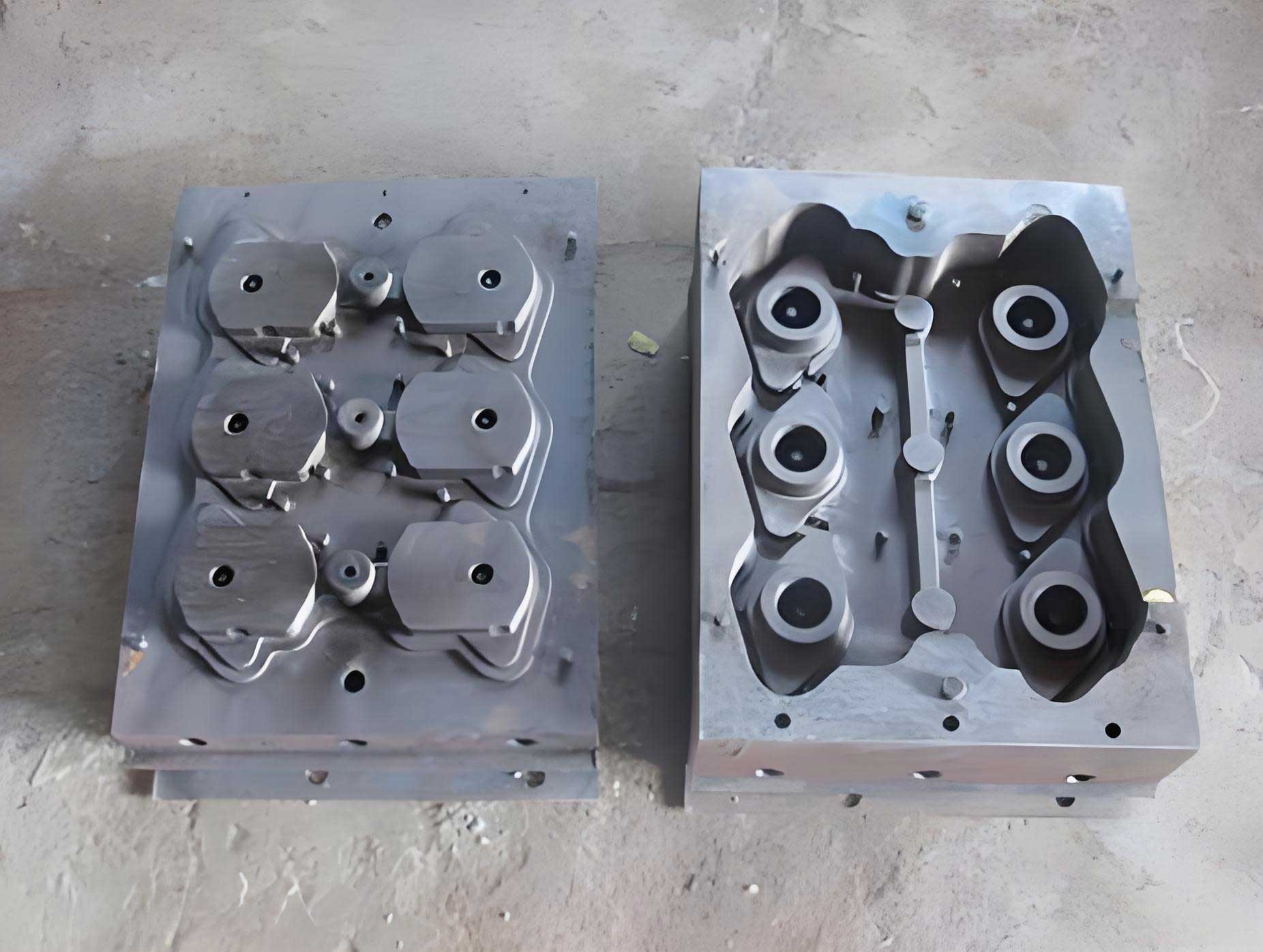
The fundamental principle of sand coated iron mold casting involves creating a thin, robust shell mold from a phenolic resin-coated sand (resin-coated sand). This is typically achieved using a heated metal pattern (core box). The sand mixture is dumped onto the heated pattern, where the resin cures, forming a hardened shell with a thickness typically ranging from 6 to 12 mm. Two of these shell halves are then bonded together with adhesive to form a complete mold cavity. For casting, this bonded shell is often surrounded by a supporting media, such as steel shot or sand, within a molding box to withstand the metallostatic pressure during pouring. This methodology creates a highly stable and precise mold cavity, offering unparalleled control over the solidification dynamics of the cast metal.
Technical Characteristics and Comparative Advantages
The superiority of sand coated iron mold casting stems from its unique ability to modulate the cooling rate of the casting. Positioned between the rapid cooling of permanent metal molds and the slow cooling of conventional green sand molds, this process offers a “Goldilocks zone” for many ferrous alloys, particularly ductile iron.
Consider the cooling time from pouring temperature to a specific critical temperature, say 800°C. For identical castings, the relationship can be expressed as:
$$ t_{\text{shell}} : t_{\text{green sand}} \approx 1 : 4 $$
This indicates that the cooling rate in a shell mold is approximately four times faster than in a green sand mold. This accelerated cooling suppresses undesirable metallurgical phenomena while enhancing mechanical properties.
The following table contrasts key attributes of sand coated iron mold casting with other common methods:
| Parameter | Green Sand Casting | Chill Mold / Permanent Mold | Sand Coated Iron Mold Casting |
|---|---|---|---|
| Cooling Rate | Slow | Very Fast | Moderately Fast (Controllable) |
| Dimensional Accuracy | CT10-CT12 | CT8-CT10 | CT8 or better |
| Surface Roughness (Ra, μm) | 25-100 | 12.5-25 | 6.3-25 |
| Mold Rigidity | Low | Very High | High |
| Typical Scrap Rate for Ductile Iron Crankshafts | 8-12% | Varies (risk of chill) | < 3% (stable) |
| Machining Allowance (mm) | 3-5 | 2-3 | 1-2 (or less) |
The high rigidity of the shell mold is a cornerstone of the process. With a cold tensile strength exceeding 3.5 MPa and a high-temperature strength above 2.0 MPa, the mold effectively restricts the expansion of ductile iron during the graphite formation stage of solidification. This naturally promotes densification within the casting, often eliminating the need for feeder heads (risers) and preventing shrinkage porosity. The enhanced cooling rate also refines the microstructure. In ductile iron, for instance, it promotes a higher pearlite content and finer graphite nodules, leading to a direct improvement in as-cast mechanical properties. The grade can typically be elevated by one full specification; for example, a casting that would be QT600-3 in sand can achieve QT700-2 or better via sand coated iron mold casting. Furthermore, common defects like surface pinholes, graphite flotation, and fading of the nodularizing effect are virtually eliminated.
Detailed Process Breakdown
1. Metal Melting and Treatment
The process begins with precise melting. A coreless medium-frequency induction furnace, often with a dual-body system for alternating melting and holding, is employed. Charge materials (pig iron, returns, steel scrap) are proportioned via computerized batching systems. Key to the success with ductile iron is a consistent and efficient melt treatment.
After superheating to above 1520°C, the base iron is tapped into a specialized treatment ladle for desulfurization and nodularization. A widely adopted method is the pure magnesium converter process, characterized by a controlled reaction without the need for prior desulfurization. The magnesium addition is typically 0.12-0.18% of the iron weight, with a treatment time of 60-90 seconds, achieving a magnesium recovery rate over 60% and a post-treatment sulfur content below 0.01%. After treatment, the iron chemistry and nodularization quality are swiftly checked using direct-reading spectrometers and thermal analysis devices.
Post-inoculation is critical. As the treated iron is transferred to the pouring ladle, a stream inoculation is performed using a FeSi-based compound inoculant (e.g., containing Sn) at an addition rate of 0.1-0.2%. The iron is then held briefly for slag removal. The target pouring temperature is strictly controlled between 1380°C and 1420°C to ensure proper fluidity without compromising the shell mold integrity.
| Process Step | Parameter | Target Value / Range |
|---|---|---|
| Furnace Operation | Melting Temperature | > 1520 °C |
| Furnace Type | Medium Frequency Coreless | |
| Charge Control | Computerized Batching | |
| Nodularization | Agent | Pure Magnesium |
| Addition Rate | 0.12 – 0.18 % | |
| Treatment Time | 60 – 90 s | |
| Post-Treatment [S] | < 0.01 % | |
| Inoculation | Method | Stream Inoculation |
| Addition Rate | 0.1 – 0.2 % | |
| Pouring | Temperature | 1380 – 1420 °C |
2. Molding (Shell Production & Assembly)
This is the heart of the sand coated iron mold casting process. For high-volume production of components like 4-cylinder crankshafts, fully automatic double-pattern dump-box shell molding machines are essential. These machines feature heated metal patterns (typically steel, imported with the machine). The resin-coated sand is dumped onto the heated pattern, where the phenolic resin cures, forming a precise shell. The shell is then ejected.
The bonding of shell halves utilizes the residual heat from the molding process. A specialized adhesive is applied, and the halves are pressed together in a shell bonding machine. For certain parts like six-cylinder crankshafts, cores may be placed inside the shell before bonding. The assembled shell mold, now a complete cavity, is ready for backing.
| Component Type | Shell Dimensions (L x W, mm) | Cavities per Shell | Shell Thickness (mm) | Recommended Machine Type |
|---|---|---|---|---|
| 4-Cylinder Crankshaft | ~800 x 600 | 2 | 8-10 | Automatic Double-Pattern Dump Box |
| 6-Cylinder Crankshaft | ~1100 x 800 | 1 | 10-12 | Automatic Double-Pattern Dump Box |
3. Mold Backing, Pouring, and Cooling
The bonded shells are delicate. They are placed into molding boxes (flasks) and surrounded by a dry, granular supporting medium. Steel shot (S70/S110, 0.7-1.1 mm diameter) is commonly used due to its excellent flowability, high thermal conductivity, and reusability. The shot is filled around the shell and compacted on a vibration table to provide uniform support.
The pouring line is typically an open-loop layout with roller conveyors and transfer cars. Pouring is done statically, often with the mold in a vertical orientation for some components to optimize gating and feeding. After pouring, the complete box enters a prolonged cooling tunnel. The cooling time must be sufficient to allow the casting to solidify completely and cool to a handling temperature below 500°C, often requiring 45-60 minutes. The relationship between shell thickness ($h_{shell}$), casting modulus ($M_c$), and the required cooling time ($t_{cool}$) can be approximated for planning purposes, though it is highly alloy-dependent.
4. Shakeout, Cleaning, and Finishing
After cooling, the box is tipped in a shakeout machine. The castings, along with the spent sand/resin lumps and backing shot, are discharged onto a vibrating grid. The castings are separated and conveyed for further cooling. The gating system is removed via high-speed cutoff wheels. Surface cleaning is achieved efficiently through continuous rotary table or hook-type shot blasting machines. The high dimensional accuracy inherent to sand coated iron mold casting drastically reduces the cleaning and grinding labor compared to sand castings.
Final quality inspection includes 100% hardness testing (ensuring minimal hardness variation, e.g., ΔHB ≤ 30 across a crankshaft) and ultrasonic testing to verify internal soundness and the absence of shrinkage defects. Microstructural evaluation confirms graphite nodularity (Grade II or better) and matrix structure (e.g., pearlite content >85% with minimal carbides).
5. Sand and Shot Reclamation
Economic and environmental sustainability requires efficient reclamation of the molding media. The material from shakeout passes over vibrating screens and through magnetic separators. Reusable steel shot is cooled and returned to storage hoppers for reuse. The spent resin-coated sand, however, requires thermal regeneration to burn off the residual resin and restore its properties for recoating. Modern thermal reclaimers can achieve a sand recovery rate exceeding 90%. The reclaimed sand is then mixed with new sand and phenolic resin in a hot-coating unit to produce fresh resin-coated sand, closing the loop.
Economic and Quality Justification
The adoption of sand coated iron mold casting is driven by compelling technical and economic arguments. The benefits can be quantified across several axes.
Quality Metrics:
- Dimensional Accuracy & Surface Finish: Machining allowances can be reduced from 3-5 mm to 1-2 mm or less. Surface roughness (Ra) of 6.3-12.5 μm is consistently achievable.
- Mechanical Properties: As-cast tensile strength improvement can be modeled as: $$ \sigma_{\text{shell}} \approx \sigma_{\text{green sand}} \times (1 + \delta) $$ where $\delta$ represents the fractional increase, often 0.15-0.25, enabling the production of higher-grade material (e.g., QT700-2) from the same base iron chemistry.
- Scrap Rate Reduction: A dramatic reduction from 8-12% in sand casting to below 3% is typical, primarily by eliminating shrinkage, slag, and gas-related defects.
Economic Impact:
| Cost Factor | Impact of Sand Coated Iron Mold Casting | Quantitative Estimate |
|---|---|---|
| Material Utilization | Increased due to reduced machining allowance and elimination of feeders. | Improvement of 5-10% |
| Energy Consumption | Elimination of post-casting normalizing heat treatment for ductile iron. | Energy savings of 500-800 kWh/ton of castings |
| Labor for Cleaning/Finishing | Significantly reduced due to minimal flash and good surface. | Reduction of 50-70% |
| Tooling (Pattern) Life | High, as the heated pattern contacts resin sand, not molten metal. | Pattern life > 500,000 molds |
| Capital Investment | Higher initial cost for automated shell machines and reclaim systems. | Justified by high-volume production (> 10,000 tons/year) |
The overall cost-effectiveness ($C_{eff}$) can be conceptualized as a function of volume ($V$), part complexity ($\zeta$), and quality premium ($Q_p$):
$$ C_{eff} \propto \frac{V \cdot \zeta \cdot Q_p}{I + O} $$
where $I$ represents the initial investment and $O$ the operational cost. For high-volume, complex, quality-critical parts, sand coated iron mold casting optimizes this function.
Conclusion
In summary, sand coated iron mold casting is a sophisticated and highly effective manufacturing process that occupies a strategic niche in modern foundry technology. Its capability to precisely control cooling rates, coupled with the high rigidity and precision of the shell molds, delivers castings of exceptional dimensional accuracy, superior as-cast mechanical properties, and excellent surface quality. While the initial investment in specialized equipment like automated shell molding machines and sand reclamation plants is substantial, the economic payback for high-volume producers is clear and compelling. The dramatic reduction in scrap rates, significant savings in energy and machining costs, and the ability to produce near-net-shape components make it an ideal, if not indispensable, process for the mass production of critical automotive and engineering components such as crankshafts, camshafts, and cylinder bodies. As the industry continues to demand lighter, stronger, and more precise components, the role of sand coated iron mold casting is poised to expand further, solidifying its status as a cornerstone of advanced casting methodology.