
In my years of experience within the precision manufacturing sector, the foundational role of machine tool castings has become increasingly apparent. As the industry pivots towards high-precision, high-speed, and highly stable CNC equipment, the demands placed on the structural integrity of these cast components have escalated dramatically. The bed, column, base, and saddle are not merely passive supports; they are the critical, vibration-damping, geometrically stable bedrock upon which machining accuracy is built. The transition from a casting大国 to a casting强国 hinges on mastering the nuanced technical control of these components. This article delves into the core technical parameters that define premium machine tool castings, drawing comparisons with international standards and outlining the path toward achieving superior performance.
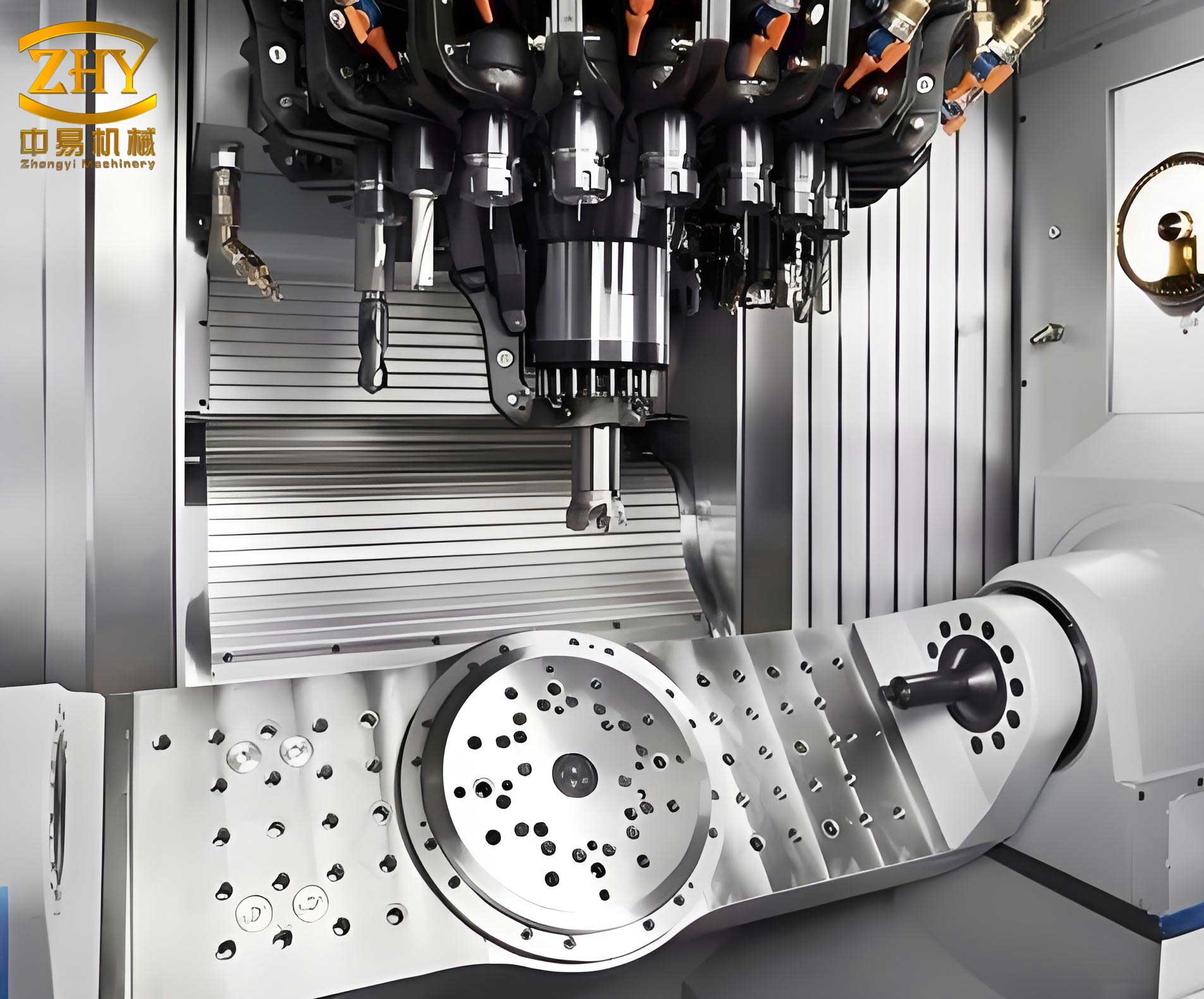
The performance requirements for a modern machine tool casting form a comprehensive checklist: high compressive and tensile strength, exceptional dimensional stability over time (precision holding), a high modulus of elasticity (stiffness), good wear resistance, superior vibration damping capacity, consistent machinability, reliable castability, and high dimensional accuracy with a low surface roughness. Balancing these often-competing demands is the foundry’s art and science. International leaders in the field exercise meticulous control over several key areas: chemical composition, mechanical properties, metallographic structure, dimensional accuracy, and stress relief treatments.
1. The Paramount Importance of Chemical Composition Control
At the heart of consistent casting performance lies the stringent control of molten iron chemistry. For a CNC machine performing complex, long-duration operations, consistency in hardness and machinability of the machine tool casting is non-negotiable. While modern CNCs feature tool wear compensation, variations in the workpiece material itself can still introduce subtle errors in long-term precision. My observation aligns with industry best practices: stabilizing the chemical composition is the primary lever for stabilizing hardness and machinability. The goal is to minimize fluctuations. High-end foundries aim for Carbon (C) and Silicon (Si) variations within ±0.10%, with Molybdenum (Mo) similarly constrained, and an even tighter control on Carbon, often as low as ±0.05%.
A critical metric derived from composition is the Carbon Equivalent (CE), which predicts castability and influences final properties. It is commonly calculated using the formula:
$$ CE = C + \frac{1}{3}(Si + P) $$
where the elements are expressed in weight percent.
International benchmarks reveal a telling trend. Compared to domestic standards, advanced foundries overseas often maintain a higher Carbon Equivalent for an equivalent strength grade. This is a significant technical achievement, as it yields better casting fluidity, reduced shrinkage tendency, and superior machinability while still meeting high strength targets. This approach is essential for the industry’s push towards lightweighting, where wall sections of major machine tool castings are being reduced from 20-25mm to 14-20mm, or even 8-10mm for certain components.
The following table illustrates the precise compositional control exercised by a leading international foundry for a 275 MPa grade casting, highlighting the narrow bandwidths for each element:
| Element | Max. Limit (%) | Control Upper (%) | Target (%) | Control Lower (%) | Min. Limit (%) |
|---|---|---|---|---|---|
| CE | 4.13 | 4.07 | 4.01 | 3.95 | 3.89 |
| C | 3.42 | 3.37 | 3.32 | 3.27 | 3.22 |
| Si | 2.22 | 2.19 | 2.12 | 2.07 | 2.02 |
| Mn | 0.70 | 0.65 | 0.60 | 0.55 | 0.40 |
| P | 0.070 | 0.052 | 0.042 | 0.032 | 0.010 |
| S | 0.10 | 0.08 | 0.06 | 0.05 | 0.03 |
Another strategic factor is the Silicon-to-Carbon ratio (Si/C). Elevating this ratio from a typical 0.4-0.5 to 0.7-0.8, while holding CE constant, can enhance both tensile strength and, crucially, the modulus of elasticity. This nuanced control of composition, rather than simply minimizing CE for strength, is a hallmark of advanced machine tool casting production.
2. Mechanical Properties: Beyond Tensile Strength to Stiffness
While domestic standards often specify grades like HT200, HT250, and HT300 for major castings, the global shift is firmly towards HT300 and HT350 as the baseline. However, focusing solely on tensile strength (σ_b) is a common oversight. For a machine tool casting, rigidity—the resistance to elastic deflection under load—is frequently more critical than pure strength. Even at maximum cutting forces, the safety factor on tensile strength is usually ample, but insufficient stiffness can lead to micron-level deflections that directly corrupt machining accuracy.
The key material property defining stiffness is the Modulus of Elasticity (E), often referred to as Young’s Modulus. It is defined by Hooke’s Law in the elastic region:
$$ \sigma = E \cdot \epsilon $$
where σ is stress and ε is strain. A higher E value indicates a stiffer material that deforms less under a given load.
Although E generally correlates with tensile strength, the relationship is not absolute. Two castings with identical σ_b can have different E values based on underlying metallurgy. Factors like the amount and morphology of graphite, the fineness of the pearlite, and the Si/C ratio profoundly influence E. Therefore, specifying and testing for modulus is as important as testing for strength. The following table shows the empirical relationship and compares typical values:
| Tensile Strength, σ_b (MPa) | Typical Elastic Modulus, E (GPa) | Recommended E for High-Grade Castings (GPa) |
|---|---|---|
| 250 | 100 – 110 | 115 – 120 |
| 300 | 115 – 125 | 130 – 135 |
| 350 | 125 – 135 | 140 – 145 |
Under operational stress, the effective modulus can decrease. Designers often use the “secant modulus” at a working stress level (e.g., σ_b/4) for calculations. This is precisely why higher strength grades are favored for high-stiffness applications—they maintain a higher effective E under load, ensuring the machine tool casting provides a stable platform.
3. Metallographic Structure: The Microscale Determinant of Macroscale Performance
The mechanical properties are a direct consequence of the microstructure. Advanced foundries produce superior machine tool castings not just by chemistry, but by achieving an optimized microstructure through superior melting and inoculation practices. Even with identical carbon equivalents, the difference lies in the details.
- Graphite: The goal is a uniform distribution of Type A (random flake) graphite. However, the key differentiator is size and dispersion. Finer, more evenly distributed graphite flakes significantly enhance strength and stiffness while maintaining good damping capacity. A shift from coarse to fine graphite can improve tensile strength by 90 MPa or more at the same CE.
- Matrix: The matrix should be predominantly pearlite (>95%). The critical factor here is the interlamellar spacing within the pearlite colonies. Finer pearlite (approaching a sorbitic or troostitic structure) provides greater strength and wear resistance. The difference between coarse and fine pearlite can account for a 30-100 MPa variance in strength. The presence of carbides should be strictly limited (<3%) to preserve machinability.
Controlling this microstructure requires high-temperature melting for superior iron quality, precise preconditioning of the melt, and powerful, well-timed inoculation. This process ensures the formation of a large number of graphite nucleation sites, leading to the desired fine, uniform structure that defines a high-performance machine tool casting.
4. Dimensional Accuracy and Surface Integrity
The widespread adoption of resin sand molding has revolutionized the dimensional accuracy of machine tool castings. This process allows for the production of near-net-shape components with complex geometries. The standard for evaluating this is the Casting Tolerance (CT) grade per ISO 8062. While many domestic foundries operate reliably at CT9 to CT10, the benchmark for components destined for automated flexible machining lines is CT8. This means tighter dimensional control across the entire casting.
An equally important, and often specified, metric is the flatness over a defined length, typically 600 mm. For premium castings, the requirement is often “flatness within 1.0 mm over any 600 mm length.” Achieving this consistently requires excellent pattern equipment, robust molding processes, and controlled cooling to minimize warpage. This level of accuracy reduces the amount of subsequent machining required on reference surfaces, lowering cost and preserving the integrity of the cast skin, which can be beneficial for wear resistance.
5. Stress Relief: Ensuring Long-Term Geometric Stability
Residual stresses locked into a machine tool casting during solidification and cooling are the enemy of long-term precision. These stresses can gradually relax over time or be released asymmetrically during machining, causing the component to warp and lose its alignment. As casting strengths increase (e.g., to HT350), the inherent residual stress levels also tend to rise, making stress relief not just important, but critical.
Three primary methods are employed:
- Thermal (Traditional) Aging: This involves heating the castings to a specific temperature (below the lower critical transformation temperature), holding for a sufficient time, and then cooling slowly in the furnace. The temperature is grade-dependent; higher strength grades require higher aging temperatures to effectively reduce stresses. For example, a 350 MPa grade may require aging at 590-620°C.
- Vibration Stress Relief: This is a non-thermal method where the casting is subjected to resonant vibrations for a period. The cyclical loading helps to precipitate microplastic deformation in high-stress areas, thereby reducing the peak residual stress. It is energy-efficient but requires careful setup for each casting geometry.
- Natural Aging & Low-Stress Casting Techniques: Some foundries specialize in process controls that minimize the development of residual stresses from the outset, sometimes in conjunction with extended natural aging periods. This is less common for high-precision, high-stress applications.
The choice of method depends on the casting size, geometry, required final stability, and production economics. For the most critical machine tool castings, a properly executed thermal aging cycle remains the gold standard for guaranteeing decades of precision stability.
6. Conclusion: The Path Forward for Foundry Excellence
The journey towards producing world-class machine tool castings is a multidimensional challenge. It requires moving beyond simple recipe-based production to a deeply analytical, process-controlled methodology. The gap with international leaders is not unbridgeable, but it demands focused investment in several areas: the implementation of precise, automated charge calculation and melt control systems; the adoption of advanced inoculation and treatment technologies to refine microstructure; rigorous process qualification for dimensional accuracy; and a steadfast commitment to comprehensive stress relief. Furthermore, the development and adoption of material specifications that include modulus of elasticity and detailed microstructural criteria, rather than just tensile strength, will align domestic practices with global expectations. By mastering these technical pillars—chemistry, properties, structure, dimensions, and stability—the foundation for a new generation of ultra-precision, highly reliable machine tools can be cast, propelling the entire manufacturing ecosystem forward.