
In my experience working in the manufacturing industry, I have come to appreciate the critical role of machine tool casting in producing durable and precise components for industrial machinery. Machine tool casting forms the backbone of many mechanical systems, and its quality directly impacts performance and longevity. However, defects in machine tool casting are inevitable due to complexities in the casting process, such as mold issues, material inconsistencies, or cooling stresses. Over the years, I have been involved in developing and implementing repair techniques for these defects, which not only save costs but also ensure that valuable machine tool casting parts can be reused without compromising safety or functionality. This article, based on my firsthand knowledge and industry practices, delves into the comprehensive repair methodologies, standards, and calculations essential for managing defects in machine tool casting. I will explore various repair methods, supported by tables and formulas, to provide a detailed guide for engineers and technicians. The goal is to emphasize how proper repair of machine tool casting can enhance efficiency, reduce waste, and uphold quality in manufacturing operations.
Machine tool casting involves pouring molten metal into molds to create parts like beds, frames, and housings for machine tools. These components must exhibit high strength, dimensional accuracy, and resistance to wear. Defects in machine tool casting can arise from numerous factors, including gas entrapment, shrinkage, sand inclusion, or improper cooling. Common defects include cracks, pores, slag inclusions, cold shuts, and surface irregularities. If left unaddressed, these flaws can lead to catastrophic failures in machine tools, resulting in downtime and financial losses. Therefore, establishing a robust repair protocol for machine tool casting is paramount. In our department, we have set up a dedicated repair section within the cleaning division to handle such issues systematically. This approach aligns with industry best practices, where repair is seen not as a last resort but as an integral part of the quality assurance process for machine tool casting.
To categorize defects in machine tool casting, I often refer to a detailed table that summarizes their types, causes, and detection methods. This helps in quickly identifying the appropriate repair strategy. For instance, surface cracks might be visible to the naked eye, while internal pores require non-destructive testing like ultrasonic inspection. Below is a table I commonly use in training sessions for new technicians working on machine tool casting repair:
| Defect Type | Description | Common Causes | Detection Method |
|---|---|---|---|
| Cracks | Linear fractures on the surface or internally, often due to thermal stress. | Rapid cooling, uneven material composition. | Visual inspection, dye penetrant testing. |
| Pores and Blowholes | Gas pockets trapped within the casting, leading to weakness. | Improper venting, high moisture in mold sand. | X-ray or ultrasonic testing. |
| Slag Inclusions | Non-metallic materials embedded in the metal, affecting integrity. | Impurities in molten metal, inadequate slag removal. | Macroetching, sectional analysis. |
| Cold Shuts | Incomplete fusion of metal streams, creating seams. | Low pouring temperature, slow filling. | Visual inspection, pressure testing. |
| Surface Roughness | Irregular textures that can interfere with machining. | Poor mold surface quality, incorrect sand grain size. | Tactile and visual checks. |
When it comes to repairing defects in machine tool casting, we employ a variety of techniques depending on the defect’s nature, location, and severity. The primary methods include welding, patching, plugging, and insertion of sleeves. Welding is further divided into hot welding and cold welding, each with specific applications. For machine tool casting, hot welding involves preheating the part to a controlled temperature, performing the weld, and then allowing slow cooling to minimize residual stresses. This is crucial for large or complex machine tool casting components where thermal distortion must be avoided. Cold welding, on the other hand, is used for minor repairs without preheating, but it requires careful execution to prevent cracking. In our practice, we reserve cold welding for non-critical surfaces or fixed joints where the defect does not compromise structural rigidity. The choice of method often hinges on calculations related to heat input and stress distribution. For example, the heat input during welding can be estimated using the formula: $$ Q = \frac{V \times I \times 60}{S} $$ where \( Q \) is the heat input in joules per millimeter, \( V \) is the voltage in volts, \( I \) is the current in amperes, and \( S \) is the travel speed in millimeters per minute. This formula helps ensure that the repair does not adversely affect the surrounding material in machine tool casting.
For defects like cracks in machine tool casting, we follow a systematic approach. First, we assess the crack’s length and depth relative to the component’s thickness. If the crack is superficial and on a non-machined surface, we might use cold welding after preparing the area by grooving and drilling stop holes at the crack ends. This prevents propagation during repair. The allowable crack length for cold welding in machine tool casting is typically limited to a quarter of the surface dimension, as per our internal standards. For deeper or more extensive cracks, hot welding is mandatory. We preheat the machine tool casting part to around 300–400°C, depending on the material, and use compatible filler metals to achieve a strong bond. Post-weld heat treatment is often applied to relieve stresses and restore mechanical properties. To quantify the repair’s effectiveness, we perform hardness tests on the welded zone, ensuring it matches the base material within a tolerance of ±10 HB (Brinell hardness). This is critical for machine tool casting parts that undergo dynamic loads, as hardness discrepancies can lead to premature failure.
Pores and blowholes in machine tool casting are another common issue. If these defects are shallow and on non-functional surfaces, we might simply fill them with specialized putty or epoxy compounds that mimic the casting’s color and texture. However, for more significant voids, welding or plugging is necessary. We have developed guidelines for when to use each method, summarized in the table below. This table is based on years of experience with machine tool casting repair and aligns with international standards like ISO 4990 for steel castings.
| Defect Type | Location on Casting | Maximum Allowable Size | Recommended Repair Method |
|---|---|---|---|
| Small Pores | Non-working surfaces | Depth ≤ 1/3 of section thickness | Putty filling or cold welding |
| Large Cavities | Fixed joint surfaces | Area ≤ 100 cm² | Hot welding with filler metal |
| Cracks | Moving parts or sliding surfaces | Length ≤ 1/4 of surface dimension | Hot welding with preheating |
| Inclusions | Internal sections | Diameter ≤ 5 mm | Drilling and plugging |
| Leaks in Oil Passages | Pressure vessels or gearboxes | Pressure ≤ 1 atm | Sealant application or welding |
In addition to welding, we frequently use plugging and sleeving for defects in machine tool casting, especially when dealing with holes or misaligned bores. Plugging involves inserting a metal plug into a defect site, such as a pore on a sliding surface. The plug’s diameter is typically limited to one-fifth of the surface width or one-quarter for moving surfaces, and its thickness should not exceed one-third of the original section thickness. We derive these limits from stress concentration factors, which can be calculated using formulas like: $$ K_t = 1 + 2\sqrt{\frac{a}{\rho}} $$ where \( K_t \) is the stress concentration factor, \( a \) is the defect length, and \( \rho \) is the radius of curvature at the defect tip. For machine tool casting, keeping \( K_t \) low ensures that repaired areas do not become weak points. Similarly, sleeving is used when a bore in a machine tool casting part is oversized or has eccentricity. We enlarge the bore and press-fit a sleeve made of compatible material, then machine it to the required dimensions. This method is highly effective for restoring functionality in critical components like spindle housings.
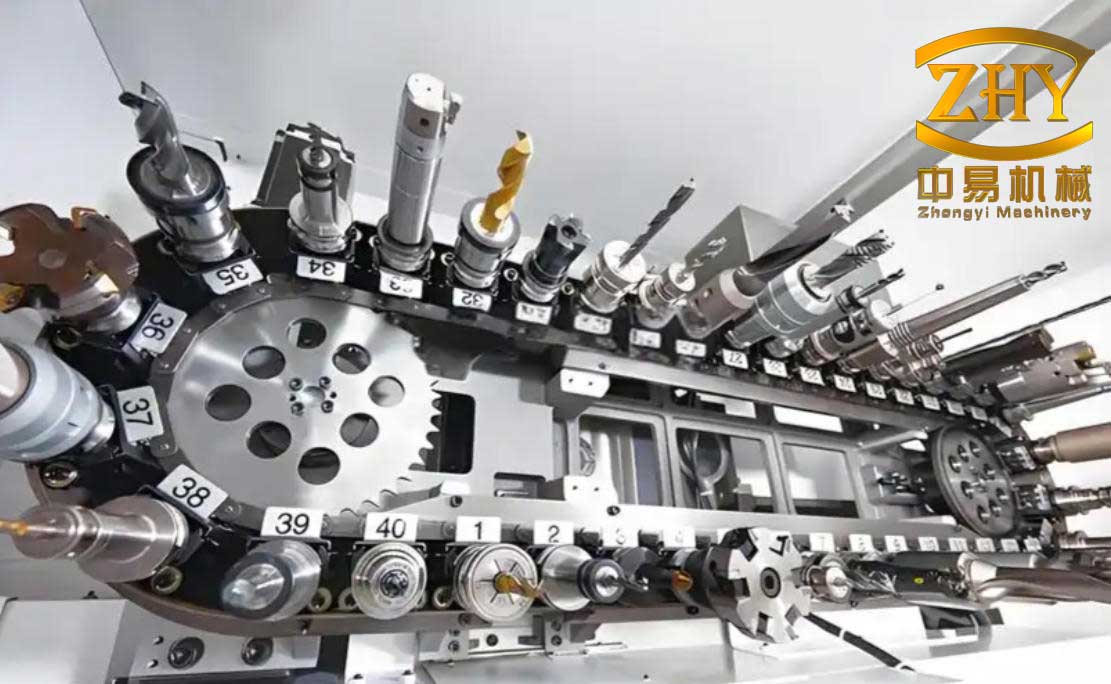
Visual inspection plays a key role in assessing defects in machine tool casting, and images like the one linked above help in training and documentation. Beyond repair techniques, we also focus on preventive measures to minimize defects in machine tool casting. This includes optimizing the casting process through proper gating design, controlled cooling, and material selection. For instance, we often use inoculated cast iron for machine tool casting components that require high strength and wear resistance. Inoculation involves adding elements like silicon or calcium to the molten metal to refine the graphite structure, enhancing mechanical properties. The effectiveness of inoculation can be expressed through the inoculation efficiency formula: $$ E_i = \frac{\sigma_{inoculated} – \sigma_{base}}{\sigma_{base}} \times 100\% $$ where \( E_i \) is the inoculation efficiency, \( \sigma_{inoculated} \) is the tensile strength of inoculated cast iron, and \( \sigma_{base} \) is the base strength. In our foundry, we achieve improvements of up to 20% in tensile strength for machine tool casting parts using this method, reducing the need for repairs later on.
Standards and specifications are vital for ensuring consistency in machine tool casting repair. We adhere to guidelines that specify allowable defect densities and repair limits based on the casting’s application. For example, on sliding surfaces of machine tool casting, we permit only a limited number of repairs per meter to maintain smooth operation. The table below, derived from industry practices, outlines these limits for different casting sizes and surfaces. It serves as a quick reference for our quality control team when inspecting repaired machine tool casting components.
| Surface Type | Casting Length < 2 meters | Casting Length ≥ 2 meters | Remarks |
|---|---|---|---|
| Sliding Surfaces | ≤ 2 repairs per meter | ≤ 1 repair per meter | Repairs must not affect hardness or finish. |
| Moving Parts | ≤ 3 repairs per meter | ≤ 2 repairs per meter | No welding on sharp edges or corners. |
| Other Surfaces | Unlimited | ≤ 5 repairs total | Repairs should blend with original surface. |
Moreover, we incorporate mathematical models to predict the behavior of repaired machine tool casting under load. For instance, the fatigue life of a welded joint can be estimated using the Paris law for crack growth: $$ \frac{da}{dN} = C(\Delta K)^m $$ where \( da/dN \) is the crack growth rate per cycle, \( \Delta K \) is the stress intensity factor range, and \( C \) and \( m \) are material constants. By inputting values specific to machine tool casting materials, we can assess whether a repair will sustain long-term operational stresses. This analytical approach complements our empirical practices, ensuring that repaired machine tool casting parts meet performance criteria.
In recent years, advancements in technology have revolutionized machine tool casting repair. Techniques like laser cladding and metal 3D printing allow for precise material deposition with minimal heat input, reducing distortion in sensitive machine tool casting components. We are experimenting with these methods for repairing complex geometries or high-value parts. Additionally, non-destructive testing methods, such as computed tomography (CT) scanning, provide detailed internal images of machine tool casting, enabling more accurate defect characterization and repair planning. These innovations align with the industry’s push toward digitalization and smart manufacturing, where machine tool casting quality is monitored in real-time using sensors and data analytics.
To illustrate the economic impact of proper repair in machine tool casting, consider a case study from our facility. We had a large machine tool casting bed with multiple cracks discovered during routine inspection. Instead of scrapping it, we performed hot welding with controlled preheating and post-weld annealing. The repair cost was approximately 30% of a new casting, and the bed has been in service for over five years without issues. This example underscores how strategic repair of machine tool casting can yield significant savings while promoting sustainability by reducing material waste. Furthermore, by documenting such cases, we have built a knowledge base that guides future repairs and training programs for machine tool casting technicians.
Looking ahead, the future of machine tool casting repair lies in integrating artificial intelligence and machine learning. We are developing algorithms that analyze defect patterns from historical data to predict optimal repair parameters. For instance, by inputting defect size, location, and casting material, the system can recommend welding currents, speeds, or filler metals. This not only speeds up decision-making but also enhances consistency across repairs. As machine tool casting continues to evolve with new alloys and processes, our repair methodologies must adapt accordingly. We are actively participating in industry consortiums to share best practices and develop unified standards for machine tool casting repair worldwide.
In conclusion, the repair of defects in machine tool casting is a sophisticated discipline that blends traditional craftsmanship with modern engineering principles. From welding and plugging to advanced digital techniques, each method plays a role in extending the life of critical components. Through meticulous standards, mathematical calculations, and continuous innovation, we can ensure that machine tool casting remains reliable and efficient in industrial applications. I hope this detailed exposition provides valuable insights for professionals engaged in machine tool casting manufacturing and maintenance. By embracing repair as a core competency, we not only cut costs but also contribute to a more sustainable and resilient manufacturing ecosystem centered on high-quality machine tool casting.