
In my extensive experience within the foundry industry, grey cast iron has consistently proven to be an exceptional engineering material. Its superior wear resistance, damping capacity, and machinability, combined with excellent castability, make it the material of choice for critical components such as internal combustion engines and, most importantly for our discussion, machine tool casting. The evolution of modern manufacturing, however, demands more from these foundational elements. Traditional grey cast iron grades often fall short of meeting the rigorous requirements of today’s high-end, precision machine tools. There is a burgeoning market need for machine tool casting with enhanced properties: high strength, low residual stress, high rigidity, and a high modulus of elasticity. This article details the first-person perspective and technical controls we implemented to reliably produce such high-performance synthetic grey cast iron machine tool casting.
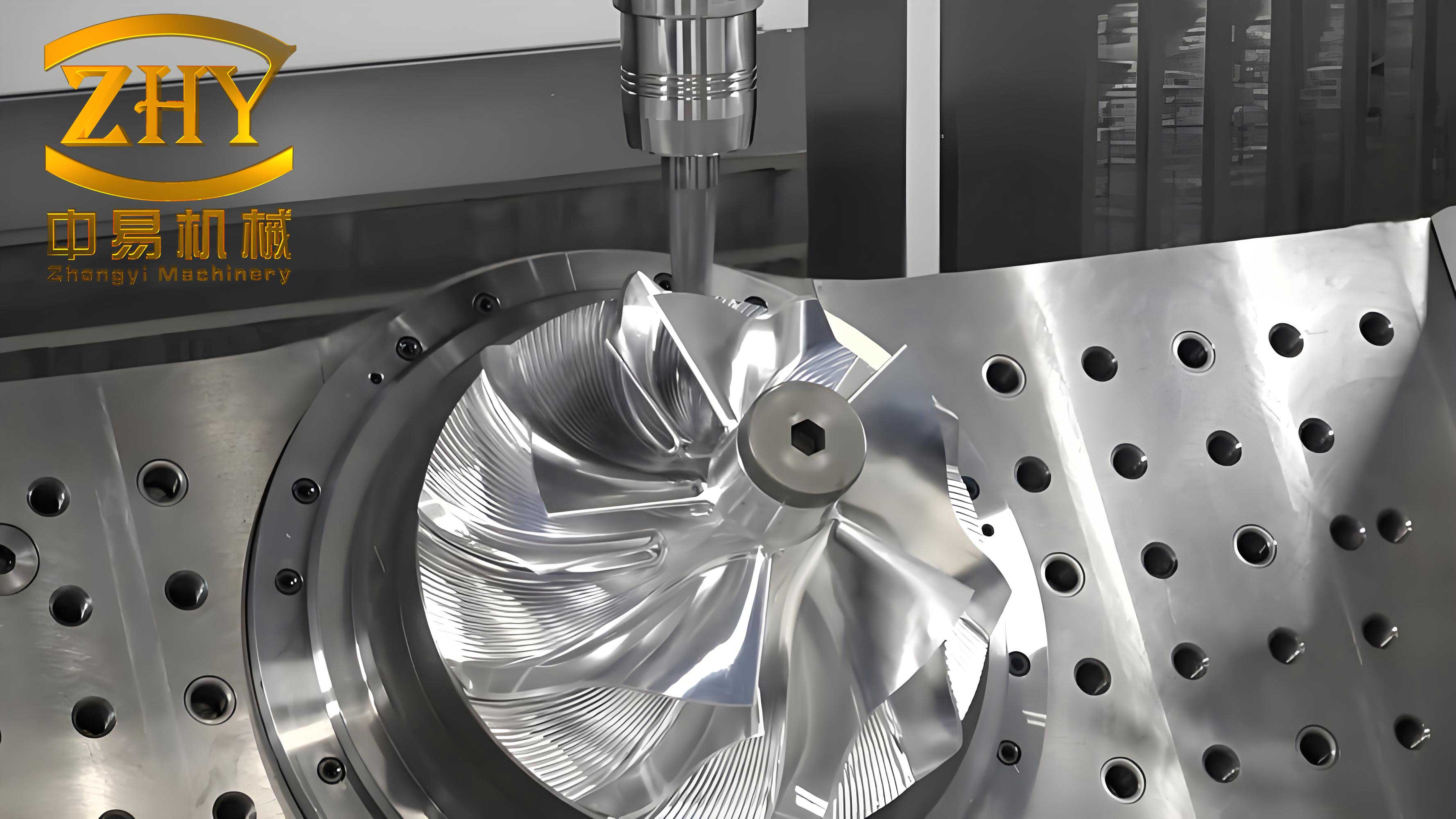
The driving force behind this technical development was a specific project: producing bed castings for export to Okuma, a renowned Japanese machine tool builder. This particular machine tool casting, a bed component, had approximate dimensions of 1400 mm in length, 850 mm in width, and 350 mm in height, with a weight nearing 1000 kg. The success of this machine tool casting project hinged on achieving exceptionally strict and uniform microstructural and mechanical properties. The specifications mandated a graphite structure consisting exclusively of randomly oriented Type A graphite, with a flake length rating between 3 and 6. The matrix required a pearlite content of 98% or higher. Mechanically, the tensile strength needed to exceed 300 MPa. The bulk hardness was specified between 190 and 210 HB, with a Shore hardness (HS) between 32 and 38. A critical additional requirement was the subsequent induction hardening of the guideways, which necessitated an unprecedented level of microstructural homogeneity and consistency throughout the entire machine tool casting to ensure uniform hardening response and avoid distortion.
To meet these formidable challenges for our machine tool casting, we devised a comprehensive control strategy focusing on four interconnected pillars: (1) precise selection and control of molten iron chemistry, (2) stringent management of charge materials and melting practices, (3) active control of gaseous element content, and (4) optimized inoculation treatment. Each pillar is crucial for the final quality of the high-strength synthetic grey cast iron machine tool casting.
Technical Requirements for Premium Machine Tool Casting
The performance of a high-end machine tool is directly correlated to the inherent properties of its cast components. Precision, efficiency, stability, and durability are non-negotiable. Therefore, the material specification for a critical machine tool casting like a bed goes beyond standard grades. For our project, the core requirements can be summarized by the following key parameters essential for any high-duty machine tool casting:
| Property | Specification for Machine Tool Casting |
|---|---|
| Graphite Type | 100% Type A, random orientation |
| Graphite Size (ASTM) | 3 to 6 |
| Matrix Pearlite Content | ≥ 98% |
| Minimum Tensile Strength | 300 MPa |
| Bulk Hardness (Brinell) | 190 – 210 HB |
| Bulk Hardness (Shore) | 32 – 38 HS |
| Uniformity for Hardening | Essential for guideway quenching |
Control of Production Technology for Machine Tool Casting
1. Selection of Molten Iron Chemical Composition
The chemical composition is the foundation upon which all other properties of the machine tool casting are built. The carbon equivalent (CE) is the most influential parameter. A high CE promotes good fluidity, low shrinkage tendency, and excellent damping—all beneficial for a large, complex machine tool casting. However, it typically reduces strength and hardness. Our strategy was to employ a relatively high carbon equivalent but compensate for the potential loss in strength through microalloying, creating a synthetic grey iron. This approach is ideal for producing a consistent, high-quality machine tool casting.
The need for subsequent guideway hardening placed additional constraints. We selected copper (Cu) and tin (Sn) as our primary alloying elements. Copper refines pearlite and improves hardness uniformity, while tin is a powerful pearlite stabilizer. Notably, antimony (Sb) was prohibited due to its potential to cause embrittlement. A crucial rule was established to control the total alloy addition: $$Cu + 10 \times Sn \leq 0.8\%$$. This formula ensures we stay within a safe window to avoid excessive hardening or segregation in the machine tool casting.
Precision is paramount. We enforced very tight compositional windows to minimize batch-to-batch variation in the machine tool casting. The target ranges were set as follows:
| Element | Target Range (wt.%) | Control Tolerance (± wt.%) |
|---|---|---|
| Carbon (C) | 3.10 – 3.30 | 0.05 |
| Silicon (Si) | 1.60 – 1.90 | 0.05 |
| Manganese (Mn) | 0.80 – 1.00 | 0.05 | Sulfur (S) | 0.06 – 0.10 | – |
| Phosphorus (P) | < 0.05 | – |
| Copper (Cu) | 0.50 – 0.60 | – |
| Tin (Sn) | 0.020 – 0.030 | – |
The carbon equivalent for this machine tool casting chemistry, calculated using the common formula $$CE = C + \frac{1}{3}(Si + P)$$, typically falls between 3.7 and 3.9, indicating a high CE approach fortified with alloys.
2. Charge Materials and Melting Practice Control
We adopted a synthetic cast iron process using a 2-ton medium-frequency coreless induction furnace. This method, relying heavily on steel scrap, provides exceptional control over the base chemistry and minimizes the “genetic” influence of harmful trace elements often present in pig iron, which is vital for a reliable machine tool casting.
The charge makeup was carefully designed:
| Charge Material | Percentage | Description & Purpose |
|---|---|---|
| Prime Carbon Steel Scrap | 55% – 65% | Provides a clean, low-trace element base for the machine tool casting. |
| Internal Returns (Same Grade) | 25% – 30% | Improves metallic yield and process stability. |
| Semi-Graphitized Recarburizer | 1.0% – 1.3% | Restores carbon. Its quality is critical for nitrogen control. |
| Silicon Carbide (SiC) | 0.6% – 1.2% | Acts as a potent inoculant and carburizer. Provides heterogeneous nuclei. |
The use of silicon carbide is a key differentiator. During melting, SiC dissociates, releasing silicon and carbon while simultaneously creating a multitude of finely dispersed silicon-rich nuclei. This action significantly reduces the undercooling tendency of the iron, powerfully promoting the formation of Type A graphite, which is essential for the desired properties in the final machine tool casting. The near-elimination of pig iron effectively controls deleterious elements like titanium (Ti ≤ 0.05%) and lead (Pb ≤ 0.004%), whose presence could destabilize the graphite structure in a critical machine tool casting.
The melting practice was standardized: the final tap temperature was maintained between 1500°C and 1520°C. After reaching temperature, the bath was held for 3 to 5 minutes. This practice, coupled with the inherent electromagnetic stirring in the induction furnace, allows for effective degassing and flotation of non-metallic inclusions, thereby enhancing the metallurgical quality and fluidity of the iron destined for the machine tool casting.
3. Control of Gaseous Elements
Control of interstitial elements, particularly nitrogen (N), is a critical but often overlooked aspect of producing high-integrity grey iron, especially for a machine tool casting requiring high strength and consistency. Nitrogen acts as a potent micro-alloying element. In controlled amounts, it refines graphite flakes, making them shorter and blunter at the edges, and strengthens the pearlitic matrix. These effects contribute positively to the tensile strength and hardness of the machine tool casting. However, an excess of nitrogen (> 120 ppm) leads to the formation of subsurface pinhole porosity, which is catastrophic for the machinability and pressure tightness of any casting.
The primary sources of nitrogen in our synthetic process are the steel scrap and, more significantly, the recarburizer. Therefore, we implemented strict incoming material inspection using an oxygen/nitrogen analyzer. We mandated that all recarburizer batches must have a nitrogen content ≤ 500 ppm. Through this control, we successfully maintained the dissolved nitrogen in the final molten iron for the machine tool casting within an optimal range of 50 to 100 ppm.
Oxygen (O) activity, though less discussed, also influences graphite morphology. Based on our extensive process monitoring, we found that maintaining oxygen levels between 10 and 40 ppm in the molten iron correlates with optimal graphite formation for a high-strength machine tool casting. The relationship between strength (σ), and gas content can be conceptually represented for process control purposes: $$ \sigma_{UTS} \propto \frac{1}{[N]_{excess}} $$ where $[N]_{excess}$ is the nitrogen content above a critical threshold (e.g., 120 ppm). Our target zone avoids this excess.
4. Selection of Inoculation Practice
Inoculation is the final, crucial step to guarantee that the potential for a sound microstructure is realized in the actual machine tool casting. We employed a dual-stage inoculation process.
Primary Inoculation: At tap, we added 0.4% to 0.6% of a Ca-Ba-FeSi长效孕育剂 (long-lasting inoculant) with 3-8 mm granularity. Barium (Ba) significantly enhances the nucleation potential of the melt, increasing the number of graphite substrates. This is crucial for achieving a fine, uniform Type A graphite distribution throughout the substantial section of a large machine tool casting, countering the fade effects that can occur during pouring and solidification.
Secondary (Stream) Inoculation: During pouring into the mold, we used a 75% FeSi powder (0.2-0.7 mm) as a stream inoculant, adding 0.05% to 0.1%. This late inoculation introduces fresh, active nuclei just before solidification, ensuring maximum nucleation efficiency at the critical moment. This two-stage approach is indispensable for achieving the required high pearlite count, minimized undercooling, and consistent hardness across the entire machine tool casting, especially important for parts undergoing localized hardening.
The effectiveness of inoculation fade can be modeled by a simple exponential decay: $$ N(t) = N_0 \cdot e^{-kt} $$ where $N(t)$ is the number of active nuclei at time $t$ after inoculation, $N_0$ is the initial number, and $k$ is a fade constant. Stream inoculation effectively resets $t$ to near zero for the metal entering the mold.
Product Trial and Result Analysis for Machine Tool Casting
The production trial was conducted using a no-bake resin sand molding process. Five separate furnace melts were processed under the controlled parameters described. The pouring temperature was tightly controlled between 1360°C and 1390°C. A bottom-gating system with side in-gates was employed to ensure calm and uniform filling of the mold cavity, promoting thermal consistency during solidification of the machine tool casting.
1. Chemical Composition and Gas Content Analysis
Samples from each of the five heats were analyzed using optical emission spectrometry and an oxygen/nitrogen analyzer. The results confirmed the efficacy of our controls for producing the machine tool casting.
| Heat No. | C (%) | Si (%) | Mn (%) | P (%) | S (%) | Cu (%) | Sn (%) | O (ppm) | N (ppm) | Cu+10Sn (%) |
|---|---|---|---|---|---|---|---|---|---|---|
| 1 | 3.14 | 1.72 | 0.857 | 0.028 | 0.071 | 0.65 | 0.022 | 15 | 63 | 0.87 |
| 2 | 3.12 | 1.69 | 0.887 | 0.015 | 0.077 | 0.60 | 0.025 | 13 | 57 | 0.85 |
| 3 | 3.17 | 1.64 | 0.840 | 0.021 | 0.061 | 0.61 | 0.023 | 17 | 67 | 0.84 |
| 4 | 3.15 | 1.70 | 0.861 | 0.020 | 0.080 | 0.64 | 0.021 | 24 | 61 | 0.85 |
| 5 | 3.13 | 1.69 | 0.878 | 0.018 | 0.078 | 0.61 | 0.022 | 23 | 53 | 0.83 |
Analysis: All compositional values are within the specified narrow windows. The key parameter $$Cu + 10Sn$$ is consistently below the 0.9% limit, averaging around 0.85%. Oxygen and nitrogen contents are securely within the target bands of 10-40 ppm and 50-100 ppm, respectively. This demonstrates successful control over the foundational chemistry and gas levels for the synthetic grey iron machine tool casting.
2. Mechanical Properties and Microstructural Analysis
Separately cast keel blocks (for tensile testing) and samples from the actual castings (for hardness and metallography) were evaluated. The results exceeded the minimum specifications for the machine tool casting.
| Heat No. | Separately Cast Test Bar | Casting Body (Machine Tool Casting) | ||||||
|---|---|---|---|---|---|---|---|---|
| Graphite Type | Graphite Size | Pearlite (%) | Tensile Strength (MPa) | Hardness (HB) | Graphite Type/Size | Pearlite (%) | Hardness (HS) | |
| 1 | A | 4 | 99.5 | 395 | 230 | A / 4 | 98 | 34 |
| 2 | A | 4 | 99.6 | 370 | 230 | A / 4 | 98 | 35 |
| 3 | A | 4 | 99.4 | 390 | 229 | A / 4 | 98 | 35 |
| 4 | A | 4 | 98.7 | 365 | 226 | A / 4 | 98 | 36 |
| 5 | A | 4 | 99.0 | 375 | 229 | A / 4 | 98 | 35 |
Analysis: The results are outstandingly consistent. All test bars and casting samples exhibit 100% Type A graphite with a size of 4, indicating a fine, uniform, and random distribution crucial for the performance of the machine tool casting. The pearlite content is at or above 98% in all cases. Tensile strengths are significantly higher than the 300 MPa requirement, ranging from 365 to 395 MPa. The hardness values also confirm the success: test bar hardness (HB) is above 220, and the casting body hardness (HS) falls perfectly within the 34-36 range. The microstructure uniformity is confirmed by the identical graphite characteristics in both test bars and the actual machine tool casting body.
The relationship between tensile strength and key controlled variables for this machine tool casting can be approximated by an empirical equation derived from the data:
$$ \sigma_{UTS} (MPa) \approx K \cdot (\%Pearlite) + \alpha \cdot (\%Cu) + \beta \cdot (\%Sn) – \gamma \cdot (Graphite\_Size) $$
Where K, α, β, and γ are positive constants specific to our process. The high pearlite content, controlled alloy additions, and fine graphite (Size 4) all contribute synergistically to the high strength observed.
Metallographic Examination of the Machine Tool Casting
Metallographic examination under an optical microscope at 100x magnification provided visual confirmation. The separately cast test bars and the samples extracted from the actual machine tool casting bed showed virtually identical structures. The graphite was uniformly distributed as fine, Type A flakes against a background of almost entirely pearlitic matrix. No ferrite halos or degenerate graphite forms were observed. This level of microstructural consistency and purity is the direct result of the integrated production controls and is the fundamental reason why this machine tool casting meets the stringent prerequisites for successful guideway hardening and long-term precision performance.
Conclusions on High-Strength Synthetic Grey Iron for Machine Tool Casting
Based on the successful development and批量生产 of these critical bed castings, several key conclusions can be drawn for the production of high-strength synthetic grey iron machine tool casting:
-
The strategic use of microalloying elements Copper and Tin within the constraint of $$Cu + 10Sn \leq 0.8\%$$ is highly effective for enhancing and stabilizing the pearlitic matrix, increasing strength and hardness, and ensuring uniformity. This is a cornerstone for producing a reliable machine tool casting capable of undergoing localized heat treatment.
-
The synthetic cast iron process, utilizing high-quality steel scrap, controlled recarburizers, and silicon carbide, provides superior metallurgical control. It minimizes detrimental trace elements and promotes a fine, Type A graphite structure, which is essential for the damping capacity and machinability of a precision machine tool casting.
-
Active control of gaseous elements is not optional but mandatory for premium grades. Maintaining nitrogen between 50-100 ppm leverages its beneficial micro-alloying effects while avoiding porosity. Keeping oxygen in the 10-40 ppm range supports favorable graphite formation. These controls are integral to the quality assurance of a high-integrity machine tool casting.
-
A dual-stage inoculation practice, combining a Ba-containing primary inoculant at tap with a FeSi stream inoculant during pouring, is critical to combat fade and ensure a high nodule count of active substrates throughout the entire pouring and solidification sequence of a large machine tool casting. This guarantees the desired microstructure and mechanical properties are achieved consistently in the casting body.
The production methodology outlined here has been validated through the consistent, batch-after-batch manufacture of high-performance machine tool casting for demanding applications. The principles of tight chemical control, careful charge selection, gas management, and robust inoculation are universally applicable for foundries aiming to produce superior grey iron components. However, it is imperative to remember that specific control limits and parameters may require adjustment based on individual foundry conditions, melting equipment, and the exact specifications of the target machine tool casting. The framework, however, provides a proven roadmap for achieving high strength, consistency, and reliability in synthetic grey iron machine tool casting.