
The advancement of modern machine tools towards high speed, heavy cutting, automation, and ultra-high precision has been a significant driver for progress in the foundry sector serving this industry. The traditional, experience-based and artisanal production model in casting is being progressively replaced by scientific methods, superior materials, and advanced processes and equipment. Efficient, low-consumption, and environmentally friendly production of high-quality castings has become the hallmark of modern foundry practice. As a practitioner deeply involved in this field, I have witnessed and participated in this transformative journey. The casting of components for machine tools is not merely a manufacturing step; it is fundamental to achieving the static and dynamic stiffness, damping characteristics, and long-term precision stability that define high-performance equipment.
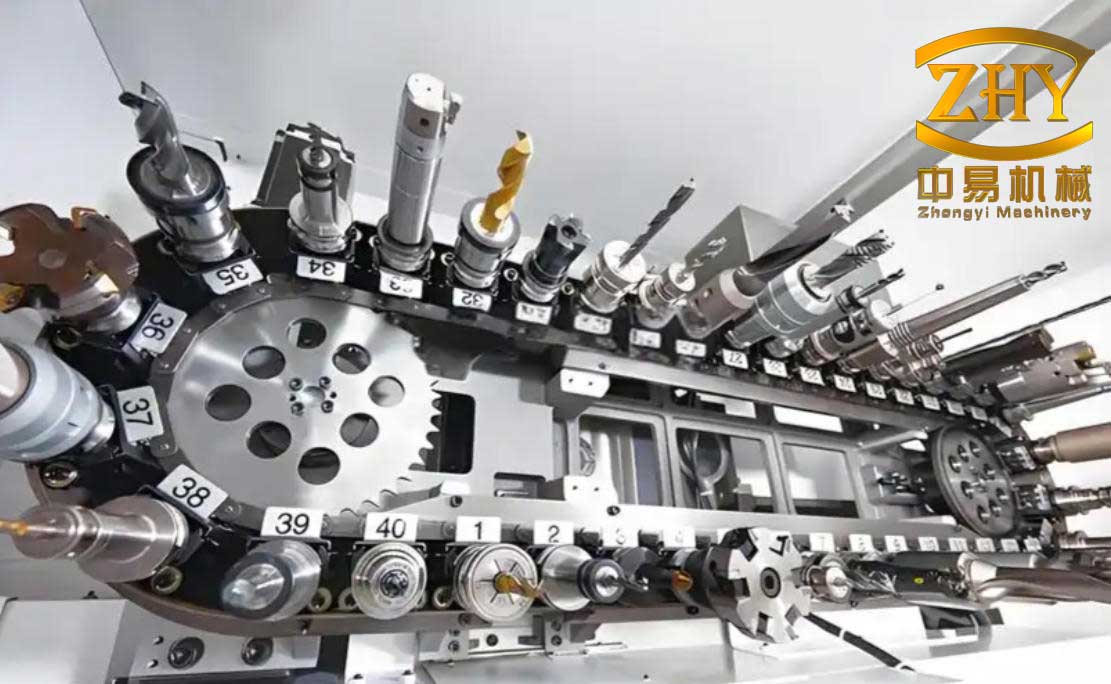
The role of castings in machine tool construction is indispensable. By weight, cast iron parts typically constitute 70-80% of a conventional machine tool’s total weight. Within the broader mechanical manufacturing sector, machine tool castings account for a substantial portion of total cast iron production. The distribution by component type is illustrative of their critical function, as shown in Table 1.
| Component Type | Approximate Weight Proportion (%) |
|---|---|
| Bed (Bed Frames) | 40-50 or more |
| Tables (Work Tables) | 15-25 or more |
| Headstocks | 10-15 or more |
| Saddles & Slides | 5-10 or more |
Evolution and Demands on Cast Iron Material
The pursuit of higher machining accuracy and stability has fundamentally shifted the requirements for the material at the heart of machine tool casting: cast iron. High stiffness is a prerequisite for high precision, and stiffness is governed by the material’s elastic modulus under working stress. The elastic modulus (E) is not an independent property; it maintains a specific functional relationship with the material’s tensile strength ($\sigma_b$). This relationship, often empirically derived for cast irons, can be approximated for certain ranges by equations such as:
$$E = k \cdot \sigma_b + C$$
where $k$ and $C$ are material constants. Consequently, only high-grade cast irons with elevated tensile strength can provide the high elastic modulus necessary for rigid machine structures.
Furthermore, long-term dimensional stability is threatened by the relaxation of residual casting stresses over time. The magnitude of distortion is directly related to the amount of stress relaxation. High-strength cast irons exhibit a lower stress relaxation coefficient, meaning they are more resistant to this time-dependent creep deformation. Therefore, upgrading the cast iron grade serves the dual purpose of increasing static stiffness and enhancing precision stability by reducing the potential for stress-induced distortion. This understanding has led major industrial nations to specify premium cast irons for critical machine tool components. The selection of material grades in different countries reflects this trend, with a clear move towards higher strength classes for major structural parts like beds, columns, and headstocks.
A comparison of the mechanical properties of some internationally recognized high-quality cast irons used in machine tool casting reveals the performance benchmarks. The development of materials like “High-Strength Low-Stress Cast Iron” represents a targeted effort to meet these benchmarks, focusing on achieving high strength, high modulus, low residual stress, and good machinability simultaneously.
| Country / Designation | Tensile Strength, $\sigma_b$ (MPa) | Elastic Modulus, E (GPa) | Relative Hardness | Key Characteristics |
|---|---|---|---|---|
| Japan (High-Grade FC) | 300 – 350 | 130 – 145 | Controlled | High stiffness, stability |
| UK/USA (Mechanite) | 250 – 400 | 120 – 150 | Controlled | Consistent properties, good damping |
| France (Specification) | 300 – 350 | ≥ 140 | — | High modulus requirement |
| Development: High-Strength Low-Stress Iron | ≥ 300 | ≥ 140 | Low | Low residual stress (< 30% reduction), good machinability |
Melting Technology and Equipment for Machine Tool Casting
The intrinsic quality of a cast iron component is largely determined at the melting stage. The choice of melting equipment and the control over the melting process are therefore critical in machine tool casting. Globally, the cupola furnace has historically been the dominant melting unit due to its efficiency in melting solid charges and its operational simplicity. However, environmental pressures concerning dust and pollutant emissions, coupled with rising coke costs and limitations on achievable superheat temperatures, have spurred the adoption of electric furnaces, particularly coreless and channel induction furnaces.
Electric melting offers superior control over chemistry and temperature, yields cleaner iron with lower gas content, and significantly improves the working environment. A notable trend is the growth of duplex melting, which combines the raw melting efficiency of a cupola with the superb superheating, holding, and alloying capabilities of an electric furnace. This system optimizes energy use and provides exceptional flexibility and quality for demanding machine tool casting applications. The melting efficiency ($\eta_m$) can be considered as a function of energy input and superheat achieved:
$$\eta_m = \frac{C_p \cdot \Delta T}{E_{input}}$$
where $C_p$ is the specific heat of the iron, $\Delta T$ is the temperature increase (superheat), and $E_{input}$ is the energy consumed. Duplex systems often maximize this efficiency by using the most suitable energy source for each stage of the process.
The focus in melting practice is on achieving high, consistent tapping temperatures (consistently above 1500°C), minimizing element oxidation losses (aiming for Si loss < 10%, Mn loss < 15%), and maintaining tight chemical composition windows. This requires not only advanced equipment but also high-quality charge materials (including specialized foundry coke) and sophisticated process control, increasingly aided by computer systems for optimized charge calculation, real-time monitoring, and feedback control.
Molding Materials and Processes: The Shift to Binder Systems
The evolution of molding materials and processes in machine tool casting has followed a clear path from traditional green sand (clay-bonded) to chemically-bonded systems, with resin-bonded sand now representing the state-of-the-art for high-quality, medium to large castings. The molding process directly influences surface finish, dimensional accuracy, and the incidence of defects like veining, penetration, and sand inclusions. It is estimated that a significant percentage of casting defects originate from molding and core-making issues.
The adoption of furan no-bake or phenolic urethane cold-box resin systems has revolutionized the production of machine tool castings. These processes enable the production of molds and cores with high strength, excellent dimensional stability, and good collapse characteristics, which are essential for complex, cored structures like machine tool beds. The economic benefits are substantial, as evidenced by case studies showing dramatic reductions in cleaning hours per ton of casting, lower scrap rates, and increased productivity. The advantages stem from the sand’s free-flowing nature, which allows it to be compacted without ramming around patterns, reproducing pattern details with high fidelity. The relationship between binder content (B), sand compactability, and final strength can be critical for process control.
| Metric | Green Sand Process | Resin-Bonded Sand Process | Improvement |
|---|---|---|---|
| Cleaning Hours per Ton Casting | High (e.g., 20 hrs) | Low (e.g., 8 hrs) | > 50% Reduction |
| Scrap Rate (%) | ~10% | ~3% | > 50% Reduction |
| Dimensional Accuracy | CT 13-15 (ISO) | CT 10-12 (ISO) | 2-3 Grades Improvement |
| Surface Finish | Fair | Excellent | Significant Enhancement |
The drive towards resin sand is further fueled by the stringent requirements of international collaboration, where specifications often demand surface flatness tolerances as tight as 1mm over a 1000mm length, a standard difficult to achieve consistently with conventional green sand molding.
Casting Refinement and Lightweighting
In an era focused on energy conservation and material efficiency, the refinement and lightweighting of machine tool castings is a major trend. Historically, stiffness was often achieved simply by increasing wall thickness, leading to bulky, heavy castings. Modern design, supported by advanced materials and simulation tools, allows for optimized ribbed structures that provide equal or greater stiffness with significantly less material. The average weight of machine tools has steadily decreased over the decades, partly due to this casting refinement. While past designs featured main wall thicknesses of 20-30mm, modern, stiffness-optimized castings for small precision machines can have primary walls as thin as 12-15mm.
The economic and strategic imperative is clear. Reducing the weight of castings by even 10-15% through design optimization and controlled processes saves thousands of tons of metal annually on a national production scale. The formula for the bending stiffness of a plate-like structure illustrates the principle:
$$Stiffness \propto E \cdot I$$
where $E$ is the Elastic Modulus and $I$ is the Area Moment of Inertia. For a given width, $I$ is proportional to the cube of the thickness ($t^3$). Therefore, using a material with a higher $E$ (like high-grade iron) can allow for a reduction in $t$ while maintaining the same stiffness, as a smaller decrease in $t^3$ can be compensated by a proportional increase in $E$.
Achieving successful lightweighting requires impeccable casting quality to ensure the integrity of thinner sections. This ties back to the fundamentals: high-quality, high-strength iron, precise molding for dimensional accuracy, and thorough fettling and cleaning (including shot blasting) to remove stress raisers like fins and burrs, which are more critical in thinner, more highly stressed components.
Beyond Cast Iron: Alternative Materials for Machine Tool Structures
While cast iron remains the dominant material for machine tool structures, alternative materials have found niches based on specific advantages. The search for higher performance, better damping, thermal stability, or lower cost drives this exploration. Steel weldments offer very high stiffness-to-weight ratios and design flexibility. Polymer concrete (or epoxy granite) provides exceptional damping, thermal stability, and the ability to form complex, integrated shapes. Natural granite is prized for its superb dimensional stability and vibration damping. Even advanced ceramics are being investigated for ultra-precision spindle components due to their low thermal expansion, high wear resistance, and low density.
The future material landscape for machine tool structures is likely to be diverse, with material selection becoming more application-specific. The potential for new materials to replace traditional ones in various components is an active area of research and development, as summarized in Table 4.
| Component | Traditional Material | Potential New Material | Driving Benefit |
|---|---|---|---|
| Bed, Base | Cast Iron, Steel Weldment | Polymer Concrete, Ceramic-Composite | Superior Damping, Thermal Stability, Design Freedom |
| Spindle | Alloy Steel | Advanced Ceramics (e.g., Si3N4, Al2O3) | High Stiffness, Low Thermal Expansion, Wear Resistance |
| Slideways, Bearings | Cast Iron, Bronze | Ceramics, Engineered Polymers | Wear Resistance, Low Friction |
| Housings, Covers | Cast Iron, Sheet Steel | Carbon Fiber Composites | Lightweighting, Damping |
Summary and Future Perspective
The field of machine tool casting stands at a crossroads defined by the escalating demands of advanced manufacturing. The path forward is multidimensional. Material science will continue to push the boundaries of iron metallurgy, developing grades with even better combinations of strength, modulus, damping, and thermal stability. The adoption of premium melting practices, particularly electric or duplex melting with sophisticated process control, will become more widespread to ensure the consistent, high-quality molten metal required to realize these advanced material properties.
The consolidation of resin-bonded sand as the standard for precision molding seems inevitable, driven by quality and economic factors. Concurrently, digitalization will deepen its impact through the expanded use of simulation software for optimizing casting design (filling, solidification, stress) and predictive analytics for process control. Lightweighting through topological optimization, enabled by these simulation tools and validated by robust processes, will remain a key focus for sustainability and performance.
Finally, the exploration of non-traditional materials like polymer composites and advanced ceramics will continue, potentially moving from specialized applications to more mainstream use as costs decrease and processing techniques mature. The ultimate goal remains unchanged: to provide the machine tool designer with foundation components of unparalleled quality, consistency, and performance, enabling the next generation of manufacturing technology. The journey from molten metal to a precision machine tool bed is a complex alchemy of tradition, science, and innovation, and its continued evolution is fundamental to the progress of the entire manufacturing sector.