
In the realm of precision engineering, the longevity and accuracy of machine tools are paramount. As a foundry specialist with decades of experience, I have dedicated my career to exploring advanced materials that enhance the performance of critical components. Among these, the machine tool casting stands out as a foundational element whose properties dictate the entire system’s capability. Traditional materials like gray iron have served well, but evolving demands for higher precision, reduced weight, and improved durability necessitate a paradigm shift. This article delves into the transformative potential of vermicular graphite iron (VGI) as a superior alternative to conventional gray iron for machine tool casting applications. Through extensive research and industrial trials, we have established that VGI uniquely addresses the triad of factors essential for precision retention: wear resistance, rigidity, and damping capacity. The integration of VGI into machine tool casting design not only elevates performance but also enables innovative, lightweight structures, marking a significant leap forward in manufacturing technology.
The quest for optimal machine tool casting materials hinges on balancing often-competing properties. Gray iron, with its graphite flakes, offers good damping but limited strength and wear resistance. In contrast, ductile iron provides high strength but reduced vibration damping. Vermicular graphite iron, characterized by its compacted or vermicular graphite morphology, occupies a strategic middle ground. Its graphite particles are interconnected like gray iron but more rounded and stubby, akin to ductile iron, yielding a remarkable combination of mechanical and physical attributes. For machine tool casting components such as beds, columns, and slides, this translates directly into extended service life and sustained accuracy under operational stresses. Our investigations reveal that VGI can enhance the precision-keeping ability of machine tool casting by over 70% in some cases, a testament to its engineered microstructure.
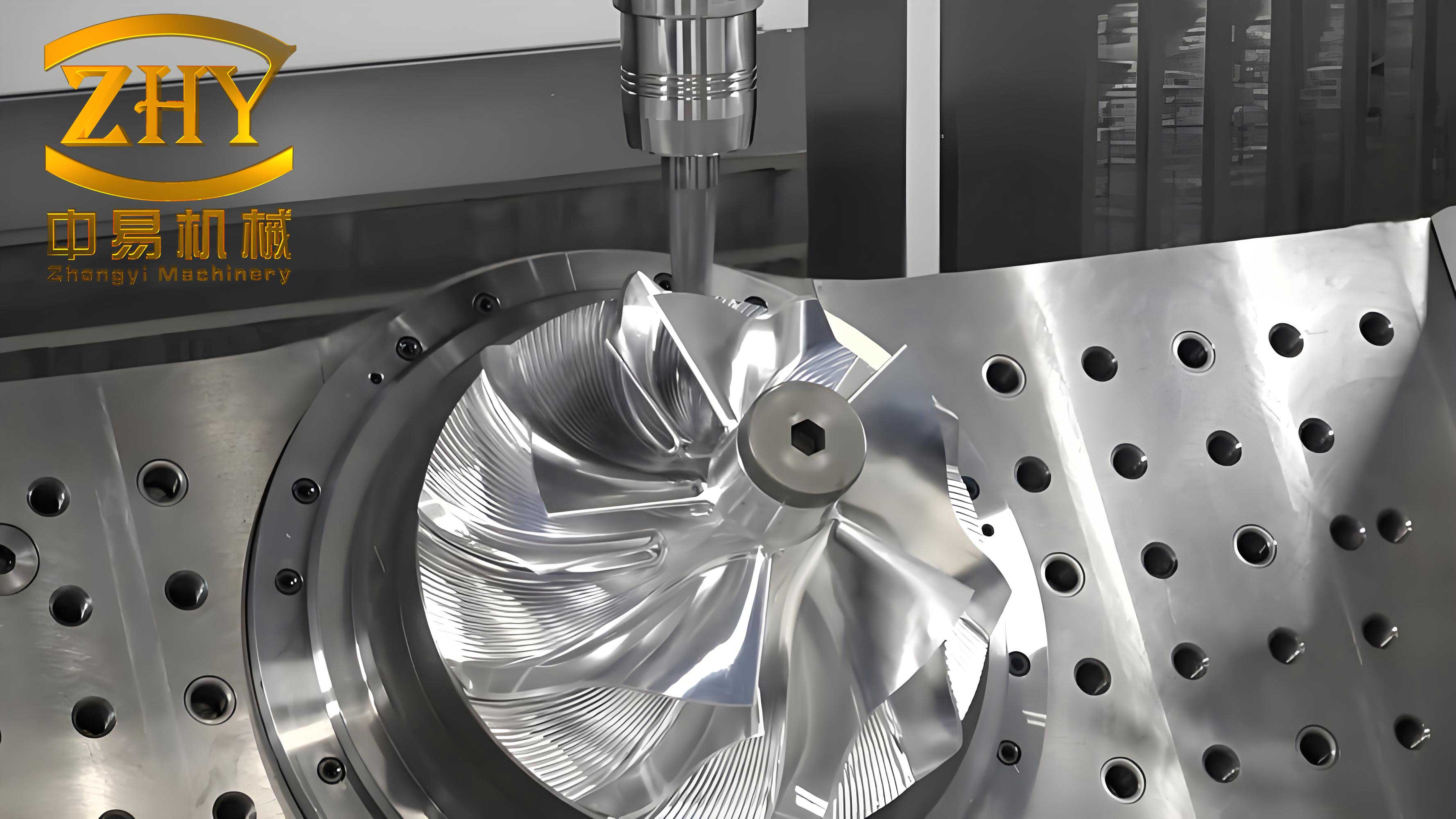
The performance of any machine tool casting is fundamentally governed by three interrelated factors: wear resistance, rigidity (static stiffness), and damping capacity (dynamic stiffness). These elements collectively determine how well a casting maintains its geometric accuracy under mechanical loads, thermal variations, and vibrational excitations over time. In traditional machine tool casting with gray iron, compromises are inevitable; high-carbon equivalents promote damping but reduce strength, while alloying for strength can diminish damping. Vermicular iron shatters this trade-off. Its microstructure, achieved through controlled inoculation with elements like rare earths, provides a synergistic enhancement across all three domains. For instance, in a typical machine tool casting like a lathe bed, VGI exhibits wear rates significantly lower than premium gray irons, elastic moduli approaching those of steel, and damping values that effectively absorb machining vibrations. This triad optimization is why VGI is increasingly regarded as the premier material for high-end machine tool casting, especially in CNC systems where precision retention is non-negotiable.
Wear resistance in a machine tool casting is critical for components like guideways and sliding surfaces, which experience continuous friction. Conventional wisdom holds that pearlitic matrices with hard phases offer the best wear performance. However, VGI challenges this notion through matrix strengthening mechanisms. When rare earth elements are added to achieve vermicular graphite formation, they also dissolve in the ferrite matrix, causing lattice distortion. This distortion creates a stress field that impedes dislocation motion, effectively strengthening the ferrite. Consequently, even VGI with substantial ferrite content can exhibit excellent wear resistance, as the hardened ferrite compensates for the absence of pearlite. The relationship can be conceptualized by a simplified model for wear volume, \( W_v \), which inversely correlates with matrix hardness \( H \) and graphite morphology factor \( G_f \):
$$ W_v = k \cdot \frac{1}{H \cdot G_f} $$
Here, \( k \) is a material constant, \( H \) is influenced by solid-solution strengthening from rare earths, and \( G_f \) is higher for vermicular graphite than for flake graphite, reducing wear. Our experimental data, derived from standardized tests like the Amsler rolling wear and reciprocating lubrication wear, consistently show VGI outperforming gray irons. For example, in lubricated rolling wear tests, VGI demonstrated a relative wear ratio of 1.0, while HT300 gray iron showed 2.55, meaning VGI lasted over 2.5 times longer. This is pivotal for machine tool casting longevity, as reduced guideway wear directly correlates with maintained alignment and accuracy.
| Cast Iron Type | Average Wear Loss (mg after 400,000 cycles) | Relative Wear Ratio |
|---|---|---|
| HT200 Gray Iron | 6.05 | 3.27 |
| HT300 Gray Iron | 4.725 | 2.55 |
| Antimony (Sb) Alloyed Iron | 2.15 | 1.16 |
| High-Phosphorus Iron | 1.975 | 1.06 |
| Vermicular Graphite Iron (VGI) | 1.7–2.0 | 1.0 |
Moreover, the presence of hard particles such as titanium carbonitrides (TiCN) within the VGI matrix further augments abrasion resistance. These dispersoids, often a byproduct of rare earth additions, act as micro-scale reinforcements. In practical machine tool casting scenarios, such as lathe beds tested under production conditions, VGI guideways exhibited wear depths 1.6 to 2.3 times lower than those of gray iron counterparts after years of service. This translates directly into reduced maintenance intervals and superior precision holding for the entire machine tool system.
Rigidity, or static stiffness, is another cornerstone for machine tool casting performance. It defines the resistance to elastic deformation under load, ensuring that cutting forces do not cause deflections that compromise machining accuracy. The key material property here is the elastic modulus \( E \), which relates stress \( \sigma \) to strain \( \epsilon \) in the linear elastic region via Hooke’s Law:
$$ \sigma = E \cdot \epsilon $$
For a given machine tool casting geometry, a higher \( E \) yields smaller deflections under identical loads. Vermicular iron boasts an elastic modulus ranging from 120 to 160 GPa, significantly exceeding that of gray irons (typically 83–137 GPa). This enhancement stems from the vermicular graphite’s morphology, which provides more continuous metallic matrix and better load transfer compared to flake graphite. To quantify the impact on machine tool casting design, we conducted static stiffness tests on simulated bed castings. The results were striking: VGI castings showed deformation reductions of up to 49% compared to HT300 gray iron castings under the same load. Even when the VGI casting was redesigned with thinner walls (e.g., a 15 mm reduction in guideway thickness, leading to a 7% weight saving), its deformation was still 18% lower than that of the thicker gray iron casting. This demonstrates VGI’s potential for lightweighting without sacrificing rigidity—a critical advantage for modern machine tool casting aiming for energy efficiency and material economy.
| Test Specimen Type | Cast Iron Material | Average Deformation (mm or µε) | Reduction in Deformation vs. HT300 |
|---|---|---|---|
| Structure A | HT300 Gray Iron | 0.113 mm | – |
| Vermicular Iron | 0.063 mm | 44.2% | |
| Vermicular Iron (Thinner Walls) | 0.069 mm | 39% | |
| Structure B | HT300 Gray Iron | 49 µε | – |
| Vermicular Iron | 27 µε | 44.9% |
The damping capacity, or ability to dissipate vibrational energy, is vital for dynamic stability in machine tool casting. Excessive vibration during machining leads to poor surface finish, tool wear, and dimensional errors. Gray iron is renowned for its high damping due to the graphite flakes, which act as internal friction sites under stress. Vermicular iron offers a tailored balance: its damping is lower than that of low-grade gray irons but comparable to or better than high-strength gray irons like HT300. The damping performance \( D \) can be expressed as a function of graphite shape factor \( S_g \) and matrix continuity \( M_c \):
$$ D \propto S_g \cdot (1 – M_c) $$
Where \( S_g \) is higher for flake graphite and lower for vermicular graphite, and \( M_c \) is higher for VGI due to its more connected matrix. Experimental measurements show that VGI’s relative damping capacity is about 0.647 compared to 1.00 for HT200 gray iron and 0.549 for HT300 gray iron. This means VGI provides sufficient vibration absorption for precision machining while maintaining high rigidity. For machine tool casting subjected to intermittent cuts or high-speed operations, this balanced damping is invaluable. Furthermore, the damping of VGI can be optimized by controlling the vermicularity percentage (the proportion of vermicular graphite to total graphite). A higher vermicularity (e.g., >50%) moves damping closer to gray iron, ensuring that machine tool casting components effectively damp chatter and resonance frequencies.
| Specimen Type | Cast Iron Material | Relative Damping Capacity (Normalized to HT200=1.00) |
|---|---|---|
| Standard Test Sample | HT200 Gray Iron | 1.00 |
| Standard Test Sample | HT300 Gray Iron | 0.549 |
| Standard Test Sample | Vermicular Iron | 0.647 |
| Simulated Bed Casting | HT300 Gray Iron | 0.549 |
| Simulated Bed Casting | Vermicular Iron | 0.674 |
Beyond the precision triad, vermicular iron offers exceptional foundry characteristics that benefit machine tool casting production. Its fluidity is superior to that of gray iron, as evidenced by spiral flow tests where VGI melts achieved lengths of 710 mm at 1280°C, compared to 105 mm for gray iron at 1270°C. This enhanced fluidity reduces the risk of misruns and cold shuts in complex machine tool casting geometries. Additionally, VGI exhibits low section sensitivity, meaning hardness and strength remain consistent across varying wall thicknesses—a common challenge in bulky machine tool casting with both thick and thin sections. For instance, in stepped test bars, VGI showed a hardness variation of only 11 HB between 20 mm and 80 mm sections, whereas gray iron varied by 23 HB. This uniformity ensures predictable performance throughout the casting, crucial for large-scale machine tool casting like machining centers or grinders.
The mechanical properties of VGI starkly outperform those of high-grade gray irons, as summarized below. These properties empower designers to re-envision machine tool casting with thinner walls and optimized shapes, reducing weight and material usage while maintaining or enhancing performance. Historical attempts at lightweighting gray iron machine tool casting often failed due to strength limitations; VGI overcomes this hurdle decisively.
| Property | Vermicular Iron (Pearlite-Ferrite Matrix) | High-Grade Gray Iron (Pearlitic Matrix) |
|---|---|---|
| Tensile Strength (MPa) | 350–450 | 200–400 |
| Yield Strength (MPa) | 250–350 | ≈0 |
| Bending Strength (MPa) | 700–1000 | 400–680 |
| Compressive Strength (MPa) | 600–1200 | 500–1400 |
| Elongation (%) | 1–4 | 0.0–0.5 |
| Deflection (mm) | 4–17 | 2.5–3.5 |
| Hardness (HBS) | 150–220 | 187–269 |
| Impact Toughness (J/cm²) | 11–20 | 9–11 |
| Elastic Modulus (MPa) | 120,000–160,000 | 83,300–137,200 |
| Bending Fatigue Strength (MPa) | >170 | <140 |
In practical applications, these advantages have yielded tangible benefits. For example, in the production of universal testing machine bases—a critical machine tool casting with wall thickness ratios up to 12:1—switching from gray iron to VGI reduced scrap rates from 20% to below 6%, thanks to improved soundness and lower residual stresses. Residual stress \( \sigma_r \) in castings can be approximated by:
$$ \sigma_r = \alpha \cdot E \cdot \Delta T \cdot f(G_m) $$
Where \( \alpha \) is thermal expansion coefficient, \( \Delta T \) is cooling differential, and \( f(G_m) \) is a function of graphite morphology. VGI’s intermediate graphite structure results in \( \sigma_r \) values between gray and ductile iron; for vermicularity >50%, stresses are comparable to or lower than those in HT300 gray iron, minimizing post-casting distortion and enhancing dimensional stability in the final machine tool casting.
Despite its proven benefits, the widespread adoption of VGI in machine tool casting faces hurdles. Historically, its use was sometimes driven by material shortages rather than design optimization, leading to reversion to gray iron when supplies eased. Today, the primary barrier is awareness among machine tool designers, who often specify traditional gray iron based on legacy standards. For VGI to flourish, designers must recognize its holistic advantages and update material specifications accordingly. This requires collaborative education and dissemination of performance data, highlighting how VGI can achieve superior precision retention in machine tool casting while enabling cost savings through lightweight design and longer service life.
An interesting but challenging avenue explored was duplex casting, combining VGI for wear surfaces with gray iron for damping. The goal was to create a machine tool casting with a VGI guideway layer fused to a gray iron body, optimizing both wear and damping. However, trials revealed that controlling the interface was problematic: short intervals between pours caused complete mixing, diluting the VGI into gray iron; long intervals led to cold shuts. In one test, only a thin VGI layer equal to machining allowance formed, insufficient for durability. This underscores the sensitivity of microstructural control in machine tool casting and suggests that monolithic VGI may be more reliable than duplex approaches for most applications.
Looking ahead, the future of machine tool casting lies in materials like vermicular iron that offer tailored properties. Advances in process control—such as automated inoculation and thermal analysis—are making VGI production more consistent and cost-effective. For high-precision sectors like aerospace and automotive manufacturing, where machine tool accuracy directly impacts product quality, VGI provides a compelling upgrade path. Moreover, sustainability trends favor materials that reduce weight and extend lifespan, both strengths of VGI in machine tool casting.
In conclusion, vermicular graphite iron represents a transformative material for machine tool casting. Its unique ability to synergize wear resistance, rigidity, and damping addresses the core requirements for precision retention. Coupled with excellent castability and mechanical properties, VGI enables lighter, stronger, and more durable castings. The key to its broader implementation is enlightening the design community about its capabilities, fostering a shift from conventional gray iron. As manufacturing evolves toward higher precision and efficiency, VGI stands poised to become the cornerstone of next-generation machine tool casting, ensuring that machines not only meet but exceed the demands of modern industry. Through continued research and collaboration, we can unlock the full potential of this remarkable material, redefining excellence in machine tool casting for decades to come.