
In the field of heavy machinery manufacturing, the production of medium-to-large machine tool castings presents significant challenges. Full Mold (FM) or Lost Foam casting has emerged as a particularly effective method for such applications. We find this process advantageous primarily due to its suitability for low-volume production with quick changeovers, its capability to achieve dimensional accuracies of CT7 to CT8, its short production cycle, and its overall cost-effectiveness for large-scale components. The following discussion details our comprehensive approach to the process design, parameter selection, and technical controls essential for successfully casting large machine tool components like beds, columns, and housings.
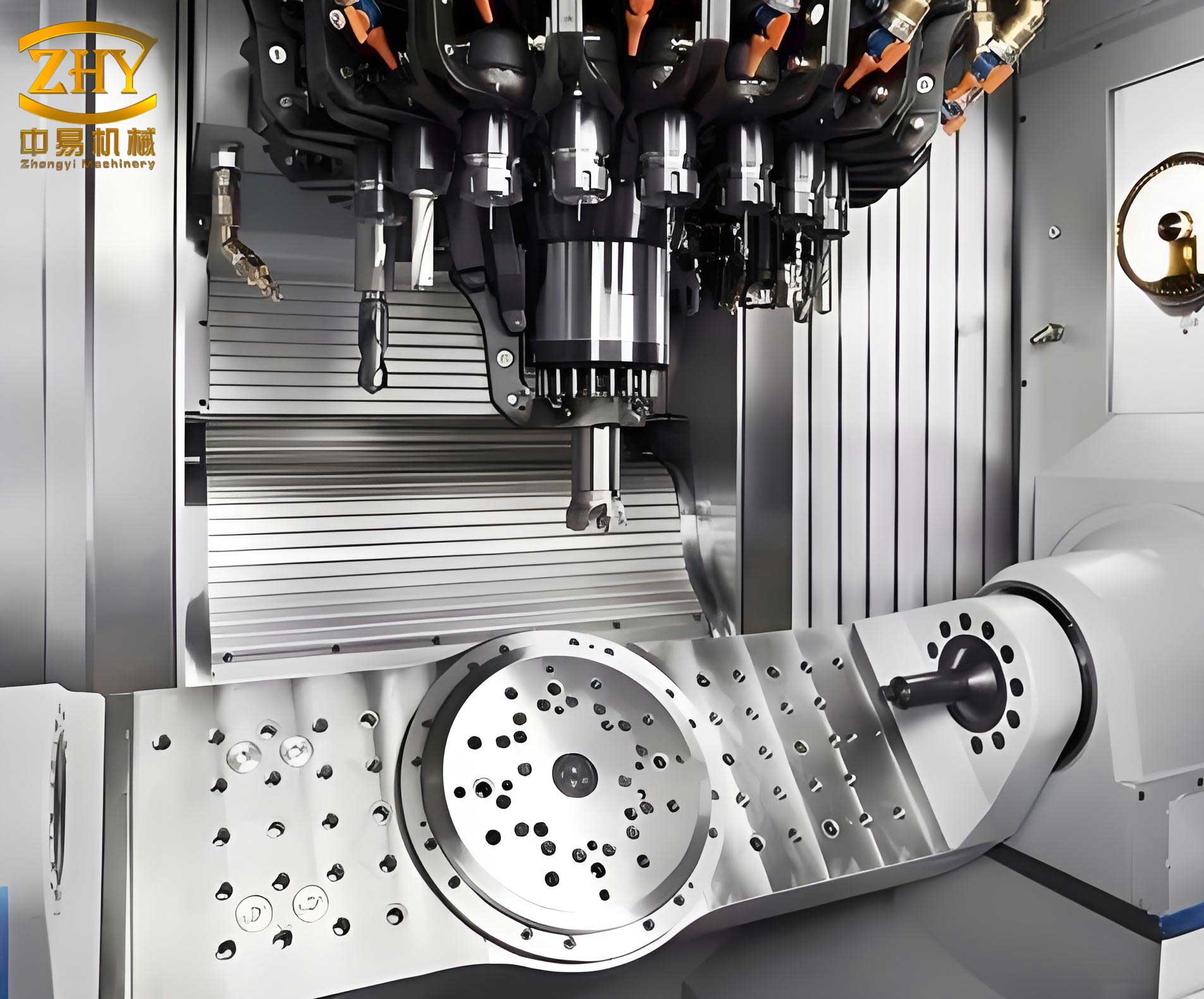
The foundation of any successful casting begins with meticulous planning. For full mold casting of machine tool castings, the formulation of the process plan and the selection of parameters, while following principles similar to conventional sand casting, require specific adaptations to handle the decomposition of the foam pattern. The primary goals remain ensuring casting integrity, optimizing cost, and facilitating straightforward foundry floor operations.
Foundational Process Planning and Parameter Selection
The initial design phase sets the stage for quality. A critical first decision is the selection of the parting plane. For machine tool castings featuring guideways, the optimal practice is to orient the casting with the guideways facing downward. This positioning promotes better metallurgical quality in these critical wear surfaces and simplifies molding. When evaluating molding methods for large machine tool castings, pit molding is often preferred over flask molding for its economic benefits and shorter lead times, especially for single or low-volume pieces. The key molding parameters differ between these methods, primarily in the required sand thickness (ram-up thickness) around the pattern.
| Molding Method | Bottom Thickness (mm) | Side Wall Thickness (mm) | Top Thickness (mm) | Sand-to-Metal Ratio |
|---|---|---|---|---|
| Pit Molding | 250 – 300 | 300 – 350 | 200 – 250 | 3 : 1 |
| Flask Molding | 200 – 250 | 150 – 200 | 150 – 200 | 2.5 : 1 |
Pit molding, however, introduces specific considerations. The massive gas generation from foam pyrolysis (producing H₂, CO, CO₂) necessitates excellent venting pathways throughout the sand mass to prevent defects. This gas generation also significantly increases the buoyancy force (lifting force) during pouring, requiring robust weighting or clamping systems. It is also worth noting that pit molding is generally unsuitable for “flat and broad” machine tool castings like certain gearbox housings.
Pattern allowances must be carefully considered. For foam patterns of grey iron castings, a linear shrinkage allowance of 1.0% is typically applied. Machining allowances are generally set slightly larger than those used for wooden pattern processes to accommodate potential slight distortions or surface irregularities inherent to the process.
Molding, Gating, and Coating System Design
The choice of molding sand is paramount. We consistently favor resin-bonded sand over alternatives like sodium silicate or cement sands for producing high-quality machine tool castings. The benefits in terms of final casting finish, dimensional stability, and ease of shakeout are significant. The sand system is carefully controlled: new sand is typically 20/40 mesh washed sand, with used sand being effectively regenerated. Target properties include a final compressive strength of 0.5 – 0.8 MPa and a permeability in the range of 300 – 500. Uniform ramming and precise control of catalyst addition to manage the sand’s work time are critical to achieving consistent mold hardness.
Control of the ram-up thickness (the sand cushion between pattern and mold wall) is a crucial economic and quality factor. Insufficient thickness risks mold wall failure (“breakout” or “run-out”) during pouring, while excessive thickness unnecessarily increases material and handling costs.
The design of the gating and feeding system for full mold casting of machine tool castings requires a specialized approach. The system must effectively facilitate slag trapping, venting of pattern gases, and feeding of solidification shrinkage. For large castings, multiple sprue bases (two or more) are standard, positioned considering crane access for pouring. The gating is typically designed as a bottom-gated system. For castings with a height exceeding 350 mm, a stepped or multi-level ingate arrangement may be necessary. Ingates are typically spaced 80-100 mm apart. A common ratio for the gating cross-sectional areas is:
$$F_{sprue} : F_{runner} : F_{ingate} = 1 : 1.5 : 2$$
Ceramic pour tubes are recommended for the sprue to resist erosion. Given the complexity of theoretical calculations for foam patterns, the initial design for machine tool castings often relies on empirical experience—determining sprue number and location based on part geometry, then calculating runner and ingate areas proportionally. Due to the relatively low carbon equivalent required for the strength of machine tool castings (e.g., HT250) and potential mold hardness inconsistencies in large molds, the use of blind feeders (side risers) is often necessary. Their size and number are determined by the local casting modulus and geometry.
| Casting Mass (t) | Typical Blind Feeder Dimensions (mm) | ||||
|---|---|---|---|---|---|
| A | B | C | D | E | |
| > 20 | 100 | 150 | 120 | 50 | 15 |
| 5 – 10 | 80 | 110 | 90 | 35 | 15 |
Additionally, open risers (≈30 mm diameter, spaced 1-1.5 m apart) are placed on the top of the cope. These are connected to the foam pattern via a foam cone topped with a ceramic filter (≈50x50x10 mm) to prevent metal splash.
The application of refractory coating is a critical step. A common practice is to apply a first coat of water-based coating, followed by a second coat of alcohol-based coating, with each layer dried at 50-60°C for 8-12 hours. The total coating thickness should be 1.5 – 2.5 mm. For critical sections or to improve surface finish, a zircon-based coating may be used as a face coat.
Pouring Practice and Process Control
Pouring parameters directly and decisively influence the final quality of machine tool castings in the full mold process. Pouring temperature is perhaps the most critical variable. An excessively low temperature leads to mistruns, cold shuts, severe folds (wrinkles), and carbonaceous slag deposits on the upper surfaces. Conversely, an excessively high temperature promotes veining and penetration burns (metal penetration), shrinkage porosity in heavy sections, and can even cause surface shrinkage (cavitation). Recommended pouring temperatures for large HT250 machine tool castings are summarized below:
| Casting Mass (t) | Average Wall Thickness (mm) | Pouring Temperature (°C) |
|---|---|---|
| 0.5 – 2 | 20 – 30 | 1390 – 1410 |
| 5 – 10 | 30 – 40 | 1370 – 1390 |
| 10 – 20 | 40 – 60 | 1360 – 1380 |
| 15 – 30 | 45 – 70 | 1350 – 1370 | > 30 | 50 – 70 | 1340 – 1360 |
Pouring rate, or fill time, is equally important. A controlled fill rate ensures smooth displacement of foam degradation products without turbulent entrapment. The empirical fill rate can be estimated by the total pouring time. For large machine tool castings, a suitable range is often 2.5 to 3.5 tons per minute. The number of sprues is adjusted to achieve this within the constraints of the metal handling system.
$$ \text{Pouring Time (min)} \approx \frac{\text{Casting Mass (t)}}{\text{Fill Rate (t/min)}} $$
Several operational precautions are vital during pouring. When multiple sprues are used, they must be started simultaneously to prevent back-pressure fluctuations and metal “back-spray”. If using a ladle with a stopper, maintaining a consistent and adequate metal head pressure above the sprue is essential to sustain the designed fill rate. The operator must constantly monitor the metal level in the pouring basin and adjust ladle height accordingly to maintain a steady, non-turbulent flow.
Analysis and Mitigation of Common Defects in Machine Tool Castings
Despite careful planning, specific defects can occur in the full mold casting of large machine tool castings. A systematic understanding of their causes and remedies is essential.
Shrinkage Porosity and Cavities in Upper Heavy Sections: This is a frequent challenge when heavy sections are inevitably located in the upper part of the mold due to parting line constraints. Relying solely on oversized feeders is often ineffective and wasteful. A more integrated approach is required:
- Directional Feeding: Position ingates to feed directly into or near the heavy section, ensuring a supply of hot metal.
- Chill Application: Strategically place external chills on the sides or beneath the heavy section to accelerate local solidification and establish a favorable temperature gradient. Internal chills can be used where permissible.
- Metallurgical Adjustment: Slightly increasing the carbon equivalent (within specified mechanical property limits) can improve the feeding characteristics of the iron.
Dimensional Distortion and Warping: Long, slender machine tool castings like beds and crossrails are prone to distortion due to uneven cooling and residual stresses. Countermeasures include:
- Pattern Camber: Incorporate a reverse camber (upward arch) into the pattern or the mold cavity for the guideway surface. For beds over 6m, a camber of 0.05% to 0.15% of the length is typical.
- Mold Restraint: For pit-molded guideways, the pattern can be weighted down onto a pre-formed cambered mold base.
- Process Control: Ensure adequate mold weighting/clamping. Extend the time between pouring and shakeout to allow for stress relief within the mold. For critical components, increasing machining allowances (with customer agreement) can provide a safety margin against distortion.
The required camber (C) can be approximated as:
$$ C = L \cdot k $$
where \( L \) is the casting length and \( k \) is the camber factor (e.g., 0.001 for 0.1%).
Core Float or Lift: For machine tool castings with enclosed internal cavities (e.g., certain housings), the buoyant force of the molten metal can lift the sand core, causing a fatal wall thickness error. Prevention focuses on core stability:
- Core Reinforcement: Design the core with adequate intrinsic strength and stiffness. Use strong core prints and strategic mold supports to resist buoyancy.
- Mechanical Anchoring: For non-machined upper surfaces, use metal “chaplets” or braces wired to the cope to physically restrain the core from floating.
The buoyancy force \( F_b \) can be estimated to design adequate restraint:
$$ F_b = V_{displaced} \cdot (\rho_{metal} – \rho_{core}) \cdot g $$
where \( V_{displaced} \) is the volume of metal displaced by the core, \( \rho \) are densities, and \( g \) is gravity.
| Defect | Primary Causes | Corrective & Preventive Measures |
|---|---|---|
| Shrinkage Porosity | Unfavorable thermal gradient; Inadequate feeding. | Strategic ingate placement; Use of chills; Optimized feeder design; Slight CE increase. |
| Dimensional Warping | Uneven cooling; Residual stresses. | Application of pattern/mold camber; Adequate weighting; Extended shakeout time; Increased machining allowance. |
| Core Float | Buoyancy force exceeding core restraint. | Reinforced core design with strong prints; Use of mechanical anchors/chaplets. |
| Surface Folds/Wrinkles | Low pouring temp; Slow fill rate; Poor coating permeability. | Increase pouring temperature; Optimize fill rate; Ensure coating dryness and adequate permeability. |
| Carbon Inclusions | Incomplete pyrolysis of foam; Poor gas evacuation. | Ensure adequate pouring temperature & rate; Optimize coating & sand permeability; Improve gating for slag collection. |
In conclusion, the successful full mold production of medium-to-large machine tool castings is an integrated engineering discipline. It requires a holistic approach that synergizes robust process design—from parting line selection and sand system control to sophisticated gating and feeding—with meticulously controlled pouring parameters and a deep understanding of defect formation mechanisms. The process is particularly powerful for low-volume, high-complexity components where its advantages in flexibility, accuracy, and lead time are most pronounced. Continuous refinement of these practices, guided by sound metallurgical principles and empirical observation, is key to achieving consistent quality and reliability in these critical foundation components for the machine tool industry.