
In my years of experience in the foundry industry, specializing in the production of high-precision components, I have come to understand the critical role that machine tool castings play in the modern manufacturing landscape. As the backbone of CNC machine tools, these castings must exhibit exceptional properties to ensure the accuracy, stability, and longevity of the equipment. The shift towards high-speed, high-precision machining has placed unprecedented demands on the quality of machine tool castings, driving advancements in metallurgical control and processing techniques. This article delves into the key technical aspects that govern the performance of these essential components, drawing from both international standards and practical insights gained on the foundry floor.
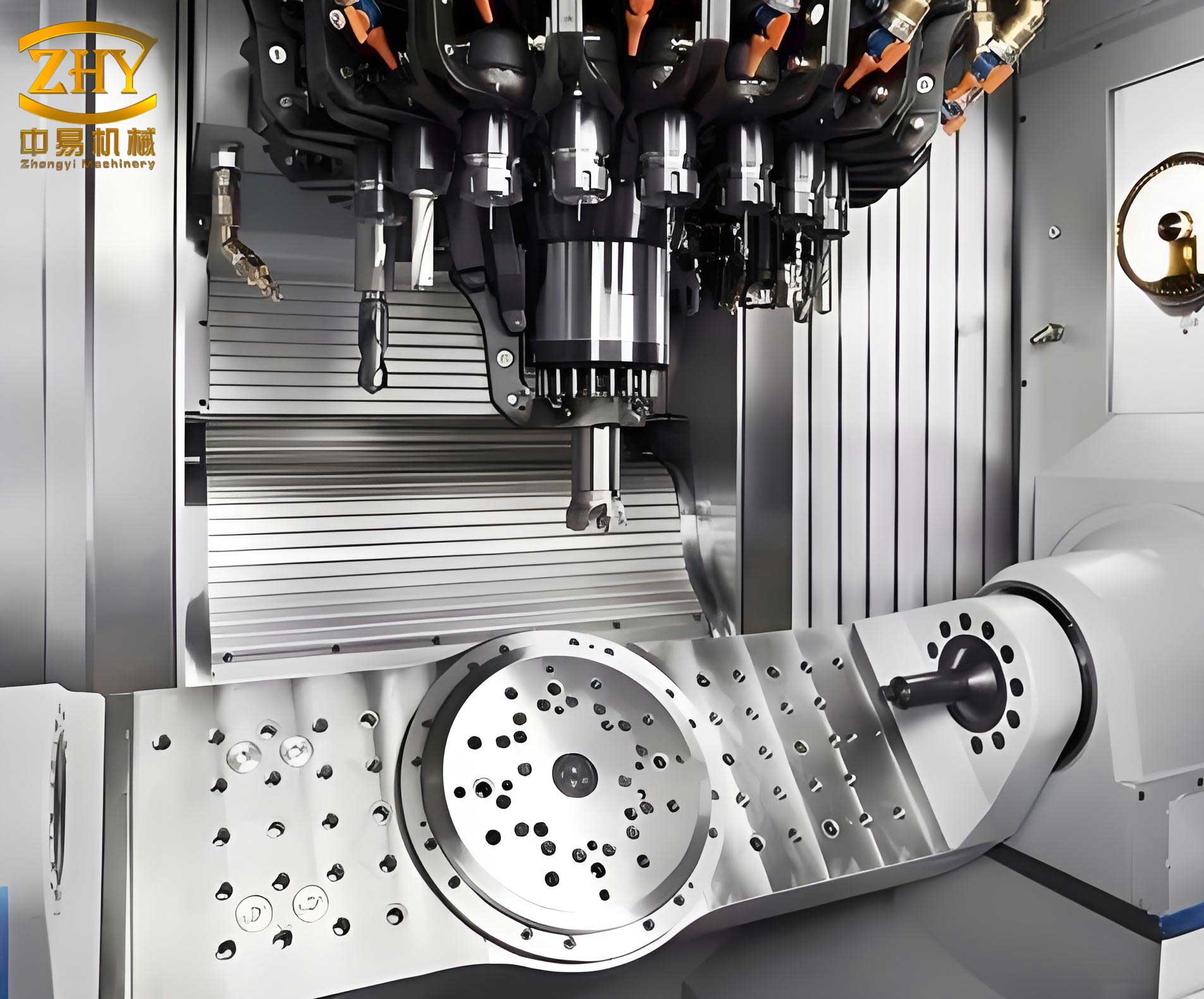
The performance requirements for machine tool castings are multifaceted and rigorous. Primarily, they must possess high compressive and tensile strength to withstand the forces encountered during heavy-duty machining operations. Precision stability is paramount; the casting must maintain its dimensional integrity over time and under varying thermal and mechanical loads. A high elastic modulus is crucial for rigidity, minimizing deflection during cutting to preserve accuracy. Good wear resistance ensures the longevity of sliding surfaces like guideways, while superior damping capacity absorbs vibrations, leading to better surface finish and tool life. Additionally, excellent machinability is required for efficient post-casting processing, and favorable casting properties are essential to produce complex geometries with minimal defects. Finally, high dimensional accuracy and low surface roughness are necessary to reduce machining allowances and ensure fitment. Achieving this combination of properties in machine tool castings requires precise control over every stage of production, from melting and alloying to molding and heat treatment.
One of the most fundamental control points is the chemical composition of the iron. The stability of hardness and machinability in machine tool castings is directly linked to the consistency of the melt. In our operations, we have found that maintaining tight compositional tolerances is non-negotiable. For high-grade gray iron used in CNC machine beds and columns, the carbon (C) and silicon (Si) content must be controlled within very narrow bands. International best practices suggest that the fluctuation for C should not exceed ±0.05% and for Si, ±0.10%, whereas traditional specifications were often much wider. This precision ensures consistent undercooling behavior and graphite formation during solidification, which in turn dictates the final mechanical properties. The Carbon Equivalent (CE) is a vital derived parameter that summarizes the combined effect of graphitizing elements. A common formula used is:
$$ CE = C + \frac{1}{3}(Si + P) $$
However, for simpler comparative assessments in hypereutectic gray irons, the formula $$ CE = C + \frac{Si}{3} $$ is often employed. Controlling CE allows foundries to achieve high strength without excessively compromising castability, which is essential for the thin-walled, lightweight designs of modern machine tool castings.
The following tables illustrate the stringent compositional control adopted by leading international foundries compared to more conventional ranges. Table 1 shows the target chemistry for high-grade castings from a Japanese foundry.
| Grade Designation | C | Si | Mn | P | S | Note |
|---|---|---|---|---|---|---|
| FC35 | 3.15 | 1.85 | 0.85 | 0.35 | 0.100 | – |
| FC30 | 3.20 | 1.90 | 0.80 | 0.35 | 0.100 | – |
| FC25 | 3.30 | 1.95 | 0.50 | 0.35 | 0.100 | For wear-resistant parts with guides, additions of Cu (~0.6%) and Cr (~0.3%) are common. |
Table 2 highlights the dramatic difference in the permitted fluctuation ranges for key elements, underscoring the precision required for advanced machine tool castings.
| Grade | Origin | C Range | ΔC | Si Range | ΔSi |
|---|---|---|---|---|---|
| ~FC30/HT300 | Japan | 3.15 – 3.25 | 0.10 | 1.80 – 2.00 | 0.20 |
| HT300 | Conventional | 2.90 – 3.30 | 0.40 | 1.40 – 2.10 | 0.70 |
| ~FC35/HT350 | Japan | 3.10 – 3.20 | 0.10 | 1.75 – 1.95 | 0.20 |
| HT350 | Conventional | 2.80 – 3.10 | 0.30 | 1.30 – 1.90 | 0.60 |
Table 3 provides an even more detailed view from an American manufacturer, showing the target, control limits, and absolute limits for a 275 MPa grade. This level of statistical process control is essential for producing reliable machine tool castings.
| Parameter | CE | C | Si | Mn | P | S | Cr | Cu | Mo | Ni |
|---|---|---|---|---|---|---|---|---|---|---|
| Absolute Max | 4.13 | 3.42 | 2.22 | 0.70 | 0.070 | 0.10 | 0.40 | 0.95 | 0.50 | 1.20 |
| Control Max | 4.07 | 3.37 | 2.19 | 0.65 | 0.052 | 0.08 | 0.37 | 0.92 | 0.43 | 1.13 |
| Target | 4.01 | 3.32 | 2.12 | 0.60 | 0.042 | 0.06 | 0.30 | 0.85 | 0.36 | 1.06 |
| Control Min | 3.95 | 3.27 | 2.07 | 0.55 | 0.032 | 0.05 | 0.23 | 0.78 | 0.33 | 1.03 |
| Absolute Min | 3.89 | 3.22 | 2.02 | 0.40 | 0.010 | 0.03 | 0.20 | 0.75 | 0.30 | 1.00 |
The relationship between carbon equivalent and strength is a delicate balance. Higher CE generally improves castability but can reduce strength. Advanced foundries overcome this by using high-temperature melting, significant scrap steel charges for dilution, and powerful inoculation techniques. This allows them to produce machine tool castings with high strength at a relatively high CE, which is vital for the casting of thin sections. The ratio of Si to C (Si/C) is another lever; increasing it from around 0.5 to 0.7-0.8 can enhance both tensile strength and elastic modulus for a given CE.
While tensile strength is a key specification, the elastic modulus (E) is often the more critical property for machine tool castings. Rigidity, or resistance to elastic deformation under load, is what ultimately determines a machine tool’s ability to maintain precision during aggressive cutting. A higher elastic modulus means less deflection for the same force. There is a strong correlation between tensile strength (σ_b) and the nominal elastic modulus (E_0), but the relationship is not perfectly linear and can be influenced by microstructure. Table 4 shows this typical correlation.
| Tensile Strength, σ_b (MPa) | Nominal Elastic Modulus, E_0 (GPa) |
|---|---|
| 155 | 103.5 |
| 185 | 111.7 |
| 215 | 120.0 |
| 265 | 129.7 |
| 310 | 137.9 |
| 355 | 141.4 |
| 400 | 144.8 |
However, the elastic modulus under service conditions is more relevant. As stress increases within the elastic range, the modulus can decrease slightly. Designers often use the secant modulus at a stress level of σ_b/4. This is why high-strength grades are preferred for critical machine tool castings—they retain a higher effective modulus under working stresses. International standards for premium castings specify higher minimum elastic moduli than conventional grades, as shown in Table 5.
| Gray Iron Grade | Elastic Modulus, E (MPa) | Recommended E (MPa) | Source (for comparison) |
|---|---|---|---|
| HT250 (Premium) | 110,000 – 120,000 | 115,000 | Domestic Specification |
| ~250 MPa Grade | – | 120,000 | International (e.g., Mechanite GD/GE) |
| HT300 (Premium) | 125,000 – 135,000 | 130,000 | Domestic Specification |
| ~300 MPa Grade | – | 135,000 | International (e.g., Mechanite GC/GB) |
| HT350 (Premium) | 135,000 – 145,000 | 140,000 | Domestic Specification |
| ~350 MPa Grade | – | 145,000 | International (e.g., Mechanite GA) |
The superior mechanical properties of advanced machine tool castings are rooted in their refined microstructure. Merely achieving a Type A graphite morphology is not enough; the size, distribution, and branching of the graphite flakes are crucial. International premium castings exhibit uniformly distributed, finely sized graphite (often corresponding to ASTM size 4 or finer). The matrix is virtually 100% pearlite, but the key differentiator is the interlamellar spacing of this pearlite. In high-performance castings, this spacing is so fine that it approaches the structure of sorbitte or troostite, significantly increasing strength and stiffness. A quantitative relationship can be approximated: for the same CE, reducing graphite size from coarse to fine can increase tensile strength by over 90 MPa. Similarly, refining pearlite spacing can contribute an additional 30 to 100 MPa. The volume fraction of graphite is the dominant factor affecting elastic modulus, as graphite has a very low modulus. Therefore, minimizing and refining graphite is a primary goal in metallurgical design for machine tool castings. Typical specifications require over 95% pearlite, carbide content below 3%, and graphite length between 125-250 μm (ASTM 4-5).
Dimensional accuracy and stability are non-negotiable for machine tool castings destined for automated production lines. The widespread adoption of resin sand molding has greatly improved capabilities. Dimensional tolerance is classified by CT (Casting Tolerance) grades. While many foundries routinely achieve CT9 to CT10, the benchmark for components in flexible manufacturing systems is CT8 or better. This means that for a casting dimension up to 600 mm, the tolerance is on the order of ±1.1 to ±1.8 mm depending on the nominal size. More critically, the flatness over any 600 mm span should be less than 1 mm for premium castings, compared to a more common requirement of < 2 mm. Achieving this requires excellent pattern equipment, controlled molding and coremaking processes, and predictable solidification shrinkage. The consistency of these dimensional characteristics across batches is as important as the absolute values for the assembly of precision machine tools.
Residual stresses locked in during the cooling of a casting can lead to dimensional distortion over time or during machining, jeopardizing the precision of the final machine tool. Therefore, stress relief is an essential step. The magnitude of residual stress tends to increase with the tensile strength of the iron, making it even more critical for high-grade machine tool castings. The three main methods are thermal stress relief (stabilization), vibration stress relief, and the use of low-stress irons through process control. Thermal aging remains the most common and reliable method for critical castings. The aging temperature must be carefully selected based on the grade; higher strength irons require higher temperatures to effectively reduce stresses without risking microstructural degradation (e.g., graphitization or excessive scaling). Table 6 outlines typical thermal aging temperatures for different strength levels, as practiced in advanced foundries.
| Approximate Tensile Grade (MPa) | Example Grade Designation | Thermal Aging Temperature Range (°C) |
|---|---|---|
| 210 – 250 | GD, GE | 510 – 560 |
| 280 – 320 | GC, GB | 560 – 590 |
| 350 | GA | 590 – 620 |
| > 385 | GM | 590 – 620 |
The cycle typically involves slow heating (around 100°C/hour) to the target temperature, a soak of 1-2 hours per 25 mm of critical section thickness, and controlled cooling in the furnace. For very large or complex machine tool castings, like beds and columns, the process can take several days. Vibration aging is sometimes used as a complementary process or for simpler geometries, but its effectiveness is highly dependent on the specific casting shape and the correct application of resonant frequencies.
In conclusion, the production of high-performance machine tool castings is a sophisticated interplay of metallurgy, process engineering, and quality control. The journey from molten iron to a dimensionally stable, rigid, and durable casting component requires unwavering attention to detail at every stage. The global trend is clear: towards higher strength grades (HT350/HT300 and beyond) achieved not by simply lowering carbon equivalent, but through precise chemical control, advanced melting and inoculation, and meticulous thermal management. The payoff is castings with superior elastic modulus and damping capacity, enabling the next generation of high-speed, high-precision CNC machine tools. As a practitioner in this field, I believe the future lies in further integration of real-time process monitoring, data analytics, and perhaps the development of new alloy systems or composite structures for machine tool castings. The goal is always to provide the stable, rigid foundation upon which manufacturing innovation is built. Continuous investment in research, technology, and skilled personnel is the only path to closing any remaining gaps and solidifying a position at the forefront of this critical sector of the foundry industry. The demands on machine tool castings will only increase, and our technical control strategies must evolve accordingly.