
In my extensive experience within the machine tool industry, I have observed a significant and growing recognition that the aesthetic quality of a product is an integral component of its overall quality. The visual impression formed by a user is immediate and profound. A平整, harmonious, and aesthetically pleasing appearance not only constitutes a major criterion in the user’s quality assessment but also psychologically influences their perception and trust in the product. Therefore, the external finish directly impacts a product’s marketability and its competitiveness in the international arena.
Within various types of machine tools, machine tool castings constitute a substantial proportion of the components. Consequently, the alignment and flushness of matched parting surfaces between adjacent castings play a pivotal role in determining the overall appearance. Improving this matched appearance quality is an urgent and persistent challenge. This task is complex, involving numerous departments and intricate details. Even in large, vertically integrated factories, it has remained problematic for extended periods. For specialized foundries with weaker inter-plant coordination, the challenge is even more daunting.
Traditionally, design and process engineers have not specified clear requirements for the matched appearance of cast part contours. Consequently, this aspect has often been neglected during production, leading to poor alignment at assembly interfaces and necessitating extensive manual rectification work during fitting. To genuinely address this, a holistic approach is required. One must investigate, analyze, and implement effective countermeasures across the entire lifecycle: from the design drawings and casting/ machining process planning to the tooling and all stages of production.
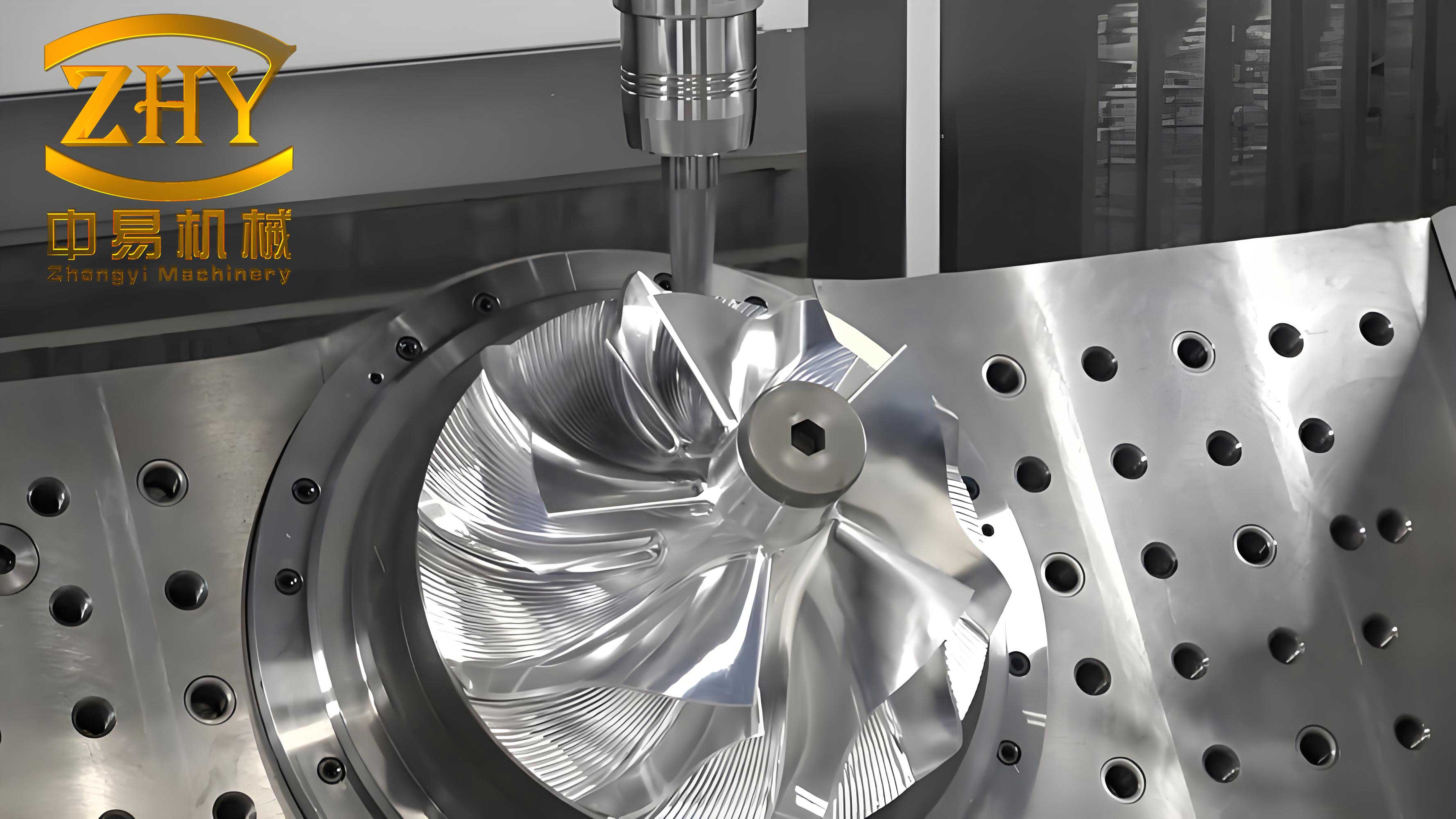
In this article, I will explore the influence of key stages in the production process on the matched appearance of machine tool castings. I will provide a detailed analysis of design drawings, process documentation, and tooling, while also briefly outlining other contributing factors.
1. The Critical Role of Design
All subsequent production stages essentially serve to realize the design intent. Therefore, enhancing design quality is the fundamental prerequisite for improving the matched appearance of machine tool castings. I have identified several common design-related shortcomings.
1.1 Omission of Mating Part Identification
A widespread issue is the failure to clearly identify mating part numbers on drawings. This omission prevents the “mating” information from being communicated downstream. Two mating castings often differ in material, structure, size, and production method—they may be produced by different specialized foundries or different workshops within a larger plant. Without clear identification, process planning and production cannot take coordinated measures to control dimensions for optimal fit.
1.2 Lack of Specification for Mating Surface Requirements
Similarly, drawings frequently lack explicit requirements for the flushness of mating surfaces. While general quality grading standards exist, from an economic standpoint, different requirements should be applied based on the casting’s location on the machine. Surfaces on the front or top faces require stricter control than those on the sides or non-visible interior faces.
1.3 Inconsistent and Suboptimal Dimensioning of Mating Features
Consider the example of a cylindrical grinder’s front and rear bed castings. The mating surfaces include several ribs and coolant troughs. Inconsistent dimensioning schemes between the two parts—using different datums and placing tolerance accumulation (“closed loops”) on different features—can lead to significant permissible misalignment. By analyzing different dimensioning strategies, we can derive better practices.
Let us define three dimensioning schemes for a simplified mating interface with two features (e.g., a central rib and a trough). The total permissible mismatch $\Delta_{total}$ is a function of the individual tolerances $\delta_i$ of the chain of dimensions. The fundamental equation for worst-case tolerance stack-up in a linear chain is:
$$ \Delta_{total} = \sum_{i=1}^{n} |\delta_i| $$
Where $n$ is the number of dimensions in the chain affecting the relative position of the mating surfaces. The goal is to minimize $\Delta_{total}$ through intelligent dimensioning.
The following table compares the maximum cumulative allowable mismatch for different dimensioning philosophies applied to the same mating features:
| Dimensioning Scheme | Description | Datum | Closed Loop Location | Max. Allowable Mismatch (Typical) |
|---|---|---|---|---|
| Original (Inconsistent) | Each part dimensioned independently with different datums. | Varies per part/feature | On critical mating features | High (e.g., ±2.5mm) |
| Scheme A (Unified, Symmetric) | Both parts dimensioned from a common centerline; closed loop on largest non-mating feature. | Common Centerline | Largest non-critical feature | Lower (e.g., ±1.2mm) |
| Scheme B (Unified, Datum Edge) | Both parts dimensioned from the same physical edge; closed loop on a non-mating feature. | Common Physical Edge | Non-mating feature | |
| Scheme C (Direct Mating Dims) | Directly dimension mating feature positions relative to each other with tight tolerances. | Primary mating feature | N/A (Each dim controlled) | Lowest (e.g., ±0.5mm) but costly |
From this analysis, I conclude that: 1) Unifying dimensioning schemes between mating parts is essential. 2) When all features in a chain must mate, the closed loop (tolerance accumulation) should be placed on the largest non-mating feature. 3) The number of dimensions in the tolerance chain should be minimized.
1.4 Overly Complex Casting Contours
Some machine tool castings, like certain headstock housings, have unnecessarily complex external contours with multiple non-aligned centerlines. This complexity makes it extremely difficult to achieve a clean, flush match with cover plates, regardless of the parting line location. Simplifying these contours to have consistent centerlines and smoother transitions drastically improves manufacturability and final appearance.
1.5 Structural Designs Detrimental to Appearance
Certain design elements are inherently prone to revealing misalignment. A classic example is a small, round boss on a front-facing surface designed to fit a standard washer. With typical casting and machining tolerances, the boss’s position may vary enough to cause a visibly offset washer. Redesigning such bosses into counterbored (spot-faced) holes often provides a superior and more forgiving appearance. The condition for a visible mismatch on a round boss is:
$$ \text{Misalignment} > \frac{(\text{Boss Diameter} – \text{Washer Diameter})}{2} $$
If the boss diameter is only marginally larger than the washer, even small tolerances cause visible errors.
1.6 Unnecessarily Tight Matching of Non-Visible Features
Not all mating surfaces require flush contours. For internal or non-visible interfaces, designing intentional gaps or stepped profiles can eliminate fitting work. For instance, a mounting bracket that fits over a large bed casting’s internal rib can be designed slightly larger. This ensures it always fits without trimming, whereas trying to match it exactly guarantees grinding work due to casting size variation.
2. Foundry Process & Tooling Influence
The foundry process is the first point where the design is physically realized, and its control is paramount for dimensional accuracy of machine tool castings.
2.1 Lack of Mating Requirements in Process Documentation
Just as in design, foundry process sheets often omit specific notes about mating surfaces. A practical method is to annotate critical mating dimensions on the pattern drawing as “net size” or “match to part [X]”, alerting both patternmakers and foundry personnel to exercise special control.
2.2 Inappropriate Process Methods
- Parting Line Selection: The orientation of the parting plane relative to the mating surface is crucial.
- Perpendicular: Creates draft on the mating face, altering its shape and size. Undesirable.
- Coincident: Maintains shape but increases size due to draft. Can be improved by using internal draft (if possible).
- Parallel but Offset: Best for maintaining both the shape and true size of the mating face.
- Shrinkage Allowance: Mating castings of different materials (e.g., cast iron and aluminum) or complex shapes will have different effective shrinkage rates. Determining the correct pattern allowances requires iterative feedback and pattern correction. Creating and maintaining master match templates for critical parts is highly recommended.
- Gating Location: Placing ingates on or near a visible mating surface can cause surface imperfections and require extra finishing.
2.3 Deficiencies in Foundry Tooling
Many jobbing foundries use simple, worn flasks with unreliable locating systems (pins/bushes). For complex machine tool castings made with split patterns (e.g., large beds), precise and robust alignment tooling between flask sections is non-negotiable for maintaining feature location. The lack of proper core-setting jigs and checking fixtures further compounds dimensional variation.
2.4 Misalignment with Machining Process Requirements
A disconnect between foundry and machining process planning is a common root cause. For example, a machinist might select a rough cored hole as a primary datum for machining a bottom face, to ensure minimum wall thickness for a nearby tapped hole. However, the foundry, unaware of this criticality, does not tightly control the position of that cored hole. The result is a correctly machined wall thickness but a misaligned coolant trough on the mating face. The solution requires coordinated design change (moving the hole) and aligned process planning (changing the machining datum to the trough).
3. Machining Process Contributions
Machining is not merely a passive receiver of castings; it can either exacerbate or mitigate mismatch issues.
3.1 Omission of Mating Requirements in Machining Instructions
Machining process sheets also frequently lack notes regarding specific mating surfaces, missing the final opportunity to communicate fit intent to the machine operator.
3.2 Inappropriate Machining Strategies
Standard machining sequences often prioritize other tolerances over flushness. Consider a column casting where dimension ‘A’ (overall width) has significant casting variation ($\pm \Delta A_{cast}$). A conventional sequence might:
- Machine one side face (F1) to a fixed dimension from a temporary datum.
- Flip part and machine the opposite side face (F2) to the final width dimension $W_{nominal}$.
This sequence fixes the final width but allows the casting’s centerline to shift relative to the machined faces, causing misalignment with the base. A smarter sequence is to:
- Machine F1 referencing a feature that will mate with the base.
- Flip and machine F2 to a dimension that ensures the mating feature’s position is correct, even if the final width $W_{actual}$ varies: $W_{actual} = W_{nominal} \pm \Delta A_{cast}/2$. This uses the non-mating face as a compensatory adjustment.
The condition for effective compensation is that the compensatory dimension (the non-mating face’s stock allowance) must be greater than the casting variation it must absorb.
3.3 Unsuitable Workholding and Locating Methods
Using scribe lines on a drill jig to locate a cover plate based on its irregular cast contour is inferior to using a positive contour-shaped nest. For machining a mating face on a part, using a datum that is itself subject to variation from a previous operation (e.g., machining a slideway based on a rough cast side) will propagate that variation into the mismatch. Whenever possible, the machining datum for a mating face should be derived from the same physical location used to locate its counterpart during assembly.
4. Pattern & Model Making
The pattern is the physical embodiment of the design for the foundry. Its quality is foundational.
- Multiple Patterns for the Same Part: Having two or more patterns for a high-volume casting inevitably introduces slight dimensional variations between them, leading to inconsistent fit.
- Poor Material/Construction: Patterns made from unstable materials or with weak structures will warp over time, distorting the castings.
- Poor Control of Details: Neglecting small fillet radii on mating edges or making transition radii too large effectively changes the intended contour, making post-casting matching impossible without grinding.
5. Foundry & Machining Shop Floor Practices
Even with good design and planning, poor execution undermines results.
5.1 Foundry Floor Issues
| Process Stage | Common Issues Leading to Dimensional Error |
|---|---|
| Molding | Low sand compactness causing mold wall movement (“swell”). Rough rapping during pattern draw-out damaging mold edges. Improper repair of damaged mold sections. |
| Core Making | Loose core box fasteners or excessive ramming force deforming the core box. Incorrect core assembly. Uncorrected core damage. |
| Mold Assembly (Closing) | Incorrect core placement due to lack of/inaccurate use of setting fixtures. Excessive sealing cord on parting line, pushing mold halves apart. Loose clamping allowing “lift” or “flash” during pouring. |
| Cleaning & Finishing | Failure to clean and dress the casting to the proper contour. Overly aggressive grinding or chiseling creating “divots” on mating edges. |
3.2 Machining Floor Issues
Two critical problems are:
- Not Following Process Instructions: Skipping crucial setup steps, like properly leveling a large column casting before machining its mounting face and guideways, will guarantee that the mounting face is not parallel to the guideways. This causes a twisted fit on the base and misalignment with a top cover.
- Improper Use of Tooling: Using worn or damaged fixtures, or incorrect clamping methods, introduces unplanned locational errors directly into the machined mating surface.
6. Synthesis and Guiding Principles
Based on my analysis of the entire process chain for machine tool castings, I can formulate several key conclusions and principles for systematic improvement.
Conclusion 1: The stipulated allowable mismatch value is a comprehensive target for the entire system. It cannot be the responsibility of the assembly department alone. Just like the fit between a shaft and a bearing, it must be clearly defined by design, meticulously planned for in process engineering, and conscientiously executed in production. Only then can assembly achieve the standard with minimal rework.
Conclusion 2: Dimensional variation in castings is the primary source of mismatch. The inherent variability in sand casting, especially for large, jobbing-lot machine tool castings, is significant. Relying solely on tightening casting tolerances is often technically and economically unfeasible.
Conclusion 3: Machining strategy has a decisive and often underutilized role. For a given casting variation, machining can either amplify or compensate for its effects on the final matched appearance. Intelligent sequencing and datum selection are powerful, low-cost levers for improvement.
Principle 1: Design and Process Engineering are the linchpins. This is where the greatest untapped potential lies. Proactive coordination between design and manufacturing engineering (both foundry and machining) is the essential prerequisite. Appointing dedicated engineers to analyze, specify, and track mating interfaces can yield dramatic improvements.
Principle 2: Economic Efficiency Must be Pursued. Applying a single, very tight mismatch standard to every interface on a machine is prohibitively expensive. A rational, graded approach is necessary:
- Tier 1 (High Visibility): Front and top-facing exterior surfaces demand the highest control, potentially involving tighter drawing tolerances or pre-assembly fitting.
- Tier 2 (Medium/Low Visibility): Side or rear faces can have relaxed requirements.
- Tier 3 (Non-Visible): Internal interfaces should be designed for clearance, not flushness, to eliminate unnecessary cost.
The methods to achieve flushness must also be chosen economically:
- Design with Tolerances: Specify coordinated size and positional tolerances on mating part drawings. Effective but can be costly if over-applied.
- Pre-Assembly Fitting: Specify machining or grinding of mating parts as a matched set before final assembly. Effective for complex interfaces but adds a process step.
- Post-Assembly Finishing: Specify grinding and filling at the assembly stage. Lowest upfront cost but can compromise paint integrity and create cleanliness issues.
In summary, optimizing the matched appearance of machine tool castings is a classic systems engineering challenge. It requires breaking down departmental silos, fostering communication from design through to assembly, and applying intelligent, cost-effective strategies at each stage. The aesthetic reward—a product that looks as precise and high-quality as it functions—is a significant competitive advantage well worth the disciplined effort.