
Vibration aging, also known as vibration stress relief, is an advanced technique for eliminating residual stresses, minimizing deformation, and ensuring dimensional stability in workpieces. This method has gained prominence for its effectiveness on machine tool castings, welded structures, forgings, and non-ferrous components. In this article, I will delve into the research and application of vibration aging, with a focused emphasis on machine tool castings, drawing from extensive experimental investigations and industrial implementations. The process not only enhances the performance of machine tool castings but also offers economic and environmental benefits over traditional methods like heat aging.
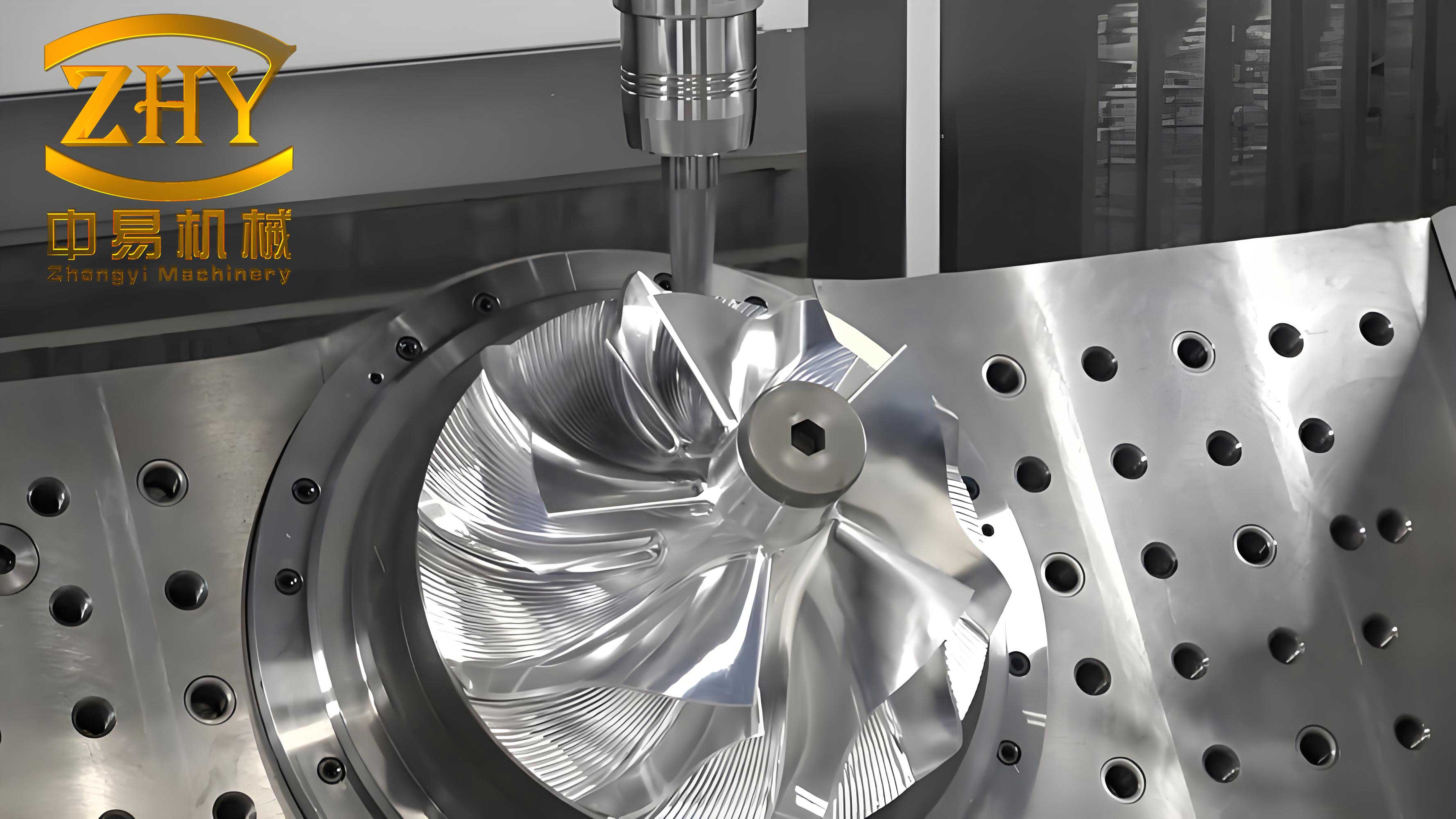
The core principle behind vibration aging for machine tool castings lies in reducing or eliminating residual stresses while simultaneously boosting the material’s resistance to deformation. For machine tool castings, particularly those made of gray cast iron, the presence of flake graphite leads to localized plastic deformation in the metal matrix under low stress, resulting in non-elastic behavior. This non-elasticity is characterized by a decrease in elastic modulus with increasing stress, as described by the following relationship: $$ E(\sigma) = E_0 – \beta \sigma $$ where $E$ is the elastic modulus at stress $\sigma$, $E_0$ is the initial modulus, and $\beta$ is a material-dependent coefficient. However, when machine tool castings undergo cyclic loading below the endurance limit (approximately $0.5 \sigma_b$, with $\sigma_b$ as tensile strength), residual plastic deformation ceases after a certain number of cycles, and the elastic modulus increases. This phenomenon is pivotal for vibration aging of machine tool castings, as it enhances dimensional stability.
Experimentally, cyclic loading during vibration aging has been shown to increase the elastic modulus of cast iron in machine tool castings by over 30%. The mechanism involves dislocation rearrangement and microplastic deformation, which can be modeled as: $$ \Delta E = E_{\text{post}} – E_{\text{pre}} = k \cdot N^{\gamma} $$ where $\Delta E$ is the change in elastic modulus, $N$ is the number of cycles, and $k$ and $\gamma$ are constants dependent on the material of machine tool castings. This improvement directly contributes to the anti-deformation capability of machine tool castings under operational stresses.
| Sample ID | Initial Residual Stress (MPa) | Residual Stress After Vibration (MPa) | Reduction Percentage (%) |
|---|---|---|---|
| MT-Casting-01 | 150 | 75 | 50 |
| MT-Casting-02 | 120 | 60 | 50 |
| MT-Casting-03 | 180 | 54 | 70 |
| MT-Casting-04 | 200 | 80 | 60 |
The vibration aging process for machine tool castings involves attaching an exciter to the workpiece, adjusting the frequency to achieve resonance, and controlling the excitation force and duration. Resonance is preferred due to its energy efficiency and maximal stress impact. For machine tool castings, the natural frequency $f_n$ must align with the exciter’s range, which can be estimated using: $$ f_n = \frac{1}{2\pi} \sqrt{\frac{k_{\text{eff}}}{m_{\text{eff}}}} $$ where $k_{\text{eff}}$ is the effective stiffness and $m_{\text{eff}}$ is the effective mass of the machine tool casting. If the natural frequency is outside the range, adjustments like adding masses or altering supports are employed.
Key parameters in vibration aging of machine tool castings include vibration frequency, intensity, and time. Vibration intensity is often represented by dynamic stress $\sigma_d$, which for machine tool castings is typically set at 30–50 MPa to optimize stress relief. This can be derived from amplitude $A$ using: $$ \sigma_d = E \cdot \epsilon = E \cdot \frac{A}{L} $$ where $L$ is a characteristic length of the machine tool casting. Vibration time, usually ranging from 10 to 60 minutes, depends on the size and complexity of machine tool castings, and it correlates with the number of cycles $N = f \cdot t$, where $f$ is the frequency and $t$ is time. The process is monitored via amplitude-time curves, with changes indicating stress relaxation.
| Sample Group | Elastic Modulus Before (GPa) | Elastic Modulus After (GPa) | Increase Percentage (%) |
|---|---|---|---|
| Group X (Machine Tool Castings) | 100 | 130 | 30 |
| Group Y (Machine Tool Castings) | 105 | 136.5 | 30 |
| Group Z (Machine Tool Castings) | 110 | 143 | 30 |
The technical efficacy of vibration aging for machine tool castings has been validated through comparative studies. Vibration aging eliminates up to 70% of residual stresses and homogenizes stress distribution, reducing peak stresses that cause deformation. For instance, in simulated bed castings, stress differentials decreased from 50 MPa to 10 MPa after treatment. Additionally, the anti-deformation capability of machine tool castings improves significantly, as shown in Table 3.
| Test Condition | Improvement vs. No Aging (%) | Improvement vs. Heat Aging (%) |
|---|---|---|
| Static Load (24 hours on machine tool castings) | 25 | 15 |
| Dynamic Load (1 hour on machine tool castings) | 30 | 20 |
| Thermal Cycle (ΔT=20°C on machine tool castings) | 40 | 25 |
Dimensional stability is a critical metric for machine tool castings. Vibration aging reduces deformation by 50–80% compared to untreated or poorly heat-aged machine tool castings. Long-term observations reveal that dimensional changes in vibration-aged machine tool castings are minimal, as summarized in Table 4. The stabilization period for machine tool castings after vibration aging is typically 2–3 months, whereas for other methods, it can extend to 6 months or more.
| Workpiece Type | Tolerance Requirement (mm) | Observed Dimensional Change (mm) | Monitoring Duration |
|---|---|---|---|
| Bed Casting for Planer | ±0.05 | 0.02 | 12 months |
| Milling Machine Table Casting | ±0.03 | 0.01 | 8 months |
| Column Casting for Machining Center | ±0.02 | 0.005 | 6 months |
In production settings, vibration aging has been applied to hundreds of large machine tool castings, such as those for gantry planers, milling machines, and boring mills. Precision measurements confirm that vibration-aged machine tool castings meet stringent dimensional standards. Beyond machine tool castings, the technique has been adapted for welded frames and aerospace components, especially where heat aging is impractical. Economically, vibration aging for machine tool castings costs only 5–10% of heat aging, with energy consumption below 1%, making it a sustainable choice.
The equipment for vibration aging of machine tool castings includes electromagnetic, hydraulic, and mechanical exciters. Electromagnetic exciters, with forces up to 1000 N and frequencies of 10–1000 Hz, suit small to medium machine tool castings. Mechanical exciters, such as the JZ series, are ideal for large machine tool castings, with specifications in Table 5. These devices enable precise control over vibration parameters for machine tool castings, ensuring effective stress relief.
| Model | Frequency Range (Hz) | Max Excitation Force (N) | Motor Type | Power (kW) |
|---|---|---|---|---|
| JZ-1 | 10–50 | 5000 | Series-wound, belt drive | 1.5 |
| JZ-2 | 10–80 | 8000 | Series-wound, shaft drive | 2.2 |
| JZ-100 | 10–100 | 10000 | Separately excited, shaft drive | 3.0 |
To optimize vibration aging for machine tool castings, mathematical models can be employed. The stress relaxation during vibration can be described by: $$ \sigma_r(t) = \sigma_{r0} e^{-\lambda t} + \sigma_{\infty} $$ where $\sigma_r(t)$ is the residual stress at time $t$, $\sigma_{r0}$ is the initial stress, $\lambda$ is a decay constant, and $\sigma_{\infty}$ is the steady-state stress. For machine tool castings, $\lambda$ depends on material properties and vibration intensity. Furthermore, the relationship between dynamic stress and number of cycles can be expressed as: $$ \sigma_d = \sigma_0 \left(1 – \frac{N}{N_f}\right)^{\eta} $$ where $\sigma_0$ is the initial dynamic stress, $N_f$ is the cycles to failure, and $\eta$ is an exponent for machine tool castings.
Case studies highlight the success of vibration aging for machine tool castings. In one instance, bed castings for a large lathe showed a 65% reduction in post-machining distortion, saving over 20% in rework costs. Another example involves milling machine table castings, where vibration aging maintained flatness within 0.01 mm over two years, outperforming heat-aged counterparts by 0.04 mm. These results underscore the reliability of vibration aging for diverse machine tool castings.
The future of vibration aging for machine tool castings lies in automation and advanced monitoring. Integrated systems with real-time sensors can adjust parameters dynamically, ensuring uniform treatment for complex machine tool castings. Research is ongoing to extend the method to new alloys and geometries, further solidifying its role in manufacturing. In summary, vibration aging is a transformative technique for enhancing the dimensional stability and longevity of machine tool castings, offering a blend of technical superiority and economic efficiency that positions it as a cornerstone in modern production processes.