
In the manufacturing of heavy-duty industrial equipment, the demand for robust and dimensionally stable machine tool castings is paramount. These components, such as beams and frames, must exhibit exceptional tensile strength and stiffness to withstand deformation under load and gravitational forces. Among various materials, pearlitic matrix ductile iron, specifically QT600-3, has proven ideal due to its high strength and hardness. However, producing large, as-cast machine tool castings with significant wall thickness variations—like a 9-meter beam with sections ranging from 25 mm to 120 mm—presents formidable metallurgical challenges. These include controlling carbide content in thin sections, ensuring complete pearlitic transformation in thick areas, and preventing defects like graphite flotation, chunky graphite, and graphite distortion. In this study, I explore optimized melting and processing techniques that address these issues, enabling the reliable production of as-cast QT600-3 machine tool castings. Through careful chemical composition design, the use of heavy rare-earth spheroidizers, inverted ladle spheroidization, and multi-stage composite inoculation, I have successfully manufactured large-scale machine tool castings that meet and exceed performance standards.
The foundation of producing high-quality machine tool castings lies in precise chemical composition control. Each element plays a critical role in determining the microstructure and mechanical properties of QT600-3. Below, I detail the selection and control ranges for key elements, based on both theoretical principles and practical considerations for large castings.
| Element | Primary Function | Target Range in Base Iron | Target Range in Final Iron | Rationale |
|---|---|---|---|---|
| Carbon (C) | Promotes graphitization, improves nodularity, enhances fluidity, reduces shrinkage. | 3.8–4.1 | 3.5–3.8 | Near-eutectic composition minimizes chilling tendency while preventing graphite flotation in large machine tool castings with long solidification times. |
| Silicon (Si) | Strong graphitizer, promotes ferrite formation. | 0.7–1.2 | 1.9–2.3 | Kept moderately low to suppress excessive ferrite and maintain high strength in pearlitic grades for machine tool castings. |
| Manganese (Mn) | Promotes pearlite formation, refines microstructure. | 0.3–0.6 | 0.3–0.6 | Enhances strength but limited to avoid carbide precipitation at grain boundaries, which can embrittle machine tool castings. |
| Sulfur (S) | Harmful impurity, but necessary for nucleation sites during spheroidization. | < 0.020 | < 0.020 | Low base levels ensure effective Mg-S reaction for nodularization without excessive slag formation in machine tool castings. |
| Phosphorus (P) | Harmful impurity, promotes brittleness. | < 0.04 | < 0.04 | Minimized to improve toughness and reduce segregation in heavy-section machine tool castings. |
| Copper (Cu) | Promotes graphitization during eutectic reaction, refines and stabilizes pearlite. | — | 0.3–0.6 | Added to enhance strength and ensure pearlitic matrix in thick sections of machine tool castings. |
| Tin (Sn) | Strong pearlite promoter. | — | < 0.05 | Used in trace amounts to secure high pearlite content without causing embrittlement in machine tool castings. |
| Antimony (Sb) | Promotes pearlite, refines graphite nodules, prevents abnormal graphite in heavy sections. | — | < 0.015 | Critical for suppressing chunky and distorted graphite in large machine tool castings. |
| Barium (Ba) | Powerful deoxidizer and desulfurizer, enhances nucleation sites. | — | Via inoculant | Included in inoculants to reduce chill, increase graphite count, and improve elongation in machine tool castings. |
The carbon equivalent (CE) is a crucial parameter for predicting graphitization tendency and avoiding defects in machine tool castings. I calculate it using the formula:
$$ CE = C + \frac{Si + P}{3} $$
For QT600-3 machine tool castings, targeting a CE near the eutectic point (approximately 4.3–4.5) is essential. Given the control ranges, the typical CE falls within:
$$ CE = 3.65 + \frac{2.1 + 0.02}{3} \approx 4.37 $$
This near-eutectic composition balances fluidity and minimizes shrinkage while controlling graphite flotation risks in large machine tool castings.
The melting process for these machine tool castings begins with raw material selection. I use high-purity Q10 pig iron (40–60%) to provide low sulfur and phosphorus levels, combined with ordinary carbon scrap steel (40–60%). Graphitic carburizer is added to adjust carbon content. A portion of pig iron is introduced later in the melt to preserve inherent nucleation sites. Silicon and manganese alloys are added during the final stages. Superheating is critical to purify the iron and eliminate genetic coarse graphite from pig iron. The superheating temperature range is 1500–1540°C, which can be expressed in terms of energy input:
$$ Q = m \cdot c_p \cdot \Delta T $$
where \( Q \) is the heat energy (J), \( m \) is the mass of iron (kg), \( c_p \) is the specific heat capacity (~800 J/kg·K for iron), and \( \Delta T \) is the temperature rise from melting point to superheat. For a typical batch of machine tool castings iron, maintaining this superheat ensures optimal nucleation conditions. After superheating, the iron is transferred to a holding furnace for temperature adjustment before spheroidization. The spheroidization temperature is carefully controlled at 1400–1440°C; too high causes excessive magnesium loss, while too low impedes dissolution of spheroidizer. The pouring temperature for machine tool castings is set at 1300–1350°C to prevent defects like shrinkage and cold shuts.
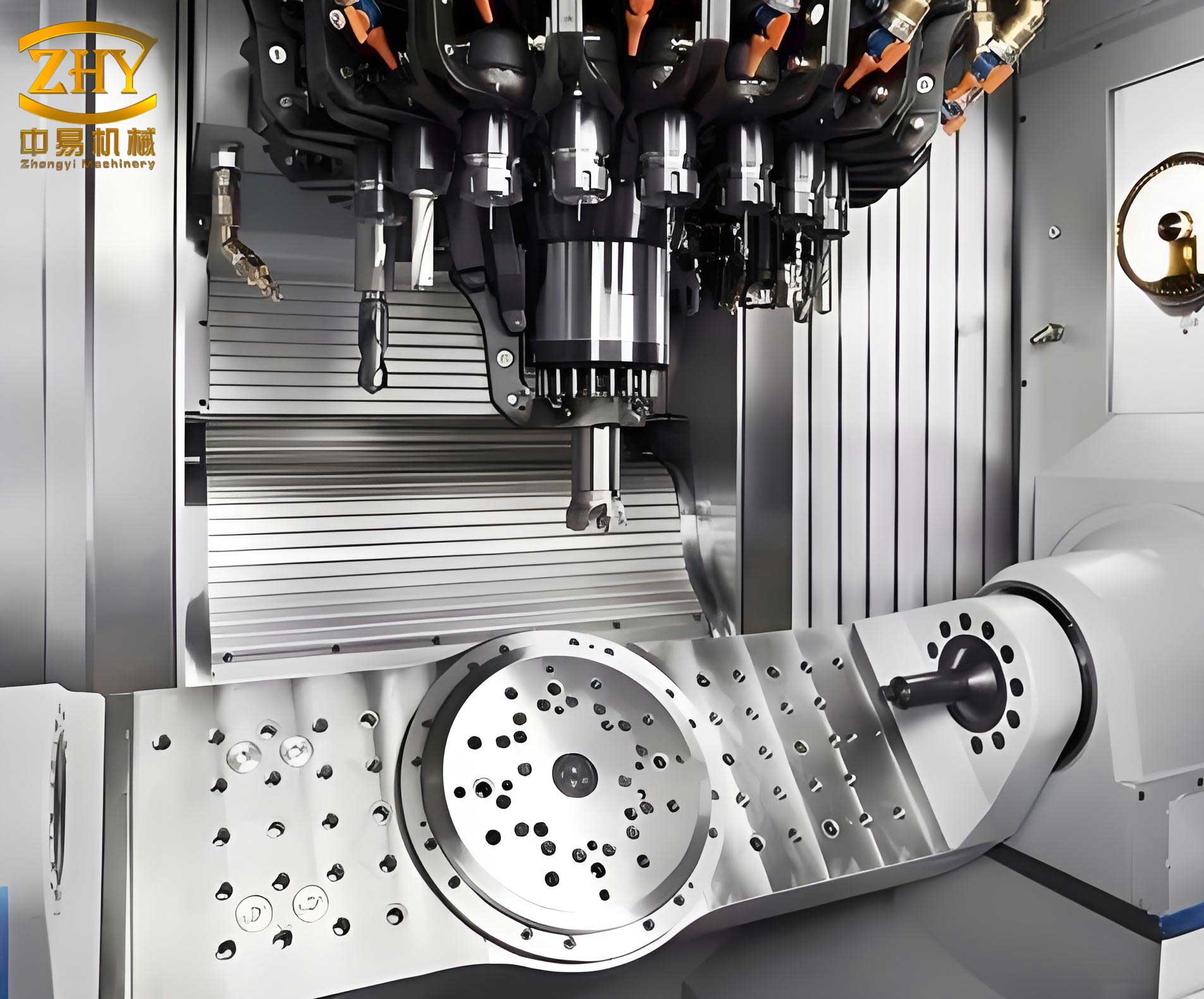
Spheroidization is a pivotal step for achieving spherical graphite in machine tool castings. I employ an inverted ladle spheroidization technique, which allows simultaneous treatment of multiple ladles, reducing processing time and mitigating spheroidization and inoculation decay. The spheroidizer is a heavy rare-earth长效 type with enhanced anti-fade properties. Its composition is detailed below:
| Mg | RE (Rare Earth) | Ca | Ba | Si | Bi, Sb |
|---|---|---|---|---|---|
| 6–7 | 1.5–2.5 | 1.5–2.5 | Trace | 42–45 | Trace |
The addition rate is 1.2–1.5% of the iron mass. The inverted ladle process involves placing the spheroidizer in the treatment ladle, covering it with inoculant and alloys, and then pouring iron from a transfer ladle. This method improves nucleation and provides a stable temperature platform. The magnesium recovery can be estimated as:
$$ \text{Mg recovery} = \frac{\text{Mg absorbed}}{\text{Mg added}} \times 100\% $$
Typically, recovery rates of 40–60% are achieved, sufficient for effective nodularization in machine tool castings. The spheroidization reaction involves magnesium vaporization and reaction with sulfur and oxygen:
$$ \text{Mg} + \text{S} \rightarrow \text{MgS} $$
$$ \text{Mg} + \text{O} \rightarrow \text{MgO} $$
These reactions lower the sulfur and oxygen content, creating favorable conditions for graphite nucleation in machine tool castings.
Inoculation is equally critical for refining graphite structure and preventing chill in machine tool castings. I use a multi-stage composite inoculation process with silicon-based inoculants containing barium. The stages are as follows:
- Transfer Ladle Inoculation: Add 0.1–0.3% of 5–15 mm ferrosilicon (FeSi) to the ladle bottom during iron transfer. This pre-inoculation reduces undercooling and prepares the iron for spheroidization.
- Spheroidization Ladle Inoculation: After placing the spheroidizer, cover it with 0.4–0.7% of 5–15 mm Ba-containing inoculant (2–6% Ba), along with alloying elements like Cu, Sn, and Sb. A steel plate is placed on top to delay reaction.
- In-Process Inoculation: During spheroidization, after one-third of the iron is poured, add 0.1–0.3% of 5–15 mm Ba-containing inoculant to enhance nucleation.
- Stream Inoculation: During pouring of machine tool castings, add 0.1% of 0.5–1.5 mm fine inoculant directly into the stream to combat inoculation fade.
The total inoculation addition typically sums to 0.7–1.3%, ensuring ample nucleation sites. The effectiveness of inoculation can be modeled by the nucleation rate equation:
$$ I = I_0 \exp\left(-\frac{\Delta G^*}{kT}\right) $$
where \( I \) is the nucleation rate, \( I_0 \) is a pre-exponential factor, \( \Delta G^* \) is the activation energy for nucleation, \( k \) is Boltzmann’s constant, and \( T \) is temperature. By adding Ba and Ca, the activation energy is reduced via formation of heterogeneous nuclei like BaS and CaO, increasing graphite count in machine tool castings.
In production, I applied these techniques to manufacture two 9-meter long beam machine tool castings, each weighing 18.7 tons. The castings were produced in green sand molds, with Y-block and attached test samples (40 mm and 70 mm thickness) for evaluation. After cooling, samples were analyzed for microstructure and mechanical properties. The results are summarized below:
| Casting ID | Sample Type | Nodularity Grade | Graphite Size Grade | Pearlite Content (%) | Hardness (HBW) | Graphite Nodules per mm² | Tensile Strength (MPa) | Elongation (%) |
|---|---|---|---|---|---|---|---|---|
| Beam-1 | Y-block | 2 | 7 | 95 | 269 | — | 726 | 4.5 |
| Attached (40 mm) | 2 | 6 | 95 | 229 | 286 | 677 | 3.0 | |
| Attached (70 mm) | 2 | 6 | 95 | 229 | 194 | 617 | 3.0 | |
| Beam-2 | Attached (40 mm) | 2 | 6 | 95 | 255 | 196 | 705 | 4.5 |
| Attached (70 mm) | 2 | 6 | 95 | 241 | 158 | 608 | 4.0 |
All values meet or exceed the requirements of GB/T 1348-2019 for QT600-3, demonstrating the efficacy of the process for machine tool castings. The graphite nodularity is consistently high (grade 2), indicating excellent spheroidization. The pearlite content is stable at 95%, crucial for strength in machine tool castings. Notably, the graphite nodule count decreases with increasing section thickness—from over 280/mm² in 40 mm sections to around 160/mm² in 70 mm sections—due to slower cooling in thicker areas of machine tool castings. This relationship can be approximated by:
$$ N_v = N_0 \cdot \exp(-k_v \cdot t_c) $$
where \( N_v \) is the volumetric nodule count, \( N_0 \) is the initial nucleation density, \( k_v \) is a cooling rate constant, and \( t_c \) is the solidification time. For large machine tool castings, slower solidification in thick sections reduces nucleation efficiency, but the multi-stage inoculation compensates adequately.
The mechanical properties show some variation between castings. Beam-1 exhibits slightly higher tensile strength in thin sections but lower elongation compared to Beam-2. This may be linked to differences in graphite roundness and pearlite morphology. In Beam-1, some coarse graphite particles suggest a slightly hypereutectic solidification path, whereas Beam-2 shows more uniform nodules indicative of eutectic solidification. The elongation appears correlated with graphite sphericity, which can be quantified by the aspect ratio \( \alpha \):
$$ \alpha = \frac{\text{major axis}}{\text{minor axis}} $$
For ideal spheres, \( \alpha = 1 \). In Beam-2, nodules are rounder (\( \alpha \approx 1.1 \)), contributing to better ductility. The pearlite lamellar spacing also influences strength; finer spacing, as observed in Beam-2, enhances strength according to the Hall-Petch-type relation:
$$ \sigma_y = \sigma_0 + k_y \cdot \lambda^{-1/2} $$
where \( \sigma_y \) is yield strength, \( \sigma_0 \) and \( k_y \) are constants, and \( \lambda \) is interlamellar spacing. Overall, the consistency in properties validates the process for large machine tool castings.
The success of this approach hinges on synergies between chemistry and processing. The use of heavy rare-earth spheroidizers provides long-lasting nodularization, critical for large machine tool castings with extended processing times. The inverted ladle technique ensures uniform treatment and minimizes temperature drop. Multi-stage inoculation with Ba-rich compounds maximizes nucleation sites, reducing undercooling and promoting fine graphite. Alloying with Cu, Sn, and Sb stabilizes pearlite without promoting carbides. These elements partition during solidification; for instance, Sn segregation can be described by the Scheil equation:
$$ C_s = k \cdot C_0 \cdot (1 – f_s)^{k-1} $$
where \( C_s \) is solid concentration, \( k \) is partition coefficient, \( C_0 \) is initial concentration, and \( f_s \) is solid fraction. For Sn in iron, \( k < 1 \), leading to enrichment at grain boundaries, which reinforces pearlite but must be controlled to avoid embrittlement in machine tool castings. The addition of Sb is particularly effective in thick sections to suppress chunky graphite, a common issue in heavy machine tool castings. This is attributed to Sb adsorbing on graphite surfaces, modifying growth kinetics.
Furthermore, the prevention of graphite flotation is achieved by maintaining carbon content below 3.8% and ensuring rapid cooling in thick sections through mold design. The risk of flotation increases with higher carbon equivalent and longer solidification times, as described by Stokes’ law for graphite particles:
$$ v = \frac{2g r^2 (\rho_f – \rho_g)}{9\eta} $$
where \( v \) is rising velocity, \( g \) is gravity, \( r \) is graphite radius, \( \rho_f \) and \( \rho_g \) are densities of iron and graphite, and \( \eta \) is viscosity. By controlling nodule size and solidification rate, flotation is minimized in these machine tool castings.
In conclusion, the optimized melting and processing strategy detailed here enables the production of high-integrity as-cast QT600-3 large machine tool castings. Key elements include: precise chemical control with low sulfur and phosphorus, targeted alloying with Cu, Sn, and Sb, use of heavy rare-earth spheroidizers at 1.2–1.5%, inverted ladle spheroidization for efficiency, and multi-stage composite inoculation with Ba-containing compounds. This comprehensive approach addresses the unique challenges of thick-section machine tool castings, such as controlling carbide, ensuring pearlitic matrix, and preventing graphite abnormalities. The resulting machine tool castings exhibit superior mechanical properties, with tensile strengths exceeding 600 MPa and elongations over 3% in heavy sections, meeting the rigorous demands of industrial applications. Future work could explore computational modeling to further refine process parameters for even larger machine tool castings, but the current methodology provides a robust foundation for manufacturing high-performance machine tool castings in the as-cast condition.