
In the realm of precision manufacturing, the quality of machine tools, especially those used for精密加工, hinges critically on the performance of their foundational components. As an engineer deeply involved in foundry technology, I have long observed that the evaluation of machine tool accuracy extends beyond mere finished-product inspections to encompass intrinsic qualities like精度保持性 and service life. Often, these latter aspects only manifest after prolonged use by customers, leading to their undue neglect in favor of immediately measurable metrics. Key castings such as bedways, tables, and housings in磨床 and other精密加工机床 must exhibit a harmonious blend of strength, hardness, low internal stress, wear resistance, and machinability. These properties not only facilitate achieving precision but fundamentally dictate the machine’s long-term reliability and durability. Relying on ordinary gray iron, or even high-strength inoculated or wear-resistant irons, often falls short of meeting these comprehensive demands. This gap underscores the urgent need to develop a superior cast iron that delivers balanced performance for machine tool castings.
The pursuit of such material excellence is not new. Decades ago, experts noted a significant lag in high-strength iron research compared to advanced nations, a disparity that is even more pronounced in the realm of comprehensively高性能优质铸铁. The machine tool industry has experimented with various wear-resistant irons like high-phosphorus, phosphorus-copper-titanium, vanadium-titanium, and boron cast irons. However, these often suffer from poor刮削加工性能, increased difficulty in grinding, non-uniform microstructure, high section sensitivity, elevated internal stresses, and subpar casting characteristics. For instance, comparative tests on刮削加工性能 revealed that wear-resistant irons require significantly more machining time than standard grades, highlighting a critical trade-off. This experience reinforces my belief that the quality of machine tool castings must be judged by their “fitness for use” – a concept echoing quality management principles. A cast iron, regardless of its individual strength or wear resistance, cannot be deemed优质 for machine tool castings unless it offers a well-rounded set of properties tailored to the application’s demands.
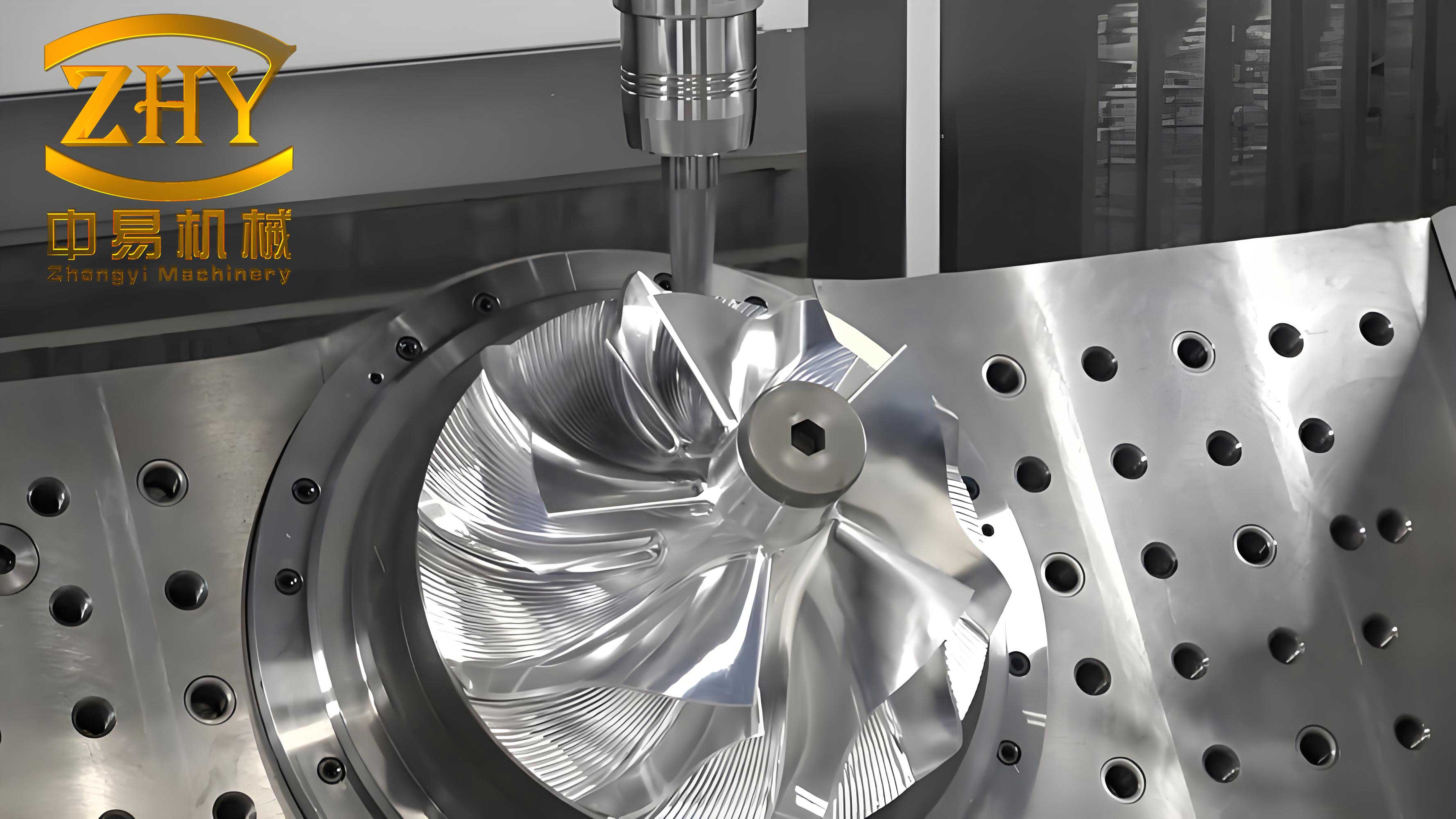
This brings us to a class of materials historically recognized for their superior综合性能: Meehanite cast iron. Originating from the pioneering work of Meehan in the 1920s, this iron employs a specific mechanism of inoculation rather than mere compositional adjustment or alloying for singular properties. Over nearly six decades, Meehanite has evolved dramatically, with advances in inoculant chemistry, treatment methods, and a deeper understanding of nucleation mechanisms. Today, it represents a family of优质铸铁 treated with highly effective复合孕育剂 to achieve exceptional balance. The Meehanite series, as classified by entities like the International Meehanite Metal Company, spans multiple categories and grades. The普通工程类, for instance, includes grades designated by tensile strength, ranging from approximately 250 MPa to over 400 MPa. Notably, recent decades have seen the introduction of grades like 400/2, emphasizing that Meehanite is not merely high-strength iron but a system engineered for specific applications.
The progression of Meehanite reflects several key advancements. Inoculation has moved from simple硅钙 additions to sophisticated复合孕育剂 containing multiple micro-alloying elements. These modern inoculants enhance graphite morphology, refine matrix structure, reduce section sensitivity, retard fading, and improve overall consistency. Consequently, the performance specifications and recommended applications for each grade have become more precise. For example, a grade equivalent to the historical “Grade 2” is now explicitly recommended for machine tool castings with sliding guides, citing its high strength, good toughness, excellent wear resistance, low section sensitivity, and hardenability. The improvements in综合性能 are quantifiable: hardness ranges have tightened (e.g., 180-220 HB), elastic modulus has increased, linear shrinkage has slightly reduced, and hardness uniformity across large bedways has become exceptional, with variations as low as 10-15 HB. These enhancements stem from rigorous control over chemistry, mitigation of pig iron遗传性 through superheating, advanced melting practices, and the tailored use of复合孕育剂.
From my perspective, the development of优质灰铸铁 for machine tool castings is both crucial and pressing.精密加工机床 components, particularly those with sliding surfaces, demand a symphony of properties: dense and uniform microstructure, high strength with adequate韧性, superior wear resistance, minimal internal stress, and excellent machinability. Achieving this requires a holistic approach, not a narrow focus on单一性能. For instance, in磨床 applications where cutting forces are low and specific guideway pressures are modest, excessively high hardness or wear resistance at the expense of machinability (e.g., for刮削加工) is counterproductive. Therefore, the target should be a material analogous to the Meehanite grade optimized for machine tool castings, emphasizing balanced综合性能.
The technical prerequisites for producing such优质铸铁 are stringent. First, molten metal temperature must exceed 1500°C, preferably reaching 1520-1550°C. Superheating is essential to消除遗传性, refine grains, and improve inoculation effectiveness. The relationship between superheating temperature and grain refinement can be expressed in terms of undercooling reduction:
$$ \Delta T_{effective} = \Delta T_{initial} – k \cdot (T_{pour} – T_{eutectic}) $$
where $\Delta T_{effective}$ is the effective undercooling, $\Delta T_{initial}$ is the initial undercooling, $T_{pour}$ is the pouring temperature, $T_{eutectic}$ is the eutectic temperature, and $k$ is a material constant. Higher $T_{pour}$ reduces $\Delta T_{effective}$, promoting finer graphite and matrix.
Second, melting must be controlled to minimize oxidation losses. Elemental burn-off, particularly for硅 and锰, should be kept below 15% and 20%, respectively, with渣中FeO含量 under 5%. Excessive oxidation negates inoculation effects. The oxidation loss can be modeled as:
$$ \text{Burn-off} \% = A \cdot \left(\frac{O_2}{C}\right)_{\text{ratio}} \cdot t_{\text{exposure}} $$
where $A$ is a furnace-specific coefficient, $(O_2/C)_{\text{ratio}}$ relates to the oxidizing atmosphere, and $t_{\text{exposure}}$ is the time at high temperature.
Third, charge composition and base iron chemistry must be tightly controlled, with碳当量 (CE)波动 within ±0.1%. CE is calculated as:
$$ \text{CE} = \%C + \frac{1}{3}(\%Si + \%P) $$
For优质铸铁, CE typically ranges from 3.6 to 3.9, depending on the desired strength and section size. Consistency here ensures stable mechanical properties and reduces the risk of exceeding upper strength limits, which can be detrimental to machinability.
Fourth, the use of复合孕育剂 is indispensable. These inoculants are blends of graphitizing elements (e.g., Si, Ca), pearlite stabilizers (e.g., Sb, Sn), and micro-alloying elements (e.g., Bi, Sr, Zr, rare earths) that interact synergistically. For example,添加Bi refines graphite but may promote chill; however, combined with锑, this effect is mitigated. The optimal composition for machine tool castings might include:
$$ \text{Inoculant} = \text{Si} + \text{Ca} + \text{Al} + \sum_{i=1}^{n} k_i \cdot X_i $$
where $X_i$ are micro-alloying elements and $k_i$ are weighting factors determined empirically. Such复合孕育剂 enhance uniformity, reduce section sensitivity, and improve wear resistance without compromising machinability.
Fifth, controlling the casting’s knockout temperature can mitigate internal stresses. For castings with varying sections, allowing thin walls to cool below approximately 500°C in the mold before shakeout promotes more uniform properties and lower residual stress.
To meet these prerequisites, several concrete measures must be implemented in the foundry. Table 1 summarizes the key requirements and targets for producing优质铸铁 for machine tool castings.
| Aspect | Requirement/Target | Rationale |
|---|---|---|
| Molten Metal Temperature | ≥1500°C, ideally 1520-1550°C | Eliminates pig iron inheritance, refines structure, enhances inoculation |
| Oxidation Loss (Si/Mn) | <15% / <20%; Slag FeO <5% | Prevents inoculation fading and gas defects |
| Carbon Equivalent Control | CE波动 ±0.1% (e.g., CE=3.8±0.1) | Ensures consistent strength and properties |
| Inoculant Type | Composite inoculant with multiple micro-alloys | Optimizes综合性能: uniformity, wear, machinability |
| Charge Composition | High scrap steel比例 (≥40%), low pig iron | Reduces inheritance, allows precise chemistry adjustment |
| Coke Quality | Foundry coke: Fixed碳 >90%, low ash & sulfur | Critical for achieving high temperature and low oxidation |
| Coke/Iron Ratio | 1:8 to 1:10 (12.5% to 10%) | Balances economy with thermal efficiency; excessive ratio harms quality |
| Knockout Temperature | Thin sections <500°C in mold | Reduces internal stresses and improves uniformity |
Raw material stability is paramount. Consistent pig iron and scrap composition, adhering to national standards, is essential. Increasing scrap steel usage to 40% or more while reducing pig iron proportion minimizes the adverse遗传性 of pig iron, such as coarse graphite. Charge weighing accuracy must be improved, possibly via calibrated electronic scales verified by mechanical checks.
The quality of coke is arguably the most critical factor limiting铁水 quality in many foundries. Using冶金焦 with fixed carbon content below 85% results in low superheat temperatures and high oxidation. Switching to specialized铸造用焦 with fixed碳 >90%, low ash (<8%), and low sulfur (<0.8%) can elevate temperatures by 50-100°C. The coke/iron ratio should be optimized around 1:8 to 1:10; ratios exceeding 1:7 often lead to over-oxidation without substantial temperature gain. The thermal balance in a cupola can be approximated by:
$$ Q_{\text{available}} = m_{\text{coke}} \cdot \text{CV}_{\text{coke}} – Q_{\text{losses}} $$
$$ Q_{\text{required}} = m_{\text{iron}} \cdot C_p \cdot (T_{\text{out}} – T_{\text{in}}) + Q_{\text{slag}} $$
where $Q$ is heat, $m$ is mass, CV is calorific value, $C_p$ is specific heat, and $T$ is temperature. Using high-CV coke reduces $m_{\text{coke}}$ needed for a given $Q_{\text{required}}$, allowing a lower coke/iron ratio.
Melting process control necessitates advanced instrumentation. Airflow control systems,炉气分析仪 for monitoring CO/CO₂ ratios, and前线快速分析仪 like thermal analysis are vital. Thermal analysis, providing carbon equivalent and硅 content within minutes, relies on the cooling curve analysis:
$$ \text{CE} = f(T_{\text{eutectic}}, \Delta T_{\text{recalescence}}) $$
Ensuring a steady supply of consumables like test cups is crucial for continuous monitoring.
Furnace selection is influenced by economic and energy considerations. While electric furnaces or duplex melting offer excellent control and temperature, cupolas remain predominant due to lower operating costs where coke is affordable. For cupola operation,炉型设计 should favor双排风口 with large tuyeres to concentrate combustion and improve thermal efficiency when using quality coke. Trials indicate双排风口 can increase铁水温度 by 30-50°C and save coke by 10-15% compared to single-row designs, though oxidation may slightly increase. This can be compensated by adjusting the coke/iron ratio.
Supplementary techniques to boost temperature include富氧送风 and脱湿送风. Oxygen enrichment of 2-3% can raise metal temperature by 20-40°C; injection at tuyeres yields even better results. Hot blast systems, either via internal recuperators or external heaters, can provide air at 300-500°C, elevating metal temperature by a comparable amount. Moisture control in blast air is critical; humidity above 8-10 g/m³ significantly reduces temperature and increases oxidation. The detrimental effect of moisture can be expressed as:
$$ \Delta T_{\text{loss}} = \alpha \cdot (H – H_0) $$
where $\alpha$ is a coefficient (~2°C per g/m³), $H$ is actual humidity, and $H_0$ is a threshold humidity (e.g., 5 g/m³). Maintaining humidity below 5 g/m³ via dehumidification is beneficial.
The development and application of复合孕育剂 warrant detailed discussion. Unlike simple硅铁 inoculants, modern复合孕育剂 are engineered to address specific needs of machine tool castings. Table 2 outlines typical elements and their functions in such inoculants.
| Element | Primary Function | Effect on Machine Tool Castings | Typical Range in Inoculant |
|---|---|---|---|
| Si | Graphitizer, nucleation aid | Promotes type A graphite, reduces chilling | 65-75% |
| Ca | Strong deoxidizer, sulfide modifier | Improves nucleation sites, enhances inoculation potency | 0.5-2.0% |
| Al | Deoxidizer, promotes nucleation | Refines graphite, but excessive amounts may cause pinholes | 0.5-1.5% | Bi | Graphite refiner | Significantly refines graphite, improves uniformity; can increase hardness | 0.01-0.05% |
| Sr | Powerful graphite modifier | Enhances undercooling capacity, reduces section sensitivity | 0.5-1.5% |
| Sb | Pearlite stabilizer | Increases hardness and wear resistance without severe chilling | 0.05-0.15% |
| RE (e.g., Ce, La) | Desulfurizer, modifier | Neutralizes tramp elements, improves graphite shape | 0.1-0.5% |
| Fe (balance) | Carrier | Ensures even dissolution and distribution | Remainder |
The interaction among these elements is complex. For instance, the combined effect of Bi and Sb on chill depth (D_chill) can be modeled as:
$$ D_{\text{chill}} = D_0 – \beta_1 \cdot \%\text{Bi} + \beta_2 \cdot \%\text{Sb} – \beta_3 \cdot (\%\text{Bi} \times \%\text{Sb}) $$
where $D_0$ is the base chill depth, and $\beta_i$ are interaction coefficients. Optimal proportions must be determined through designed experiments targeting the综合性能 for machine tool castings.
Furthermore, the inoculation process itself must be optimized. The efficiency of inoculation (η_inoc) depends on treatment temperature, method (e.g., late stream addition), and inoculant particle size distribution:
$$ \eta_{\text{inoc}} = \frac{N_{\text{effective}}}{N_{\text{added}}} = k_T \cdot e^{-E_a/(R T)} \cdot f(\text{size}) $$
where $N$ is the number of effective nuclei, $k_T$ is a constant, $E_a$ is activation energy, $R$ is the gas constant, $T$ is treatment temperature, and $f(\text{size})$ accounts for particle dissolution kinetics. Higher treatment temperatures (e.g., >1450°C) dramatically improve η_inoc.
Beyond metallurgical factors, the design of the machine tool castings themselves influences the required material properties. For bedways and tables, the contact pressure and sliding velocity dictate wear demands. The Archard wear equation provides a framework:
$$ V = K \frac{W \cdot s}{H} $$
where $V$ is wear volume, $K$ is a wear coefficient, $W$ is load, $s$ is sliding distance, and $H$ is hardness. For machine tool castings, a balanced approach seeks a high $H$ but also a low $K$ through optimal microstructure (fine pearlite with均匀 graphite), rather than maximizing hardness alone at the expense of machinability.
Internal stress (σ_residual) in castings affects long-term dimensional stability. It arises from thermal gradients during cooling and can be estimated via simplified models:
$$ \sigma_{\text{residual}} \approx E \cdot \alpha \cdot \Delta T_{\text{gradient}} $$
where $E$ is Young’s modulus, $\alpha$ is thermal expansion coefficient, and $\Delta T_{\text{gradient}}$ is the temperature difference between sections during cooling. Lower knockout temperatures and uniform cooling reduce $\Delta T_{\text{gradient}}$, thereby minimizing σ_residual.
The economic and environmental aspects cannot be ignored. While using high-quality coke and复合孕育剂 increases direct material cost, the benefits in reduced scrap rate, improved product quality, and longer service life of machine tool castings yield a lower total cost of ownership. Energy-saving measures like hot blast and oxygen enrichment must be evaluated against their capital and operational costs. The overall production cost per ton of优质铸铁 can be expressed as:
$$ C_{\text{total}} = C_{\text{raw materials}} + C_{\text{energy}} + C_{\text{labor}} + C_{\text{scrap}} $$
Investments in better raw materials and process control often reduce $C_{\text{scrap}}$ and $C_{\text{energy}}$ per合格铸件, justifying the initial outlay.
In conclusion, the development and adoption of high-quality cast iron for machine tool castings is a pivotal endeavor with far-reaching implications for the competitiveness of the machinery industry. The essential conditions are achieving high-quality molten metal—characterized by elevated temperature, minimal oxidation, and precise chemistry—coupled with the application of tailored composite inoculants. The current challenges, notably the availability of suitable foundry coke and optimal coke/iron ratios, are central to advancing铁水 quality. While energy conservation policies encourage the use of lower-grade fuels, a holistic view of societal经济效益 must consider that employing high-quality coke with appropriate ratios can reduce waste, enhance product quality, and ultimately improve the performance and longevity of machine tools. Complementary techniques such as oxygen enrichment, dehumidified blast, and hot blast systems offer pathways to save coke while maintaining quality. Simultaneously, the development and provision of advanced monitoring and control instruments for melting operations are indispensable. The journey toward superior machine tool castings is continuous, demanding sustained research into innovative inoculants, process optimization, and a steadfast commitment to综合性能 over singular metrics. Only through such integrated efforts can we produce铸铁 that truly meets the rigorous demands of precision machine tools, ensuring their accuracy, durability, and reliability in global markets.