
The strategic design of a modern foundry hinges on integrating advanced processes, optimizing material flow, and embedding principles of sustainability and operational efficiency from the ground up. This detailed exposition outlines the comprehensive design philosophy and technical execution for a dedicated foundry with an annual production capacity of 20,000 tons of machine tool castings. The core innovation lies in adopting a short-process melting route coupled with a呋喃树脂自硬砂 (Furan resin no-bake sand) molding system, a combination chosen for its significant advantages in energy conservation, metal quality, dimensional accuracy, and environmental performance for producing large, high-value machine tool castings like bed frames, housings, and columns.
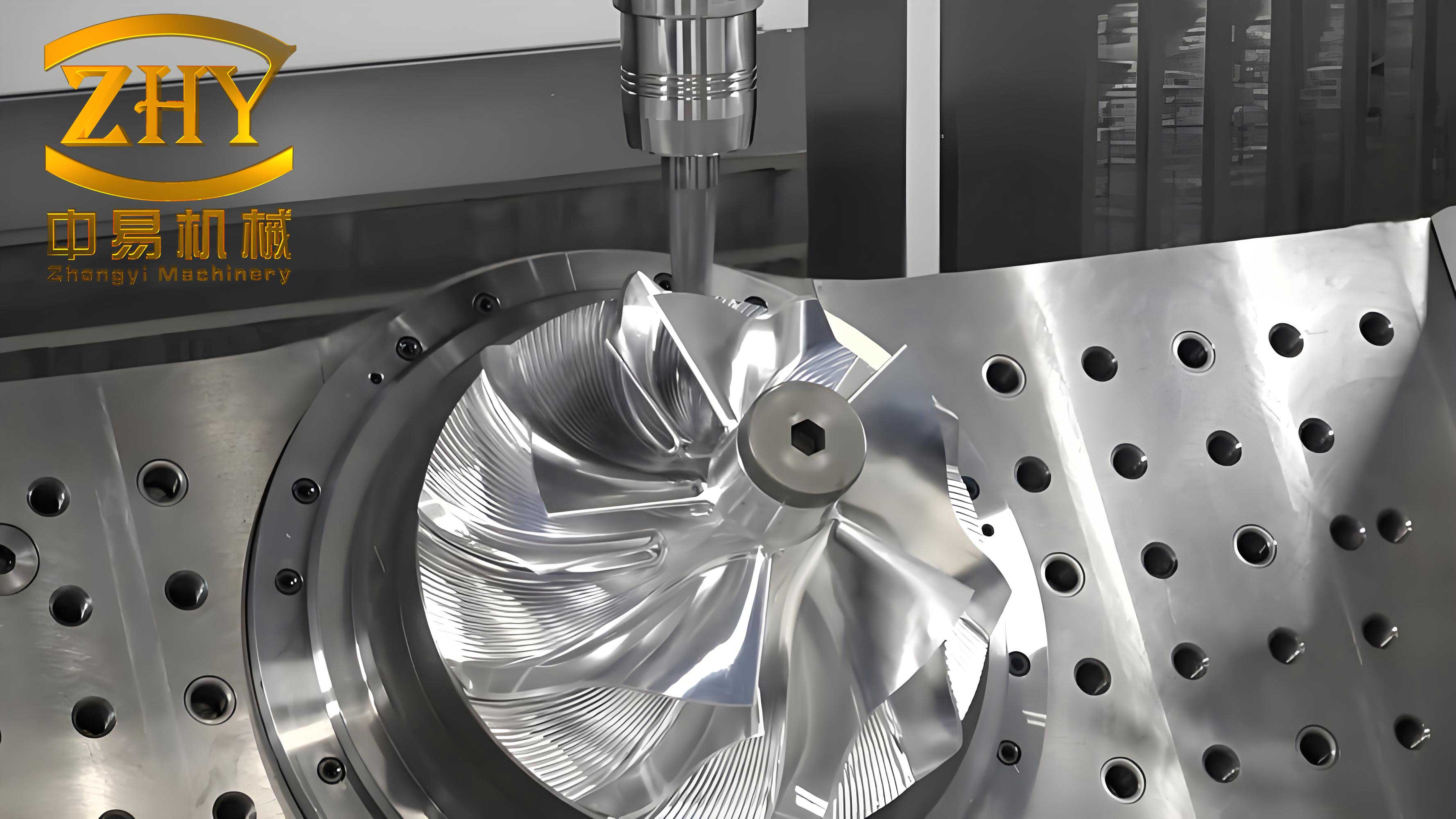
The production focus is exclusively on medium-to-large machine tool castings, with component weights ranging from several hundred kilograms up to 8 metric tons. The product mix primarily consists of high-strength gray iron, with a portion allocated for ductile iron and alloyed iron grades to meet diverse mechanical property requirements. Key representative castings, such as press bed frames, have typical dimensions and weights as summarized below:
| Castling Type (Press Bed) | Dimensions (L x W x H, m) | Weight (t) |
|---|---|---|
| Large Bed | 3.5 x 2.5 x 1.0 | 8 |
| Medium Bed | 2.8 x 1.8 x 0.9 | 5 |
| Small Bed | 2.0 x 1.5 x 0.8 | 3 |
1. Foundry Layout and Master Planning
The foundry is conceived as a single-story structure with a lightweight steel frame and color steel sandwich panels for walls and roofing, offering excellent construction speed and thermal insulation. The layout is a logical, linear flow to minimize internal transportation distances and cross-traffic. The building comprises four primary bays with a total length of 108.8 meters and a cumulative width of 69 meters, yielding a production floor area of approximately 6,014 m².
- Bay 1 (21.5m wide): Dedicated to medium and large-part molding, core assembly, and pouring. It is equipped with high-capacity cranes (32t + 10t) and houses the large-format mobile混砂机 (mixer).
- Bay 2 (9.5m wide): The heart of the melting and metallurgy section. It contains the intermediate frequency (IF) furnace system, charge preparation area, and the sand regeneration plant control room.
- Bay 3 (24m wide): Designed for smaller machine tool castings molding and core-making, featuring fixed混砂机s and dedicated stations for core coating and drying.
- Bay 4 (15m wide): Separated from the molding areas to contain dust and noise, this bay is the cleaning, finishing, and inspection department, housing shot blasting machines and a stress relief furnace.
This segregated layout, particularly isolating the dusty cleaning operations, is crucial for maintaining a superior in-plant environment and protecting the high-integrity molding areas.
2. Core Process Technology: The Short-Process Melting Department
The defining feature of this foundry is its “short-process” or “direct charge” melting philosophy. This method bypasses the energy-intensive step of remelting solid pig iron by utilizing molten iron directly from a nearby blast furnace. The process flow and its comparative advantage are fundamental to the plant’s economic and energy profile.
Process Flow: Molten blast furnace iron at approximately 1,350°C is transported via a ladle car on rails to the foundry. A dedicated 16t冶金起重机 (metallurgical crane) transfers this iron into one of two 6-tonne capacity medium frequency coreless induction furnaces. The IF furnace’s role is twofold: to superheat the charge to a precise casting temperature (~1,550°C) and to act as a holding and composition adjustment vessel. Alloying elements, foundry returns, and necessary charge corrections are made within the IF furnace, ensuring exceptional metallurgical control and consistency vital for machine tool castings.
The furnace system is uniquely configured as a “twin-body, dual-power-supply with power divider” setup. One 2,400 kVA transformer feeds two 1,350 kW IF power supplies, which in turn feed the two furnace bodies through a power divider. This allows one furnace to operate at full power for superheating while the other holds at reduced power, creating a quasi-continuous supply of ready molten metal. The operational sequence is designed to match the blast furnace’s 8-tonne-per-2-hour tapping schedule.
| Parameter | Specification |
|---|---|
| Blast Furnace Tap Size | 8 t / 2 hours |
| Blast Furnace Tap Temperature | ~1,350 °C |
| IF Furnace Capacity (each) | 6 t |
| IF Furnace Total Installed Power | 2,100 kW (max) |
| Target Casting Temperature | ~1,550 °C |
| Process Cycle Time Goal | < 2 hours (receive to pour) |
The theoretical annual melting capacity validates the production target. With a 1-hour cycle time (including superheating and holding) and 20 effective operating hours per day for 300 days, the system’s potential output is:
$$ \text{Annual Melt Capacity} = \left( \frac{6 \, \text{t}}{\text{cycle}} \times 20 \, \frac{\text{cycles}}{\text{day}} \right) \times 300 \, \text{days} = 36,000 \, \text{t} $$
Accounting for a typical yield of 70% and an assumed scrap rate of 10%, the net output of good castings is:
$$ \text{Net Castings} = 36,000 \, \text{t} \times 0.70 \times 0.90 = 22,680 \, \text{t} $$
This comfortably exceeds the 20,000 t/year target, providing necessary operational buffer. Process control is ensured with a dedicated spectrometer for chemistry and infrared pyrometers for temperature.
3. Molding and Core Making with Resin Sand Technology
For the large sizes and complex geometries of machine tool castings, the furan resin no-bake sand process is selected. It offers excellent dimensional stability, good shakeout properties for large masses, and superior surface finish compared to green sand. The工部 is equipped with a range of continuous mixers to match different batch sizes and production rhythms across the molding bays.
| Location / Purpose | Mixer Type | Rated Capacity (t/h) |
|---|---|---|
| Bay 1 (Large Molds) | Mobile | 30 |
| Bay 1 (Medium Molds) | Fixed | 20 |
| Bay 3 (Small Molds/Cores) | Fixed | 15 |
| Bay 3 (Core Making) | Fixed | 10 |
The required sand volume is calculated based on the production纲领 (production program), sand-to-metal ratio, and process loss factors. Let \( C = 20,000 \, \text{t} \) be the annual output of castings, and \( S = 3 \) be the sand-to-metal ratio. Accounting for casting scrap rate \( \alpha = 3\% \), mold scrap rate \( \beta = 2\% \), and sand loss rate \( \gamma = 5\% \), the total annual sand demand \( Q \) is:
$$ Q = C \times S \times (1 + \alpha) \times (1 + \beta) \times (1 + \gamma) $$
$$ Q = 20,000 \times 3 \times (1.03) \times (1.02) \times (1.05) $$
$$ Q \approx 66,188 \, \text{t/year} $$
With 300 working days and 10 effective mixing hours per day, the average hourly sand requirement \( P_h \) is:
$$ P_h = \frac{66,188 \, \text{t/year}}{300 \, \text{days} \times 10 \, \text{hours/day}} \approx 22 \, \text{t/h} $$
The total installed mixer capacity \( P_m = 75 \, \text{t/h} \) gives a system负荷率 (load factor) \( \eta \) of:
$$ \eta = \frac{P_h}{P_m} = \frac{22}{75} \approx 29\% $$
This is within the typical operational range (30-40%) for such batch-based processes. Core making is supported by alcohol-based coatings applied via spraying, with a dedicated gas-fired continuous dryer for core drying to ensure gas evolution control during pouring.
4. Sand Reclamation: A Closed-Loop System
A cornerstone of the economic and environmental viability of resin sand processes is efficient sand reclamation. A dedicated 25 t/hour capacity再生 (reclamation) plant is installed to process used sand from shakeout. The system targets high recovery rates and stringent quality parameters to allow for high-percentage reuse in new molds, minimizing new sand purchase and waste disposal.
Key Technical Targets for Reclaimed Sand:
| Parameter | Target Specification |
|---|---|
| System Capacity | ≥ 25 t/h |
| Sand Recovery Rate | ≥ 95% |
| Resin Coating Removal (De-coating) | ≥ 22% |
| Loss on Ignition (LOI) | ≤ 2.0% |
| Fine Content (< 200 mesh) | ≤ 0.3% |
| Discharge Sand Temperature | ≤ 35°C |
The required reclamation capacity \( P_{reclaim} \) is calculated from the annual sand use \( Q \), the reclamation rate \( \Psi = 95\% \), an unevenness factor \( K = 1.2 \), and an annual equipment operating time base \( T = 2,850 \, \text{hours} \):
$$ P_{reclaim} = \frac{Q \times \Psi \times K}{T} = \frac{66,188 \times 0.95 \times 1.2}{2,850} \approx 26.5 \, \text{t/h} $$
The selected 25 t/h system is well-matched to this demand. The process involves magnetic separation, crushing, intensive mechanical attrition (regeneration), cooling, and finally sand temperature conditioning before storage and reuse. This闭环 (closed-loop) dramatically reduces the resin binder requirement; when using nearly 100% reclaimed sand, the furan resin addition can be lowered to 0.8-1.1%, compared to 1.1-1.5% for all-new sand systems.
5. Casting Cleaning, Finishing, and Heat Treatment
Post-casting processing is critical for delivering dimensionally stable and stress-relieved machine tool castings. After cooling, molds are transported via 15t电动平车 (transfer cars) to shakeout stations. The extracted castings then proceed to the cleaning bay.
- Shakeout & Decoring: A 30t double-unit vibration shakeout handles the largest molds, while a 10t unit serves smaller ones.
- Cleaning: A combination of shot blasting equipment is used: a hook-type machine for smaller or elongated parts, and a larger roller-conveyor or car-type machine for heavy, bulky machine tool castings like bed frames.
- Heat Treatment: All critical machine tool castings undergo a stress relief anneal in a gas-fired (utilizing surplus blast furnace gas) furnace to ensure long-term dimensional stability, a non-negotiable requirement for precision machine tools.
- Finishing: Final steps include grinding of parting lines and feeder heads, weld repair if specified, dimensional inspection, and finally painting before dispatch.
6. Utilities, Environmental, and Safety Integration
The design embeds utility efficiency and environmental protection at every stage.
Utilities Summary:
| System | Key Design Feature |
|---|---|
| Electrical | Dedicated 2,400 kVA transformer for IF furnaces. Separate 560 kVA transformers for auxiliary power (sand plant, cranes, lighting). |
| Water Cooling | Closed-loop cooling towers for IF furnaces (~200 m³/h) and sand cooler (~100 m³/h), minimizing fresh water consumption. |
| Compressed Air | Centralized system delivering ≥30 Nm³/min at 0.75 MPa for all pneumatic equipment. |
| Ventilation | Natural ventilation enhanced by roof-mounted, wind-driven turbines. Local exhaust at all major dust sources. |
Environmental & Safety Measures:
- Dust Control: Primary pollution sources (IF furnace charging, shakeout, shot blast) are equipped with high-efficiency capture hoods connected to bag-house filter systems. Design target for stack emissions is ≤100 mg/Nm³, meeting stringent national standards.
- Noise Control: Equipment is selected for low noise output. Enclosures and isolators are used for high-noise units like fans and shot blast machines, aiming for a workshop noise level ≤85 dB(A).
- Energy Conservation: The short-process melting itself is the largest energy saver. Additional measures include insulated building panels, energy-efficient lighting (metal halide), and heat recovery from reclaimed sand cooling.
- Fire Safety & Ergonomics: The building is designed for丁戊类 (Class D/E) fire hazard with appropriate fire-rated materials, clear escape routes, and a designated indoor/outdoor hydrant system supplied from a 1,000 m³ elevated water reservoir. Ergonomic considerations include crane-assisted handling, dedicated core-setting stations with low-height wall cranes, and provision of personal protective equipment (PPE) for all hazardous tasks.
In conclusion, this foundry design presents a holistic model for the modern production of heavy-section machine tool castings. By synergistically combining a short-process, energy-efficient melting route with a high-precision, recyclable resin sand molding system within an optimized, environmentally conscious layout, the facility is engineered to achieve superior economic performance, product quality, and sustainability metrics. The design principles underscore that advanced manufacturing for foundational industrial components like machine tool castings must be lean, clean, and meticulously integrated from molten metal to finished product.