
As the lead engineer for this project, I was tasked with designing a foundry capable of producing 15,000 tons per year of high-grade machine tool castings. These machine tool castings, including beds, worktables, and elevating platforms, are critical components for various machine tool manufacturers and export markets. The largest casting measures 4590 mm × 1250 mm × 710 mm and weighs 7400 kg, requiring meticulous planning. The primary material specified is HT350 high-strength inoculated cast iron, known for its dimensional stability, compressive strength, and wear resistance. This document details the comprehensive design process from a first-person perspective, emphasizing key considerations, process integration, and technological solutions to ensure efficient production of these specialized machine tool castings.
The production of machine tool castings presents unique challenges. Unlike mass-produced components, these machine tool castings are characterized by a single-item, small-batch production mode. Large castings often require pit molding, while box-shaped structures like machine beds necessitate extensive core assembly. The geometry, prone to residual stress, often precludes the use of vigorous vibration shakeout. Furthermore, the wide variation in weight and size among different machine tool castings complicates production scheduling and logistics. For instance, worktable castings with high length-to-width ratios require specific handling and processing considerations.
The design philosophy was built upon several core principles to address these challenges effectively. The following table summarizes the primary design objectives and their corresponding solutions, all centered on optimizing the production of machine tool castings.
| Design Objective | Strategic Solution | Key Benefit for Machine Tool Castings |
|---|---|---|
| Ensure high-quality iron melt | Cupola-Furnace duplex melting | Achieves required temperature (1470–1520°C) and composition control for HT350. |
| Accommodate diverse casting sizes | Flexible molding system (floor, pit, simple line) | Enables cost-effective production of both large and small machine tool castings. |
| Manage complex core assembly | Dedicated core shop with mechanized handling | Ensures precision and efficiency in assembling cores for intricate machine tool castings. |
| Balance core production capacity | Integrated core making, coating, drying, and storage | Prevents bottlenecks and matches core supply with molding demand. |
| Handle delicate shakeout | Large-table, medium-load shakeout machines | Removes sand without imposing excessive stress on sensitive machine tool castings. |
| Optimize material flow | Strategic layout with specialized transport (ladles, cranes, transfer cars) | Minimizes cross-traffic for molten metal, cores, and finished machine tool castings. |
| Enable efficient cleaning | Specialized cleaning equipment based on casting geometry | Improves cleaning speed and reduces operating costs for varied machine tool castings. |
| Provide robust utilities | Centralized, oversized cooling water, compressed air, and dust collection systems | Supports continuous three-shift operation critical for meeting annual tonnage of machine tool castings. |
| Control capital investment | Judicious crane capacity planning and use of co-lifting for very heavy machine tool castings | Reduces structural steel costs while maintaining production capability. |
The foundry’s operational rhythm is based on a three-stage shift system to maximize equipment utilization and flow. Shift 1 focuses on molding, core making, and closing of molds. Shift 2 is dedicated to melting, pouring, and the initial cooling of the machine tool castings. Shift 3 handles knockout, shakeout, sand regeneration, and preparatory work for the next cycle. This staged approach ensures a smooth, continuous production pipeline for these valuable machine tool castings.
Detailed Production Processes for Machine Tool Castings
The heart of quality for machine tool castings lies in melt control. We selected a cupola-electric furnace duplex system. Two 10 t/h water-cooled cupolas provide stable, continuous melting. The molten iron is then transferred to a 15 t medium-frequency induction holding furnace. This system allows for precise temperature control, superheating to the required 1520°C, and crucial composition adjustments. The high scrap steel charge (40–50%) needed for HT350 is managed effectively here. The thermodynamics of superheating can be approximated by the energy balance:
$$ Q = m \cdot c_p \cdot \Delta T + m \cdot L_f $$
where \( Q \) is the required energy (J), \( m \) is the mass of iron (kg), \( c_p \) is the specific heat capacity (~800 J/kg·K for iron), \( \Delta T \) is the temperature rise, and \( L_f \) is the latent heat of fusion (≈272,000 J/kg for cast iron). For a 15-ton heat raised from 1350°C to 1520°C, the energy requirement is substantial, justifying the efficiency of the duplex process. A rapid spectrometric analysis station adjacent to the melting area ensures real-time chemical control, vital for the consistent properties of machine tool castings.
The molding department employs furan resin no-bake sand technology. Flexibility is key. We installed multiple continuous mixers with different capacities. A pivotal feature is a 40 t/h mobile mixer servicing a dedicated 40m x 2.5m x 2m deep molding pit. This setup can simultaneously accommodate four long worktable molds, a common type among our machine tool castings. A 32t overhead crane serves this area. Furthermore, to decouple core assembly from general crane traffic, several semi-gantry cranes (rail height 6.5m) were installed specifically for precision core setting operations, enhancing the efficiency of preparing molds for complex machine tool castings.
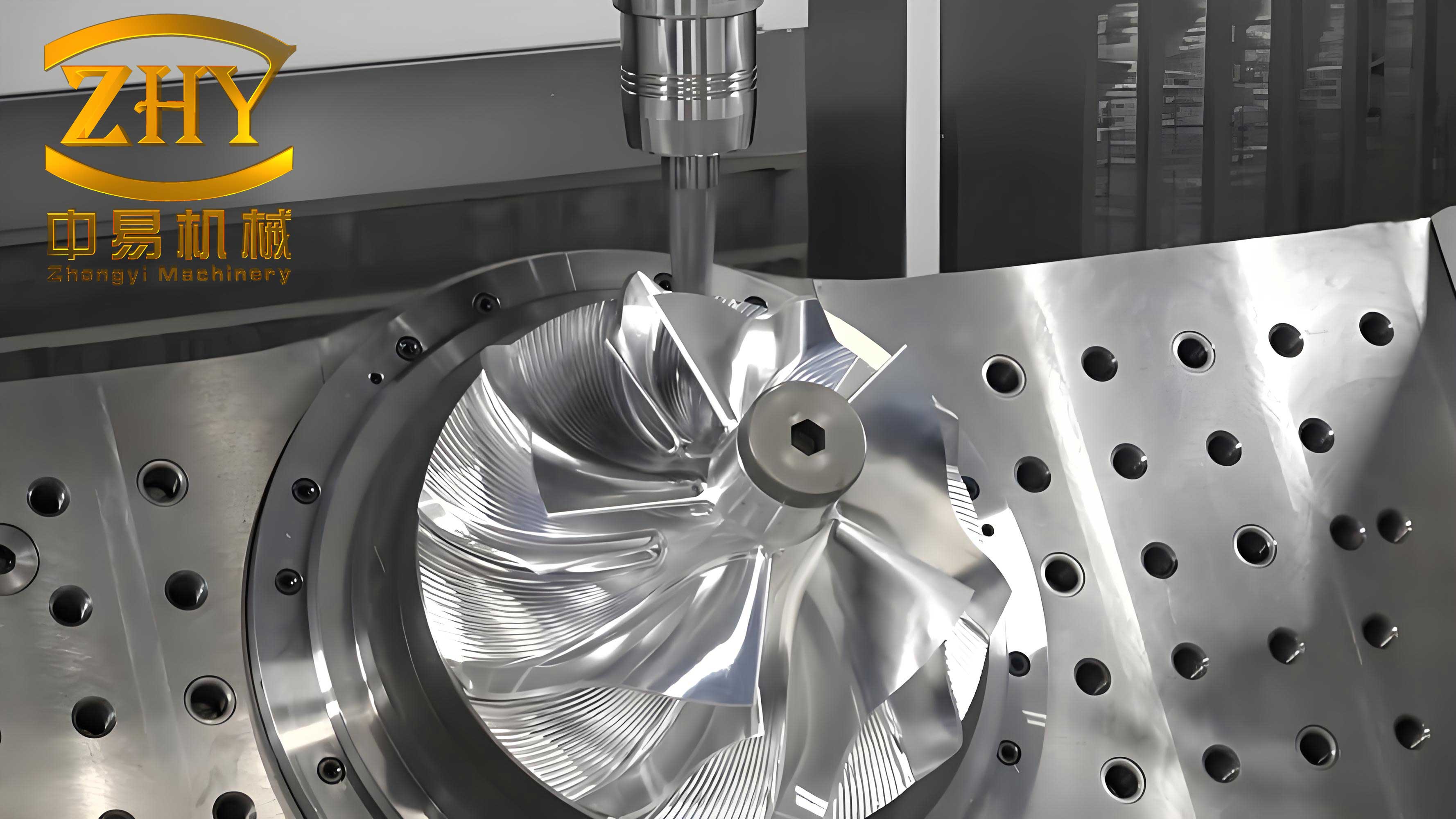
The core shop is equally critical, as machine tool castings are often core-intensive. It uses the same furan resin no-bake sand system, with one 5 t/h and two 10 t/h fixed mixers. Cores are coated with alcohol-based coatings and dried in a through-type electric circulation oven. To facilitate handling, pillar-mounted jib cranes are installed throughout, allowing cores to be lifted, turned, and transported directly to the molding closing area. The core production capacity was meticulously balanced with molding demand. The relationship can be expressed as a capacity ratio to avoid bottlenecks:
$$ R_{c/m} = \frac{C_{core} \cdot t_{core}}{C_{mold} \cdot t_{mold} \cdot N_{cores/mold}} $$
where \( R_{c/m} \) is the core-to-mold capacity ratio (target ≥1), \( C \) denotes hourly capacity (t/h), \( t \) denotes effective operation time per shift, and \( N_{cores/mold} \) is the average number of cores per mold for typical machine tool castings. We designed for \( R_{c/m} \approx 1.2 \) to provide a safe buffer.
The sand regeneration system has a total capacity of 25 t/h, achieved by two parallel 12.5 t/h units. The shakeout machine was specifically chosen with a large deck area but moderate load capacity to break down sand molds without subjecting the delicate machine tool castings to damaging vibration. The regeneration process involves magnetic separation, crushing, cooling, and classification. The efficiency \( \eta \) of sand recovery can be modeled based on initial sand-to-metal ratio \( S/M \) and system losses \( L \):
$$ \eta = 1 – \frac{L}{(S/M) \cdot M_{castings}} $$
where \( M_{castings} \) is the annual production mass of machine tool castings. A high recovery rate (>90%) is essential for economic and environmental sustainability in producing these machine tool castings.
Cleaning and heat treatment are tailored to the geometry of the machine tool castings. A one-size-fits-all approach is inefficient. Therefore, we implemented a suite of equipment:
| Casting Type (Examples) | Typical Geometry | Cleaning Equipment Selected | Rationale |
|---|---|---|---|
| Small brackets, covers | Compact, < 1 ton | Q3710 Hook Type Shot Blasting Machine | Cost-effective for high-volume processing of small parts. |
| Beds, headstocks (up to 20t) | Box-shaped, bulky | Q7320 Rotary Table Shot Blasting Chamber | Allows thorough, multi-directional cleaning of complex surfaces. |
| Long worktables, slides | Elongated, high L/W ratio | Custom Long-Chamber Hook-Type Shot Blaster (5t capacity) | Accommodates length without requiring excessive chamber volume. |
| Very large, one-off castings | Massive, >25t | Open-Floor Shot Blasting Room | Maximum flexibility for unique, super-heavy machine tool castings. |
Stress relief heat treatment is conducted in car-bottom furnaces, with cycles designed based on the wall thickness of the machine tool castings, following kinetic models for stress relaxation.
Foundry Layout and Material Flow Optimization
The overall layout is a key factor in the foundry’s efficiency. The main building is a 120m x 102m rectangle comprising three parallel bays (24m, 30m, 30m spans). Adjacent to it is the cleaning and heat treatment building with two parallel bays. A crucial design feature is the 18m wide open bay separating these two main structures. This layout offers profound advantages for the production flow of machine tool castings.
The material flow is unidirectional and logical. Raw materials enter near the melting section. Molten metal flows from the cupolas and furnace towards the central molding bays. Cores move from the core shop perpendicularly into the molding area. After pouring and cooling, molds are moved to the knockout station in the sand regeneration bay. The decored machine tool castings are then transferred through the open bay to the cleaning department. Finally, finished machine tool castings exit for storage or shipment. The open bay serves multiple purposes: it provides storage buffer for molds and castings, houses large utility units like dust collectors, and dramatically improves natural ventilation and lighting across the entire facility—a significant benefit for a workspace handling large machine tool castings.
Utility systems are centralized along one side of the production halls, accommodating the sand regeneration plant’s cooling tower, compressor station, substation, and main dust collection units. This arrangement keeps service lines short and maintenance access clear, supporting the robust, 24/7 operation required to produce 15,000 tons of machine tool castings annually. The choice of steel structure with roof drainage simplified construction and reduces long-term maintenance issues compared to internal gutter systems.
In conclusion, the successful design of this foundry hinges on a holistic understanding of the unique demands of manufacturing high-end machine tool castings. By integrating flexible melting, tailored molding and core-making, a balanced sand system, specialized cleaning, and a logical layout that optimizes material flow and utility management, the facility is engineered to meet its production targets reliably and efficiently. Every aspect, from the duplex melting that ensures the metallurgical quality of the machine tool castings to the segregated cleaning lines that respect their geometric diversity, contributes to a cohesive and productive whole. This project underscores the importance of a detail-oriented, system-based approach in designing modern foundries dedicated to precision components like machine tool castings.