
In the manufacturing of high-precision machine tools, the performance and stability of cast components are critical. As a key material, cast iron, particularly gray and ductile iron, forms the backbone of structural parts such as beds, columns, tables, and saddles. These machine tool castings account for approximately 70–80% of the total machine weight, ranging from several tons to tens of tons, and directly influence machining accuracy, rigidity, and long-term precision retention. However, common failure modes like deformation, cracking, and wear due to residual stresses and material inconsistencies pose significant challenges. In our research, we focused on addressing these issues through a holistic approach encompassing structural design optimization, advanced melting techniques, and tailored aging treatments. This article details our first-person perspective on developing high-strength, low-stress cast iron for machine tool castings, emphasizing process innovations and production applications.
The stability of machine tool castings hinges on two fundamental aspects: structural stiffness and material stiffness. Structural stiffness refers to the design integrity under operational loads, including considerations for vibration resistance, uniform wall thickness transitions, fillet radii, and strategic rib placement. Material stiffness, on the other hand, relates to the physical properties such as tensile strength, hardness, and elastic modulus, which are largely governed by composition and processing. Our investigations revealed that many failures in machine tool castings stem from inadequate design or excessive residual stresses from improper manufacturing. For instance, cracks in thick sections without fillets, fractures due to low carbon equivalents, or thermal shocks during cooling highlight the need for integrated solutions. Through simulation-driven design, high-carbon-equivalent alloying, and controlled aging, we achieved castings with superior strength and minimal stress, thereby enhancing the reliability and lifespan of machine tools.
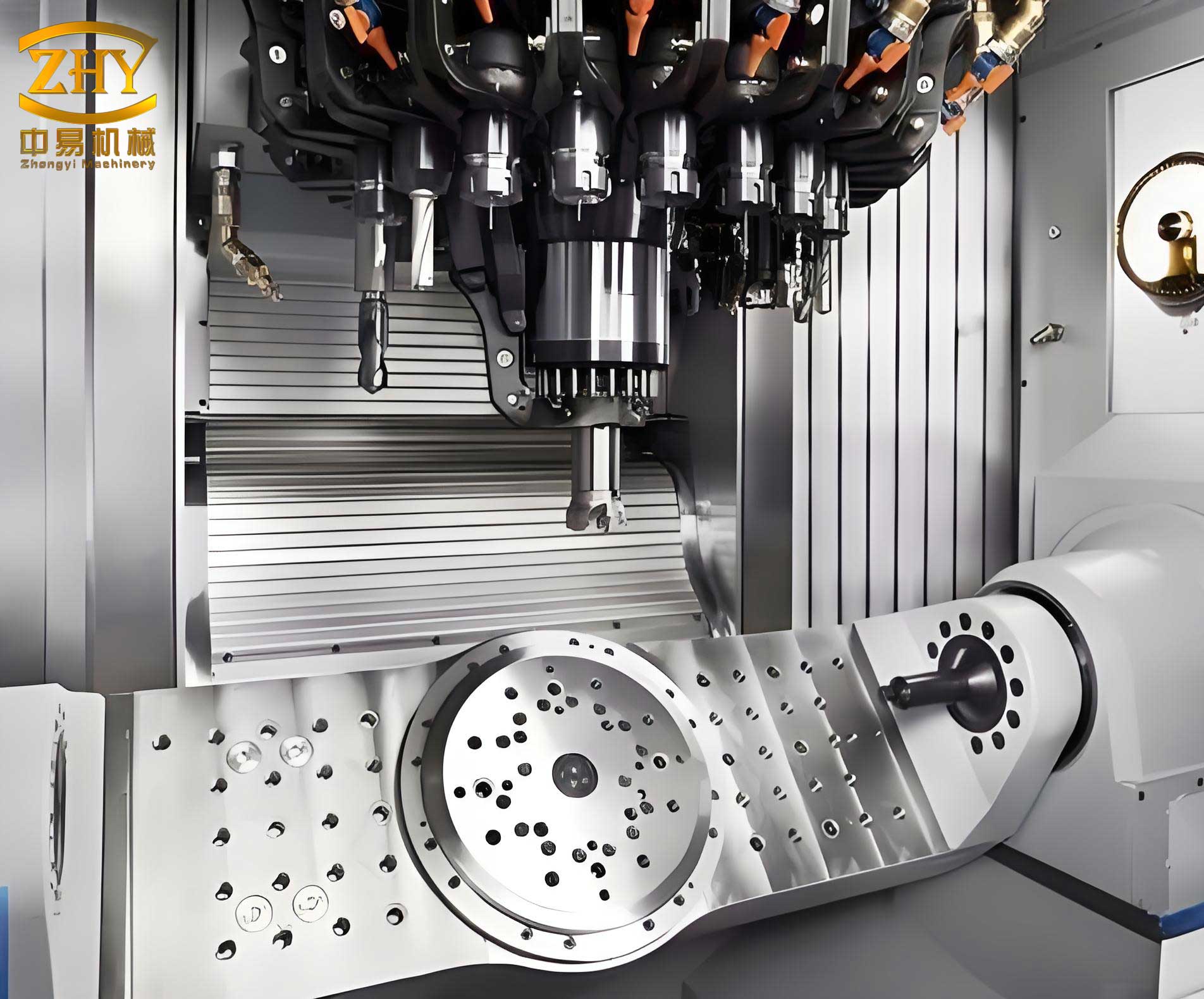
To illustrate the importance of structural optimization, consider a large bed casting made of HT300, measuring 16 m in length with an average wall thickness of 100 mm and weighing 68 tons. Initial simulations using casting software indicated high residual tensile stresses at rib junctions and riser necks, with Mises coefficients exceeding 0.8, implying a high risk of cracking. The Mises stress, often used to predict yielding, is given by: $$\sigma_{vm} = \sqrt{\frac{(\sigma_1 – \sigma_2)^2 + (\sigma_2 – \sigma_3)^2 + (\sigma_3 – \sigma_1)^2}{2}}$$ where $\sigma_1, \sigma_2, \sigma_3$ are principal stresses. By adding transverse ribs without increasing weight, we reduced the maximum Mises coefficient to below 0.5, significantly lowering crack propensity. This underscores that finite element analysis (FEA) is indispensable for optimizing machine tool castings, as it allows virtual testing of stress concentrations and solidification patterns. Furthermore, we applied similar simulations to other components like columns and tables, consistently improving design robustness. For example, modifying rib layouts and increasing fillet radii reduced stress peaks by 30–40% in several cases. These adjustments ensure that machine tool castings can withstand operational loads without premature failure.
Our melting process was revamped to achieve high strength coupled with low stress. Traditionally, machine tool castings used gray iron with carbon equivalents (CE) around 3.4–3.7%, but this often led to inconsistent properties. We adopted a synthetic cast iron approach, using 50–60% steel scrap, balanced with returns and minimal pig iron, along with high-quality graphitizing carburizers. The carbon equivalent, a key parameter for cast iron, is defined as: $$CE = C + \frac{Si}{3}$$ where C and Si are weight percentages. To enhance fluidity and reduce shrinkage, we targeted higher CE values of 3.6–3.8% for gray iron (HT300) and 4.4–4.5% for ductile iron (QT600-3), while avoiding graphite flotation. Additionally, we implemented high-temperature superheating at 1500–1550°C with a 5–10 minute hold to purify the melt, followed by precise composition control using spectroscopy and thermal analysis. Alloying elements like Cu, Cr, Sn, and Sb were added in combinations to promote pearlite formation and increase strength without compromising stress levels. The silicon-to-carbon ratio ($Si/C$) was also optimized, as it influences graphite morphology and mechanical properties. Our experiments showed that for HT300, increasing $Si/C$ from 0.5 to 0.7 boosted tensile strength from 350 MPa to 390 MPa, as summarized in Table 1.
| Sample | $Si/C$ Ratio | Tensile Strength (MPa) | Hardness (HBW) | Graphite Type |
|---|---|---|---|---|
| 1 | 0.50 | 356 | 241 | A, 4级 |
| 2 | 0.55 | 369 | 235 | A, 4级 |
| 3 | 0.60 | 383 | 245 | A, 5级 |
| 4 | 0.65 | 390 | 250 | A, 5级 |
Inoculation played a vital role in refining microstructure. We employed a multi-stage inoculation process: base inoculation in the ladle, stream inoculation during tapping, and instantaneous inoculation during pouring. This increased nucleation sites, resulting in finer graphite and improved mechanical properties. For ductile iron, pretreatment of the melt with inoculated ferrosilicon before nodularization enhanced graphite nodule count from 75/mm² to 135/mm², as shown in Table 2. The nodularity, critical for ductile iron, can be expressed as: $$Nodularity = \frac{N_{nodular}}{N_{total}} \times 100\%$$ where $N_{nodular}$ is the number of spheroidal graphite particles. This refinement directly contributed to higher elastic modulus and reduced stress concentrations in machine tool castings.
| Sample | Treatment | Nucleation Count (per mm²) | Average Nodule Diameter (µm) |
|---|---|---|---|
| 1# | Standard | 75–107 | 35 |
| 2# | Pre-inoculated | 99–135 | 25 |
The elastic modulus, a measure of material stiffness, was extensively evaluated for both gray and ductile irons. For machine tool castings, a high and stable elastic modulus is desirable to resist deformation under load. Our data, compiled over several production runs, indicated that alloying significantly improves consistency. As seen in Table 3, HT300 with Cu and Cr additions showed elastic moduli ranging from 117 to 142 GPa, compared to 93–164 GPa for unalloyed samples. For QT600-3, adding Cu, Sb, or combinations ensured moduli above 160 GPa, meeting international standards. The relationship between composition and modulus can be approximated by: $$E = E_0 + k_1 \cdot Cu + k_2 \cdot Cr$$ where $E_0$ is the base modulus and $k_1, k_2$ are coefficients. This highlights the importance of tailored alloying for high-performance machine tool castings.
| Material | Alloy Additions | Elastic Modulus Range (GPa) | Average Modulus (GPa) |
|---|---|---|---|
| HT300 | None | 93–164 | 124.9 |
| HT300 | Cu, Cr, Sn | 117–142 | 124.1 |
| QT600-3 | None | 138–190 | 165.7 |
| QT600-3 | Cu+Sb | 160–182 | 170.0 |
Aging treatments are crucial for stress relief in machine tool castings. We compared natural aging, thermal aging, and vibration aging, each with distinct mechanisms. Natural aging relies on environmental temperature fluctuations over months or years to induce microplasticity at stress concentrations, but it is time-consuming. Thermal aging involves heating castings to 500–600°C, holding for several hours, and slowly cooling to relax stresses through creep. The stress relief $\Delta \sigma$ can be modeled as: $$\Delta \sigma = \sigma_0 \left(1 – e^{-kt}\right)$$ where $\sigma_0$ is initial stress, $k$ is a temperature-dependent rate constant, and $t$ is time. Vibration aging applies cyclic stresses to mobilize dislocations, reducing stresses by 30–50%. In our practice, we combined thermal aging with vibration for optimal results, achieving up to 78% stress reduction. For instance, a bed casting showed residual stresses dropping from 175 MPa (as-cast) to under 80 MPa after treatment. Cooling rates during aging were carefully controlled; for castings over 8 tons, we maintained cooling below 13°C/h to minimize thermal gradients.
Residual stress measurements on production castings validated our process improvements. Using strain gauge rosettes, we calculated stresses from measured strains via: $$\sigma_x = \frac{E}{1-\nu^2}(\epsilon_x + \nu \epsilon_y)$$ where $E$ is elastic modulus, $\nu$ is Poisson’s ratio (typically 0.25–0.3 for cast iron), and $\epsilon_x, \epsilon_y$ are strains. Table 4 presents results for various machine tool castings after optimized aging. Notably, stresses were predominantly compressive, with tensile stresses below 50 MPa, indicating enhanced stability. These low-stress levels are critical for precision machine tool castings, as they minimize distortion during machining and service.
| Casting | Material | Max Tensile Stress (MPa) | Max Compressive Stress (MPa) | Stress State |
|---|---|---|---|---|
| Worktable 01# | HT300 | 26.0 | 105.9 | Mostly compressive |
| Bed 02# | HT300 | 32.1 | 227.3 | Compressive dominant |
| Column 03# | QT600-3 | 25.7 | 82.8 | Balanced |
Production trials on actual components confirmed the efficacy of our approach. Six machine tool castings, including beds, columns, and tables, were manufactured using the high-strength low-stress process. All met mechanical requirements, with HT300 showing tensile strengths above 330 MPa and elastic moduli over 110 GPa, and QT600-3 exhibiting moduli consistently above 160 GPa. These properties ensure that the machine tool castings maintain accuracy under load. Furthermore, non-destructive testing via ultrasonic velocity showed uniform structures with velocities around 5600 m/s, correlating with low internal defects. The success of these trials underscores the reproducibility of our methods for diverse machine tool castings.
In conclusion, achieving high-strength low-stress cast iron for machine tool castings requires a multidisciplinary strategy. Simulation-based design optimization prevents stress concentrations, while high-carbon-equivalent compositions with controlled alloying enhance material stiffness. Advanced melting and inoculation refine microstructures, and combined aging treatments mitigate residual stresses. Our research demonstrates that these integrated processes yield castings with superior performance, directly contributing to the precision and durability of machine tools. Future work may explore digital twin technologies for real-time process adjustment, further pushing the boundaries of casting quality. Ultimately, the advancements detailed here provide a robust framework for producing reliable machine tool castings that meet the escalating demands of modern manufacturing.