
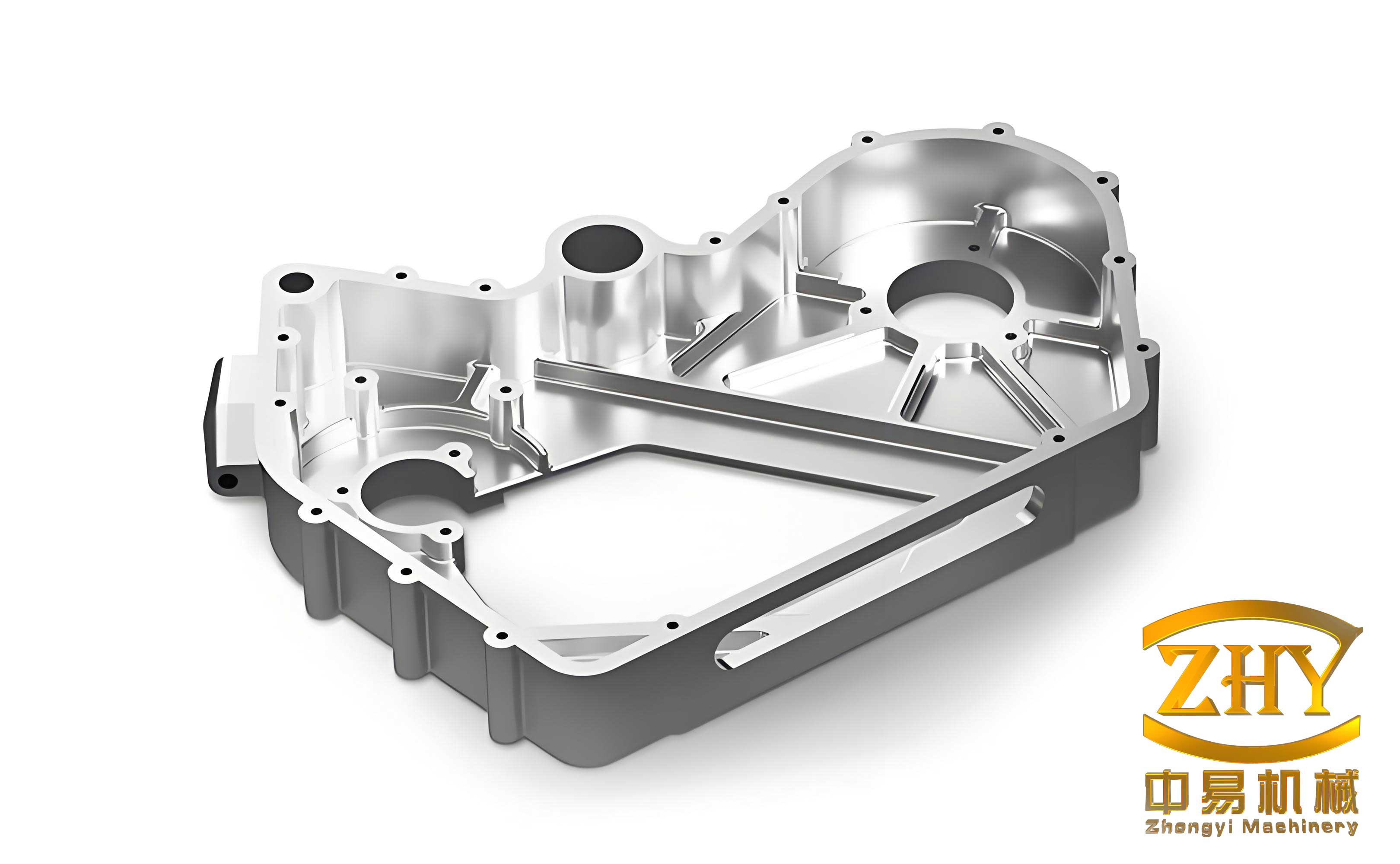
The transmission system is a cornerstone of the automotive powertrain, and its housing—essentially a critical shell casting—plays a pivotal role in determining overall vehicle performance. As the structural enclosure for gears, shafts, and bearings, the transmission housing directly influences power transmission efficiency, long-term reliability, and driver comfort through its vibrational and acoustic behavior. The relentless pursuit of vehicle lightweighting to improve fuel economy and reduce emissions presents a significant challenge: reducing the mass of these shell castings must not compromise their stiffness, durability, or noise insulation properties. This review synthesizes contemporary research and advancements across four interconnected domains critical to transmission housing development: lightweight design and structural reliability, casting process optimization for shell castings, and the control of vibration and radiated noise. The integration of advanced simulation tools has become indispensable in navigating these complex, often competing, design objectives.
Integrated Approach to Lightweight Design and Structural Reliability
The design of transmission housings is a fundamental exercise in optimizing structural efficiency. The primary goal is to minimize mass while ensuring the component can withstand static and dynamic loads throughout its service life without failure. This necessitates a dual focus on intelligent lightweight design strategies and rigorous reliability analysis.
Topological and Structural Optimization for Mass Reduction
Topology optimization has emerged as a powerful computational tool for generating innovative, weight-efficient structural layouts for shell castings. This method operates by distributing material within a predefined design space, iteratively removing underutilized elements to arrive at an optimal load path. A common mathematical formulation uses the Solid Isotropic Material with Penalization (SIMP) method, where the design variable is the relative density \( \rho_e \) of each finite element, varying between 0 (void) and 1 (solid material). The stiffness tensor \( \mathbf{E}_e \) is interpolated as:
$$
\mathbf{E}_e(\rho_e) = \rho_e^p \mathbf{E}_0
$$
where \( \mathbf{E}_0 \) is the stiffness tensor of the base material and \( p \) (typically \( p \geq 3 \)) is a penalization factor that drives the solution towards a clear 0-1 (void-solid) distribution. The optimization problem is often stated as minimizing compliance (maximizing stiffness) or mass subject to constraints like volume fraction and stress.
Applied to transmission housings, this technique frequently reveals organic, non-intuitive ribbing patterns. Researchers have successfully employed density-based methods to propose X-shaped internal rib networks, achieving simulated mass reductions of over 20%. The final design must then be interpreted for manufacturability as a castable shell casting. Beyond topology, parametric shape and size optimizations are used to refine dimensions. This includes optimizing wall thickness distributions, flange geometries, and the precise cross-sectional shape of ribs and walls. For instance, transitioning from a simple flat panel to a corrugated or wave-shaped cross-section can significantly increase bending stiffness with minimal added mass, a principle governed by the area moment of inertia \( I \). The bending stress \( \sigma \) under a moment \( M \) is inversely related to \( I \):
$$
\sigma = \frac{M y}{I}
$$
where \( y \) is the distance from the neutral axis. By increasing \( I \) through strategic shaping, stress and deformation are reduced. A summary of common lightweighting approaches and their typical outcomes is presented below.
| Optimization Method | Key Design Variables | Primary Objective | Typical Mass Reduction/Performance Gain |
|---|---|---|---|
| Topology Optimization | Material density distribution in design space | Maximize stiffness/strength for given mass or minimize mass for given stiffness | 5% – 15% mass reduction; novel rib layouts |
| Size & Shape Optimization | Wall thickness, rib height/width, local feature dimensions | Reduce stress concentrations, improve specific stiffness | 3% – 10% mass reduction; 10-50% stress reduction in hotspots |
| Cross-Sectional Design | Panel curvature, corrugation geometry | Increase bending and torsional rigidity | Significant stiffness increase (20%+) for minimal mass penalty |
Reliability Analysis: Fatigue, Dynamics, and Durability
Lightweight designs must be validated against real-world loading conditions. Reliability analysis ensures the housing’s structural integrity under static, dynamic, and cyclic loads.
Fatigue Strength Analysis: Transmission housings are subjected to complex, time-varying loads from gear meshing, engine torque fluctuations, and driveline shocks. Fatigue analysis predicts the component’s life under these cyclic stresses. The local stress-life (S-N) approach, often used for high-cycle fatigue in cast aluminum, relates the alternating stress amplitude \( S_a \) to the number of cycles to failure \( N_f \). A common model is the Basquin equation:
$$
S_a = \sigma_f’ (2N_f)^b
$$
where \( \sigma_f’ \) is the fatigue strength coefficient and \( b \) is the fatigue strength exponent. For variable amplitude loading, the Palmgren-Miner linear damage rule (LDR) is frequently applied to estimate cumulative damage \( D \):
$$
D = \sum_{i=1}^{k} \frac{n_i}{N_{f,i}}
$$
where \( n_i \) is the number of cycles at a given stress level and \( N_{f,i} \) is the life at that level. Failure is predicted when \( D \geq 1 \). Finite Element Analysis (FEA) is used to identify high-stress regions prone to fatigue cracking. Subsequent structural optimizations, such as adding fillets, changing local wall thickness, or introducing additional stiffening ribs, aim to lower local stress amplitudes \( S_a \) and extend fatigue life.
Dynamic Characteristic Analysis: Preventing resonant fatigue and excessive vibration requires knowledge of the housing’s dynamic properties. Modal analysis, performed via FEA, extracts the natural frequencies \( \omega_n \) and mode shapes \( \{\phi_n\} \) of the shell casting by solving the eigenvalue problem:
$$
\left( [K] – \omega_n^2 [M] \right) \{\phi_n\} = \{0\}
$$
where \( [K] \) and \( [M] \) are the global stiffness and mass matrices, respectively. The goal is to ensure that these natural frequencies do not coincide with major excitation frequencies from the gearbox (e.g., gear mesh frequencies \( f_{mesh} = n \cdot N \cdot \text{RPM}/60 \), where \( n \) is the gear tooth count and \( N \) is the rotational order). If potential resonances are identified, the design is modified—often by increasing stiffness in specific mode shapes—to shift the natural frequencies away from excitation bands.
Crack Initiation and Durability: Failures in shell castings often originate from casting defects (pores, shrinkage) acting as stress concentrators, or from areas of high local stress due to poor design. Fracture mechanics approaches can be used to assess the criticality of flaws. Furthermore, material-related issues like elemental segregation (e.g., silicon in aluminum alloys) can create weak paths for crack propagation. Addressing these requires a combination of structural optimization to reduce nominal stresses and casting process control to improve material integrity.
| Analysis Type | Key Metrics & Outputs | Simulation Tools & Methods | Design Response to Issues |
|---|---|---|---|
| Static & Fatigue Analysis | Maximum principal stress, stress concentration factors, fatigue damage accumulation, predicted life cycles | FEA (e.g., ANSYS, ABAQUS), S-N curves, Miner’s Rule | Add local stiffeners, increase fillet radii, modify load paths, adjust thickness in high-stress zones |
| Modal & Dynamic Analysis | Natural frequencies, mode shapes, frequency response functions (FRF), dynamic stiffness | FEA Modal Analysis, Transient Dynamic Analysis, Experimental Modal Analysis (EMA) | Reinforce areas with high modal displacement (e.g., large flat panels), add damping treatments, change connection stiffness (bolting) |
| Durability & Fracture Analysis | Fracture limit load, crack propagation rate, failure origins (from teardown) | Elastic-Plastic FEA, Fracture Mechanics (J-integral), Microstructural analysis | Redesign to eliminate sharp notches, specify stricter casting quality controls, consider material grade changes |
Casting Process Optimization for High-Integrity Shell Castings
The manufacturability of optimized housing designs is predominantly governed by casting processes. High-pressure die casting (HPDC), low-pressure die casting (LPDC), and gravity casting are common methods for producing aluminum and magnesium alloy shell castings. Achieving the desired geometric accuracy, mechanical properties, and leak-tightness requires meticulous optimization of the process parameters and die design.
Process Parameter Optimization
The quality of a shell casting is highly sensitive to numerous process variables. Numerical simulation software (e.g., MAGMASOFT, ProCAST, AnyCasting) is essential for virtual prototyping, allowing engineers to visualize mold filling, solidification, cooling, and predict defect formation. Key parameters include:
- Temperature Parameters: Pouring temperature \( T_{pour} \), die temperature \( T_{die} \).
- Pressure Parameters: Injection pressure profile in HPDC, applied pressure in LPDC.
- Velocity Parameters: Slow-shot and fast-shot velocities in HPDC, gate velocity.
- Time Parameters: Fill time, intensification/packing time, cooling time.
The optimization often follows a Design of Experiments (DoE) approach, such as Taguchi methods or Response Surface Methodology (RSM). For example, an objective might be to minimize porosity or shrinkage defect index \( D_{index} \), modeled as a function of key parameters:
$$
D_{index} = f(T_{pour}, T_{die}, V_{injection}, P_{intensification}, …)
$$
Simulation-driven optimization has led to recommendations such as using lower pouring temperatures (e.g., 670-720°C for Al alloys) to reduce shrinkage, precise die temperature control (differential heating/cooling) to promote directional solidification, and optimized pressure profiles to ensure proper feeding of thick sections.
Defect Mitigation Strategies in Shell Castings
Defects are the primary cause of scrap and performance issues in shell castings. Common defects and targeted solutions include:
- Porosity & Gas Entrapment: Caused by turbulent filling or air being trapped. Solutions involve optimizing gating systems for laminar flow, implementing vacuum-assisted HPDC, and ensuring proper venting in the die.
- Shrinkage Porosity & Cavities: Occur in isolated hot spots where liquid metal cannot feed during solidification. Addressed by redesigning cooling channels (using conformal cooling), adding local cooling pins, or applying secondary processes like Local Squeeze Pin (LSP) technology. LSP involves a hydraulically actuated pin that pushes into the solidifying casting at a specific location to compensate for shrinkage.
- Cold Shuts & Misruns: Result from premature solidification due to low metal or die temperature, or slow filling. Mitigated by increasing \( T_{pour} \) or \( T_{die} \), or by increasing injection speed/gate size.
Advanced techniques like semi-solid casting or the use of expendable cores for complex internal geometries are also areas of development for producing next-generation shell castings.
| Common Casting Defect | Root Cause | Simulation-Based Diagnostic | Corrective/Preventive Measures |
|---|---|---|---|
| Shrinkage Porosity | Inadequate feeding during solidification, hot spots | Solidification simulation showing isolated liquid pockets | Reposition cooling lines, add cooling pins/chills, implement Local Squeeze Pins (LSP), modify rib/wall thickness |
| Gas Porosity (Entrapped Air) | Turbulent metal flow during mold filling | Mold filling simulation showing vortexing or air entrapment zones | Redesign gating/runner system for laminar flow, use stepped shot profiles, apply vacuum die casting |
| Cold Shuts | Metal fronts meeting after surface oxide has formed | Filling simulation showing multiple flow fronts and temperature distribution at meeting point | Increase metal/die temperature, increase gate velocity, modify gate location to change fill pattern |
| Surface Sinks | Localized shrinkage pulling the surface inward | Thermal simulation showing slow cooling in specific areas | Increase local cooling rate, modify part geometry (add ribs, reduce local mass), optimize packing pressure profile |
Enhancing Production Efficiency
Beyond quality, the economic viability of producing shell castings depends on cycle time and yield. Efficiency improvements focus on the die and peripheral processes:
- Die Design for Productivity: Incorporating conformal cooling channels that follow the part contour can achieve more uniform and faster cooling, reducing cycle time. Multi-slide and complex core-pulling mechanisms enable the casting of intricate features in a single cycle, eliminating secondary operations.
- Process Automation & Control: Robotic die spraying with optimized spray patterns and timing ensures consistent die lubrication and thermal management. Intelligent drying systems for cores and finished castings prevent moisture-related defects and speed up post-casting handling.
- Yield Improvement: Reducing scrap directly improves efficiency. This is primarily achieved through the robust process optimization and defect mitigation strategies described above, ensuring more castings are produced within specification on the first attempt.
The future of casting for transmission housings lies in the convergence of these optimized processes with Industry 4.0 principles, creating “smart foundries” where real-time sensor data feeds into adaptive process controls for consistently high-quality shell castings.
Vibration and Radiated Noise Control of the Housing
The transmission housing is not just a structural container; it is a major contributor to vehicle Noise, Vibration, and Harshness (NVH). Gear meshing forces, bearing vibrations, and engine inputs excite the housing, causing it to vibrate and radiate sound. Controlling this vibro-acoustic behavior is paramount for passenger comfort.
Vibration Characteristics and Analysis
The foundation of noise control is understanding the housing’s vibration response. This involves building a system-level model. A common approach is to create a coupled multi-body dynamics (MBD) and FEA model. The gear- shaft-bearing system is modeled in MBD software to calculate the time-varying dynamic forces \( \mathbf{F}(t) \) at the bearing locations. These forces are then applied as inputs to a detailed finite element model of the housing.
The dynamic response of the housing can be calculated using modal superposition. The displacement vector \( \{\mathbf{u}(t)\} \) is expressed as a linear combination of the mode shapes \( \{\phi_i\} \):
$$
\{\mathbf{u}(t)\} = \sum_{i=1}^{n} \{\phi_i\} q_i(t)
$$
where \( q_i(t) \) are the modal coordinates. The equations of motion in modal space become a set of decoupled ordinary differential equations for each mode:
$$
\ddot{q}_i(t) + 2 \zeta_i \omega_i \dot{q}_i(t) + \omega_i^2 q_i(t) = \frac{\{\phi_i\}^T \{\mathbf{F}(t)\}}{m_i}
$$
where \( \omega_i \) is the natural frequency, \( \zeta_i \) is the damping ratio, and \( m_i \) is the modal mass for the \( i \)-th mode. Solving these equations yields the vibration velocity \( \dot{u}(t) \) on the housing’s outer surface, which is the source for radiated noise.
Dynamic stiffness, particularly at mounting points, is a critical metric. It is defined as the ratio of applied force to the resulting displacement at a specific frequency \( \omega \): \( K_{dyn}(\omega) = F(\omega) / X(\omega) \). Low dynamic stiffness at excitation frequencies leads to high vibration amplitudes.
Noise Control Strategies
Reducing radiated noise involves strategies at the source (vibration), along the path (housing structure), or at the receiver (acoustic treatment). For the housing itself, path control is primary.
Structural-Acoustic Optimization: The sound pressure \( p(\mathbf{r}, \omega) \) at a field point \( \mathbf{r} \) radiated by the vibrating housing can be computed using Boundary Element Methods (BEM) coupled with the FEA vibration results. Acoustic contribution analysis identifies which panel modes or surface areas contribute most to the sound pressure at a target frequency. The optimization loop then modifies the housing structure—for example, by adding ribs to break up large radiating panels, increasing local thickness, or changing curvature—to reduce the vibration velocity of these major contributors. The optimization objective function \( \Phi \) could be to minimize the total sound power \( W_{rad} \):
$$
\min \Phi = W_{rad} = \int_S I(\mathbf{s}) \, dS = \int_S \frac{1}{2} \Re \{ p(\mathbf{s}) v_n^*(\mathbf{s}) \} \, dS
$$
where \( I \) is the sound intensity, \( S \) is the radiating surface, \( p \) is surface pressure, \( v_n \) is normal surface velocity, and \( * \) denotes complex conjugate.
Advanced Materials and Treatments: Beyond geometric stiffening, add-on treatments are used:
- Damping Treatments: Constrained layer damping (CLD) patches applied to flat panels convert vibrational energy into heat, reducing resonance amplitudes.
- Active Vibration Control (AVC): Compact inertial mass actuators can be mounted to the housing. They generate counteracting forces to cancel out specific harmonic vibrations, showing effectiveness in mid-to-high frequency ranges (e.g., 1000-5000 Hz).
- Metamaterials: Research is exploring integrating locally resonant metamaterials (LRMs) into the housing design. These engineered structures can create frequency bandgaps where vibration transmission and sound radiation are dramatically attenuated, offering a potential breakthrough for lightweight, low-noise shell castings.
| Control Strategy | Mechanism of Action | Typical Application / Design Change | Frequency Range of Efficacy |
|---|---|---|---|
| Structural Stiffening | Increases natural frequencies, reduces vibration amplitudes under force excitation | Adding T-shaped or X-shaped ribs, thickening flanges, using curved panels instead of flat ones | Broadband, especially effective for low-mid frequency resonances (<1000 Hz) |
| Acoustic Contribution-Based Optimization | Targets modification of panels contributing most to radiated sound at key frequencies | Selective rib addition, local mass addition/stiffening based on BEM analysis | Targeted at specific troublesome frequency tones (e.g., gear whine) |
| Damping Treatments | Dissipates vibrational energy as heat, reducing resonant response | Applying constrained layer damping (CLD) sheets or spray-on coatings to large flat surfaces | Narrowband around structural resonances |
| Active Vibration Control (AVC) | Generates destructive interference to cancel specific harmonic vibrations | Mounting inertial mass actuators driven by control algorithms based on vibration sensors | Targeted at specific, predictable harmonic orders (e.g., engine or gear orders) |
Conclusion and Future Perspectives
The development of high-performance automotive transmission housings represents a sophisticated interplay of structural mechanics, materials science, manufacturing engineering, and acoustics. The trajectory of research and industrial practice clearly points towards an integrated, simulation-driven approach. Topology and parametric optimization enable the creation of lightweight, stiff geometries for shell castings, while advanced durability and dynamic analyses ensure these designs survive the harsh operational environment. Concurrently, the maturation of casting simulation tools allows for the virtual optimization of process parameters, dramatically improving the quality and yield of complex shell castings while reducing development time and cost. Finally, the application of vibro-acoustic simulation and novel control strategies is essential to meet increasingly stringent vehicle NVH standards, turning the housing from a noise radiator into a managed acoustic component.
Future advancements are likely to focus on several frontiers. The exploration of new material systems, such as high-strength magnesium alloys or aluminum matrix composites, promises further weight reduction for shell castings if cost and processing challenges can be overcome. The integration of smart manufacturing technologies—including real-time process monitoring, artificial intelligence for defect prediction, and digital twins of the entire casting cell—will push quality and productivity to new levels. Furthermore, the nascent field of functional integration, where the housing incorporates cooling channels, sensors, or acoustic metamaterials directly into its cast structure, could redefine its role within the powertrain. Ultimately, the transmission housing will continue to evolve from a passive enclosure into an actively optimized, multifunctional component at the heart of efficient and refined vehicle propulsion systems.