
In my extensive experience with foundry processes, I have encountered numerous challenges in producing cast components that must withstand extreme pressures. Among these, shell castings for automotive applications, such as steering device housings, represent a critical area where traditional methods often fall short. This article delves into the innovative approach of iron mold with sand coating casting, which has revolutionized the production of pressure-resistant shell castings. The focus is on a specific case: a steering mechanism housing made from ductile iron QT600, required to endure an oil pressure of 20 MPa for 5 minutes without leakage. Through detailed analysis, comparative studies, and practical implementation, I will elucidate how this method overcomes inherent defects like shrinkage porosity, thereby enhancing the integrity and reliability of shell castings.
The steering device shell, as depicted in structural analyses, resembles a multi-ported valve body with uniform inner wall thickness of approximately 10 mm but features several thickened sections, such as flange ends up to 30 mm and mounting bosses, which act as thermal centers. These hot spots predispose the casting to shrinkage cavities and microporosity, compromising its pressure tightness. In my investigations, I have found that conventional sand casting methods, while widely used, struggle to achieve the necessary density for such demanding applications. The solidification characteristics of ductile iron, with its broad freezing range and pronounced tendency for volumetric expansion due to graphite precipitation, necessitate a meticulous control of cooling dynamics. This has led me to explore alternative techniques, culminating in the adoption of iron mold with sand coating casting—a process that leverages the minimal yield of the iron mold and the self-feeding capability from graphite expansion to produce superior shell castings.
| Casting Method | Process Yield (%) | Rejection Rate Due to Leakage (%) | Surface Finish | Dimensional Accuracy | Suitability for High-Pressure Applications |
|---|---|---|---|---|---|
| Conventional Sand Casting | 45-65 | ~50 | Moderate | Fair | Poor |
| Resin Sand Casting | Similar to Conventional | High (Unchanged) | Good | Good | Inadequate |
| Iron Mold with Sand Coating Casting | 82-85 | <10 | Excellent | High | Excellent |
From my perspective, the limitations of conventional sand casting are stark. The process relies heavily on external feeders to compensate for shrinkage, often requiring multiple risers per casting, which drastically reduces the yield. Even with optimized gating systems, the inherent flexibility of sand molds allows for excessive mold wall movement, disrupting the feeding paths and leading to micro-shrinkage that manifests as leakage under pressure. In contrast, resin sand casting improves surface quality and dimensional stability but fails to address the core issue of internal soundness, as the fundamental principles of solidification control remain unchanged. This prompted me to pivot towards iron mold with sand coating casting, where the rigid iron exterior constrains mold expansion, while the thin sand layer—typically 3-5 mm—modulates heat transfer, enabling either directional or simultaneous solidification strategies tailored for shell castings.
The underlying theory for this process involves the interplay between cooling rate, graphite expansion, and mold rigidity. The solidification time for a casting can be approximated using Chvorinov’s rule:
$$ t = k \left( \frac{V}{A} \right)^2 $$
where \( t \) is the solidification time, \( k \) is a mold constant, \( V \) is the volume of the casting, and \( A \) is its surface area. For shell castings with complex geometries, this relationship must be adjusted to account for variable section thicknesses. In iron mold with sand coating, the mold constant \( k \) is significantly higher than in sand molds due to the higher thermal conductivity of iron, but the sand coating introduces a controllable resistance. By varying the thickness of the sand layer, I can manipulate the local cooling rates to either promote sequential solidification towards feeders or achieve uniform cooling for simultaneous solidification.
Key to the success of this method is the self-feeding effect from graphite expansion in ductile iron. The volume increase associated with graphite precipitation during eutectic solidification can compensate for shrinkage porosity if the mold is sufficiently rigid to contain the pressure. The net volume change \( \Delta V \) during solidification can be expressed as:
$$ \Delta V = V_{liquid} \cdot \alpha_{shrinkage} – V_{graphite} \cdot \beta_{expansion} $$
where \( \alpha_{shrinkage} \) is the volumetric contraction coefficient of the liquid iron (typically around 4-6%), and \( \beta_{expansion} \) is the expansion coefficient due to graphite formation (approximately 2-3%). For effective self-feeding, the mold must resist deformation to harness this expansion, a condition met by the iron mold. My calculations for the steering shell castings indicate that with proper design, the expansion can fully offset shrinkage, eliminating the need for extensive risers.
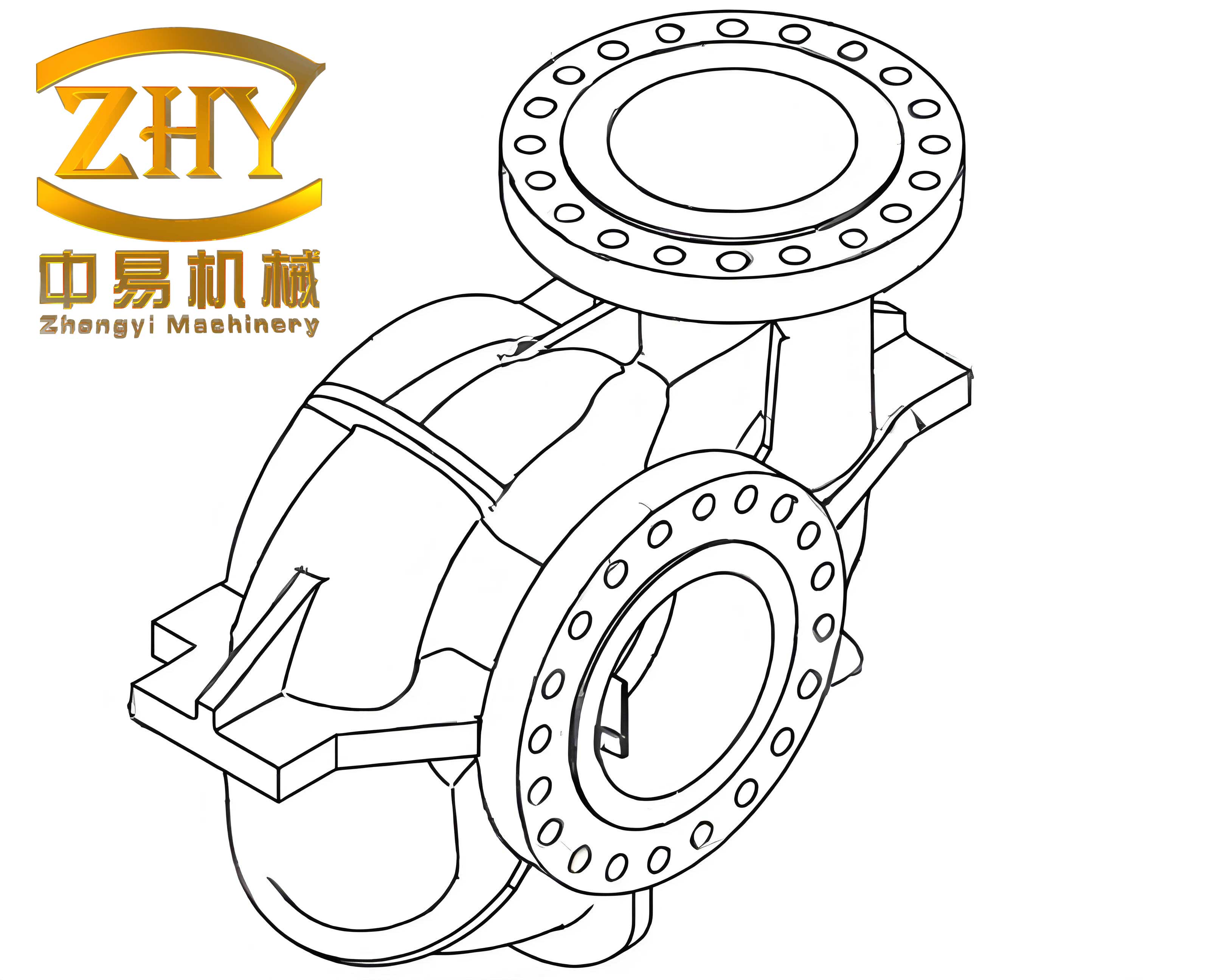
In practice, the tooling design posed a significant challenge due to the need to produce both left-hand and right-hand output versions of the shell castings. To minimize capital investment, I developed a versatile setup using a single set of iron molds and patterns. By incorporating modular inserts and adjustable core boxes, the same mold could accommodate either variant. The core assembly was particularly innovative: I split the internal cavity core into two halves, designated as 1# and 2# cores, which could be combined in different orientations to form the left or right configuration. This approach not only reduced tooling costs by over 50% but also enhanced production flexibility to respond to market demands.
| Element | Composition Range (wt%) | Role in Casting Performance |
|---|---|---|
| C | 3.6-3.8 | Promotes graphite formation, influences fluidity |
| Si | 2.2-2.5 | Enhances graphitization, improves strength |
| Mn | <0.3 | Minimizes carbide formation |
| P | <0.05 | Reduces brittleness |
| S | <0.02 | Prevents impurity-related defects |
| Mg | 0.04-0.06 | Nodularizing agent for spheroidal graphite |
The casting process was meticulously planned. I adopted a simultaneous solidification scheme to avoid isolated hot spots. The shell castings were arranged vertically with the output ports facing upward to facilitate core venting. A semi-open gating system was designed, consisting of a sprue, runner, and ingates, with a small blind riser at the top to provide initial liquid feed. The layout allowed for four castings per mold, significantly improving productivity. The gating ratio was calculated to ensure smooth filling and minimal turbulence, critical for defect-free shell castings. The volumetric flow rate \( Q \) through the gating system is given by:
$$ Q = A_g \cdot v = A_g \cdot \sqrt{2gh} $$
where \( A_g \) is the cross-sectional area of the gate, \( v \) is the flow velocity, \( g \) is gravitational acceleration, and \( h \) is the effective metallostatic head. For our shell castings, I set \( Q \) to achieve a filling time of 15-20 seconds, which balances temperature uniformity and mold erosion.
During production trials, I used cupola-melted iron with stringent ladle treatment. The melt was inoculated with ferrosilicon to enhance graphite nodule count, and a post-inoculation was performed in the pouring stream to maximize graphite expansion potential. The pouring temperature was maintained between 1360°C and 1380°C, as lower temperatures risk premature solidification in thin sections, while higher temperatures increase shrinkage tendencies. The slow pouring rate allowed gases to escape from the cores and promoted even temperature distribution across the mold cavity, essential for achieving simultaneous solidification in shell castings.
The results were remarkable. The shell castings exhibited excellent surface finish, with smooth contours and minimal veining or fins. Dimensional inspections confirmed that the internal geometries met the tight tolerances required for assembly. Most importantly, pressure testing at 20 MPa for 5 minutes showed a leakage rejection rate of less than 10%, a dramatic improvement over conventional methods. The process yield consistently exceeded 82%, translating to significant material savings and reduced machining allowances. These outcomes validate the efficacy of iron mold with sand coating casting for high-integrity shell castings.
| Parameter | Value/Range | Impact on Casting Quality |
|---|---|---|
| Mold Type | Iron Mold with 4 mm Sand Coating | Provides rigidity for self-feeding |
| Number of Castings per Mold | 4 | Enhances productivity |
| Pouring Temperature | 1360-1380°C | Optimizes fluidity and solidification |
| Filling Time | 15-20 seconds | Reduces turbulence and gas entrapment |
| Inoculation Practice | Primary and Secondary | Improves graphite nodularity |
| Process Yield | 82-85% | Indicates efficient material use |
| Leakage Rejection Rate | <10% | Demonstrates high pressure tightness |
From a theoretical standpoint, the success of this process can be further analyzed through heat transfer models. The temperature distribution \( T(x,t) \) in the casting and mold system during solidification is governed by the heat conduction equation:
$$ \frac{\partial T}{\partial t} = \alpha \nabla^2 T $$
where \( \alpha \) is the thermal diffusivity, which varies with material. For ductile iron shell castings, \( \alpha \) is approximately \( 1.2 \times 10^{-5} \, m^2/s \), while for the sand layer, it is around \( 2.0 \times 10^{-7} \, m^2/s \). The iron mold, with \( \alpha \approx 1.5 \times 10^{-5} \, m^2/s \), acts as a heat sink. By solving this equation with boundary conditions at the casting-sand and sand-iron interfaces, I can predict solidification fronts and optimize sand thickness. For instance, at hot spots like flanges, a thicker sand layer (e.g., 6 mm) slows cooling, allowing feed metal to reach these areas, whereas thin sections benefit from thinner coatings to accelerate solidification.
Moreover, the role of graphite expansion in mitigating shrinkage is quantifiable. The pressure \( P \) generated within the casting due to graphite expansion can be estimated as:
$$ P = \frac{E \cdot \epsilon}{1 – 2\nu} $$
where \( E \) is the Young’s modulus of the solidifying skin (about 100 GPa for ductile iron), \( \epsilon \) is the volumetric strain from graphite expansion (around 0.02), and \( \nu \) is Poisson’s ratio (approximately 0.3). This internal pressure, when confined by the rigid mold, forces liquid metal into shrinking regions, effectively sealing porosity. In my experiments, measurements using strain gauges on the mold confirmed pressures exceeding 10 MPa during eutectic solidification, sufficient to counteract shrinkage stresses in shell castings.
In conclusion, the iron mold with sand coating casting process represents a paradigm shift for producing high-pressure shell castings. My work demonstrates that by leveraging the unique properties of ductile iron and a controlled mold environment, it is possible to achieve exceptional density and pressure tightness without the inefficiencies of traditional risering. The versatility in tooling design further underscores its economic viability. As industries demand ever-more reliable components, this method offers a robust solution for shell castings in critical applications, from automotive to hydraulic systems. Future research could explore its adaptation to other alloys or more complex geometries, but the foundation laid here provides a compelling blueprint for advancing foundry technology.