
In this study, we investigate the low-pressure casting process for complex thin-walled shell castings made of ZM4 magnesium alloy. The shell castings are critical components in aerospace applications, requiring high precision, excellent mechanical properties, and leak-tightness. The complexity of these shell castings, with thin walls as thin as 5 mm and intricate internal oil passages, poses significant challenges in manufacturing. We adopt a sand mold low-pressure casting technique to address these challenges, focusing on optimizing process parameters to eliminate defects such as cold shuts, porosity, and shrinkage. The goal is to produce high-quality shell castings that meet stringent standards for structural integrity and performance.
The ZM4 magnesium alloy is part of the magnesium-rare earth-zirconium system, known for its enhanced corrosion resistance and high-temperature creep properties due to zirconium and rare earth elements. However, its wide solidification temperature range (approximately 100°C) and susceptibility to oxidation make it difficult to cast, especially for complex thin-walled geometries. Low-pressure casting offers advantages such as controlled filling and pressurized solidification, which can improve density and reduce defects. We conduct this research to develop an effective process for producing ZM4 magnesium alloy shell castings, leveraging detailed analysis and iterative improvements.
We begin by examining the structure and characteristics of the shell castings. The castings have dimensions of approximately 300 mm in diameter and 200 mm in height, with wall thicknesses varying from 5 mm to 15 mm. The internal features include multiple细孔 oil paths, such as top环形油路, side inclined油路, and other complex channels. These features necessitate precise core assembly and careful gating design to ensure complete filling and soundness. The shell castings must undergo thorough inspection, including fluorescent penetrant testing, X-ray radiography, and pressure leak testing at 4–6 MPa for 10–15 min without leakage. This underscores the importance of achieving defect-free shell castings.
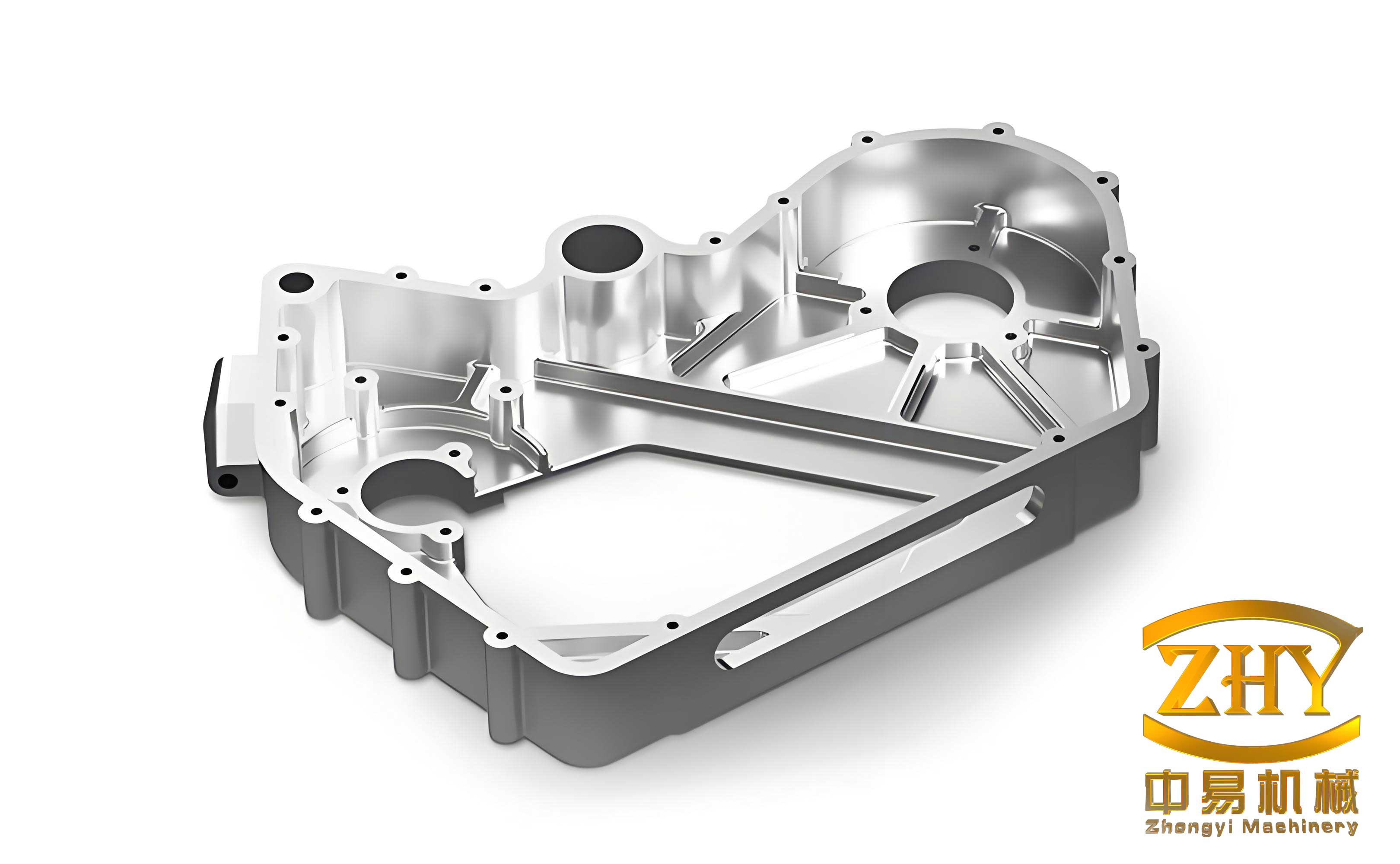
Our experimental setup involves a FT-300T-M752 low-pressure casting machine. The ZM4 magnesium alloy is melted in a crucible under a protective atmosphere of SF6 mixed with dry compressed air to prevent combustion. The alloy composition is critical for performance; we summarize it in Table 1. The shell castings are produced using sand molds with furan resin-bonded sand, incorporating 0.5–1.5% flame retardant by weight to prevent reactions with molten magnesium. The cores for internal oil passages are made of coated sand, assembled on core seats with height calibration using templates. This ensures accuracy in forming the complex internal features of the shell castings.
| Element | Mg | RE | Zr | Others |
|---|---|---|---|---|
| Content | Balance | 2.5–4.0 | 0.4–1.0 | < 0.3 |
The low-pressure casting process is characterized by a pressure-time curve, as shown in Figure 6 of the original study. We derive key parameters using fundamental equations. The pressure required for each stage is calculated based on metallostatic head and process needs. For the升液 stage (OA), the pressure P1 is given by:
$$ P1 = \rho (h_1 + \Delta h_1) \times 9.8 \times 10^{-3} $$
where ρ is the density of molten ZM4 alloy (approximately 1.7 g/cm³), h1 is the height from the molten metal surface to the riser tube口, and Δh1 accounts for metal level drop. Similarly, for the充型 stage (AB), the pressure P2 is:
$$ P2 = \rho (h_1 + \Delta h_1 + h_2 + \Delta h_2) \times 9.8 \times 10^{-3} $$
where h2 is the height from the riser tube口 to the top of the冒口, and Δh2 is the corresponding drop. These formulas guide our initial parameter settings for producing the shell castings.
We design a slot gating system for the shell castings, which includes a sprue, annular runner, vertical cylinders (立筒), slot gates, and a large top riser. The gating system is crucial for directing molten metal upward to fill the thin-walled sections and provide feeding during solidification. The thick top section of the shell castings is placed upward with the riser for effective feeding, while chill plates are placed at bottom厚大凸台 to promote directional solidification. This design aims to minimize defects in the shell castings. However, initial trials reveal issues that require further optimization.
Our first set of process parameters is based on typical low-pressure casting practices for magnesium alloys. We set the pouring temperature at 740°C, which is 10–20°C lower than gravity casting due to reduced heat loss in sealed conditions. The pressure-time parameters are summarized in Table 2. The升液 speed is set at 1.2 kPa/s to avoid temperature drop in the riser tube, and the充型 speed is 0.6 kPa/s to prevent turbulence in the thin sections of the shell castings. The结壳增压 pressure is 2 kPa with a 4-s duration, followed by a 20-s结壳保压. The结晶增压 pressure is 2 kPa with a 4-s duration, and结晶保压 lasts 120 s to ensure complete solidification under pressure.
| Stage | Pressure (kPa) | Speed (kPa/s) | Time (s) | Purpose |
|---|---|---|---|---|
| 升液 (OA) | P1 (calculated) | 1.2 | t1 | Raise metal to mold入口 |
| 充型 (AB) | P2 (calculated) | 0.6 | t2-t1 | Fill mold cavity |
| 结壳增压 (BC) | P3 = P2 + 2 | – | 4 | Form initial shell |
| 结壳保压 (CD) | P3 | – | 20 | Stabilize shell |
| 结晶增压 (DE) | P4 = P3 + 2 | – | 4 | Enhance feeding |
| 结晶保压 (EF) | P4 | – | 120 | Solidify under pressure |
| 卸压 (FG) | 0 | – | t6-t5 | Release pressure |
After casting with these parameters, we inspect the shell castings and find defects in some samples. Approximately 15% of the shell castings exhibit gas bubbles near the inclined oil passage inlets, along with minor mechanical sand burning on surfaces. We analyze that the bubbles result from excessive pouring temperature causing core gas evolution, while sand burning is due to high结壳增压 pressure eroding the mold coating. To address this, we adjust the parameters: pouring temperature is reduced to 735°C,结壳增压 pressure to 1 kPa, and结壳增压 time to 2 s. Additionally, we modify the core seats by applying a self-hardening sand layer after blasting and coating with a binder, then baking at 200°C for 2 hours. This improves thermal insulation and reduces cold shuts in the shell castings.
Despite these adjustments, X-ray inspection reveals cold shuts in the inclined oil passages of 30% of the shell castings. This indicates that parameter tuning alone is insufficient due to the remote location of these passages from the gates. We hypothesize that improving the gating system is necessary. We add an extra slot gate and vertical cylinder near the inclined oil passages, increasing the number of gates from three to four. This modification shortens the feeding distance and enhances metal flow to the problematic areas of the shell castings. The revised gating system is shown in Figure 11 of the original study, and we implement it in subsequent trials.
We then conduct a third trial with optimized parameters and the modified gating system. The final parameters are summarized in Table 3. The pouring temperature is 735°C,升液 speed 1.2 kPa/s,充型 speed 0.6 kPa/s,结壳增压 1 kPa for 2 s,结晶增压 2 kPa for 4 s, and结晶保压 120 s. The shell castings produced under these conditions show no visible defects. We perform non-destructive testing, including fluorescent and X-ray inspection, and find no cold shuts, porosity, or cracks in the shell castings. After machining, pressure leak tests confirm no leakage in the oil passages, meeting the required standards. The mechanical properties of附铸试样 are evaluated, as shown in Table 4, demonstrating compliance with specifications.
| Parameter | Value | Rationale |
|---|---|---|
| Pouring Temperature | 735°C | Reduce gas evolution and improve fluidity |
| 升液 Pressure P1 | Calculated via formula | Based on metal static head |
| 升液 Speed | 1.2 kPa/s | Prevent metal cooling in riser tube |
| 充型 Pressure P2 | Calculated via formula | Ensure complete filling |
| 充型 Speed | 0.6 kPa/s | Avoid turbulence in thin walls |
| 结壳增压 Pressure | 1 kPa | Minimize mold erosion |
| 结壳增压 Time | 2 s | Adequate for shell formation |
| 结壳保压 Time | 15 s | Stabilize shell without over-thickening |
| 结晶增压 Pressure | 2 kPa | Enhance feeding for soundness |
| 结晶增压 Time | 4 s | Smooth pressure transition |
| 结晶保压 Time | 120 s | Ensure solidification under pressure |
The success of this process relies on understanding the solidification behavior of ZM4 alloy in shell castings. The solidification time t_s for a thin-walled section can be estimated using Chvorinov’s rule:
$$ t_s = C \left( \frac{V}{A} \right)^n $$
where V is volume, A is surface area, C is a mold constant, and n is an exponent (typically around 2). For the 5-mm walls in our shell castings, the V/A ratio is small, leading to rapid solidification. This necessitates fast充型 and effective feeding. The low-pressure casting pressure helps compensate for shrinkage, with the feeding pressure P_f related to the固相 fraction f_s by:
$$ P_f = P_4 – \rho g h_s $$
where h_s is the height of the solidifying metal column. By maintaining P4 during结晶保压, we ensure that feeding occurs until the shell castings are fully solid.
We also analyze the thermal gradients in the shell castings using a simplified heat transfer model. The temperature distribution T(x,t) in one-dimensional solidification can be described by:
$$ \frac{\partial T}{\partial t} = \alpha \frac{\partial^2 T}{\partial x^2} $$
where α is thermal diffusivity. For ZM4 alloy, α is approximately 5.0 × 10^{-5} m²/s. The gradient affects microstructure and defect formation. By placing chills at the bottom, we promote directional solidification from bottom to top, reducing shrinkage porosity in the shell castings. The effectiveness of chills can be quantified by the chill modulus M_c:
$$ M_c = \frac{V_c}{A_c} $$
where V_c and A_c are volume and surface area of the chill. Higher M_c improves heat extraction, beneficial for thick sections of the shell castings.
| Sample | Tensile Strength Rm (MPa) | Elongation A (%) | Result vs. Standard |
|---|---|---|---|
| 1 | 151 | 3.0 | 合格 (Rm ≥ 117.6 MPa, A ≥ 2%) |
| 2 | 139 | 2.0 | 合格 |
| 3 | 148 | 2.0 | 合格 |
| Average | 146 | 2.3 | 合格 |
Throughout this research, we emphasize the importance of iterative testing and analysis for complex thin-walled shell castings. Each modification—whether in parameters, gating design, or mold preparation—contributes to the final quality. The shell castings produced with the optimized process exhibit consistent performance, validating our approach. We further discuss the implications for industrial production, where scalability and cost-efficiency are key. The low-pressure casting process for ZM4 magnesium alloy shell castings can be automated using advanced control systems to monitor pressure and temperature in real-time, ensuring reproducibility.
In conclusion, we have successfully developed a sand mold low-pressure casting process for ZM4 magnesium alloy complex thin-walled shell castings. By analyzing the structure and challenges, designing an appropriate slot gating system, and optimizing process parameters through iterative improvements, we achieve shell castings free from defects like cold shuts, porosity, and leaks. The key factors include controlling pouring temperature, adjusting结壳增压 pressure and time, adding an extra gate for remote sections, and ensuring proper mold preparation. This research provides a reliable methodology for manufacturing high-integrity shell castings for demanding applications, contributing to advancements in magnesium alloy casting technology.
The findings underscore the versatility of low-pressure casting for producing intricate shell castings. Future work could explore numerical simulation to predict flow and solidification patterns, further optimizing the process for even more complex geometries. Additionally, studying the effect of alloy modifications on the castability of shell castings may yield insights for next-generation materials. Overall, this study demonstrates that with careful design and parameter control, high-quality ZM4 magnesium alloy shell castings can be consistently produced, meeting the rigorous standards of aerospace and other high-performance industries.