
In the field of aerospace engineering, the demand for lightweight and high-performance components has driven extensive research into advanced manufacturing techniques. Among these, investment casting, particularly for producing intricate shell castings, stands out due to its ability to fabricate complex geometries with minimal machining requirements. In this study, we focus on the gravity filling process for thin-walled complex conical shell castings made from ZL205A aluminum alloy. The objective is to optimize the casting process to achieve defect-free shell castings with superior mechanical properties, leveraging finite element simulation to analyze filling patterns, temperature fields, and solidification behavior. Shell castings, such as the conical housing investigated here, are critical in structural applications where weight reduction and strength are paramount. Through a detailed examination of process parameters and microstructural evolution, we aim to demonstrate the efficacy of bottom-pouring gravity filling in enhancing the quality and performance of these shell castings.
The conical shell casting under consideration features a thin-walled design with an average wall thickness of 4.5 mm, posing significant challenges in terms of mold filling and solidification control. The structure comprises a bottom ring, intermediate ribs, a top ring, and multiple pin sockets, as illustrated in the following table summarizing key dimensions:
| Component | Dimension | Value (mm) |
|---|---|---|
| Overall Height | Height | 220 |
| Bottom Ring | Outer Diameter | 140 |
| Bottom Ring | Inner Diameter | 120 |
| Top Ring | Outer Diameter | 46 |
| Top Ring | Inner Diameter | 38 |
| Intermediate Ribs | Thickness | 3.5 |
| Pin Sockets | Diameter | 5 |
| Pin Sockets | Height | 14 |
Such geometry necessitates careful process design to avoid defects like shrinkage porosity, hot tearing, and cold shuts, which are common in shell castings with varying wall thicknesses. The ZL205A alloy, known for its high strength after heat treatment, presents additional complexities due to its wide solidification range and susceptibility to microsegregation. The chemical composition of ZL205A alloy is critical for understanding its behavior during casting, as shown in the table below:
| Element | Composition (wt.%) |
|---|---|
| Cu | 4.6–5.3 |
| Mn | 0.4 |
| Cd | 0.24 |
| Ti | 0.20 |
| Zr | 0.12 |
| V | 0.18 |
| B | 0.4 |
| Zn | 0.1 |
| Al | Balance |
The solidification characteristics of ZL205A alloy can be described using the following equation for the cooling curve: $$ T(t) = T_0 – k \cdot t $$ where \( T(t) \) is the temperature at time \( t \), \( T_0 \) is the initial pouring temperature, and \( k \) is the cooling rate, which varies with geometry and process conditions. For shell castings, controlling \( k \) is essential to achieve directional solidification. The alloy’s solidification range from 544°C to 633°C, spanning 89°C, promotes mushy zone formation, leading to shrinkage defects if not properly managed. This highlights the need for optimized gating systems in gravity filling processes for such shell castings.
Initial attempts with top-pouring gravity filling resulted in severe shrinkage porosity and gas entrapment in the bottom and top rings of the shell castings. To address this, we designed a bottom-pouring gravity filling system, incorporating a horseshoe-shaped runner, side slot gates, and a top insulating riser. This configuration aims to ensure uniform melt distribution, reduce turbulence, and facilitate sequential solidification from bottom to top. The design parameters were optimized through iterative simulations, focusing on minimizing defects in the thin-walled regions of the shell castings. The filling and solidification processes were modeled using finite element methods, with governing equations for fluid flow and heat transfer. The Navier-Stokes equations for incompressible flow during filling are given by: $$ \rho \left( \frac{\partial \mathbf{v}}{\partial t} + \mathbf{v} \cdot \nabla \mathbf{v} \right) = -\nabla p + \mu \nabla^2 \mathbf{v} + \rho \mathbf{g} $$ where \( \rho \) is density, \( \mathbf{v} \) is velocity, \( p \) is pressure, \( \mu \) is dynamic viscosity, and \( \mathbf{g} \) is gravitational acceleration. For heat transfer during solidification, the energy equation is: $$ \rho c_p \frac{\partial T}{\partial t} = \nabla \cdot (k \nabla T) + Q $$ with \( c_p \) as specific heat, \( k \) as thermal conductivity, and \( Q \) as latent heat release from phase change. These equations were solved numerically to predict the behavior of the shell castings during processing.
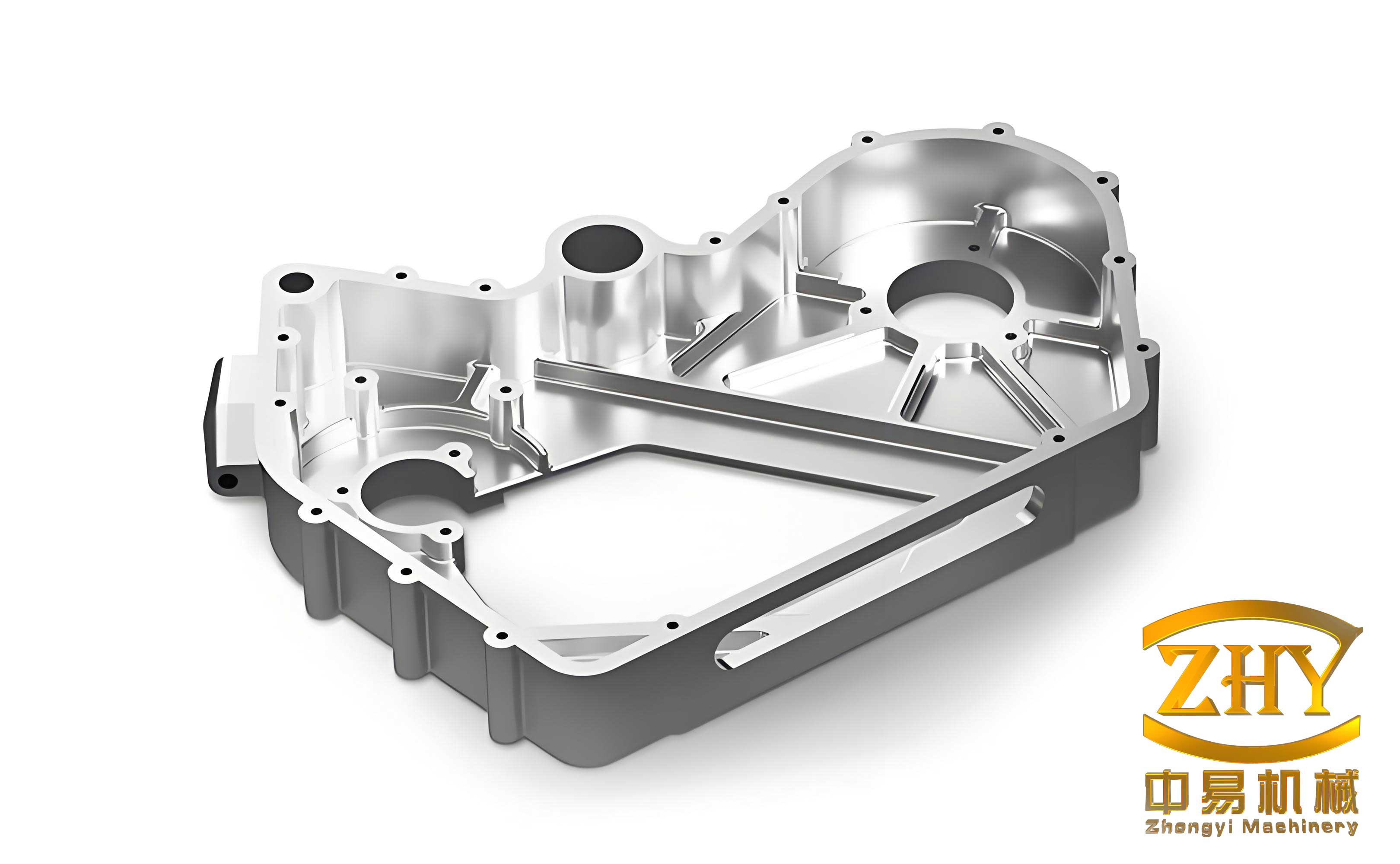
Simulation results indicated that the bottom-pouring system achieved complete filling of the shell castings in approximately 21 seconds, with a smooth and controlled flow pattern. The temperature field analysis revealed directional solidification, progressing from the bottom upward and from the interior outward, crucial for reducing thermal stresses and defects in shell castings. The solid phase distribution showed that full solidification occurred at 374 seconds, with complete precipitation at 424 seconds, ensuring adequate feeding and minimal porosity. To visualize the simulation outcomes, the following image provides an insight into the filling process for such shell castings:
The microstructural evaluation of the produced shell castings revealed refined grain sizes, with as-cast and T5 heat-treated conditions showing averages of 112 μm and 94 μm, respectively. This refinement is attributed to the controlled solidification rates achieved through the gravity filling process. The T5 heat treatment parameters, as summarized in the table below, were critical in enhancing the mechanical properties of the shell castings:
| Process Step | Temperature (°C) | Time (h) | Medium |
|---|---|---|---|
| Solution Treatment | 538 | 14 | Water |
| Quenching | 40 | – | Water |
| Aging | 155 | 9 | Air |
Mechanical properties were assessed using specimens extracted from the rib regions of the shell castings. The results, presented in the table below, demonstrate that the T5-treated shell castings meet the required design specifications, with high strength and ductility:
| Property | Average Value |
|---|---|
| Tensile Strength | 453 MPa |
| Yield Strength | 400 MPa |
| Elongation | 8.9% |
| Hardness (HBS) | 114 |
The success of this gravity filling technology for shell castings can be further analyzed through the relationship between process parameters and final properties. For instance, the cooling rate \( \dot{T} \) influences grain size \( d \) according to the equation: $$ d = a \cdot \dot{T}^{-n} $$ where \( a \) and \( n \) are material constants. In our shell castings, the optimized filling process resulted in a cooling rate that promoted fine grains, enhancing mechanical performance. Additionally, the avoidance of defects is quantified by the Niyama criterion for shrinkage porosity: $$ G / \sqrt{\dot{T}} > C $$ where \( G \) is temperature gradient, \( \dot{T} \) is cooling rate, and \( C \) is a critical value. Our simulations confirmed that the designed gating system maintained adequate \( G \) and \( \dot{T} \) throughout the solidification of the shell castings, preventing porosity formation.
In conclusion, the bottom-pouring gravity filling process, coupled with finite element simulation, proves highly effective for manufacturing thin-walled complex conical shell castings from ZL205A alloy. The process ensures directional solidification, minimizes defects, and achieves superior mechanical properties. This study underscores the importance of integrated process design and simulation in advancing investment casting techniques for high-performance shell castings. Future work may explore the application of this technology to other alloy systems or more intricate geometries, further expanding the capabilities of shell castings in aerospace and other industries. The repeated emphasis on shell castings throughout this research highlights their significance in modern manufacturing, where lightweight and durable components are essential. By refining gravity filling methods, we can continue to improve the quality and reliability of shell castings for demanding applications.