
The manufacturing of high-integrity shell castings, particularly for critical applications in automotive, aerospace, and machinery, demands a rigorous and multi-faceted quality assurance protocol. The journey from a molten alloy to a precision component involves numerous potential failure points, making systematic inspection non-negotiable. This article details a comprehensive inspection framework for shell castings, encompassing both the initial raw casting evaluation (the “rough” or “blank” stage) and the final verification of the machined product. The methodology is rooted in preventing defects, ensuring material consistency, and guaranteeing dimensional and functional conformity, thereby securing the structural and operational reliability of the final shell assembly.
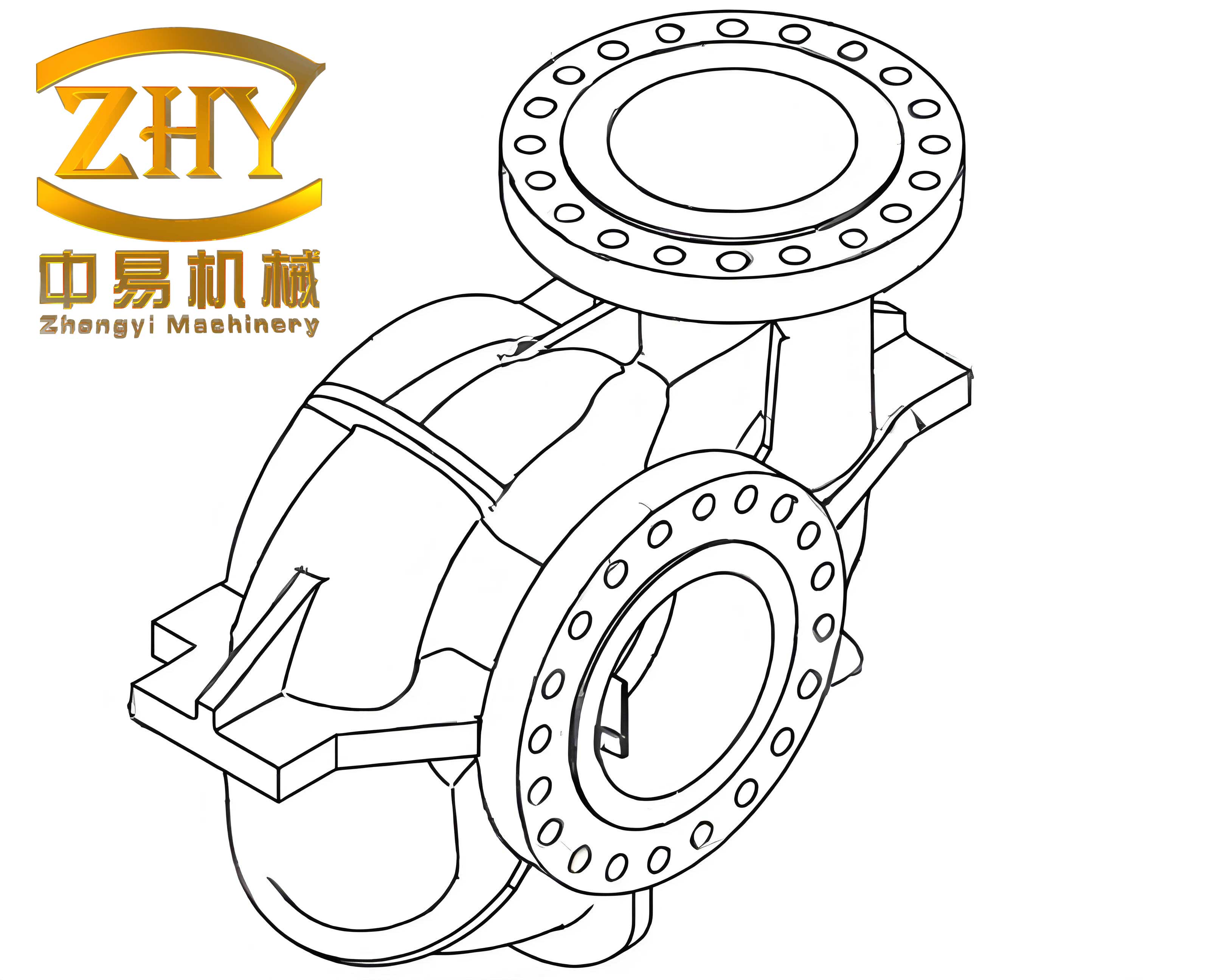
The foundation of any reliable shell component lies in its material constitution. For aluminum alloy shell castings, the standard ADC12 (per JIS H 5302) is frequently specified due to its excellent castability, pressure tightness, and mechanical properties. The verification process begins with chemical composition analysis to ensure the alloying elements (Si, Cu, Mg, etc.) fall within the specified ranges, directly influencing the final microstructure and performance. Alongside chemistry, bulk material hardness serves as a quick, non-destructive indicator of the casting’s approximate strength and wear resistance. A typical requirement is a minimum Brinell hardness, for instance: $$HBW_{5/250/30} \geq 80$$. This initial screening helps identify gross metallurgical inconsistencies before proceeding to more detailed tests.
The true mechanical capability of shell castings, however, is best assessed through tensile testing of samples extracted from the casting itself. This is crucial because properties can vary significantly from a separately cast test bar due to differences in solidification rates and local microstructure. Designated sampling areas on the shell casting, often in thicker sections deemed representative of the load-bearing structure, are used. The key mechanical properties that must be verified include:
- Yield Strength (Rp0.2): The stress at which the material begins to deform plastically. For reliable shell castings, this must meet a minimum threshold to avoid permanent deformation under service loads: $$R_{p0.2} \geq 140 \text{ MPa}$$.
- Tensile Strength (Rm): The maximum stress the material can withstand. This is a critical indicator of the ultimate load-bearing capacity of the shell: $$R_m \geq 240 \text{ MPa}$$.
- Elongation (A): A measure of ductility. Even for brittle cast alloys, a minimum elongation (e.g., $$A > 1\%$$) is required to provide some tolerance for stress concentration and impact.
| Common Name | Japanese Standard (JIS) | US Standard (ASTM) | European Standard (EN) | Primary Composition |
|---|---|---|---|---|
| ADC12 | JIS H 5302 ADC12 | ASTM B85-03 (A383) | EN 1706:2020 EN AC-46000 | Al-Si-Cu |
| A380 | JIS H 5302 ADC10 | ASTM B85-03 (A380) | EN 1706:2020 EN AC-46100 | Al-Si-Cu |
Following material verification, the visual and geometric inspection of the raw shell casting commences. This step ensures that the casting process has accurately replicated the intended design and that no surface anomalies threaten subsequent machining or function. The first task is a holistic visual check against the 3D CAD model to confirm all designed features—bosses, ribs, mounting pads, and logos—are present and correctly formed. Dimensional validation is then performed via 3D scanning, comparing the as-cast shell against the nominal CAD data. Key tolerances for non-machined features are strictly enforced, such as profile tolerances, default fillet radii, and draft angles. For instance, a common draft angle specification for non-critical walls might be based on the 3D model with a tolerance of $$\pm 0.5^\circ$$, while functional faces like bolt head seats may be held to a stricter limit (e.g., $$0.5^\circ \text{ MAX}$$).
The casting process inevitably leaves traces such as parting lines, ejector pin marks, and gate removal points. The acceptability of these features is strictly governed. The height of ejector pin marks may be allowed to be slightly recessed (e.g., $$0.8 \text{ mm MAX}$$) on non-machined surfaces or slightly proud (e.g., $$0.5 \text{ mm MAX}$$) on surfaces that will be machined away. Similarly, residual flash or burrs from the mold parting line must be controlled. Their allowable limits are typically categorized into grades based on the shell casting’s functional zones.
| Defect Type | Description | Potential Cause | Typical Disposition |
|---|---|---|---|
| Cold Shut | Imperfect fusion of two metal streams, appearing as a crack or line with rounded edges. | Low metal temperature, slow filling, or poor gating. | Reject if on sealing or high-stress areas. |
| Surface Porosity | Small, visible pits or holes on the surface. | Entrapped gas or shrinkage during solidification. | Reject if exceeds density or depth limits per Table 3. |
| Flow Marks | Streaks or lines on the surface indicating turbulent flow. | Improper gate design or filling parameters. | Accept if cosmetic only and not in sealing areas. |
| Ejector Pin Stretch | A raised or distorted area around an ejector pin mark. | Excessive ejection force or premature ejection. | Must comply with height/diameter specifications. |
| Grade | Maximum Flash Height (mm) | Maximum Flash Thickness (mm) | Applicable Areas on Shell Casting |
|---|---|---|---|
| A | 0.10 | 0.05 | Sealing surfaces, bearing bores, precision machined faces. |
| B | 0.25 | 0.10 | Non-sealing internal walls, non-critical exterior surfaces. |
| C | 0.50 | 0.20 | Non-functional interior areas, deep recesses. |
| D | As per general note (e.g., 0.75) | As per general note (e.g., 0.30) | Areas not specifically classified as A, B, or C. |
For shell castings that will undergo CNC machining, the condition of the raw casting’s datums and clamping surfaces is paramount. These primary locators must be free of gross casting defects, excessive flash, or distortion to ensure the shell is held securely and accurately in the machining fixture. The flatness of these rough datum surfaces is often specified, as any deviation will translate directly into positional errors of machined features. A simple flatness callout, verified with a dial indicator or coordinate measuring machine (CMM) on the raw shell, is a standard prerequisite for approving shell castings for production machining.
Many shell castings incorporate as-cast features that serve a direct function, eliminating the need for secondary machining. These must be inspected with care. Examples include bolt clearance holes, which may require a controlled draft angle (e.g., $$0.5^\circ \text{ MAX}$$) and a smooth, flat landing surface for the bolt head. Oil return grooves or scavenging channels within bearing housings must be fully formed to ensure proper lubrication. Similarly, drain or weep holes for fluid management must be cleanly cast. The conformance of these functional non-machined features is checked against the 2D drawing and 3D model, often using pin gauges, profile projectors, or tactile CMMs on the raw shell castings.
While surface inspection reveals external flaws, the internal soundness of shell castings is equally critical, especially for parts subjected to pressure or high dynamic loads. X-ray radiography is the primary non-destructive method for this purpose. It reveals subsurface defects like gas porosity, shrinkage cavities, and inclusions that could act as stress concentrators and initiate failure. The inspection plan should focus on areas identified as high-risk through simulation tools like Mold Flow Analysis—typically regions of last-fill, thick-to-thin transitions, or complex geometry prone to turbulent flow. A standard requirement is to perform X-ray scans on these predefined critical zones and document the results. Furthermore, any other area showing suspicious indications in a general scan must be sectioned for physical confirmation. The acceptance criteria often define the maximum allowable size, quantity, and distribution of internal voids, frequently referencing standards like ASTM E505.
Consistent wall thickness is a fundamental design goal for shell castings to ensure uniform strength and cooling. Variations can lead to localized stress or porosity. The verification of wall thickness is a two-step process: First, through non-destructive methods like ultrasonic testing for general surveying. Second, and more definitively, through destructive sectioning at specified, critical locations on sample shell castings. The required thickness tolerance, for example, might be expressed as a bilateral deviation from the 3D model nominal: $$t_{nominal} ^{+0.5}_{-0.3} \text{ mm}$$. Each sectioned location is photographed and measured, providing irrefutable evidence of the casting process’s capability to achieve design intent. Areas flagged by X-ray for potential shrinkage are also prime candidates for confirmatory sectioning.
Once the raw shell casting has passed all the aforementioned checks, it proceeds to machining. The subsequent finished component inspection verifies all machined features. This stage employs a hierarchy of measurement tools based on the required precision and the feature type. For complex geometric tolerances—such as true position of bolt hole patterns, flatness of mounting faces, concentricity of bearing bores, or total runout—a Computer Coordinate Measuring Machine (CMM) is indispensable. It provides a complete digital record of the machined shell’s conformity to the geometric dimensioning and tolerancing (GD&T) scheme on the drawing.
For high-volume production of shell castings, in-process control of machined diameters is critical. This is often managed at Statistical Process Control (SPC) stations on the shop floor. The tool selection depends on accuracy needs: Vernier calipers suffice for low-precision clearance holes; dial bore gauges or internal micrometers are used for more precise fits; and automated electronic gauges offer the highest speed and accuracy for critical features like valve guide bores or camshaft bearing journals. These instruments feed data directly into SPC software for real-time trend analysis and control.
Finally, for rapid verification of multiple interrelated features on production shell castings, dedicated functional gauges (or “check fixtures”) are deployed. These custom tools, often made of hardened steel or aluminum, simulate the mating part or assembly condition. They quickly check the collective tolerance stack-up of several features—for instance, the simultaneous location and size of a set of holes using fixed and sliding pin gauges. While not providing numerical data like a CMM, a “go/no-go” functional gauge offers unparalleled speed for 100% inspection of key assembly interfaces on finished shell castings, ensuring they will fit and function correctly in their final application. In conclusion, the robust quality assurance of shell castings is a multi-stage, technically demanding process that blends material science, precision metrology, and non-destructive evaluation. From the chemistry of the alloy to the final machined dimension, each step is designed to filter out non-conformances, ensuring that every shell casting delivered meets the stringent demands of modern engineering applications.