
As a foundry engineer specializing in evaporative pattern casting (EPC), my primary challenge has always been to achieve flawless surface quality in complex, thin-walled components. Among these, the production of motor shell castings represents one of the most demanding applications. These shell castings, characterized by extensive, thin fin arrays and stringent cosmetic requirements, often reveal the fundamental limitations of a process. This narrative details my first-person journey in diagnosing, analyzing, and systematically eliminating critical defects to establish a robust and repeatable production process for high-quality motor shell castings.
Chapter 1: The Initial Challenge – A Catalog of Failures
The project began with the adoption of EPC to replace a traditional green sand process for a Grade HT200 motor shell. The initial parameters, derived from conventional wisdom, seemed sound. We employed a top-gating system with a central sprue, eight radial runners, and multiple ingates, constituting a pressurized system. The pattern coating was applied in three layers, and casting was conducted at approximately 1500°C under a vacuum of 0.04-0.05 MPa. The results, however, were profoundly disappointing. The initial batch of shell castings exhibited a constellation of severe defects that rendered them commercially unacceptable.
The surface was marred by sand inclusions, slag inclusions, and cold shuts. Upon closer inspection, other issues like rough texture, pitting, and localized distortion were also evident. It was clear that the process was unstable. The defects were not random but pointed towards specific failures in the chain of operations—from pattern making to pouring. The quality of the final shell castings was a direct reflection of these upstream inconsistencies. This failure phase was crucial, as it provided the raw data needed for a root-cause analysis. Each flawed casting was a piece of the puzzle.
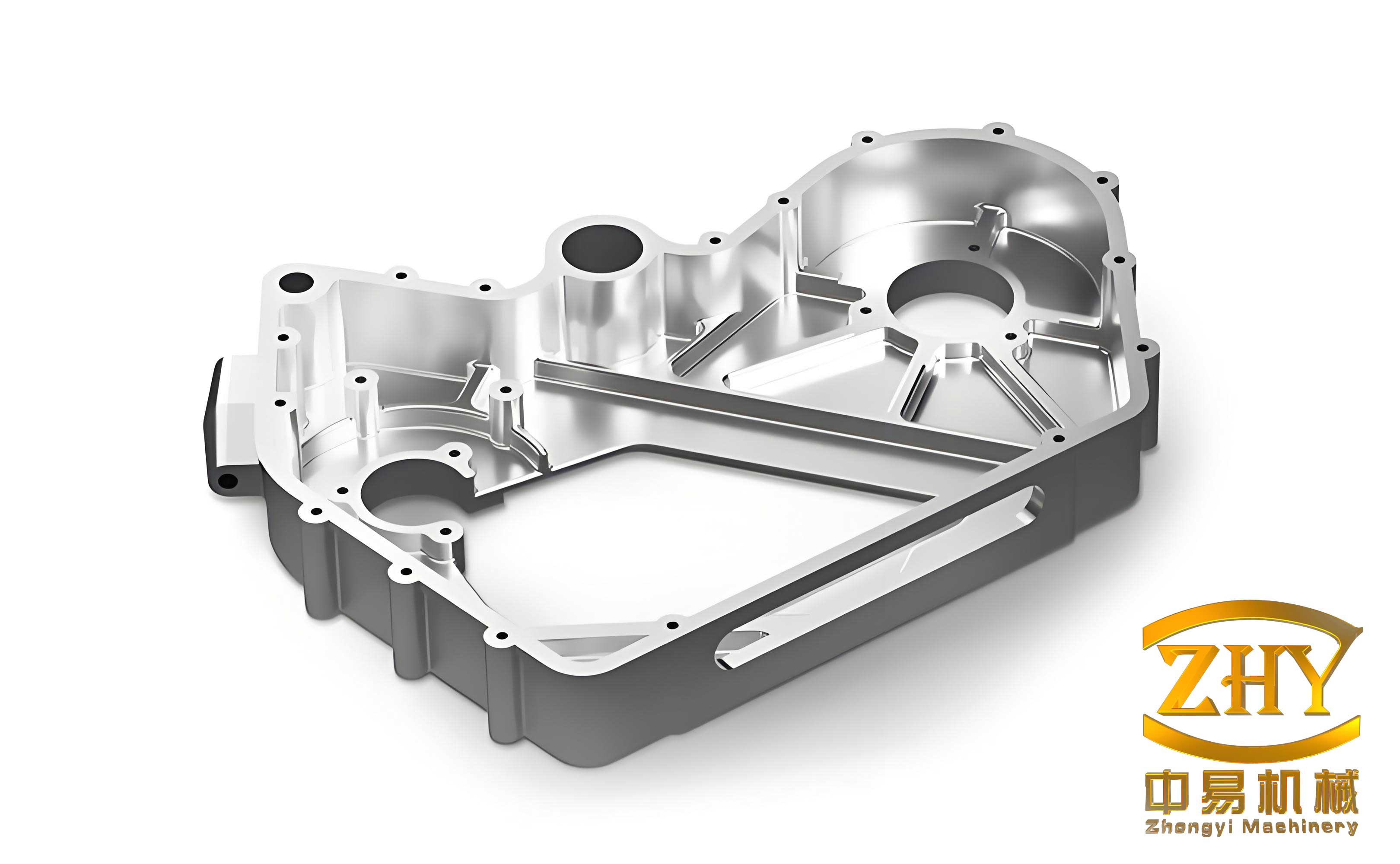
Chapter 2: Deconstructing the Defects – A Root Cause Analysis
To move forward, we had to dissect each failure mode. We categorized the defects and traced them back to their most probable origins within the EPC process flow.
| Defect Observed on Shell Castings | Primary Suspected Cause | Underlying Process Failure |
|---|---|---|
| Slag Inclusions | Slag entering the mold cavity. | Inadequate ladle skimming; poor slag trapping design in gating; failure to use effective slag covers (e.g., rock wool and steel plate). |
| Sand Inclusions / Erosion | Coating breakdown and sand wash. | Weak coating at gating junctions; coating layer too thin; possible coating moisture reabsorption (rehydration) prior to pouring. |
| Cold Shuts & Surface Pitting | Incomplete foam degradation and poor metal front merging. | Excessive pattern density; low pouring temperature; poor foam continuity (“beadiness”) leading to gas evolution issues. |
| Distortion | Pattern warping during handling/drying. | Lack of structural support for the thin-walled pattern; improper drying conditions leading to residual stresses. |
| General Rough Surface | Multiple factors. | Beady pattern surface transferred to coating; incorrect shot blasting media (too coarse). |
The analysis revealed that our problems were systemic. They were not isolated to a single parameter but were interconnected. For instance, a pattern with poor bead fusion (beadiness) would require a higher pouring temperature to fully gasify. However, a higher pouring temperature, if combined with a weak or thin coating, could lead to more severe erosion and sand defects. This interdependence is a critical aspect of process control for shell castings. We needed a holistic, systems-engineering approach.
Chapter 3: The Foundation – Pattern Quality as the First Principle
We recognized that the quality of the final casting is irrevocably set at the pattern-making stage. For thin-walled, intricate shell castings, pattern integrity is non-negotiable. Our first intervention was on the raw expandable polystyrene (EPS) beads. We switched to a premium copolymer resin known for better fusion and finer cell structure.
The target pre-expansion density was critically calculated based on the minimum wall thickness of the shell. Using the concept of bead packing and expansion ratio, we aimed for a density ($\rho_{foam}$) that would ensure complete filling of the thin fin cavities without excessive residual stress. The relationship can be simplified as:
$$ \rho_{foam} \propto \frac{1}{t_{wall} \cdot R_{expansion}} $$
where $t_{wall}$ is the nominal wall thickness and $R_{expansion}$ is the volumetric expansion ratio from bead to final part. We controlled $\rho_{foam}$ tightly between 24-25 g/L. Process stability was key: maintaining consistent steam pressure ($P_{steam}$ ≈ 0.08 MPa) and vessel pressure ($P_{vessel}$ ≈ 0.02 MPa) during pre-expansion.
The manual molding process for the pattern itself was a skill-based operation. The geometry of the motor shell, with its deep, narrow fins, presented a significant filling challenge. We optimized the filling sequence for the six injection ports to ensure uniform density and complete cavity fill. Any deviation resulted in unfused beads, visible as surface imperfections that would directly translate to the shell castings. The visual inspection criteria for a good pattern became stringent: a smooth, continuous surface with no visible bead boundaries, voids, or “orange peel” texture.
Chapter 4: The Protective Barrier – Coating Science and Drying Dynamics
The coating is the literal interface between the degrading foam and the solidifying metal. For shell castings with high surface area, its properties are paramount. We moved from a simple thickness-based approach to a performance-based specification.
We formulated a two-layer coating strategy:
- First Layer (Permeability Focus): Applied at a lower viscosity (Baume ~1.6) to ensure excellent penetration into the pattern texture and between fins, providing a solid mechanical key.
- Second Layer (Strength & Refractoriness Focus): Applied at a higher viscosity (Baume ~1.7-1.8) to build total thickness ($T_{coat}$) to 1.0-1.2 mm. This layer needed high hot-strength to resist metal pressure and erosion.
The drying process was revolutionized. Intermittent drying was replaced with a controlled, continuous drying cycle. The drying kinetics can be modeled by the diffusion of moisture through the coating. The drying time ($t_{dry}$) to reach a target moisture content ($M_{target}$) is a function of coating thickness ($T_{coat}$), ambient temperature ($T$), and relative humidity ($RH$).
$$ t_{dry} \approx k \cdot \frac{T_{coat}^2}{D(T, RH)} $$
where $k$ is a constant and $D$ is the effective moisture diffusivity. We controlled the drying room at 55°C and below 15% RH, drastically increasing $D$ and ensuring thorough drying. Patterns were dried to constant weight, a reliable indicator of complete moisture removal. Crucially, dried patterns (“brown patterns”) were kept in the drying room until the moment of molding to prevent moisture reabsorption, a critical failure point we had previously overlooked.
Chapter 5: Rigidity and Replication – Gating, Assembly, and Molding
The fragility of the thin-walled pattern demanded innovative support. During cluster assembly, we used external bracing with wooden sticks and triangular supports at the base to maintain dimensional accuracy and prevent warping under the weight of the coating or during handling. This was essential to preserve the geometric integrity of the final shell castings.
The gating system was analytically reviewed. The original choked system was creating excessive velocity at the ingates, contributing to turbulence and potential erosion. We applied Bernoulli’s principle and the continuity equation to redesign for a more laminar fill. The key modification was enlarging the ingate cross-sectional area ($A_{ingate}$).
$$ Q = A_{sprue} \cdot v_{sprue} = A_{ingate} \cdot v_{ingate} $$
To reduce $v_{ingate}$ and thus kinetic energy, we increased $A_{ingate}$. The ingate size was increased from 2×10 mm to 5×10 mm.
During molding (flasking), sand compaction became a focal point. The vibration must be sufficient to ensure uniform, high-density sand packing around the complex fins without distorting the pattern. We discovered that anisotropic vibration from the table was causing non-uniform compaction, leading to areas of lower sand density. This directly correlated with localized penetration defects (burn-on) on the shell castings. The solution was to balance the vibratory motors to achieve near-isotropic compaction. Furthermore, ensuring the pattern cluster was perfectly level during sand filling was vital to guarantee symmetrical metal flow and heat distribution.
Chapter 6: The Final Act – Pouring Thermodynamics and Vacuum Control
Pouring is where all preparatory work is put to the test. For EPC of thin-walled shell castings, it is a delicate balance of thermal and kinetic energy. Our initial temperature of ~1500°C was, paradoxically, both too high and too low. It was high enough to challenge coating refractoriness in some areas, yet too low to fully gasify the foam in the intricate, heat-sinking fins before the metal front lost fluidity.
We defined an optimal window based on the thermodynamics of foam decomposition and iron solidification. The pouring temperature ($T_{pour}$) must satisfy two conditions:
- Provide sufficient superheat to gasify the foam endothermically and maintain metal fluidity through the thin sections.
- Not exceed the sintering point or degrade the mechanical strength of the coating.
We converged on a range of 1510-1530°C. The pouring speed was equally critical: fast enough to maintain a hot, rising metal front to avoid cold shuts, but controlled enough to avoid turbulence. We targeted a full mold fill time of under 10 seconds.
Vacuum ($P_{vac}$) is the driving force for removing foam pyrolysis products. An inadequate vacuum leads to back-pressure, incomplete degradation, and carbon defects. An excessive vacuum can draw coating constituents into the metal or cause mold wall collapse. We optimized $P_{vac}$ to a steady 0.05 MPa. The hold time under vacuum after pouring was extended from 6 to 12 minutes, calculated based on the solidification modulus of the thickest section of the shell castings, ensuring they were fully solid before losing the supporting vacuum pressure.
Ladle practice was standardized: pre-heated ladles, thorough skimming, and the mandatory use of a slag barrier (rock wool covered by a steel plate) at the ladle spout to prevent any slag from entering the downsprue.
Chapter 7: Validation and the Emergence of a Robust Process
The implementation of this integrated, controlled system yielded transformative results. The final shell castings exhibited a smooth, defect-free surface. The fins were sharp and complete, with no signs of burn-in or fusion. The dimensional consistency and cosmetic quality met the highest international standards.
The table below summarizes the critical before-and-after process parameters that guaranteed the success of these complex shell castings:
| Process Parameter | Initial State (Uncontrolled) | Final Optimized State | Impact on Shell Castings |
|---|---|---|---|
| Pattern Density ($\rho_{foam}$) | Variable, often >28 g/L | Controlled at 24-25 g/L | Ensured complete, clean gasification; eliminated carbonous residues. |
| Coating Drying | Intermittent, ambient | Controlled at 55°C, <15% RH to constant weight | Eliminated coating moisture, preventing gas blows and ensuring high strength. |
| Ingate Design | Choked (2×10 mm) | Enlarged (5×10 mm) | Reduced metal velocity, minimized turbulence and erosion potential. |
| Pouring Temperature ($T_{pour}$) | ~1500°C | 1510-1530°C | Balanced foam degradation with metal fluidity and coating integrity. |
| Vacuum Level ($P_{vac}$) | 0.04-0.05 MPa (unstable) | Stable at 0.05 MPa | Consistent removal of pyrolysis gases, supporting mold integrity. |
| Sand Compaction | Unbalanced vibration | Isotropic vibration, leveled pattern | Uniform sand density, eliminated localized penetration defects. |
Conclusion: The Synthesis of Art and Science
The successful production of high-integrity motor shell castings via evaporative pattern casting is not a matter of chance; it is the inevitable result of rigorous, scientific control over every sequential step of the process. From the physics of bead expansion and moisture diffusion to the fluid dynamics of metal flow and the thermodynamics of foam degradation, each phase presents variables that must be understood and managed. This journey from a state of chronic defect generation to one of reliable quality underscores a fundamental truth: in EPC, particularly for demanding geometries like thin-walled shell castings, the process itself is the product. The casting is merely the final, tangible manifestation of the system’s stability. By replacing empirical guesswork with measured parameters and scientific principles, we transformed a problematic production line into a model of consistency, proving that even in challenging environments, a disciplined application of the EPC methodology can yield exceptional results for complex shell castings.