
The manufacture of high-integrity, thin-walled, and geometrically intricate shell castings for demanding aerospace applications presents a significant challenge. Components such as actuator cylinders, which function as both force-transmitting elements and structural supports within aircraft engine systems, necessitate exceptional dimensional accuracy, superior surface finish, and reliable mechanical properties. Historically, the production of such aluminum alloy shell castings has relied on precision casting methods like vacuum-assisted plaster mold casting. However, this method often grappled with limitations, including susceptibility to shrinkage porosity, coarse grain structure, and inconsistencies stemming from pattern-making processes, which collectively led to unacceptably low yield rates. This article details the comprehensive redesign and implementation of a low-pressure casting process utilizing plaster molds, specifically developed to overcome these historical deficiencies. The focus is on the production of a representative ZL208 alloy actuator cylinder shell, demonstrating how systematic process design can elevate the quality and reliability of complex shell castings.
The target component is a hydraulic actuator cylinder shell. As a primary force component, its failure is not an option. The material specification is ZL208, a complex aluminum-copper casting alloy known for its good strength at elevated temperatures, but it requires meticulous control during solidification to achieve its potential. The casting features varying wall thicknesses, transitioning from robust mounting sections to thin cylindrical walls. This non-uniform geometry creates inherent thermal gradients during solidification, which, if not managed, become preferential sites for shrinkage defects and porosity. Furthermore, the internal surfaces and critical mounting faces demand high dimensional fidelity to minimize subsequent machining. The traditional method’s yield of approximately 33% was deemed unsustainable, driven primarily by internal shrinkage and dimensional inconsistencies from the wax pattern stage. The new process integrates the superior dimensional replication of plaster molds with the controlled, pressure-assisted feeding of low-pressure casting to decisively address these issues.
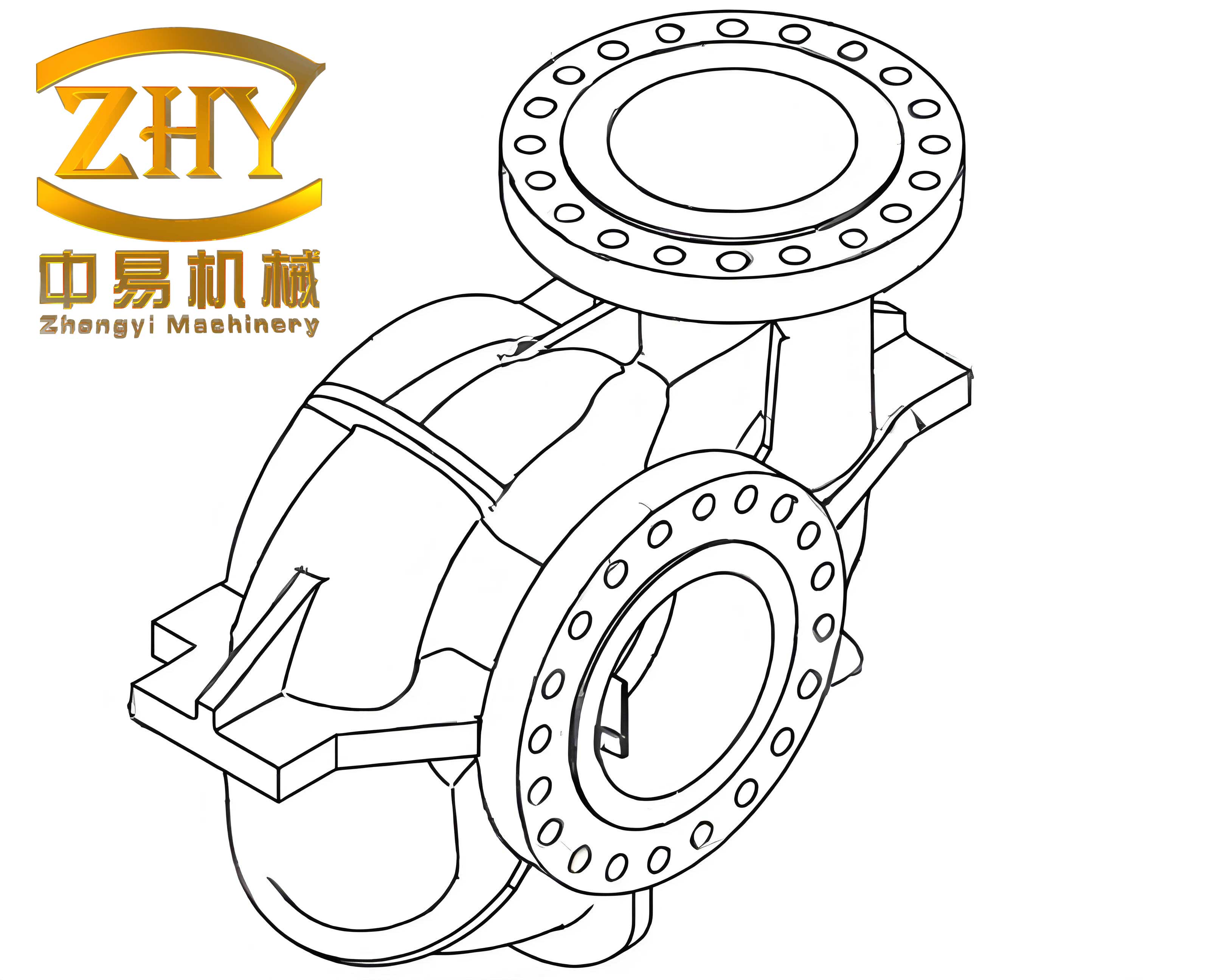
Precision Pattern and Mold Fabrication: The Foundation for Accurate Shell Castings
The journey towards a sound shell casting begins with the creation of a precise disposable pattern. For this process, a medium-temperature injection wax (C-162H type) was selected. The injection parameters are critical to prevent distortions, sink marks, or incomplete filling, especially in the thin sections of the shell casting. These parameters were rigorously defined and controlled, as summarized below:
| Process Parameter | Value | Influence on Shell Casting Quality |
|---|---|---|
| Injection Temperature | 52 °C | Ensures optimal wax fluidity to replicate fine mold details without causing thermal shock to the die. |
| Injection Pressure | 3.2 MPa | Provides the necessary force to completely fill the die cavity, especially important for thin-walled shell castings. |
| Holding Time | 20 s | Compensates for wax shrinkage during initial solidification, preventing sink marks and ensuring dimensional stability of the pattern. |
Following injection, each wax pattern of the shell casting underwent meticulous inspection and manual correction. Any parting line flash or minor surface imperfections were carefully removed. The critical dimensions of each pattern were verified using precision measuring tools. This step is non-negotiable; any error in the wax pattern is magnified in the final metal shell casting. Subsequently, the individual shell casting patterns were assembled onto a central wax gating system. The gating was designed with fluid dynamics and solidification control in mind. The connections were carefully welded and smoothed with fillet radii (R2-R5 mm) to ensure smooth metal flow and avoid turbulence. The completed assembly was then cleaned in a dilute surfactant solution to remove any grease or wax debris, ensuring a pristine surface for the subsequent plaster coat. A well-prepared pattern assembly is the first and most crucial step in achieving dimensionally accurate shell castings.
Engineering the Plaster Mold: Achieving Strength, Permeability, and Dimensional Fidelity
The plaster mold is the negative of our final shell casting and must possess a unique combination of properties: high strength to withstand handling and metallostatic pressure, sufficient permeability to allow gases to escape, exceptional fire resistance to withstand molten aluminum, and the ability to produce a mirror-like surface finish. The mold composition was engineered as a ceramic system where α-calcium sulfate hemihydrate (plaster) acts as the binder, and refractory fillers provide high-temperature stability and control the thermal expansion behavior. The chosen formulation was:
$$ \text{Plaster} : \text{Cristobalite} : \text{Chamotte} = 25 : 20 : 55 $$
The mixing process is a science in itself. The water-to-plaster ratio (W/P) is the single most critical factor determining the mold’s final strength and porosity. A precise ratio of 3:10 (water:plaster by weight) was maintained. Mixing was performed under a partial vacuum (-0.05 MPa) for a controlled duration to remove entrapped air, which could otherwise create surface defects on the shell casting. The slurry was then poured around the wax assembly in a specially welded steel flask. A two-stage pouring technique was employed: a primary face coat to capture exquisite detail, followed by a backup fill to provide structural mass. This ensures the mold can withstand the pressures of the low-pressure casting process.
The mold must then be prepared to receive molten metal. This involves the careful removal of the wax pattern (dewaxing) and the high-temperature firing (calcination) of the plaster mold. An overly aggressive dewaxing cycle can cause mold cracking due to rapid expansion of the wax. The developed thermal cycle was gradual:
- Heat slowly to 70°C, hold for 2 hours (melts and drains majority of wax).
- Increase to 130°C, hold for 1 hour (removes residual wax volatiles).
The subsequent calcination cycle serves multiple purposes: it removes all remaining organic material, completes the chemical conversion of the plaster, sinters the refractory fillers for strength, and preheats the mold to reduce thermal shock during casting. The precisely controlled cycle is outlined below:
| Stage | Target Temperature | Ramp Rate | Hold Time | Purpose |
|---|---|---|---|---|
| 1 | 165 °C | ≤ 50 °C/h | 8 h | Removal of crystallization water from plaster. |
| 2 | 250 °C | ≤ 50 °C/h | 10 h | Further burnout of organics and controlled dehydration. |
| 3 | 350 °C | ≤ 50 °C/h | 6 h | Stabilization. |
| 4 | 450 °C | ≤ 50 °C/h | 4 h | Initiation of filler sintering. |
| 5 | 600 °C | ≤ 50 °C/h | 3 h | Completion of plaster conversion and sintering. |
| 6 | 720 °C | ≤ 50 °C/h | 12 h | Final preheat and thermal stabilization of the mold. |
The mold was then furnace-cooled to 150°C and held until ready for casting. This careful thermal management results in a mold with excellent hot strength and a perfectly preheated cavity, ready for the production of high-quality shell castings.
Alloy Melting, Treatment, and the Low-Pressure Casting Process
The ZL208 alloy is a multi-component system primarily strengthened by the θ’ (Al2Cu) phase, with additions of Mn, Sb, Co, Ni, Zr, and Ti for elevated temperature stability, grain refinement, and castability. Melting and treatment were executed with precision to ensure a clean, fine-grained melt. The charge consisted of primary ingots, master alloys (Al-Ni, Al-Mn, Al-Zr, Al-Co, Al-Cu, Al-Sb), and grain refiners (Al-Ti-B). The melting sequence was orchestrated to ensure complete dissolution and homogenization. Crucibles and tools were meticulously prepared and coated with a refractory wash to prevent iron pickup.
Refining was a two-step process. Primary degassing and cleaning were achieved using hexachloroethane (C2Cl6), which decomposes to create chlorine bubbles that float out dissolved hydrogen and non-metallic inclusions. This was followed by rotary degassing with high-purity argon for 15 minutes, a highly efficient method for hydrogen removal crucial for porosity-free shell castings. The final melt treatment involved modification using a sodium-based flux to enhance the morphology of the silicon-containing phases, further improving mechanical properties.
The core innovation lies in the application of low-pressure casting. Unlike gravity pouring, where metal falls turbulently into the mold, low-pressure casting uses a pressurized gas column (typically dry air or nitrogen) to push molten metal steadily up a heated transfer tube (stalk) into the mold cavity from below. This offers transformative benefits for shell castings:
- Laminar Fill: The metal front rises smoothly, minimizing turbulence and oxide film entrainment.
- Directional Solidification: The pressure can be maintained during solidification, actively feeding shrinkage into the thickest sections of the shell casting from the molten metal source below.
- Improved Yield: The gating system is simplified and integrated into the stalk, reducing metal wastage compared to traditional top-poured systems.
The process is governed by precise pressure-time profiles. The key pressure setpoints are calculated based on the metallostatic head required.
Let \( h_1 \) be the height (mm) from the molten metal surface in the holding furnace to the top of the transfer tube. The pressure \( P_1 \) (kPa) required to bring the metal to the mold entrance is:
$$ P_1 = \frac{h_1}{42.5} + 1 $$
Let \( h_2 \) be the height (mm) of the mold cavity itself. The pressure \( P_2 \) (kPa) required to fill the mold cavity is:
$$ P_2 = P_1 + \frac{h_2}{42.5} + 2 $$
The addition of 1-2 kPa accounts for system friction and overpressure to ensure positive fill. For the actuator shell casting, the casting parameters were meticulously defined:
| Stage | Parameter | Value | Objective |
|---|---|---|---|
| Filling | Lift Velocity | 40 mm/s | Controlled, non-turbulent rise of metal in the stalk. |
| Filling | Fill Velocity | 40 mm/s | Steady, laminar filling of the thin-walled shell casting cavity. |
| Filling | Fill Time | 12 s | Directly related to fill velocity and part volume. |
| Solidification | Skin Solidification Time | 3 s | Brief pause to allow a thin solid skin to form. |
| Solidification | Crystallization Pressure | 10 kPa | Applied pressure maintained throughout solidification to suppress microporosity and feed shrinkage in the shell casting. |
| Solidification | Crystallization Time | ≥ 360 s | Sufficient time for complete solidification under pressure. |
The alloy was poured at 680-690°C. After the prescribed solidification time, the pressure was released, and the residual liquid in the stalk drained back into the furnace. The mold was then left to cool for over 8 hours before shakeout. This controlled solidification under pressure is the key mechanism that dramatically reduces shrinkage porosity in complex shell castings.
Heat Treatment and Quality Validation of the Finished Shell Castings
Following cleaning—which involved removing the plaster mold, cutting off the gate, and shot blasting—the shell castings underwent a T7 heat treatment cycle. This consists of a solution heat treatment followed by overaging. The specific cycle for ZL208 was:
- Solution Treatment: (535 ± 5)°C for ≥ 5 hours. This dissolves the soluble strengthening phases (like Al2Cu) into a homogeneous solid solution. Quenching in water (transfer time < 25 s) “freezes” this supersaturated state.
- Artificial Aging: (215 ± 5)°C for ≥ 16 hours. This is an overaging (T7) treatment, which precipitates the strengthening phases in a slightly coarser, more stable form. This trade-off between peak strength (T6 temper) and improved dimensional stability and stress-corrosion resistance (T7 temper) is often preferred for critical, stressed shell castings in aerospace applications.
Mechanical test coupons cast alongside the production shell castings were used to validate the treatment. The results far exceeded the specification requirements (Rm ≥ 220 MPa, A ≥ 1%), consistently achieving tensile strengths above 280 MPa and elongation over 3%.
The final validation of the shell castings involved rigorous non-destructive evaluation (NDE). Fluorescent penetrant inspection (FPI) was conducted on all critical surfaces to reveal any surface-breaking defects such as cold shuts, hot tears, or shrinkage cracks. Subsequently, radiographic inspection (X-ray) was employed to probe the internal soundness of the casting, specifically looking for the shrinkage porosity and gas holes that plagued the previous process. The shell castings produced via this optimized low-pressure plaster mold process passed all NDE criteria without indication of the historical defects.
Conclusion: A Robust Process for High-Performance Shell Castings
The transition from traditional vacuum plaster casting to a meticulously designed low-pressure plaster mold casting process has proven to be a decisive advancement for manufacturing complex, high-integrity ZL208 aluminum alloy shell castings. By integrating the precision of plaster mold replication with the controlled, pressure-assisted filling and feeding of low-pressure die casting, the fundamental limitations of the prior method were systematically overcome. The key to success lies in the holistic control of every stage: achieving dimensional fidelity in the wax pattern, engineering the plaster mold composition and thermal processing for strength and stability, executing precise melt treatment for cleanliness and grain structure, and, most critically, implementing a calculated low-pressure casting profile that ensures laminar fill and active feeding during solidification. The result is a dramatic increase in product yield from approximately 33% to over 90%, accompanied by enhanced and consistent mechanical properties. This process design establishes a robust and reliable framework for the production of high-quality, complex thin-walled shell castings for the most demanding structural applications, where performance, weight, and reliability are paramount.