
As a practitioner deeply involved in the development of lost foam casting (LFC) processes, I have witnessed firsthand the transformative impact this technology has had on manufacturing. Lost foam casting is renowned for its efficiency, high quality, low cost, and environmental benefits, making it a preferred method for producing critical components like gearbox housings, clutch cases, and other intricate shell parts in the automotive and heavy machinery industries. The process revolves around a foam pattern, which is coated with a refractory slurry, embedded in unbonded sand, and then replaced by molten metal. The integrity of this foam pattern throughout the pre-casting stages is absolutely paramount to the final casting’s dimensional accuracy and surface finish.
The core challenge, and the focus of my work, lies in the application of the refractory coating. The expanded polystyrene (EPS) or similar foam patterns used in lost foam casting possess inherently low strength and rigidity. During handling, transport, and the critical sand filling and compaction stages, these patterns are susceptible to deformation or even catastrophic damage. Therefore, the coating layer is not merely a refractory barrier; it is the primary structural reinforcement for the fragile foam pattern. The selection of the coating material, and more critically for complex geometries, the method of its application, becomes a decisive factor in process viability. An improper application method can induce stress, cause distortion, or fail to provide uniform coverage, leading directly to casting defects.
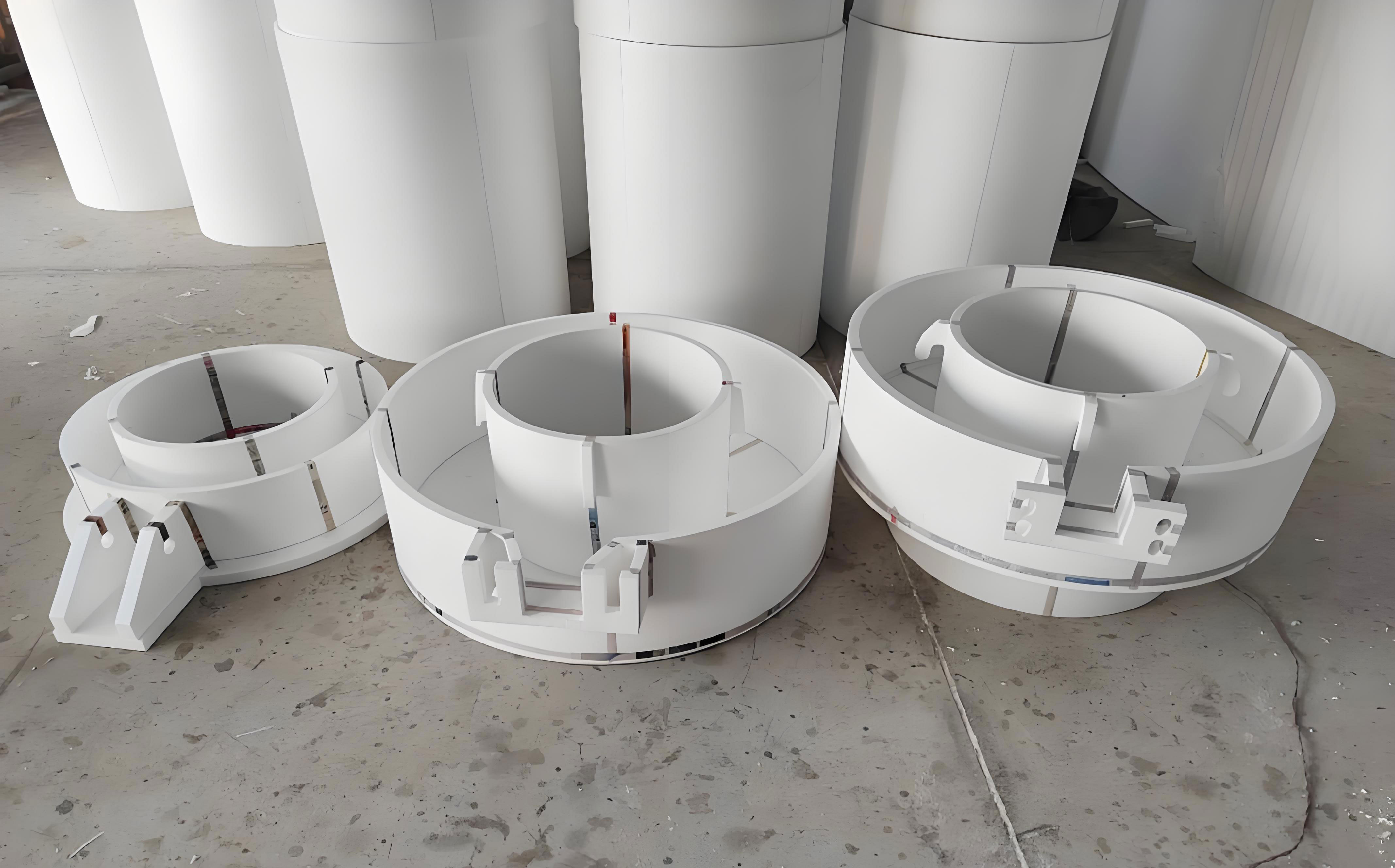
Traditional methods for applying coatings in lost foam casting include dipping, brushing, flowing, and spraying. For many years, the dipping method has been the workhorse for batch production due to its perceived advantages: high throughput, efficient use of coating material, and generally uniform coverage. The principle is simple: the foam pattern is immersed in a slurry tank and then withdrawn. However, this method reveals significant limitations when applied to the realm of large, complex, thin-walled shell components. The fundamental issue is the dramatic density differential. A typical refractory coating slurry has a density ($\rho_{coating}$) that can be an order of magnitude greater than the density of the foam pattern ($\rho_{foam}$).
During immersion, the foam pattern experiences a substantial buoyant force ($F_b$) as described by Archimedes’ principle:
$$F_b = \rho_{coating} \cdot g \cdot V_{displaced}$$
where $g$ is gravity and $V_{displaced}$ is the volume of coating displaced. For a large, thin-walled pattern with minimal structural integrity, this force can be sufficient to cause severe bending, twisting, or collapse, especially as the pattern is withdrawn and the coating layer adds asymmetrical weight. This makes the dipping method fundamentally incompatible with the reliable, high-yield batch production of such components in lost foam casting. The quest for a solution led to the research and development of a novel, dedicated coating application system.
The Engineering Imperative: A Dedicated Spray-Coating System
To overcome the limitations of dipping, we engineered a closed-loop, pump-driven spray coating system specifically for lost foam casting patterns. The design philosophy was to apply the coating as an external, controlled deposition rather than subjecting the pattern to the full fluid forces of immersion. The system is composed of five integrated functional modules working in concert.
| Module Name | Primary Function | Key Components |
|---|---|---|
| Agitation & Storage Module | Maintains coating slurry in a homogenous, suspended state to prevent settling and ensure consistent rheological properties. | Primary coating tank, helical agitator, variable-speed agitation motor, support frame. |
| Coating Delivery & Spray Module | Transports slurry from storage to the application point and atomizes/disperses it onto the pattern surface. | High-flow transfer pump, pressure regulators, distribution manifold, dual-purpose spray heads (fogging & cascading), flexible hoses. |
| Application & Containment Module | Provides a stable, enclosed workspace for coating application and captures excess slurry. | Coating application booth with sloped floor, removable perforated grating platform. |
| Slurry Recovery & Recirculation Module | Collects excess and drained coating from the containment module and returns it to the primary storage tank. | Collection sump, scavenge pump, filtration screen, return piping. |
| Integrated Control Module | Orchestrates the sequential and synchronous operation of all electromechanical components. | Programmable Logic Controller (PLC), human-machine interface (HMI), motor starters, flow sensors. |
The system’s operation is governed by a cyclical process: Agitate – Deliver – Apply – Recover – Repeat. The coating slurry is kept in constant, gentle motion within the primary tank. When activated, the delivery pump pressurizes the system, sending slurry to the spray manifolds. The pattern, securely positioned on the grating inside the application booth, is coated by the targeted spray heads. Excess coating drains through the grating, flows into the sloped sump, and is pumped back through a filter to the main tank, ensuring near-zero waste and consistent slurry density. This closed-loop design is crucial for both economic and quality control reasons in high-volume lost foam casting production.
The Physics of Spray Application vs. Immersion
The superiority of the spray method for thin-walled lost foam patterns can be analyzed through fluid dynamics and mechanics. In immersion (dipping), the pattern is subject to complex, time-varying fluid forces including buoyancy, drag, and adhesion (capillary) forces during withdrawal. The stress ($\sigma$) on a thin-walled section can be approximated by modeling it as a beam under a distributed load from the coating weight and fluid forces, often exceeding the foam’s yield strength.
In contrast, spray application primarily involves the impulse of coating droplets impacting the surface. The average force ($F_{spray}$) imparted by a spray on a pattern area ($A$) is a function of the droplet momentum flux:
$$F_{spray} \approx \dot{m} \cdot v \cdot A$$
where $\dot{m}$ is the mass flow rate per unit area and $v$ is the droplet velocity. By using low-pressure, high-volume spray heads, both $\dot{m}$ and $v$ can be controlled to keep $F_{spray}$ orders of magnitude lower than the buoyant and drag forces encountered during dipping. This minimizes deformation potential. Furthermore, spray application allows for strategic sequencing—coating internal cavities first with a fine fogging spray to ensure coverage in complex geometries, followed by a rapid cascading spray for external surfaces. This level of control is unattainable with dipping.
| Parameter | Immersion (Dipping) Method | Controlled Spray Method | Implication for Thin-Walled LFC |
|---|---|---|---|
| Primary Force on Pattern | Buoyancy & Hydrodynamic Drag ($F_b \propto \rho V g$) |
Droplet Impulse ($F_{spray} \propto \dot{m} v$) |
Spray force is designed to be negligible vs. structural failure limits. |
| Coating Uniformity on Complex Shapes | Variable; prone to pooling/draining artifacts. | High; controllable via spray head type, angle, and sequence. | Ensures consistent coating thickness, crucial for dimensional stability and gas permeability. |
| Process Control | Low (withdrawal speed is main variable). | High (pressure, flow, spray type, sequence, time). | Enables precise, repeatable coating cycles essential for batch production. |
| Pattern Stress/Deformation Risk | Very High | Very Low | Spray method enables production of parts previously impossible via LFC. |
| Slurry Consistency Maintenance | Poor (tank requires frequent manual agitation). | Excellent (continuous in-tank agitation and closed-loop recirculation). | Maintains coating viscosity and refractory suspension, critical for layer quality. |
System Component Design and Synergy
The effectiveness of this lost foam casting coating system stems from the detailed design of its components. The agitation system employs a wide, slow-moving helical ribbon impeller. This design is optimal for maintaining uniform particle suspension in shear-thinning, non-Newtonian slurries typical of refractory coatings, preventing the formation of a hard sediment pack at the tank bottom. The slurry rheology is critical; its viscosity ($\eta$) must be low enough to allow pumping and spraying but high enough to prevent immediate runoff. The system maintains this balance through controlled agitation.
The dual-spray head technology is a key innovation. For intricate internal passages and undercuts, a pneumatic fogging nozzle produces a fine, low-velocity mist that wraps around geometry without applying meaningful force. For large external areas, a high-volume “flow coat” or cascade head is used, which gently floods the surface. The flow rate ($Q$) through each head is independently adjustable via precision valves, governed by the relation:
$$Q = C_v \sqrt{\frac{\Delta P}{SG}}$$
where $C_v$ is the valve flow coefficient, $\Delta P$ is the pressure differential, and $SG$ is the specific gravity of the slurry. This allows the operator to tailor the application for different pattern zones.
The application booth’s grated platform serves a vital function: it elevates the pattern, allowing 360-degree access for spray heads while ensuring that excess slurry drains freely away from the pattern. The sloped floor (at an angle $\alpha \ge 5^\circ$) and the strategically located scavenge pump intake ensure complete recovery of valuable coating material. This recirculation is not merely economical; it constantly homogenizes the slurry batch, preventing property drift during a production run. A simple mass balance governs the system:
$$m_{tank}(t) = m_{initial} – m_{deposited} + m_{recovered}$$
In a well-tuned cycle, $m_{recovered} \approx (m_{delivered} – m_{deposited})$, leading to a near-steady-state $m_{tank}$.
Application Protocol and Results in Lost Foam Casting Production
The operational protocol using this system for lost foam casting is streamlined and repeatable. For a large transmission housing pattern (approximate envelope: 1050 mm x 925 mm x 750 mm, volume ~0.085 m³, foam mass minimal but final casting weight ~600 kg), the steps are as follows:
- Pattern Fixturing: The foam pattern is carefully placed and secured on the grating within the application booth. Simple lightweight fixtures may be used to hold critical dimensions.
- System Activation: The main agitator and recirculation pump are started, ensuring slurry homogeneity. The delivery pump is engaged.
- Coating Sequence: Using handheld spray wands connected to the manifold, the operator first coats all internal cavities with the fogging spray. Subsequently, the external surfaces are coated using the cascade spray. The entire process is completed in minutes, compared to the longer, riskier dip-and-hold sequence.
- Drain and Transfer: The coated pattern is allowed to drain briefly on the grating. The excess coating flows back to the tank. The pattern is then transferred to a drying chamber.
- Drying and Iteration: The pattern is dried using controlled temperature and airflow until the coating achieves a specific moisture content. The process is repeated for subsequent layers until the total coating thickness ($t_{total}$) meets the specification, typically following a relationship like:
$$t_{total} = n \cdot t_{layer}$$
where $n$ is the number of coats and $t_{layer}$ is the average thickness per coat, controlled by spray parameters.
The results have been definitive. Patterns coated with this system exhibit exceptional uniformity without distortion. The coating layer shows excellent adhesion and consistent permeability after drying. Most importantly, the defect rate associated with pattern distortion (such as warped walls or broken features) during the coating stage has been reduced to near zero, enabling the reliable batch production of these complex thin-walled components via lost foam casting.
Conclusion and Broader Implications for Lost Foam Casting
The development and implementation of this specialized spray-coating system address a fundamental bottleneck in the lost foam casting process chain for advanced components. It demonstrates that the limiting factor for adopting lost foam casting for large, complex thin-walled parts is often not the casting metallurgy or the foam material itself, but the engineering of the ancillary processes that support the fragile pattern. By replacing the brute-force method of immersion with a controlled, low-impact spray application, the process window for lost foam casting is significantly expanded.
The system’s benefits are multifaceted: it eliminates pattern deformation, ensures superior coating uniformity, reduces manual labor and variability, and promotes material efficiency through recirculation. This innovation underscores a critical principle in advanced manufacturing: as primary processes like lost foam casting evolve, parallel advancements in supportive tooling and automation are not just beneficial but essential to unlock the full potential of the core technology. This coating system represents a step towards making the production of lightweight, structurally optimized shell components via lost foam casting more robust, predictable, and scalable for the demanding standards of modern industry.