
In my extensive experience with foundry processes, permanent mold casting stands out as a pivotal technique for the high-volume production of medium and small-sized components, particularly aluminum alloy castings like high-pressure shell castings. This method, often termed gravity die casting, involves pouring molten metal into reusable metal molds under gravity. Its primary advantage lies in the mold’s durability, allowing for thousands of cycles, which translates to excellent dimensional consistency and superior surface finish compared to sand casting. For critical applications such as high-pressure shell castings used in automotive, aerospace, or hydraulic systems, these attributes are non-negotiable. However, the very nature of the non-permeable, metallic mold introduces a significant and persistent challenge: the formation of porosity. The absence of mold permeability traps gases, making the production of sound, leak-tight aluminum castings a constant battle. Porosity undermines the structural integrity of shell castings, acting as stress concentrators that drastically reduce fatigue life and tensile strength, and can lead to catastrophic failure under pressure or cyclic loading. Therefore, a deep, first-principles understanding of pore formation mechanisms is not merely academic; it is the cornerstone of reliable manufacturing for high-integrity shell castings.
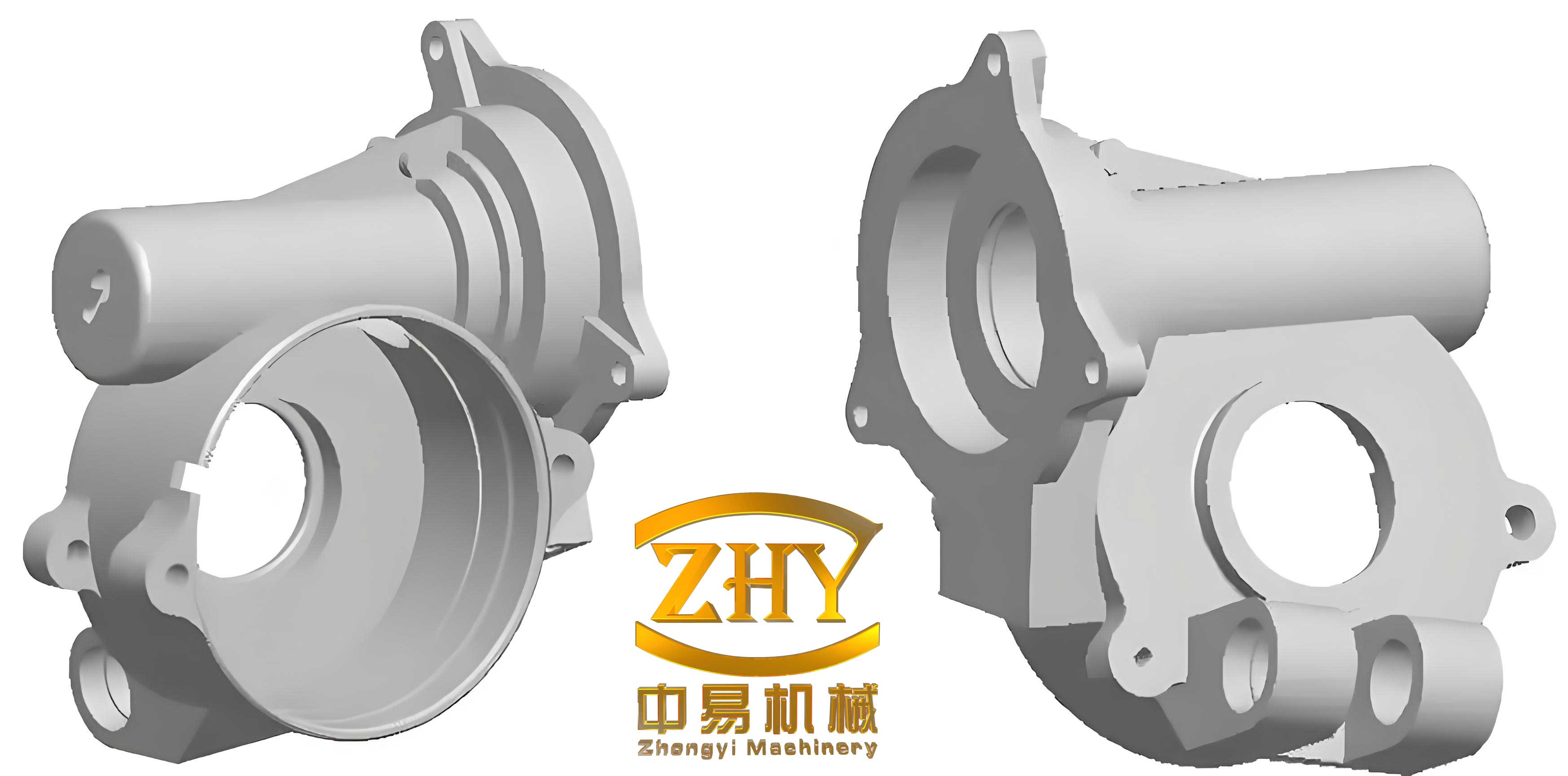
The pursuit of porosity-free aluminum shell castings led me to systematically investigate a recurring defect in a production batch of permanent mold-cast aluminum-silicon alloy high-pressure shells. Visually, after shakeout and cleaning, some castings exhibited obvious surface pits, while others passed visual inspection but failed subsequent pressure tests, indicating internal flaws. My approach was to deconstruct the problem by categorizing the potential sources and their manifestations. Porosity in castings universally falls into three primary classifications, each with distinct origins and morphologies:
| Pore Type | Primary Source | Typical Morphology & Location | Governing Mechanism |
|---|---|---|---|
| Entrained (Invasive) Pores | External: Mold/mold coat gases, air aspiration. | Large, spherical/pear-shaped, smooth walls. Often subsurface or near core prints. | Gas from external source invades molten metal frontier and is trapped. |
| Precipitated (Microshrinkage/Gas) Pores | Internal: Gas dissolved in the melt (mainly Hydrogen). | Small, spherical, often diffuse distribution. Walls are smooth, bright. Entire cross-section. | Decrease in gas solubility during solidification leads to nucleation and growth of bubbles. |
| Reaction Pores | Chemical reaction (e.g., melt-mold moisture, C-O reaction in steel). | Irregular shape, often located near mold-metal interface. May contain reaction products. | Gas generated in situ by a chemical reaction between melt, slag, or mold. |
For permanent mold aluminum casting, reaction pores with the mold are rare due to the inert metal mold surface. Therefore, my investigation focused on differentiating between entrained and precipitated porosity, which are the dominant scourges for shell castings. The experimental methodology involved sectioning several defective high-pressure shell castings at strategic locations—particularly near thick sections and last-to-freeze areas—where porosity was most likely to congregate. Samples were meticulously prepared for macro-examination and scanning electron microscopy (SEM). Macro-examination reveals the size, distribution, and general shape of pores, while SEM provides high-resolution details of the pore walls and surrounding microstructure, which are critical for identifying the pore genesis.
The macro-examination of the sectioned shell castings revealed two distinct, co-existing pore populations. The first type manifested as relatively large, isolated cavities located just beneath the casting surface. These subsurface blowholes were classic in appearance. The second type presented as a scattering of much finer, glittering pores visible on a polished macro-sample, distributed more uniformly throughout the cross-section, though sometimes concentrated in the thermal centers of thick sections. This immediately suggested at least two independent mechanisms were active during the casting of these shell castings.
Under the SEM, the differences became profoundly clear. The walls of the large subsurface pores were generally smooth and clean, showing the characteristic mirrored finish of a gas-metal interface that solidified rapidly. Occasionally, traces of non-metallic films could be detected, hinting at possible mold coat residues. In contrast, the smaller, diffuse pores were perfectly spherical with impeccably smooth, bright walls, exhibiting the classic signature of a gas precipitating from within the metal itself. They were often observed in the interstices of the dendritic network, nucleating at the roots of secondary dendrite arms where the last liquid, enriched in solute and gas, finally solidifies. The presence of these two distinct populations in the same shell casting was a critical clue.
Analysis of Surface/Subsurface Blowholes (Entrained Porosity): The location of these pores—subsurface—pointed directly to the mold coating as the culprit. Permanent molds require a ceramic-based coating (or wash) to prevent soldering, control heat transfer, and aid release. However, if this coating is applied too thickly, is not adequately dried, or contains high levels of volatile binders, it becomes a potent gas source. Upon contact with the molten aluminum alloy for the shell castings, the coating undergoes violent “outgassing.” The generated gas, unable to escape through the non-permeable metal mold, builds pressure at the interface. If the local metal pressure head is insufficient or the metal has developed a thin solid skin, this gas can intrude into the semi-solid metal frontier, forming a bubble that is subsequently enveloped by the advancing solidification front, resulting in a subsurface blowhole. The mechanism can be conceptually linked to a pressure balance at the metal-coating interface. For a gas bubble to nucleate and intrude, the local gas pressure $P_{gas}$ must exceed the sum of the metallostatic pressure $P_m$, the capillary pressure due to surface tension $P_\sigma$, and atmospheric pressure $P_{atm}$:
$$P_{gas} \geq P_m + P_\sigma + P_{atm}$$
where $P_m = \rho g h$, with $\rho$ as the metal density, $g$ gravity, and $h$ the depth of liquid metal above the point. A thick, gassy coating readily provides the high $P_{gas}$ needed, especially in areas of the shell casting with low metal head pressure $P_m$.
Analysis of Internal Diffuse Porosity (Precipitated Porosity): The fine, spherical, and widely distributed pores are the fingerprint of hydrogen precipitation. Hydrogen is the only gas with significant solubility in molten aluminum, and its solubility drops dramatically upon solidification. It is primarily introduced through the reaction of molten aluminum with water vapor ($H_2O$) from atmosphere, humid tools, damp charge materials, or combustion products:
$$2Al_{(l)} + 3H_2O_{(g)} \rightarrow Al_2O_{3(s)} + 6[H]_{(Al)}$$
or more simply: $H_2O \rightarrow O + 2[H]$.
The dissolved hydrogen content $[H]$ in the melt is governed by Sieverts’ Law, which states solubility is proportional to the square root of the partial pressure of hydrogen gas in the environment:
$$[H] = K_s \sqrt{P_{H_2}}$$
where $K_s$ is the temperature-dependent Sieverts’ constant. During solidification of the shell casting, hydrogen is rejected from the solidifying alpha-aluminum dendrites into the remaining liquid. This leads to a progressive hydrogen enrichment in the interdendritic liquid until it becomes supersaturated. The critical supersaturation $S$ can be defined as:
$$S = \frac{C_L}{C_S^*}$$
where $C_L$ is the actual hydrogen concentration in the liquid and $C_S^*$ is the equilibrium solubility of hydrogen in the liquid at the solidification interface temperature. When $S > 1$, there is a driving force for pore nucleation. The pressure inside a nucleated hydrogen pore $P_{H_2}$ is related to the hydrogen concentration in the surrounding liquid $C_L$ by a reverse Sieverts’ relationship: $P_{H_2} \propto C_L^2$. For the pore to grow and not collapse, this internal gas pressure must overcome the external pressures (as in the equation above) plus the increasing resistance from surface tension as the pore radius $r$ is initially very small ($P_\sigma = 2\gamma / r$, where $\gamma$ is surface tension). Nucleation is最难, often requiring substrates like non-metallic inclusions ($Al_2O_3$ films, spinels). Once nucleated, these pores grow by diffusion of hydrogen from the supersaturated liquid into the bubble, resulting in the characteristic round, shiny, and dispersed microporosity that severely reduces the ductility and pressure-tightness of shell castings. The volume fraction of such porosity $V_f$ can be estimated if the initial hydrogen content and solidification conditions are known, illustrating the severe impact: even a seemingly small hydrogen content can lead to significant volumetric defect.
| Process Stage | Key Parameter/Control | Impact on Porosity in Shell Castings | Target/Objective |
|---|---|---|---|
| Coating thickness, dryness, binder type/amount. | Directly controls entrained (subsurface) porosity. Thick/wet coat = high gas generation. | Thin, uniform, fully dried coating layer. Use low-gas-generating formulations. | |
| Melt Preparation & Holding | Charge material dryness, furnace atmosphere, melt temperature. | Primary source of hydrogen pickup. Higher T and humidity increase [H]. | Dry tools/charge, cover flux, controlled furnace atmosphere (e.g., dry N2), minimize superheat. |
| Melt Treatment (Degassing) | Method (Rotary impeller, lance), gas (N2, Ar, Cl2 mix), duration, efficiency. | Directly reduces dissolved hydrogen content [H]. Critical for eliminating precipitated pores. | Achieve and maintain [H] below critical threshold (e.g., < 0.10 ml/100g Al for many castings). |
| Melt Treatment (Inclusion Removal) | Fluxing, filtration (ceramic foam, deep bed). | Removes oxide bifilms which act as pore nucleation sites for *both* hydrogen and entrained air. | Deliver clean, oxide-free metal to the mold. Critical for improving melt quality. |
| Pouring & Gating System Design | Pouring speed, gating geometry (tapered, choked), runner system design. | Controls turbulence and air aspiration. Turbulence entrains air (creating entrained pores) and folds in oxides. | Laminar, non-turbulent fill. Pressurized systems to promote directional solidification. |
| Solidification & Mold Design | Mold temperature, cooling channels, use of chills, casting geometry. | Controls solidification rate and direction. Faster cooling reduces time for hydrogen diffusion and pore growth. | Promote directional solidification towards feeders. Optimize thermal gradients in shell castings. |
The analysis of the defective shell castings clearly demonstrates that a singular fix is insufficient. A robust production strategy must attack both fronts simultaneously. First, mold coating management is paramount. I advocate for standardized coating application processes using slurry density cups and Zahn viscometers to ensure consistency. The coating must be sprayed or brushed in a thin, even layer—typically not exceeding 0.1-0.2 mm—and then thoroughly dried using mold pre-heaters, not just ambient air drying. Switching to coatings with low organic content and high refractoriness can drastically reduce the gas potential.
Second, and fundamentally, melt quality control is non-negotiable for high-integrity shell castings. This is a multi-step battle:
- Prevention: Store all charge materials (ingots, returns) in a dry environment. Pre-heat charges and tools to drive off moisture. Use a dry, protective furnace atmosphere if possible.
- Active Degassing: Rotary degassing with pure argon or nitrogen-argon mixtures is the industry standard for a reason. The rotating impeller shears the purge gas into fine bubbles, creating a vast surface area for hydrogen diffusion. The efficiency can be described by mass transfer kinetics. The rate of hydrogen removal is often proportional to the melt volume, gas flow rate, and the degree of undersaturation. Process parameters must be optimized and then rigidly adhered to. A recommended practice is to perform a reduced pressure test (RPT) or a direct hydrogen measurement (e.g., Alspek, Telegas) both before and after degassing to quantify effectiveness. The target for critical shell castings is often below 0.10 ml H2/100g Al.
- Inclusion Removal: Degassing also helps float out inclusions, but proactive filtration is essential. Placing a ceramic foam filter in the gating system is a highly effective and relatively simple method to trap oxide films and other non-metallic inclusions that would otherwise act as pore nucleation sites. This step enhances both metal cleanliness and reduces the tendency for precipitated porosity.
Third, process optimization plays a crucial supporting role. The gating system for the permanent mold must be designed to achieve a tranquil, non-turbulent fill. This minimizes air entrapment and oxide generation during the mold filling stage itself. Furthermore, optimizing the mold temperature profile and using strategic chills can promote directional solidification, creating a strong thermal gradient that pushes the liquid metal front (and any dissolved gas) towards the feeder or riser, where porosity can be concentrated and safely removed from the final shell casting. A well-designed feeding system compensates for solidification shrinkage and provides a pressure head to suppress pore formation.
In conclusion, the formation of porosity in permanent mold-cast aluminum alloy high-pressure shell castings is a multifaceted challenge rooted in two primary, often concurrent, phenomena: gas entrainment from mold coatings and hydrogen precipitation from the melt. Through systematic analysis—combining macro-examination, microscopic investigation, and an understanding of the underlying physical metallurgy and fluid dynamics—one can precisely diagnose the root cause. The remedy is never a single “silver bullet” but a holistic, controlled process encompassing stringent mold coating protocols, rigorous melt degassing and purification, and optimized gating and solidification design. For manufacturers of critical shell castings, implementing and meticulously controlling this integrated approach is the definitive path to achieving consistently sound, pressure-tight, and mechanically robust castings that meet the demanding standards of modern engineering applications. The battle against porosity is won on the factory floor through disciplined science and relentless process control.