
In the development and production of advanced systems such as missiles, there exists a critical demand for high-integrity, complex, and lightweight components. Thin-wall aluminum alloy shell castings are fundamental to these structures, offering an optimal strength-to-weight ratio. However, the production paradigm for these components during the R&D and initial deployment phases is predominantly single-piece or small-batch in nature. Traditional investment casting or machining from solid billets presents significant drawbacks for this production model, including exorbitant costs for hard tooling, long lead times, poor material utilization, and limitations in achieving complex internal geometries. This context creates a pressing need for a flexible, rapid, and cost-effective manufacturing process capable of delivering high-precision shell castings without the need for massive initial investment in permanent pattern tooling.
This article explores a comprehensive study on a lost foam precision casting (LFPC) process specifically engineered for this challenge. The core innovation lies in the adaptation and systematic optimization of the process chain—from expendable pattern production to shell building and thermal decomposition—to suit the stringent requirements of producing thin-wall aluminum alloy shell castings in very low volumes. The process leverages the unique advantages of expandable polystyrene (EPS) foam, which can be easily shaped, cut, and assembled, thus acting as a “universal” or “flexible” pattern-making system. This approach is a targeted application and enhancement of the Replicast CS process principles, focusing on overcoming the traditional barriers associated with higher-density foam patterns in ceramic shell systems.
Process Overview and Rationale
The proposed manufacturing sequence is a fusion of flexible pattern fabrication and precision shell casting. The primary workflow is as follows:
- Pattern Fabrication: Instead of machining a single, solid foam block, the shell casting’s geometry is deconstructed into simpler, manufacturable segments. EPS beads are pre-expanded and then molded into standard plates or basic shapes using adjustable or “universal” molding boxes. These foam plates are then precisely machined (e.g., via CNC hot-wire cutting) and assembled into the final, complex pattern assembly using specialized adhesives. This method eliminates the need for a dedicated, complex metal die for every new part design.
- Shell Building: The assembled EPS pattern is subjected to a multi-layer ceramic shell building process. A silica sol or ethyl silicate-based binder system is typically used with refractory aggregates like alumina or zircon flour. The shell is built via repeated dipping, stuccoing, and drying cycles to achieve the necessary strength and permeability.
- Pattern Removal and Casting: The critical step is the removal of the foam pattern from the ceramic shell without causing shell fracture. The study investigates a “high-temperature burnout” strategy. The shell mold is rapidly heated to an elevated temperature, where the EPS decomposes and combusts in a controlled manner, leaving a clean mold cavity. Molten aluminum alloy is then poured under vacuum or low pressure to fill the thin-wall cavity, replicating the intricate pattern geometry to produce the final shell casting.
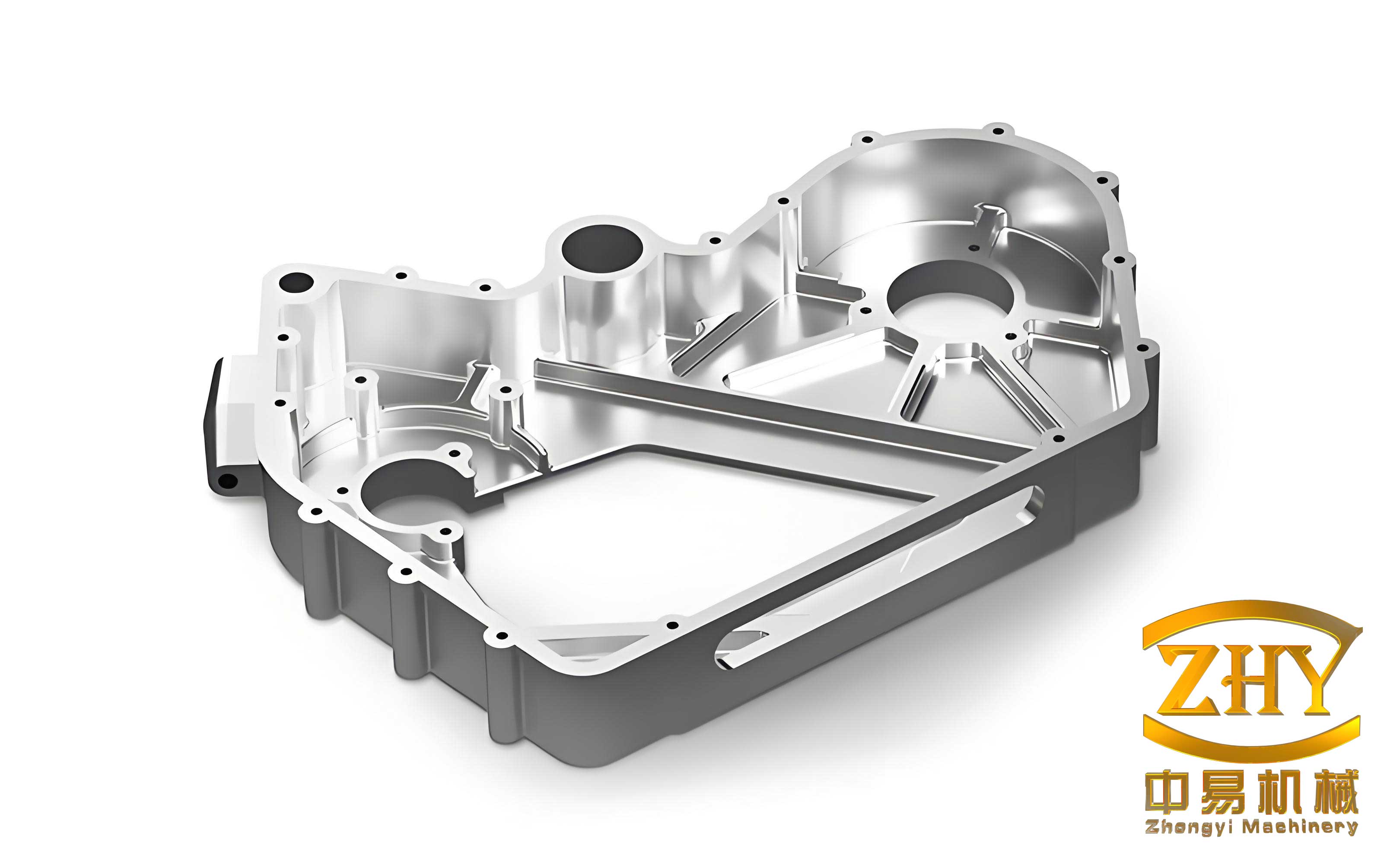
Expandable Polystyrene (EPS) Pattern: Material and Manufacturing Optimization
The quality of the final shell casting is intrinsically linked to the properties of the EPS pattern. Key parameters include density, surface finish, bead fusion, and thermal behavior. A systematic study was conducted to establish optimal processing windows.
Pre-Expansion and Molding Process Optimization
EPS beads containing 6-7% blowing agent (e.g., pentane) were pre-expanded in hot water at 95-100°C. The pre-expanded beads were then aged at room temperature for over 24 hours to stabilize and allow air diffusion. The final molding was performed in a steam chest autoclave. An orthogonal experimental design was employed to determine the optimal molding parameters for achieving a balance between low surface roughness and good inter-bead fusion (measured as a transcrystalline fracture index).
The primary factors investigated were:
- Bulk Density (ρ): Mass of EPS per unit volume of the molded pattern.
- Steam Pressure (P): Pressure of the steam during molding.
- Holding Time (t): Duration of steam exposure.
The results, summarized in the table below, indicate clear trends:
| Factor | Effect on Surface Roughness (Ra) | Effect on Transcrystalline Index | Optimal Value |
|---|---|---|---|
| Density (ρ) | Ra decreases sharply with increasing ρ up to ~0.15 g/cm³, then plateaus. | Index decreases with higher ρ, indicating poorer bead fusion if too high. | 0.16 – 0.18 g/cm³ |
| Pressure (P) | Ra is minimized at a moderate pressure. Too low prevents full fusion; too high crushes surface beads. | Index increases with higher P, promoting better fusion. | 0.14 – 0.16 MPa |
| Time (t) | Similar to pressure: insufficient time leads to poor fusion; excessive time can cause over-expansion/contraction. | Index peaks at an optimal time, then decreases. | 90 – 120 seconds |
The derived optimal process window for producing patterns suitable for precision shell castings is: ρ = 0.163 g/cm³, P = 0.15 MPa, t = 120 s. Patterns produced under these conditions exhibit a smooth surface and sufficient mechanical integrity for handling during shell building.
Surface Finish Replication Fidelity
A critical requirement for precision shell castings is the faithful replication of surface detail from the master model to the final metal part. The chain of replication is: Master Model/Tooling → EPS Pattern → Ceramic Shell → Metal Casting. The study quantified this relationship using surface roughness (Ra) measurements.
Findings indicate a strong linear correlation throughout the chain:
$$ Ra_{\text{casting}} \propto Ra_{\text{EPS}} \propto Ra_{\text{mold}} $$
This linearity confirms that the EPS material, under proper processing, exhibits excellent rheological behavior, filling and replicating the mold surface micro-features. Subsequently, the ceramic slurry effectively wets the EPS surface, capturing its topography. Therefore, controlling the master model’s finish directly controls the final shell casting’s finish.
Furthermore, the EPS bulk density and bead size distribution significantly affect the pattern’s surface roughness. The following formula and table summarize the effects:
Surface roughness as a function of density can be empirically modeled:
$$ Ra_{\text{EPS}} = k_1 \cdot e^{-k_2 \cdot \rho} + C $$
where $k_1$, $k_2$ are constants related to the material and process, and $C$ is the asymptotic minimum roughness.
| Volume Fraction of Fine Beads (<0.5 mm) | Surface Roughness, Ra (μm) | Qualitative Description |
|---|---|---|
| 0% (Coarse only) | ~25 | Very rough, pronounced bead profile |
| 30% | ~15 | Moderately rough |
| 60% | ~8 | Relatively smooth |
| 100% (Fine only) | ~6 | Smoothest achievable |
Optimizing the bead size distribution increases the packing density and coordination number, reducing inter-bead voids and creating a smoother pattern surface, which is crucial for high-quality shell castings.
The Core Challenge: High-Temperature Pattern Removal (Burnout)
For thin-wall shell castings, the pattern removal stage is the most critical. Using higher-density EPS patterns (necessary for strength and surface finish) exacerbates the problem of shell cracking due to the large volumetric expansion of the decomposing foam. Traditional low-temperature (<400°C) burnout is unsuitable as the prolonged gaseous decomposition generates high pressures. Solvent leaching or multi-stage slow heating methods are impractical for production. The proposed solution is a high-temperature, rapid burnout process.
Experimental Analysis of EPS Thermal Behavior
The thermal expansion/contraction behavior of constrained EPS was studied. Samples of different densities were heated while measuring dimensional change. Key observations are plotted in the conceptual graph below and summarized:
Low-Temperature Regime (<~100°C): EPS undergoes significant thermal expansion. The expansion strain ($\epsilon$) is highly density-dependent:
$$ \epsilon_{LT} \approx \alpha(\rho) \cdot \Delta T $$
where the expansion coefficient $\alpha(\rho)$ increases non-linearly with density $\rho$. This expansion, if constrained by the ceramic shell, generates immense stress.
High-Temperature Regime (>~300°C): As temperature approaches the polymer’s glass transition and decomposition point, the foam structure softens and collapses. Above ~500°C, rapid combustion dominates. In this regime, the dominant phenomenon is contraction, not expansion.
The study mapped the relationship between EPS density, pattern size (characteristic thickness), and the critical burnout temperature required to avoid shell cracking. The results are conceptualized below:
| EPS Density (g/cm³) | Small Pattern (Wall < 20mm) | Large Pattern (Wall > 50mm) | Mechanism Dominating at Critical Temperature |
|---|---|---|---|
| 0.10 | ~450°C | ~550°C | Decomposition gas pressure |
| 0.16 | ~700°C | ~800°C | Transition: Expansion vs. Collapse |
| 0.20 | ~850°C | ~850°C – 900°C | Rapid surface collapse and combustion |
The data shows that for a given density, a larger pattern requires a higher critical temperature. However, beyond a certain size and density, the critical temperature stabilizes near 850-900°C. This is the foundational principle of the high-temperature burnout strategy: heat the mold so rapidly that the surface layer of EPS reaches a temperature where it collapses and combusts before the interior can generate significant expansion pressure against the shell.
Mechanistic Model of High-Temperature Burnout
The successful removal of high-density EPS patterns for thin-wall shell castings relies on a sequenced, layer-by-layer mechanism rather than a uniform bulk decomposition. The proposed mechanism is as follows:
- Surface Layer Rapid Heating and Collapse: When the mold is placed in a high-temperature furnace (e.g., 800-950°C), the ceramic shell heats rapidly. The outer surface of the EPS pattern quickly exceeds its softening point (~80-100°C), then its decomposition range (300-400°C), and finally ignites (>500°C). This causes immediate melting, viscous flow, and combustion of the surface layer, creating a permeable char layer. The volume contracts dramatically.
- Inward Progressive Front: Heat conducts inward (though slowly due to EPS’s low thermal conductivity). The next sub-layer of EPS expands slightly into the space vacated by the collapsed surface layer. However, it is simultaneously heated to its decomposition/combustion point and subsequently collapses. This process creates a moving front of collapse that travels from the shell-pattern interface inward towards the pattern’s core.
- Gas Evacuation: The gaseous products from decomposition and combustion escape through the permeable charred layers and the micro-cracks/pores in the ceramic shell, preventing pressure build-up. The shell itself remains hot and strong, resisting thermal shock due to the relatively uniform heating.
- Final Cleanout: After the moving front reaches the core, a short holding period ensures complete removal of carbonaceous residues, yielding a clean, pre-heated ceramic mold ready for pouring.
This mechanism can be contrasted with the problematic low-temperature burnout. At lower temperatures (e.g., 300-500°C), the entire EPS mass decomposes into liquid styrene and gaseous products within a similar timeframe, but without the rapid surface collapse. The liquid products can block venting paths, and the uniform internal gas generation leads to high pressure modeled by a generalized gas law constrained by shell strength:
For a simplified spherical pore of radius $r$ within the EPS structure, the pressure $P$ exerted on the shell wall is a balance of gas generation, polymer strength, and surface tension:
$$ P = \frac{n_g R T}{V_p} – \frac{2 \gamma}{r} – S(T, \dot{\epsilon}) $$
where $n_g$ is moles of gas, $V_p$ is pore volume, $\gamma$ is surface tension of the polymer melt, and $S(T, \dot{\epsilon})$ is the temperature and strain-rate dependent strength (stress relaxation) of the polymer matrix. At low $T$, $S(T, \dot{\epsilon})$ can be significant, but $n_g$ builds steadily, often leading to $P$ exceeding the green shell’s tensile strength. At high $T$, $S(T, \dot{\epsilon})$ drops to near zero almost instantly, and the $- \frac{2 \gamma}{r}$ term becomes negative as the pore collapses (effective radius becomes unstable), preventing dangerous pressure build-up and safeguarding the delicate shell castings mold.
Process Advantages and Summary for Shell Casting Production
The developed lost foam precision casting process, centered on flexible EPS pattern fabrication and high-temperature burnout, offers a transformative set of advantages for manufacturing thin-wall aluminum alloy shell castings in single-piece and small-batch contexts:
| Advantage | Description | Impact on Shell Casting Production |
|---|---|---|
| Extreme Flexibility & Speed | No need for hard tooling (metal dies) for the pattern. CAD model can be directly converted to a CNC-cut and assembled EPS pattern. | Dramatically reduces lead time and cost for prototyping and low-volume production of complex shell castings. |
| Design Freedom | Ability to create internal passages, undercuts, and complex geometries that are impossible or prohibitively expensive to machine. | Enables optimized, lightweight, and functionally integrated shell casting designs. |
| Excellent Surface Finish & Dimensional Fidelity | Linear replication chain and optimized EPS process yield castings with good surface quality, minimizing post-machining. | Reduces finishing costs and improves the aerodynamic or functional performance of the shell castings. |
| High Material Utilization | Near-net-shape process minimizes aluminum waste compared to subtractive machining from a solid forging or plate. | Lowers material cost and is advantageous for expensive high-performance alloys. |
| Process Reliability for Thin Walls | The high-temperature burnout mechanism effectively prevents shell cracking, enabling the successful casting of thin sections. | Makes the process viable for the demanding geometry of thin-wall pressure vessels, housings, and structural shell castings. |
In conclusion, the systematic investigation of EPS material behavior, pattern manufacturing, shell building, and the pivotal high-temperature burnout mechanism has culminated in a viable and robust lost foam precision casting process. This technology is specifically tailored to overcome the economic and logistical challenges associated with producing high-integrity, thin-wall aluminum alloy shell castings in single-piece and small-batch quantities. It represents a strategic advancement in flexible manufacturing for the aerospace and defense sectors, with significant potential for extension into high-value commercial applications where complexity, lightweight, and rapid development cycles are paramount. The successful production of sample shell castings validates the process chain, confirming that high-density EPS patterns can be used in conjunction with ceramic shells to produce precise components, provided the thermal removal process is strategically controlled to leverage layer-by-layer collapse rather than bulk expansion.