
In recent years, as a casting engineer deeply involved in the production of high-precision machine tool components, I have witnessed and participated in the evolution of manufacturing techniques aimed at enhancing rigidity, reducing deformation, and improving overall accuracy. One of the most significant advancements has been the development and application of sand-enclosed casting, specifically for producing shell castings with intricate, windowless internal cavities. These shell castings, often serving as critical base parts like machine tool beds and table bases, present unique challenges due to their enclosed nature, where core sand remains permanently trapped within the cast structure after pouring. This method, which we refer to as “sand-enclosed casting” or “sealed-sand casting,” fundamentally shifts traditional foundry practices by eliminating the need for core sand removal, thereby increasing component weight, lowering the center of gravity, and imparting superior vibration-damping characteristics. Throughout this article, I will elaborate on our experiences, methodologies, and technical insights into this process, emphasizing the keyword “shell castings” repeatedly to underscore its centrality. The discussion will be enriched with tables and formulas to systematically summarize key parameters and relationships.
The structural essence of these advanced shell castings lies in their complex, multi-chambered internal geometries that lack conventional openings or windows for sand extraction and venting. Typical examples include large machine tool beds and table bases with contour dimensions exceeding 2000 mm in length, wall thicknesses around 25 mm, and raw casting weights ranging from 3000 to 5000 kg, often made from HT250 or similar gray iron grades. These shell castings are designed as monolithic, rigid boxes where internal ribs and partitions create segregated cavities that are entirely sealed except possibly for minor access points. For instance, a table base might have its machining face open downward and a mounting face upward, with only one small technical opening for initial sand placement and gas escape, while the side chambers remain completely enclosed. Similarly, a machine bed may feature a guideway face down and no external vents, making the internal core a permanent, inseparable part of the casting. This design philosophy prioritizes mechanical stability and damping but introduces formidable foundry obstacles, particularly in core gas venting during pouring, which I will address in detail later.
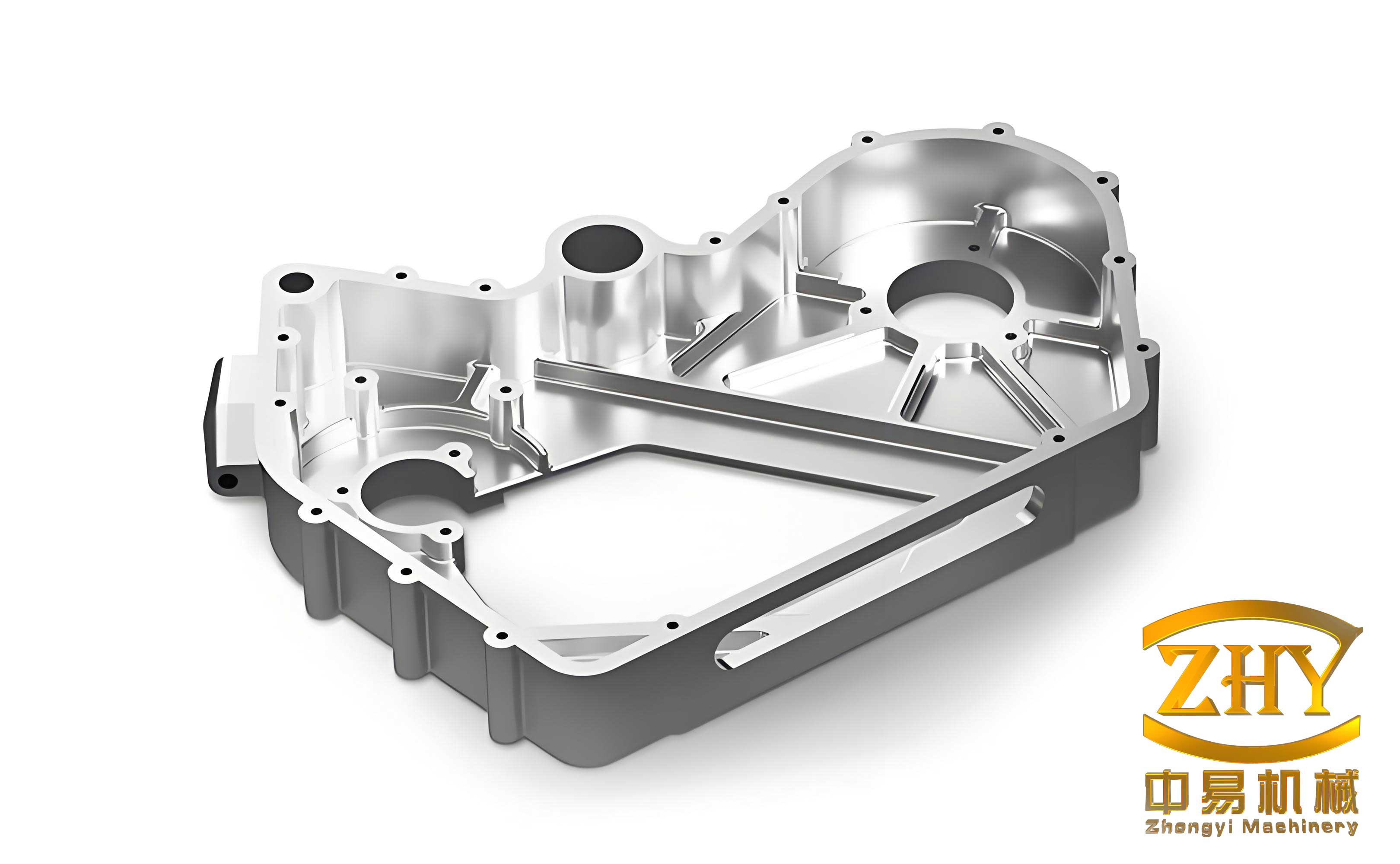
Sand-enclosed casting, as we define it, is a process where core sand is intentionally left inside the cast component’s cavities after solidification, without being removed. This contrasts sharply with traditional casting where cores are knocked out post-casting. The retained sand adds mass, lowers the center of gravity, and enhances damping, all crucial for high-precision machine tools. However, this permanence demands meticulous attention to core sand properties, gas generation, and venting pathways to prevent defects like gas holes, blows, or elevated porosity. The core must be designed not only for shape but also for long-term integrity within the casting. In our practice, we have refined this technique through iterative improvements, focusing on materials, venting innovations, and process controls tailored for these specialized shell castings.
The casting process for such shell castings begins with strategic decisions on pouring position and parting planes. For table-base-type shell castings, we typically orient the working surface downward and the mounting face upward, placing the entire casting predominantly in the drag flask to minimize turbulence and promote directional solidification toward the risers. For bed-type shell castings, the guideway surface is placed down, with most of the volume in the drag. This orientation leverages gravity to feed thick sections and reduce shrinkage defects. The parting line is chosen to simplify molding and core setting, often along planar surfaces to avoid complex joint lines. Table 1 summarizes typical orientation schemes for different shell casting types.
| Shell Casting Type | Pouring Position | Parting Plane | Primary Flask |
|---|---|---|---|
| Table Base | Working face down, mounting face up | Along mounting face perimeter | Drag (lower) |
| Machine Bed | Guideway face down, top open | Horizontal at bed top | Drag (lower) |
| Enclosed Housing | Largest flat surface down | Mid-height split | Drag and Cope balanced |
Material selection is paramount. We employ resin-bonded sand for both molding and coring due to its excellent flowability, rapid hardening at low temperatures, good permeability, and minimal deformation. Although resin sands have higher gas generation rates, their superior venting characteristics mitigate risks when properly managed. The sand mixture typically includes silica sand with a furan or phenolic resin binder, catalyzed for quick curing. For facing, we use alcohol-based zircon flour coatings to prevent metal penetration and ensure smooth surface finish, critical for the precision demands of these shell castings. The core sand must retain strength after casting to avoid disintegration inside the cavity, so resin content and curing are optimized. Table 2 outlines key properties of the materials used.
| Material | Type | Key Properties | Typical Values |
|---|---|---|---|
| Molding Sand | Resin-bonded silica | Permeability, strength, cure time | Permeability: 150-200, Tensile strength: 1.2-1.5 MPa, Cure: 2-5 min |
| Core Sand | Resin-bonded silica | Flowability, gas evolution, retained strength | Gas volume: 30-50 mL/g, Retained strength >0.8 MPa |
| Coating | Alcohol-zircon | Refractoriness, adherence | Thickness: 0.2-0.3 mm, Sintering point: >1600°C |
The cornerstone of success in sand-enclosed casting for shell castings is effective venting of gases from the enclosed core during pouring. Since traditional venting through open windows is impossible, we have developed two primary methods: nylon vent ropes and specialized venting chaplets. In the first method, nylon ropes (typically 5-10 mm diameter) are wound around core irons or placed in dead zones during core making when the sand is still flowable. The rope ends are then routed to venting chaplets or directly out through small technical openings. The gas flow through such ropes can be modeled using Darcy’s law for porous media, adapted for fibrous channels. The pressure drop $\Delta P$ along the rope is given by:
$$ \Delta P = \frac{\mu L Q}{\kappa A} $$
where $\mu$ is gas viscosity, $L$ is rope length, $Q$ is volumetric flow rate, $\kappa$ is permeability of the rope assembly, and $A$ is cross-sectional area. This ensures gases escape without causing backpressure that leads to blows. In practice, we design vent networks to cover all core volumes, with ropes leading to multiple exit points.
The second method involves custom-designed venting chaplets that serve dual purposes: supporting the core against metallostatic pressure and providing conduits for gas escape. These chaplets are machined from low-carbon steel and feature central through-holes. They are strategically placed on the core’s upper surfaces, aligned with corresponding holes in the mold, allowing gases to exit into the atmosphere. After casting, the chaplet holes are plugged with welded seals and ground flush. The placement density depends on core volume and gas generation rate. We use the following empirical formula to estimate the required number of venting chaplets $N_v$ for a shell casting core:
$$ N_v = \alpha \cdot V_c \cdot G_r $$
where $V_c$ is core volume in liters, $G_r$ is resin sand gas evolution rate in mL/g, and $\alpha$ is a safety factor typically 0.01-0.02 per liter per mL/g. For a core of 500 L with $G_r = 40$ mL/g, $N_v$ ranges from 200 to 400 chaplets, distributed evenly. Table 3 compares these venting methods.
| Method | Mechanism | Advantages | Limitations |
|---|---|---|---|
| Nylon Vent Ropes | Fibrous channels wound in core | Flexible, reaches dead zones, low cost | Rope degradation risk at high temps |
| Venting Chaplets | Steel supports with through-holes | Dual support-venting function, reliable | Requires post-casting sealing, higher cost |
| Combined Approach | Ropes connected to chaplets | Comprehensive coverage | Complex installation |
Gating system design is critical to ensure smooth, non-turbulent filling that minimizes gas entrapment and sand erosion. We prefer bottom-gating systems with multiple ingates for these large shell castings, as top gating can cause excessive turbulence and oxide formation. The gating ratio is designed as pressurized to promote rapid filling and reduce aspiration, typically with a choke at the sprue base. The area ratios follow:
$$ A_{sprue} : A_{runner} : A_{ingate} = 1 : 1.2 : 1.5 $$
where areas are in cm². The total choke area $A_c$ is determined based on pouring time $t_p$ and casting weight $W$:
$$ A_c = \frac{W}{\rho \cdot v \cdot t_p} $$
with $\rho$ as metal density (≈7.2 g/cm³ for iron), $v$ as flow velocity (kept below 50 cm/s to avoid turbulence). For a 4000 kg shell casting poured in 60 seconds, $A_c$ calculates to approximately 18 cm². Riser design is minimal, using small necked risers with area ratios relative to the choke area of 1.2:1 to 1.5:1, sufficient for feeding given the relatively uniform wall thickness of these shell castings. Pouring temperature is tightly controlled between 1350°C and 1380°C for gray iron to balance fluidity and shrinkage.
Our implementation of sand-enclosed casting for shell castings has yielded remarkable results. We have successfully produced large components such as beds for vertical machining centers and table bases for CNC vertical lathes, with weights up to 5000 kg and dimensional accuracies within ±1 mm per meter. These shell castings have demonstrated enhanced dynamic stiffness and damping ratios, measured to be 20-30% higher than conventional open-cavity designs. In one case, a machine bed produced via this method exhibited a natural frequency increase of 15%, directly contributing to improved machining precision. The retained sand adds roughly 10-15% to the casting weight, effectively lowering the center of gravity and reducing vibration amplitudes during operation. Quality metrics show defect rates below 2% for gas-related issues, achieved through rigorous venting protocols. The economic benefits are substantial, with such high-value shell castings enabling premium machine tool offerings and international collaborations.
Beyond immediate production, we have developed predictive models for gas pressure evolution in enclosed cores. The core gas pressure $P_g(t)$ during pouring can be approximated by:
$$ P_g(t) = P_0 + \frac{R T}{V_c} \int_0^t G(t) \, dt – \frac{Q_{vent}(t) \cdot t}{V_c} $$
where $P_0$ is ambient pressure, $R$ is gas constant, $T$ is temperature, $V_c$ is core cavity volume, $G(t)$ is gas generation rate function from sand decomposition, and $Q_{vent}(t)$ is venting flow rate. By ensuring $P_g(t)$ remains below metallostatic pressure minus a safety margin, we avoid gas penetration into the metal. This model guides vent sizing and placement for new shell casting designs.
Looking forward, sand-enclosed casting for complex shell castings represents a paradigm shift in foundry technology for high-performance applications. The integration of advanced simulation software allows us to optimize vent networks and gating digitally before physical trials, reducing development time. Emerging materials like low-gas organic binders or inorganic binders may further reduce venting demands. We are also exploring hybrid approaches where functional materials (e.g., damping particles) are incorporated into the retained sand to tailor dynamic properties. The essence lies in viewing the shell casting not just as a metal shape but as a composite system where the enclosed sand plays an active role in performance.
In conclusion, the journey of perfecting sand-enclosed casting for intricate, windowless shell castings has been challenging yet rewarding. By innovating in venting techniques, material science, and process control, we have turned a manufacturing constraint into a performance advantage. The repeated emphasis on “shell castings” throughout this discussion highlights their central role in modern precision machinery. As demand grows for stiffer, quieter, and more accurate machine tools, this foundry methodology will continue to evolve, pushing the boundaries of what is possible in metal casting. Our experience confirms that with careful engineering, the complexities of enclosed cavities can be mastered to produce shell castings that meet the highest standards of quality and functionality.