
In the production of high-performance aluminum alloy components, shell castings are critical for aerospace and structural applications due to their lightweight and high-strength properties. ZL201A alloy, an Al-Cu-Mn system, is widely used for such shell castings because of its excellent mechanical properties at room and elevated temperatures, along with good plasticity, impact toughness, weldability, and machinability. However, the alloy’s wide solidification range and significant shrinkage tendency often lead to defects like porosity, shrinkage cavities, cracks, and segregation, with segregation being a prevalent issue in shell castings. In this study, I focus on the “white-crack” segregation observed in differential pressure cast ZL201A alloy shell castings, exploring its morphology, composition, formation mechanisms, and preventive measures through detailed experimental analysis. The use of differential pressure casting is favored for shell castings as it reduces gas porosity, minimizes hot tearing tendencies during solidification of large complex castings, and enhances surface quality, but challenges remain in addressing segregation defects in thin-walled sections with varying thicknesses.
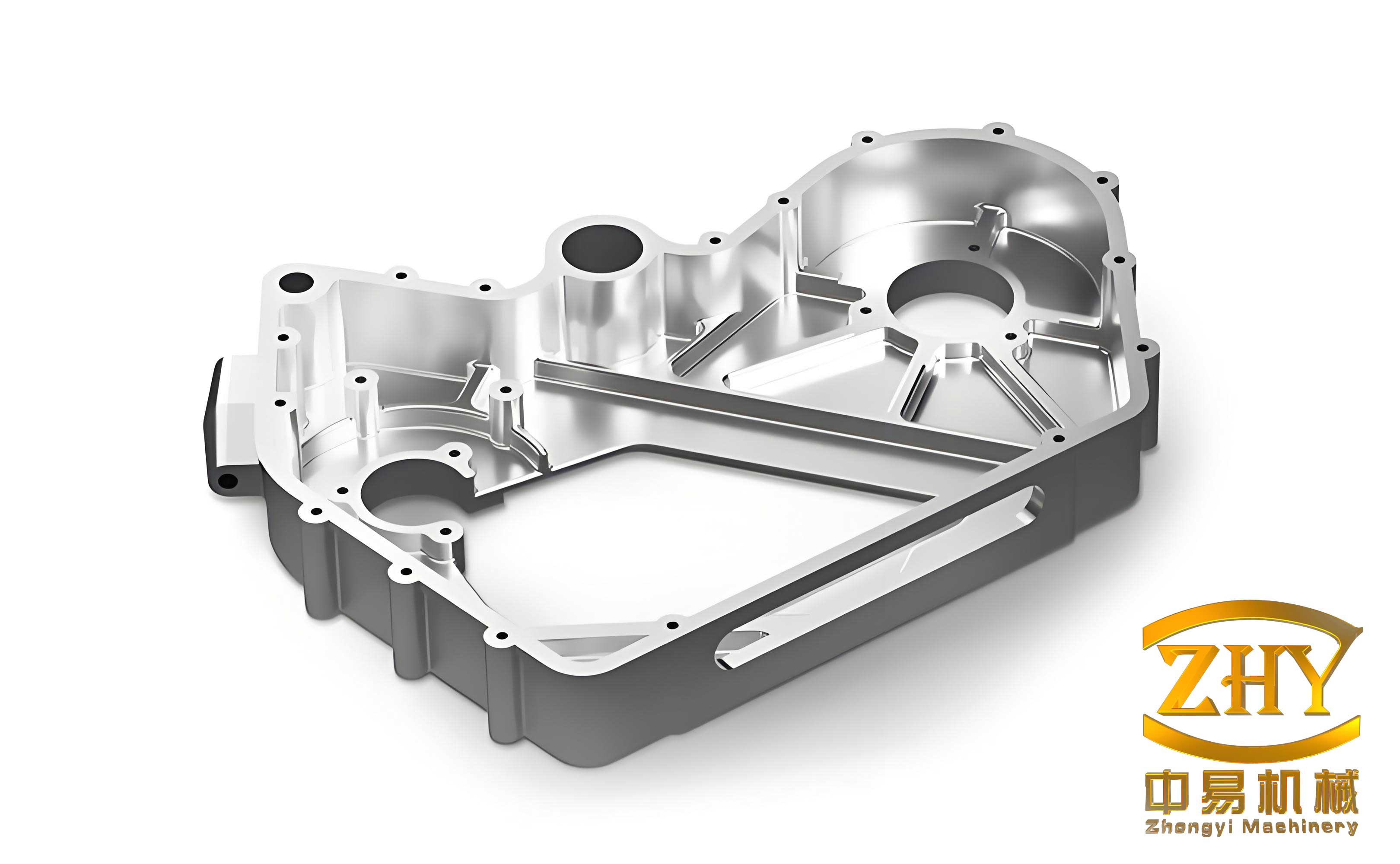
The shell castings under investigation are large thin-walled components with non-uniform thickness, typically produced using metal mold casting under differential pressure conditions. During non-destructive testing, such as X-ray inspection, a “white-crack” segregation pattern was detected in some shell castings, primarily located near corners or transitions between thin and thick sections. These defects manifest as linear features resembling cracks, often intertwined with segregation bands, compromising the structural integrity of the shell castings. This study aims to characterize these defects through macro- and microstructural observations, fracture surface analysis, chemical composition examination via energy-dispersive spectroscopy (EDS) and X-ray diffraction (XRD), and to propose mitigation strategies based on the underlying mechanisms.
To understand the segregation phenomena in shell castings, I begin by describing the experimental methodology. The shell castings were fabricated from ZL201A alloy, with a nominal composition including 4.8-5.3% Cu, 0.15-0.35% Ti, and other elements like Mn. Differential pressure casting was employed, involving a pressure difference to fill the mold and promote directional solidification. Samples were extracted from defect-prone regions of the shell castings, particularly at thin-thick transitions, and prepared for analysis. Tensile specimens were machined according to standard dimensions, and fracture surfaces were examined using a JSM-6700F scanning electron microscope (SEM). For microstructural observation, polished samples were etched with a mixture of 50% HCl, 30% HNO3, and 20% HF, then analyzed under SEM. Chemical composition was determined via EDS at various points, and phase identification was performed using XRD with a D/Max-2400 diffractometer. This comprehensive approach allows for a thorough investigation of the segregation defects in these shell castings.
The macroscopic appearance of the “white-crack” segregation in shell castings, as observed on X-ray radiographs, reveals linear white bands that often align with crack-like features. These defects are predominantly found on vertical surfaces of the shell castings, especially near areas where wall thickness changes abruptly. This localization suggests that solidification dynamics and thermal stresses play a key role. To quantify the characteristics, Table 1 summarizes the typical locations and morphologies of segregation in shell castings based on multiple observations.
| Defect Type | Location in Shell Castings | Morphology | Frequency |
|---|---|---|---|
| White-Crack Segregation | Thin-thick transitions, corners | Linear bands, fishbone-like | High in non-uniform sections |
| Micro-segregation | Grain boundaries throughout | Point or continuous phases | Moderate |
Fracture surface analysis of tensile specimens from defective shell castings shows distinct patterns compared to sound ones. Specimens with “white-crack” segregation exhibit intergranular fracture, with cracks propagating along grain boundaries, as seen in SEM images. In contrast, defect-free shell castings display ductile fracture with numerous dimples, indicating better toughness. This contrast underscores the detrimental impact of segregation on mechanical properties. To further analyze, the fracture energy can be related to segregation severity using a simplified model: $$ E_f = E_0 – k \cdot C_s $$ where \( E_f \) is the fracture energy, \( E_0 \) is the energy for defect-free material, \( k \) is a constant, and \( C_s \) is the segregation concentration. For shell castings, higher segregation levels reduce fracture resistance, leading to premature failure.
Microstructural examination of the segregated regions in shell castings reveals a fishbone-like pattern, primarily along grain boundaries, with coarse precipitates. EDS analysis indicates that these areas are enriched in Cu and Ti, with Cu forming Al2Cu phases and Ti forming Al-Ti intermetallics. Table 2 presents a summary of EDS results from various points in defective and sound shell castings, highlighting the compositional differences.
| Sample Region | Major Elements (at%) | Detected Phases | Notes |
|---|---|---|---|
| White-crack area (a1) | Al: 75%, Cu: 25% | Al2Cu | Grain boundary segregation |
| White-crack area (a2) | Al: 70%, Cu: 30% | Al2Cu | Linear aggregation |
| White-crack area (a3) | Al: 80%, Mn: 15%, K: 5% | Mn-rich phases | Random dispersion |
| White-crack area (a4) | Al: 85%, Ti: 15% | Al-Ti | Micro-clusters |
| Sound area (b1) | Al: 80%, Cu: 20% | Al2Cu | Uniform distribution |
| Sound area (b2) | Al: 78%, Cu: 22% | Al2Cu | Fine precipitates |
XRD analysis confirms that the matrix phase in shell castings is α-Al, with Al2Cu and Al1+xTi1-x phases present in segregated zones. The diffraction peaks correlate with the enrichment of Cu and Ti, supporting the EDS findings. The formation of these phases can be described using phase diagram principles. For instance, from the Al-Cu binary system, the eutectic reaction occurs at 548°C, leading to Al2Cu precipitation during solidification. The segregation behavior in shell castings is influenced by cooling rates and compositional gradients. A diffusion-based model can express the segregation ratio: $$ S = \frac{C_l – C_s}{C_0} $$ where \( S \) is the segregation coefficient, \( C_l \) is the liquid composition, \( C_s \) is the solid composition, and \( C_0 \) is the initial alloy composition. For shell castings with non-uniform cooling, \( S \) increases in slow-cooling zones, promoting Cu and Ti accumulation.
The mechanism behind “white-crack” segregation in shell castings involves both solidification dynamics and melting practices. ZL201A alloy has a wide freezing range, leading to mushy zone solidification. In thin-thick transitions of shell castings, cooling rates vary, causing thermal stresses and inadequate feeding. The low-melting-point eutectic liquid, rich in Cu, is pushed to grain boundaries during solidification, resulting in linear segregation bands. If feeding channels are blocked, shrinkage cavities or cracks form, exacerbating the defect. Additionally, Ti, introduced via Al-Ti master alloy, has a high melting point (around 730°C in Al melts). During melting, insufficient stirring can lead to Ti-rich clusters that settle due to density differences, causing micro-segregation. This is critical in shell castings where homogeneity is essential for performance.
To mathematically describe the segregation process, consider the solidification front velocity \( v \) and the partition coefficient \( k_p \) for Cu and Ti. The Scheil equation approximates composition profiles: $$ C_s = k_p C_0 (1 – f_s)^{k_p – 1} $$ where \( C_s \) is the solid composition, \( C_0 \) is the initial composition, and \( f_s \) is the solid fraction. For shell castings, local variations in \( v \) alter \( f_s \), leading to segregation. Furthermore, thermal stress \( \sigma \) in shell castings during cooling can be estimated as: $$ \sigma = E \alpha \Delta T $$ where \( E \) is Young’s modulus, \( \alpha \) is the thermal expansion coefficient, and \( \Delta T \) is the temperature gradient. High \( \sigma \) at thin-thick junctions promotes crack initiation along segregated zones.
Based on this analysis, several measures can prevent segregation in shell castings. First, optimize the differential pressure casting process to promote simultaneous solidification in non-uniform sections. This involves designing gating systems with improved yieldability to enhance feeding. Second, use high-quality master alloys for Cu and Ti to avoid coarse intermetallic particles. Third, enhance stirring during melting to ensure uniform distribution of Ti and other elements. Fourth, increase pouring temperature appropriately to reduce the settling time of high-density phases. Fifth, limit the use of recycled material to maintain alloy purity. Implementing these strategies can significantly reduce segregation defects in shell castings, improving their reliability.
To quantify the impact of process parameters on segregation in shell castings, I propose a factorial design approach. Table 3 summarizes key factors and their effects based on experimental data and theoretical considerations.
| Process Parameter | Recommended Range for Shell Castings | Effect on Segregation | Optimal Value |
|---|---|---|---|
| Pouring Temperature | 750-780°C | Reduces Ti settling, improves fluidity | 770°C |
| Mold Temperature | 200-250°C | Minimizes thermal gradients | 220°C |
| Stirring Intensity | High (mechanical stirring) | Enhances homogeneity | Continuous during melting |
| Pressure Differential | 0.5-1.0 atm | Controls filling and solidification | 0.8 atm |
| Cooling Rate | Moderate (10-20°C/s) | Reduces segregation time | 15°C/s |
The effectiveness of these measures can be modeled using a quality index \( Q \) for shell castings, defined as: $$ Q = \frac{\sigma_b \cdot \epsilon}{\rho} $$ where \( \sigma_b \) is tensile strength, \( \epsilon \) is elongation, and \( \rho \) is density. By minimizing segregation, \( \sigma_b \) and \( \epsilon \) improve, enhancing \( Q \). For shell castings in aerospace, target values might be \( \sigma_b > 300 \) MPa and \( \epsilon > 5\% \), achievable through optimized processing.
In conclusion, “white-crack” segregation in differential pressure cast ZL201A alloy shell castings is a complex defect driven by Cu and Ti enrichment at grain boundaries, exacerbated by non-uniform cooling and inadequate feeding. Through microstructural and compositional analysis, I have identified that segregation not only appears as linear bands but also extends deeply, compromising mechanical properties. The formation mechanisms involve both solidification-related factors, such as thermal stresses and mushy zone behavior, and melting-related issues, like insufficient stirring of high-melting-point elements. By addressing these through improved melting and casting practices, such as using quality master alloys, enhancing stirring, adjusting temperatures, and optimizing gating design, segregation defects can be mitigated. This study underscores the importance of holistic process control in producing high-integrity shell castings for demanding applications. Future work could explore advanced simulation tools to predict segregation in shell castings under various conditions, further enhancing quality assurance.
To deepen the understanding, consider the diffusion kinetics of Cu and Ti in aluminum melts. The diffusion coefficient \( D \) for Cu in Al at melting temperatures is approximately \( 10^{-9} \) m²/s, while for Ti it is lower due to higher atomic interactions. The segregation length \( L \) can be estimated using: $$ L = \sqrt{D \cdot t} $$ where \( t \) is the solidification time. For shell castings with \( t \approx 100 \) s, \( L \) for Cu is around 0.3 mm, explaining the localized segregation bands. Additionally, the role of Mn in ZL201A alloy should not be overlooked; it can form dispersoids that pin grain boundaries, but if segregated, it may contribute to brittleness. Thus, a balanced composition is crucial for shell castings.
In practice, monitoring segregation in shell castings requires non-destructive techniques like ultrasonic testing or advanced X-ray tomography. These methods can detect internal defects without damaging the components, enabling real-time adjustments during production. Moreover, computational fluid dynamics (CFD) simulations can model melt flow and solidification in shell castings, predicting segregation-prone areas. Integrating such tools with experimental data will lead to more robust manufacturing processes for shell castings.
Ultimately, the goal is to achieve defect-free shell castings that meet stringent performance criteria. By combining theoretical insights with practical optimizations, the industry can enhance the reliability of ZL201A alloy components. This research contributes to that effort by elucidating the “white-crack” segregation phenomenon and offering actionable solutions, ensuring that shell castings continue to serve critical roles in advanced engineering applications.