
The pursuit of lightweight, high-strength components across aerospace, automotive, and general engineering sectors has driven extensive research into aluminum alloy casting techniques. Among these, the **lost foam casting process** presents a compelling combination of design flexibility, dimensional accuracy, and cost-effectiveness. This method utilizes an expendable foam pattern coated with a refractory layer, around which unbonded sand is compacted. Upon pouring, the molten metal replaces the vaporizing foam, replicating the pattern’s geometry with high fidelity.
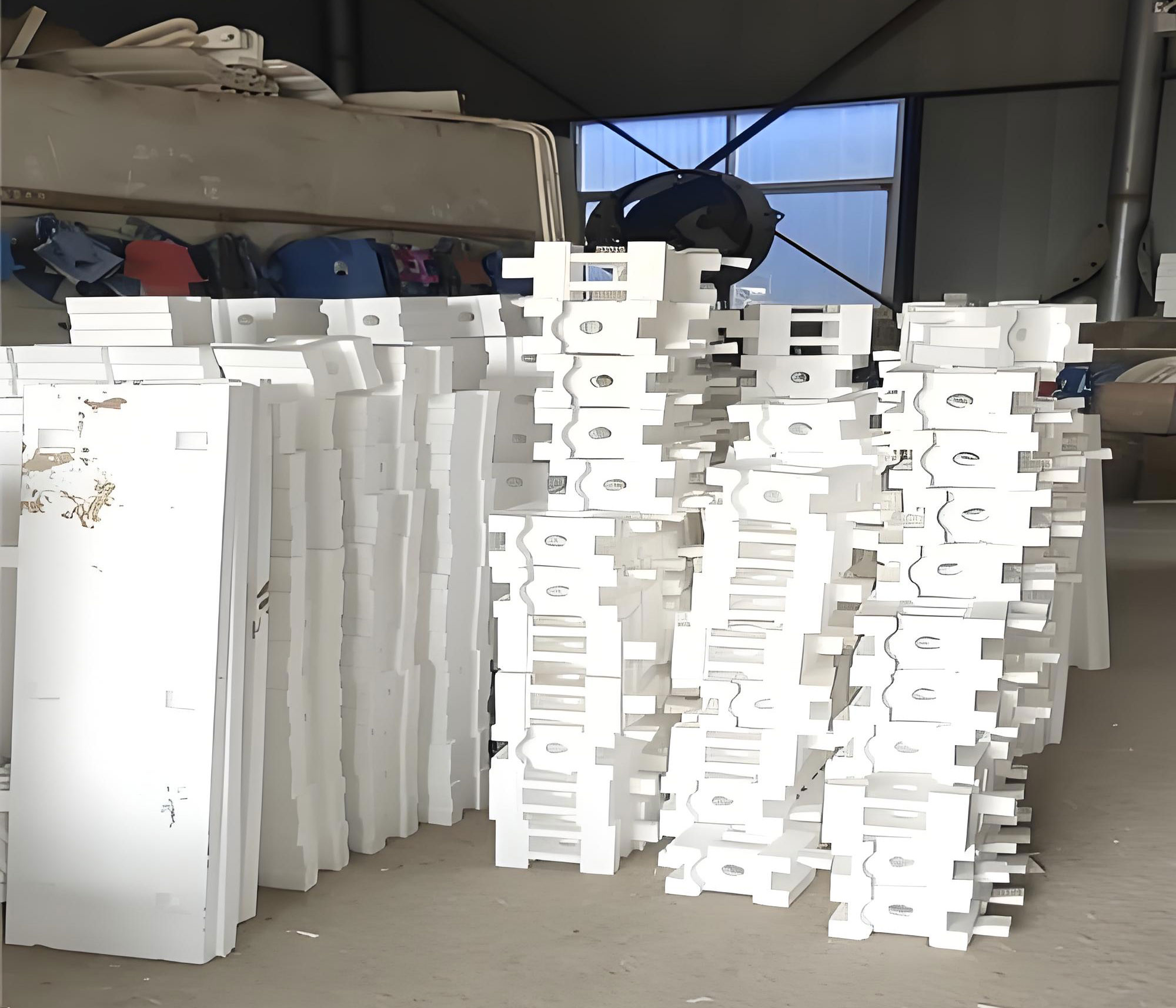
Despite its advantages, a primary challenge inherent to the **lost foam casting process** for light alloys like Al-Si systems is the relatively slow cooling rate within the dry sand mold. This often results in coarse dendritic microstructures, increased microporosity, and consequently, compromised mechanical properties. To counteract these limitations and enhance the performance of castings produced via this route, external field interventions during solidification are widely explored. Mechanical vibration stands out as a practical and effective method to refine the as-cast structure by influencing nucleation and growth kinetics.
This investigation delves deeply into the effects of systematically applied mechanical vibration on the microstructure evolution and resultant mechanical properties of an A356 (AlSi9Mg) aluminum alloy cast using the **lost foam casting process**. The study focuses on quantifying the impact of key vibration parameters—direction, amplitude, and frequency—to establish optimized processing windows and elucidate the underlying physical mechanisms.
Material, Methodology, and Experimental Design
The base material employed was a hypoeutectic A356-type aluminum alloy, with a nominal composition provided in Table 1. This alloy solidifies over a freezing range, forming primary α-Al dendrites followed by an Al-Si eutectic, making its microstructure highly responsive to solidification conditions.
| Si | Mg | Fe | Mn | Ti | Al |
|---|---|---|---|---|---|
| 9.2 | 0.4 | 0.12 | 0.002 | 0.02 | Bal. |
The experimental procedure integrated the **lost foam casting process** with a controlled vibration system. Expanded polystyrene (EPS) patterns were fabricated, coated with a proprietary refractory slurry, dried, and placed in a flask. The flask was then filled with dry silica sand, which was compacted using standard foundry practices. The alloy was melted in a resistance furnace, subjected to standard degassing and modification treatments, and poured at a superheat of approximately 130°C above the liquidus temperature (~725°C).
The critical innovation was the application of mechanical vibration during the entire pouring and initial solidification phase. The vibration unit was attached to the mold flask, enabling precise control over the excitation parameters. The experimental matrix was designed as follows:
- Vibration Direction: Six conditions were tested: No Vibration (NV), Unidirectional (X, Z), and Multi-directional (XY, XZ, XYZ). The coordinate system was defined with Z as the vertical (gravity) direction.
- Vibration Amplitude (A): Varied from 0.06 mm to 0.12 mm at a constant frequency.
- Vibration Frequency (f): Varied from 12 Hz to 48 Hz at a constant amplitude.
For directional studies, amplitude and frequency were fixed at 0.10 mm and 36 Hz, respectively. For amplitude and frequency studies, the vibration direction was fixed in the Z-axis.
Metallographic samples were extracted from a standardized location in the castings. The average grain size (D) of the primary α-Al phase was quantified using image analysis software, calculating the diameter of a circle of equivalent area:
$$ D = 2 \sqrt{\frac{A}{\pi}} $$
where \( A \) is the measured average cross-sectional area of the grains. Mechanical properties were assessed via Brinell hardness (HB) measurements and uniaxial tensile testing, with reported values representing the average of multiple tests.
Effects of Vibration Direction on Solidification Structure
The direction of applied mechanical force proved to be a decisive factor in microstructural refinement within the **lost foam casting process**. Figure 1 shows representative microstructures. The non-vibrated (NV) specimen exhibited a characteristic coarse columnar and equiaxed dendritic structure, with long primary arms indicative of unimpeded growth under a steep thermal gradient.
Application of vibration significantly altered this morphology. In all vibrated samples, the dendritic network was fragmented, leading to a more equiaxed and refined grain structure. However, the degree of refinement varied markedly with direction:
- Z-Direction (Vertical): This configuration yielded the most pronounced refinement. The primary α-Al phase appeared as fine, rosette-like or near-spherical equiaxed grains. The eutectic Si was also more uniformly distributed.
- X-Direction (Horizontal): Refinement was evident but less effective than in the Z-direction. Some residual dendritic characteristics were observable.
- Multi-Directional (XY, XZ, XYZ): These conditions produced intermediate results. While superior to no vibration, the refinement was consistently less effective than pure Z-axis vibration. The XY direction performed second-best after Z.
| Vibration Direction | Avg. Grain Size, D (µm) | Brinell Hardness, HB | Tensile Strength (MPa) | Elongation (%) |
|---|---|---|---|---|
| No Vibration | 366 | 56 | 119 | 2.76 |
| X | 178 | 64 | 125 | 3.22 |
| Z | 108 | 68 | 139 | 3.83 |
| XY | 120 | 65 | 137 | 3.80 |
| XZ | 278 | 62 | 130 | 3.77 |
| XYZ | 302 | 58 | 127 | 3.65 |
The data in Table 2 corroborates the microstructural observations. Z-direction vibration reduced the average grain size by approximately 70% compared to the non-vibrated benchmark, accompanied by the highest gains in hardness (21% increase), tensile strength (17% increase), and elongation (39% increase). The superiority of vertical (Z-axis) vibration is attributed to its alignment with the primary thermal gradient and gravity. This alignment maximizes fluid shear at the solid-liquid interface, enhancing dendrite fragmentation and promoting convective heat and mass transfer more effectively than horizontal or complex motions, which may involve component cancellation or provide a less direct coupling to the solidifying front.
Optimization of Vibration Amplitude and Frequency
Beyond direction, the intensity (amplitude, A) and rate (frequency, f) of vibration are critical controllable parameters in the enhanced **lost foam casting process**. Their effects are non-linear and exhibit clear optima.
Role of Vibration Amplitude
At a fixed frequency, increasing the vibration amplitude initially leads to significant microstructural improvement, followed by degradation at excessive levels. With increasing amplitude (from 0.06 mm to 0.10 mm), the kinetic energy imparted to the melt increases. This enhances bulk fluid flow, interfacial shear, and the probability of dendrite arm fragmentation through mechanisms like bending fatigue. The critical bending stress \( \sigma_b \) required to fracture a dendrite arm of length \( L \) under forced convection can be related to the fluid drag force, which is a function of the vibration-induced velocity \( v \), itself proportional to \( A \cdot f \):
$$ \sigma_b \propto \frac{F_{drag} \cdot L}{I} $$
where \( I \) is the area moment of inertia of the arm. Higher \( A \) increases \( v \) and thus \( F_{drag} \), promoting fragmentation up to a point.
| Amplitude, A (mm) | Avg. Grain Size, D (µm) | Brinell Hardness, HB | Tensile Strength (MPa) | Elongation (%) |
|---|---|---|---|---|
| 0.00 | 366 | 56 | 119 | 2.76 |
| 0.06 | 182 | 63 | 133 | 3.25 |
| 0.08 | 170 | 65 | 135 | 3.50 |
| 0.10 | 150 | 66 | 137 | 3.76 |
| 0.12 | 184 | 64 | 134 | 3.51 |
As shown in Table 3, the optimum amplitude was found to be 0.10 mm. Beyond this, excessive turbulence can re-entrain already separated oxide films or sediments, create gas entrapment, or even cause mold wall instability in the **lost foam casting process**, leading to slightly coarser grains and reduced properties.
Role of Vibration Frequency
Frequency dictates how often the solidification front is disturbed per unit time. At a fixed amplitude, increasing frequency initially enhances refinement by increasing the rate of dendrite fragmentation and the number of effective nucleation events per second. The number of potential nucleation sites \( N \) activated per unit time can be conceptually linked to the vibration power input, which scales with \( f^3 \cdot A^2 \) for a simple harmonic oscillator:
$$ P_{vib} \propto \rho A^2 \omega^3 = \rho A^2 (2\pi f)^3 $$
where \( \rho \) is density and \( \omega \) is angular frequency. Higher \( f \) dramatically increases this energy input.
| Frequency, f (Hz) | Avg. Grain Size, D (µm) | Brinell Hardness, HB | Tensile Strength (MPa) | Elongation (%) |
|---|---|---|---|---|
| 0 | 366 | 56 | 119 | 2.76 |
| 12 | 240 | 61 | 134 | 3.15 |
| 24 | 136 | 63 | 136 | 3.45 |
| 36 | 108 | 68 | 139 | 3.83 |
| 48 | 150 | 66 | 137 | 3.76 |
Table 4 clearly demonstrates the optimal frequency of 36 Hz. At very high frequencies (e.g., 48 Hz), the system may enter a regime where the vibration period is too short for effective fluid displacement relative to the dendritic network’s response time, or where excessive agitation leads to negative effects similar to those caused by high amplitude, thus reducing refinement efficacy.
Mechanistic Analysis of Vibration-Enhanced Solidification
The improvement in microstructure and properties due to mechanical vibration in the **lost foam casting process** can be attributed to a synergy of several interconnected mechanisms:
- Dendrite Fragmentation: This is the dominant mechanism for grain refinement in this context. The oscillatory shear stresses induced by vibration cause bending and eventual fracture of vulnerable dendritic arms, especially at their roots where solute enrichment weakens the solid. These fragments are then transported into the bulk liquid, acting as potent nucleation sites for new equiaxed grains. The condition for fracture can be simplified as:
$$ \tau_{fluid} \cdot S \geq \sigma_{y, dendrite} \cdot A_{neck} $$
where \( \tau_{fluid} \) is the fluid shear stress, \( S \) is the moment arm, \( \sigma_{y, dendrite} \) is the yield strength of the dendrite at the solidus temperature, and \( A_{neck} \) is the cross-sectional area at the dendrite root. - Enhanced Nucleation: Vibration promotes volumetric nucleation by increasing the effective undercooling in the melt through improved heat extraction and by potentially activating otherwise dormant substrates on suspended particles or mold walls.
- Suppression of Columnar Growth: The constant disturbance of the diffusion boundary layer at the solid-liquid interface reduces constitutional undercooling ahead of the growing tips, destabilizing columnar growth and favoring an equiaxed morphology.
- Improved Feeding and Porosity Reduction: The pressure fluctuations aid in interdendritic feeding, reducing shrinkage porosity—a common defect in the slowly cooling **lost foam casting process**. This directly enhances mechanical properties, especially ductility.
- Modification of Eutectic Silicon: Enhanced mass transfer alters the growth kinetics of the eutectic Si phase, often leading to a finer and more fibrous morphology, which further improves ductility.
Fractography of tensile specimens provided direct evidence of these improvements. The fracture surface of the non-vibrated alloy showed large, flat facets with occasional cleavage steps and shallow dimples, indicative of a quasi-cleavage, low-ductility failure mode. In contrast, the fracture surface of the optimally vibrated (Z-direction, 0.10 mm, 36 Hz) specimen was characterized by a uniform dimpled morphology with deep, well-defined voids, demonstrating a classic microvoid coalescence mechanism associated with high ductility and toughness.
Integrated Process Optimization and Conclusions
This comprehensive study establishes that mechanical vibration is a highly effective technique for upgrading the quality of aluminum alloy castings produced by the **lost foam casting process**. The key findings and optimized parameters are synthesized below:
| Parameter | Optimal Value | Primary Effect | Mechanistic Rationale |
|---|---|---|---|
| Vibration Direction | Z-axis (Vertical) | Greatest grain refinement & property enhancement. | Maximizes shear at solid-liquid interface aligned with thermal gradient; most efficient energy transfer for dendrite fragmentation. |
| Vibration Amplitude (A) | 0.10 mm | Optimum for property maximization; higher values cause degradation. | Provides sufficient kinetic energy for effective dendrite arm fracture without causing excessive turbulence or defect entrainment. |
| Vibration Frequency (f) | 36 Hz | Optimum for property maximization; forms a clear peak in performance. | Balances high-rate perturbation of the solidification front with the system’s dynamic response, maximizing nucleation events. |
The implementation of mechanical vibration transforms the solidification paradigm in the **lost foam casting process**. By shifting the microstructure from coarse, strength-limiting dendrites to a fine, equiaxed grain structure, it directly addresses the core weakness of the conventional process. The quantitative improvements are significant: under optimal vibration parameters (Z-direction, A=0.10 mm, f=36 Hz), the A356 alloy exhibited a grain size reduction of over 70%, a tensile strength increase of ~17%, and a remarkable elongation improvement of nearly 40% compared to non-vibrated castings.
The underlying mechanism is primarily one of forced dendrite fragmentation coupled with enhanced heat and mass transfer. The process window is well-defined, with clear optima for amplitude and frequency, indicating that excessive vibrational energy can be detrimental. Therefore, the successful integration of mechanical vibration into the **lost foam casting process** requires not just its application, but the careful selection and control of directional and kinetic parameters. This approach offers a robust, scalable method to produce aluminum castings with reliably higher performance, expanding the potential applications of the economical and flexible lost foam casting technique into more demanding structural roles.