
The production of motor shell castings represents a significant challenge in foundry practice, demanding high dimensional accuracy, excellent surface finish, and internal soundness. While traditional green sand molding has been employed for decades, it often suffers from low productivity, high labor intensity, and inconsistent surface quality leading to extensive cleaning work. The adoption of the Lost Foam Casting (EPC) process presented a promising alternative, offering the potential for near-net-shape production with improved surface definition. However, initial attempts to produce motor shell castings via EPC were plagued by persistent defects such as sand inclusion, slag entrapment, cold shuts, and deformation. These issues were primarily traced back to inadequate control across the entire process chain, from pattern making to pouring. This detailed account, from a first-person perspective as a process engineer, chronicles the systematic investigation and resolution of these challenges through rigorous process control at every stage, ultimately achieving the production of high-integrity shell castings.
Initial Process: Analysis of Failures
The baseline process for producing HT200 motor shell castings was characterized by several standard EPC practices that proved insufficient for this complex geometry. The component featured thin walls (approx. 5 mm) and dense, deep cooling fins, making it exceptionally susceptible to filling and thermal-related defects.
Original Process Parameters:
- Material: HT200 Gray Iron.
- Gating System: Top-gating with a closed design. Sprue: Ø40 mm x 50 mm. Eight horizontal runners (15 mm x 10 mm cross-section) distributed around the circumference. Ingates: 2 mm x 10 mm.
- Pattern Coating: Brushed, 3 layers, thickness 1.3-1.5 mm. Drying was intermittent (8 hours of active heating followed by residual heat).
- Pouring Parameters: Temperature ~1500°C, Vacuum: 0.04-0.05 MPa, Holding Time: 6 minutes.
The resulting shell castings exhibited a range of unacceptable surface defects. A root cause analysis was conducted, linking each defect to specific process shortcomings:
| Defect Observed | Root Cause | Theoretical Prevention Strategy |
|---|---|---|
| Slag/Sand Inclusion | 1. Inadequate molten iron slag removal & poor slag trapping at the pouring cup. 2. Coating erosion at gating system joints due to weak coating strength or gaps in assembly. |
1. Multiple slag skimming, correct placement of slag wool filters covered with an iron plate. 2. Increasing coating layers/strength at critical junctions; preventing coating moisture pickup. |
| Cold Shuts & Surface Roughness | 1. Excessive pattern density leading to incomplete gasification. 2. Low pouring temperature/speed. 3. Poor pattern surface continuity from inadequate molding or pre-expansion. |
1. Strict control of Expanded Polystyrene (EPS) bead density. 2. Increasing pouring temperature and speed. 3. Optimizing steam parameters and mold filling during pattern molding. |
| Pitting/Scab-like Defects | Direct result of poor pattern surface fusion, presenting a “leathery” or grainy texture that transfers to the metal surface. | Fundamental improvement in pattern molding process to ensure a smooth, fully fused skin. |
The analysis concluded that a holistic, tightly controlled approach was needed, starting from the raw bead. Piecemeal adjustments would be insufficient for producing quality shell castings.
Systematic Process Improvement & Control
The improvement campaign focused on a specific 225-series motor shell casting with a diameter of 343 mm, height of 420 mm, a wall thickness of 5 mm, and 60 cooling fins (5 mm thick, 40 mm deep). The stringent surface quality requirements for this export component made it an ideal test case.
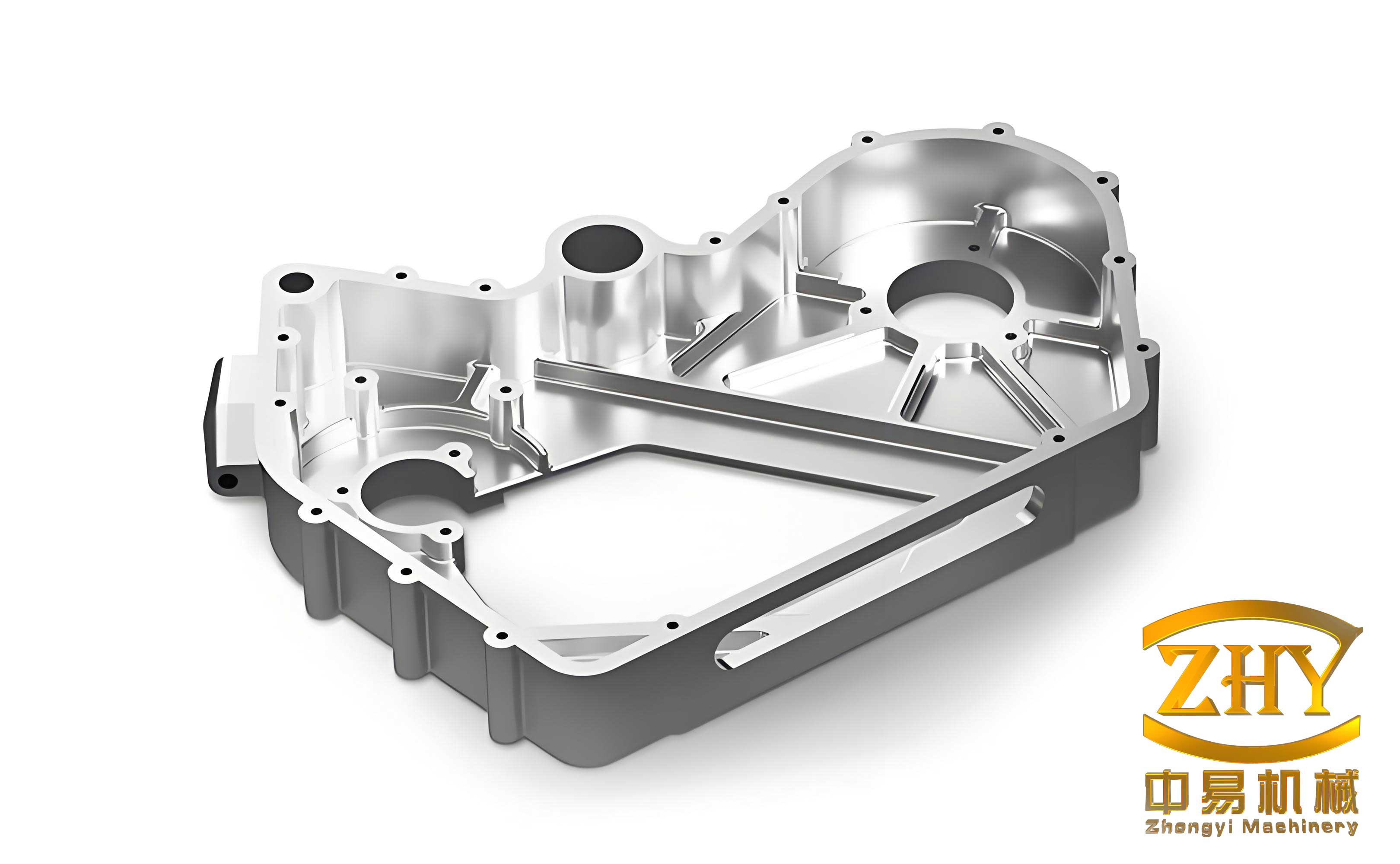
Stage 1: Raw Material & Pattern Molding
The foundation of a good shell casting is a dimensionally stable, high-surface-quality pattern. A co-polymer bead (Grade B-107) was selected for its better fusion and thermal characteristics compared to standard EPS.
Pre-expansion Control: Given the thin sections, pattern density was critical. A target range of 24-25 g/L was established to minimize distortion while ensuring sufficient strength. The relationship between bead size, density, and final surface quality can be conceptualized by the need to fill the thin-wall mold cavity completely with uniformly expanded beads. Process parameters were fixed and monitored:
$$ P_{steam} = 0.08 \text{ MPa}, \quad P_{vessel} = 0.02 \text{ MPa}, \quad t_{heat} = 18 \text{ s} $$
Regular density checks ensured consistency, as variation here directly causes surface defects in the final shell casting.
Pattern Molding: A manual tool with six feed ports was used. The sequence and technique of bead injection were found to be critical. Incorrect sequence led to unfilled areas (“short shots”), as shown by early trials. The following defects were systematically eliminated:
- Unfilled Sections: Corrected by optimizing the injection port sequence and operator technique.
- Poor Surface Fusion (Pin-hole texture): Caused by residual moisture in the tool cavity, aged beads with lost pentane, insufficient main steam time, or low cavity pressure. Corrective actions included thoroughly blowing out the tool, using fresh beads, and verifying steam parameters.
- <strong"bumpy" bead="" strong="" texture: Resulted from under-expanded beads failing to fully fill inter-bead spaces, often due to overly low pre-expansion density (overly large beads).
Through rigorous parameter control and skilled operation, a high-quality, fully fused pattern with excellent surface continuity was achieved, forming the perfect replica for the shell casting.
Stage 2: Pattern Drying & Stabilization
Effective removal of the moisture inherent from the steaming process is non-negotiable. In a high-humidity environment (ambient RH >80%), standard drying rooms (40-50°C) could not reduce pattern moisture adequately. The drying kinetics are governed by temperature and the vapor pressure difference. We established a new equilibrium:
$$ T_{dry} = 53^\circ\text{C}, \quad RH_{dry} < 13\% $$
Patterns were immediately placed in the drying room post-demolding. Drying was considered complete only after the pattern weight stabilized over successive measurements, a process requiring a minimum of 72 hours. This step is crucial for preventing pattern distortion and ensuring coating adhesion for shell castings.
Stage 3: Pattern Assembly & Coating
Assembly & Rigging: The gating was modified from the original design. To improve fill and reduce turbulence, the ingate dimensions were increased to 5 mm x 10 mm. To combat ovality distortion of the shell casting’s large face, a combination of a straightening fixture, glued wooden braces, and triangular support brackets at the base was employed during cluster assembly.
Coating Application & Drying: This phase is arguably the most critical in defining the surface quality of shell castings. A two-layer coating system with precise rheological control was implemented.
| Layer | Baume Density | Minimum Dry Time | Target Thickness | Purpose |
|---|---|---|---|---|
| 1st | ~1.6 | 10 hours | 1.0 – 1.2 mm (Total) | Create a uniform base layer, penetrate pattern surface. |
| 2nd | 1.7 – 1.8 | 24 hours | Build thickness and strength for erosion resistance. |
Patterns were always handled vertically, with force applied only to the sturdy sprue and support brackets. The drying room was maintained at 55°C and <15% RH. Weight-based monitoring confirmed dryness. A key rule was enforced: patterns ready for molding were stored separately from newly coated ones to prevent moisture re-absorption. Any repaired areas required a minimum of 8 hours of additional drying before molding.
Stage 4: Molding & Pouring
Sand Compaction: The coated cluster was only removed from the drying room immediately prior to molding. A base sand layer of 150 mm was leveled and vibrated. The cluster was placed, and sand was added to just below the pouring cup before vibration. The fill and compaction process must ensure uniform sand density around the intricate fins of the shell casting. The pouring cup was then carefully prepared and sealed with a film and cover sand to prevent sand ingress during pouring.
Pouring Practice: Final parameters were meticulously set and executed:
$$ T_{pour} = 1510^\circ\text{C}, \quad P_{vacuum} = 0.05 \text{ MPa}, \quad t_{hold} = 12 \text{ min} $$
For a 75 kg casting, the pour was completed rapidly and continuously within a 10-second window. The ladle was preheated and clean, with slag wool and an iron plate used to cover the ladle spout after thorough slag removal. This protocol minimized exogenous slag introduction into the mold cavity for the shell casting.
Iterative Refinement Based on Results
The initial improvement cycle yielded shell castings with significantly better surface definition but two persistent issues: severe, though releasable, sand adhesion on the cooling fins, and localized slag/porosity in the lower-middle region.
First Refinement Cycle:
Hypothesis: Fin sand adhesion was due to insufficient coating thickness or refractoriness in deep, narrow fin gaps. Lower-middle porosity was attributed to marginally low pouring temperature causing incomplete pattern gasification in elevated areas of the mold cavity.
Action: A third coat of slurry was applied specifically between the fins. Pouring temperature was increased to 1530°C.
Result: Partial improvement. Sand adhesion lessened but persisted symmetrically on two sides. Porosity was reduced but still present in a defined zone.
Second Refinement Cycle & Root Cause Discovery:
The symmetrical nature of the sand adhesion pointed away from a coating deficiency and towards an issue with sand compaction. The adhesion locations correlated with the axis of the vibration table. The localized porosity suggested non-uniform filling.
Investigation: It was observed that during vibration, the tall, slender cluster could tilt slightly. This would cause two problems: 1) The sand density would be lower on the “uphill” side of the tilt (leading to sand adhesion), and 2) The metal flow would not be symmetrical, leaving elevated areas of the tilted shell casting cavity under-filled and prone to mistruns and slag entrapment.
Corrective Actions:
- Vibration Table Tuning: The eccentric weights on the vibration motor corresponding to the problematic axis (X-direction) were adjusted to achieve a 90% overlap, ensuring more linear, uniform compaction force.
- Level Molding Protocol: The base sand was meticulously leveled. During vibration, clusters were monitored for tilt. If tilting occurred, the molding box was shimmed before pouring to ensure the cluster and gating system were perfectly level relative to the ladle stream.
- Pouring Philosophy: The mantra was changed to “steady, then fast,” ensuring a consistent, non-turbulent start to the pour before accelerating to complete it quickly.
| Process Stage | Key Parameter | Target Value / Control Point | Impact on Shell Casting |
|---|---|---|---|
| Bead Pre-Expansion | Bulk Density | 24 – 25 g/L | Minimizes distortion, ensures good surface finish. |
| Pattern Drying | Drying Room State | 53°C, RH < 13% to weight stability | Prevents distortion, ensures coating adhesion. |
| Coating | Layers & Drying | 2 layers (Baume 1.6, then 1.8), Full drying between | Provides erosion resistance, defines surface. |
| Molding | Cluster Levelness & Compaction | Absolutely level cluster; tuned vibrator | Prevents sand adhesion & filling-related defects. |
| Pouring | Temperature & Speed | 1510-1530°C; Fast, continuous pour (<10s) | Ensures complete fill and pattern gasification. |
Conclusion
The successful production of high-quality, complex thin-walled motor shell castings via the EPC process is a testament to the necessity of holistic, precise control across every single step of the operation. This journey from defective castings to consistent excellence underscores several fundamental principles. The process is only as strong as its weakest link; excellence in pouring cannot compensate for a poor-quality pattern, and a perfect pattern is wasted without a robust, well-dried coating and precisely controlled molding environment. Key equipment like vibration tables and drying rooms must be calibrated and maintained to exacting standards. Environmental factors, particularly humidity, must be actively managed and counteracted within the process parameters. For shell castings with demanding geometries and quality requirements, a scientific, data-driven approach—monitoring weights, temperatures, densities, and times—replaces reliance on experience alone. This case demonstrates conclusively that with such rigorous and integrated process control, the Lost Foam Casting process is fully capable of producing impeccable shell castings, even in challenging production environments, offering a superior alternative to traditional molding methods in terms of quality, consistency, and finishing effort.