
In my extensive work with precision castings for aerospace applications, I have often encountered the challenge of producing complex, thin-walled components with stringent dimensional and mechanical requirements. One such component is the actuating cylinder shell, a critical part in aircraft engine systems. These shell castings must exhibit high strength, precision, and internal soundness. My previous experience with traditional plaster mold vacuum casting for ZL208 alloy shell castings revealed significant limitations, including a high incidence of shrinkage porosity, coarse grain structure, and a disappointing qualification rate of only around 33%. Furthermore, issues with dimensional inaccuracies in wax patterns produced from medium-temperature wax dies compounded the problem. This led me to undertake a comprehensive redesign of the manufacturing process, focusing on plaster mold low-pressure casting. The objective was to enhance the dimensional accuracy, internal quality, and ultimately, the yield of these demanding shell castings.
The target component, an HNS-24 type actuating cylinder shell, is a quintessential example of a high-integrity shell casting. Its geometry is complex, featuring varying wall thicknesses from a minimal 3.5 mm to a maximum of 20 mm. The cast shell casting must withstand significant operational stresses, necessitating mechanical properties as per HB962-2001 standards: a tensile strength (Rm) greater than 220 MPa and an elongation (A) exceeding 1%. Non-destructive evaluation via fluorescent penetrant inspection mandates a flawless surface free from cold shuts, cracks, shrinkage cavities, and any through-wall defects. Achieving this consistently with the previous method was improbable, prompting my shift to a low-pressure casting approach within a plaster mold system.
The heart of improving these shell castings lies in the foundational stages of pattern and mold making. I initiated the process with the fabrication of precise wax patterns. I selected a C-162H medium-temperature wax for its balance of stability and detail reproduction. Using a vertical wax injection machine, I meticulously controlled the parameters to ensure dimensional fidelity, accounting for wax shrinkage in the tool design. The key process parameters I established are summarized below:
| Process Parameter | Set Value |
|---|---|
| Wax Injection Temperature | 52 °C |
| Mold Pressure | 3.2 MPa |
| Pressure Holding Time | 20 s |
After injection, each wax pattern for the shell casting was carefully inspected and repaired. I then assembled the patterns into a cluster with a gating and risering system designed to promote directional solidification. The gating system was welded to the shell casting patterns using runners and a central sprue, with all connections radiused (R2 to R5 mm) to reduce turbulence. The completed cluster was then cleaned with a mild detergent solution to remove any contaminants. This rigorous attention to the wax pattern stage is crucial, as any imperfection is directly transferred to the final shell casting.
The next critical phase was creating the plaster mold. For the mold material, I formulated a blend of α-type hemihydrate plaster as the binder, with cristobalite and fireclay as refractories. The weight ratio I used was Plaster : Cristobalite : Fireclay = 25 : 20 : 55. The single most critical factor in achieving a strong, accurate mold is the water-to-plaster ratio. I strictly maintained a ratio of Water : Plaster = 3 : 10. The slurry was mixed for over 30 seconds and then further stirred under a vacuum of -0.05 MPa for (2.5 ± 0.5) minutes to remove entrapped air. The slurry was then poured into a welded steel flask (260 mm x 290 mm x 590 mm) housing the wax cluster. A primary coat was applied first, and after it set, the main backup investment was poured. The mold was then subjected to a carefully controlled dewaxing and firing cycle in a car-bottom electric resistance furnace. The thermal cycle was designed to completely remove the wax without causing mold cracks and then to sinter the plaster to achieve sufficient strength and remove all volatiles. The cycle I developed is outlined in the table below:
| Process Stage | Temperature Profile | Hold Time |
|---|---|---|
| Dewaxing | Room Temp → 70°C → 130°C | 2 h at 70°C, 1 h at 130°C |
| Firing | 130°C → 165°C → 250°C → 350°C → 450°C → 600°C → 720°C | 8 h, 10 h, 6 h, 4 h, 3 h, 12 h respectively |
| Cooling | Furnace cool to 150°C | >6 h at 150°C |
With a perfected mold ready, the focus shifted to melting and casting. The alloy of choice was ZL208, a complex aluminum-copper based alloy strengthened by multiple elements like Ni, Co, Mn, and Zr. I prepared the charge using primary ingots, master alloys (Al-Ni, Al-Mn, Al-Zr, Al-Co, Al-Cu, Al-Sb), and limited high-quality returns. The melting was conducted in a crucible preheated and coated. The sequence involved melting the base charge, adding master alloys at specific temperatures, and thorough stirring. For instance, Al-Cu and Al-Sb master alloys were added at (740 ± 5)°C. The melt was then superheated to (770 ± 10)°C to promote dissolution and homogenization before being allowed to cool for grain refinement. Grain refinement was achieved by adding preheated Al-Ti-B at 740-750°C.
Refinement and degassing are paramount for high-quality shell castings. I employed a two-stage process. First, hexachloroethane (C2Cl6) was introduced, accounting for 0.6% of the melt weight, to remove hydrogen and non-metallic inclusions. This was immediately followed by rotary degassing using high-purity argon at a flow rate of 15 L/min for 15 minutes at 710-740°C. After slag removal and a brief settling period, I performed a reduced pressure test to confirm gas content was within acceptable limits. Finally, modification was carried out using a ternary salt flux (50% NaCl, 30% NaF, 10% KCl, 10% Na3AlF6), comprising 2-3% of the melt weight, to improve the silicon phase morphology in the eutectic.
The core of my process innovation is the low-pressure casting step. Instead of gravity or vacuum pouring, the mold is placed atop a sealed furnace, and pressurized air (or inert gas) is applied to the melt surface, forcing it up a refractory tube (stalk) into the mold cavity. This allows for precise control over filling velocity and solidification under pressure. The key to this process is the precise calculation and control of pressure. The pressure required to raise the metal to the top of the stalk (lift pressure, P1) and to fill the mold (filling pressure, P2) are calculated based on the metallostatic head. The formulas I used are:
$$ P_1 = \frac{h_1}{42.5} + 1 $$
$$ P_2 = P_1 + \frac{h_2}{42.5} + 2 $$
Where \( P_1 \) and \( P_2 \) are in kPa, \( h_1 \) is the height (mm) from the melt surface to the top of the stalk, and \( h_2 \) is the height of the plaster mold (cavity) in mm. The constant 42.5 mm/kPa is derived from the density of the aluminum alloy. For the shell casting in question, with precise measurements of \( h_1 \) and \( h_2 \), I determined the pressures. The other critical low-pressure parameters I optimized are listed below:
| Process Parameter | Set Value / Range |
|---|---|
| Lift Speed | 40 mm/s |
| Filling Speed | 40 mm/s |
| Filling Time | 12 s |
| Skin Formation Time | 3 s |
| Skin Formation Pressure Increase | 3 kPa |
| Crystallization (Solidification) Time | ≥ 360 s |
| Crystallization Pressure | 10 kPa |
| Pouring Temperature | 680 – 690 °C |
The controlled filling minimizes turbulence and air entrapment, while the sustained crystallization pressure actively feeds the solidifying shell casting, dramatically reducing shrinkage porosity. After a sufficient cooling period, the mold was broken away, and the cluster of shell castings was cut from the gating system.
To achieve the required mechanical properties, the ZL208 alloy shell castings must undergo a specific T7 heat treatment, which involves solution heat treatment followed by over-aging. I used pit-type furnaces for this process. The castings were solution treated at (535 ± 5)°C for a minimum of 5 hours to dissolve soluble phases, then quenched in water within 25 seconds of removal from the furnace. The quenching delay is critical; exceeding it can significantly reduce strength. The water quench duration was over 2 minutes to ensure complete cooling. Subsequently, artificial aging was performed at (215 ± 5)°C for no less than 16 hours. This T7 regimen stabilizes the microstructure and relieves internal stresses, which is vital for the dimensional stability of these precision shell castings in service.
The validation of this entire process design was conducted through rigorous inspection. Test bars cast alongside the production shell castings were machined and tested. The results consistently exceeded the specification requirements, with tensile strengths above 280 MPa and elongation over 3%. Every shell casting was subjected to fluorescent penetrant inspection and X-ray radiography. The findings were conclusive: the incidence of cold shuts, cracks, shrinkage, and porosity was reduced to minimal levels, meeting all acceptance criteria. The internal soundness of the shell castings was markedly improved compared to those from the previous vacuum casting method.
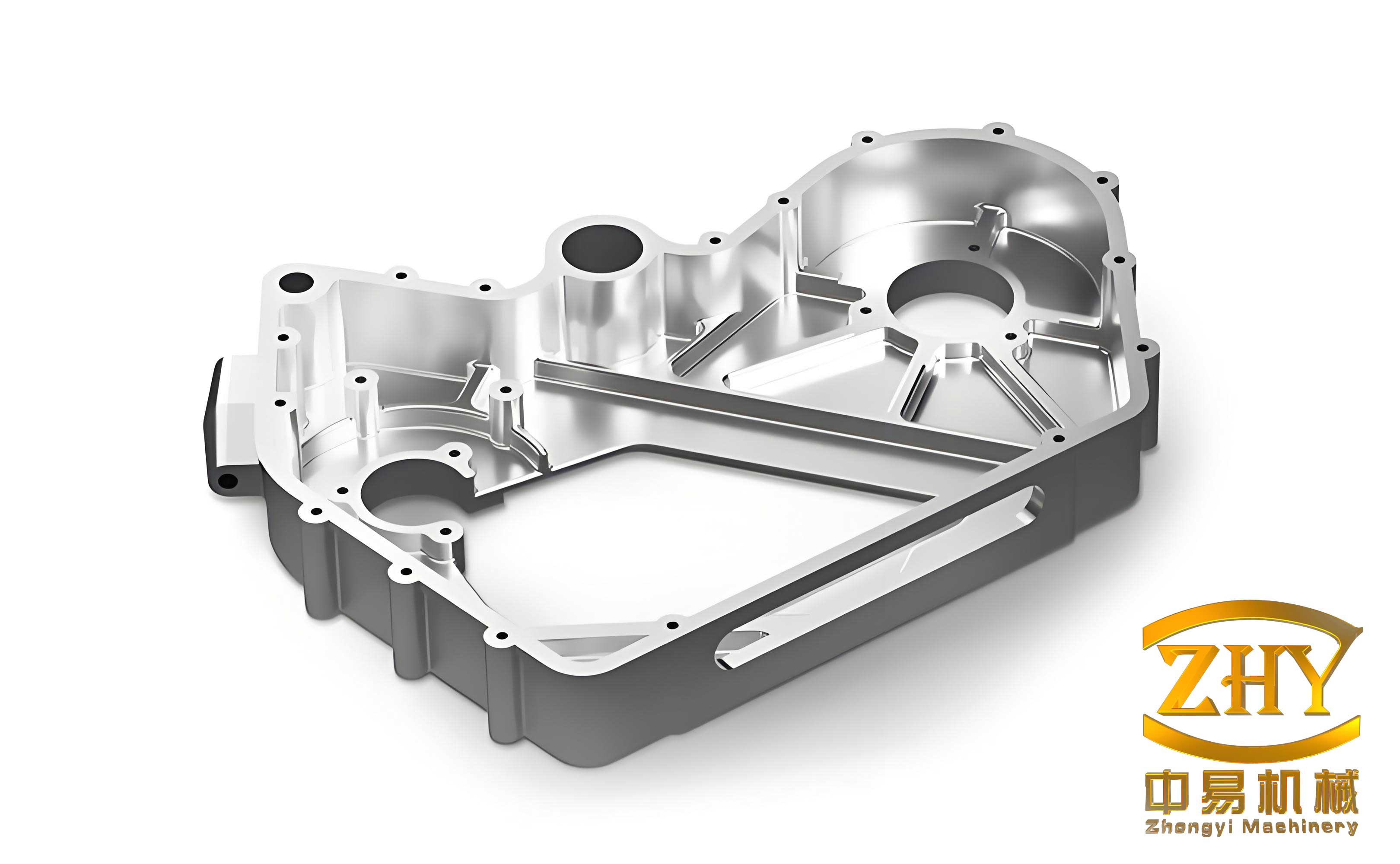
The transition to the plaster mold low-pressure casting process for manufacturing ZL208 alloy actuating cylinder shells has been a resounding success in my practice. By methodically optimizing each step—from wax pattern integrity and plaster mold formulation to controlled melt treatment and, most importantly, the precisely governed low-pressure filling and solidification—I achieved a paradigm shift in quality. The dimensional precision of the final shell castings is excellent, requiring minimal machining allowance. The internal quality, particularly regarding the reduction of shrinkage defects, is superior. This is directly attributable to the synergistic effect of the plaster mold’s fine surface finish and the feeding efficiency of the low-pressure process. Consequently, the qualification rate for these critical shell castings soared from the previous 33% to over 90% in production runs, demonstrating the robustness and reliability of the designed process.
In conclusion, the successful implementation of this plaster mold low-pressure casting process underscores several key principles for high-quality shell castings. First, the integrity of the sacrificial pattern is non-negotiable. Second, the plaster mold composition and thermal processing must be meticulously controlled to achieve the necessary permeability and strength. Third, advanced melt treatment for degassing and refinement is essential. Fourth, and most pivotal for this application, the low-pressure casting parameters—calculated lift and fill pressures, controlled speeds, and sustained solidification pressure—must be precisely tailored to the geometry of the shell casting. The pressure parameters, defined by \( P_1 \) and \( P_2 \), are not arbitrary but are derived from fundamental fluid dynamics principles related to the specific alloy density and mold geometry. This mathematical approach ensures reproducible filling conditions. The entire process chain, summarized through the various tables and formulas presented, forms a comprehensive framework that can be adapted for other complex, thin-walled shell castings requiring high dimensional accuracy and internal soundness. The significant increase in yield and performance confirms that low-pressure casting with plaster molds is a highly effective manufacturing route for premium aluminum alloy shell castings in demanding aerospace applications.