
In the field of aerospace engineering, the demand for lightweight and high-performance materials has driven significant research into magnesium alloys. These alloys offer exceptional properties, including low density, high specific strength, and good machinability, making them ideal for structural components such as missile bodies and engine housings. However, the application of magnesium alloys, especially heat-resistant variants, in large-scale shell castings presents numerous challenges. These challenges stem from their high chemical reactivity, propensity for oxidation and burning during melting and filling, and susceptibility to defects like shrinkage porosity, hot tearing, and segregation during solidification. This study focuses on the low-pressure casting process for large heat-resistant magnesium alloy shell castings, utilizing numerical simulation to optimize the gating system, sand core design, and chilling system. The primary objective is to achieve a stable filling process, effective feeding, and high-integrity shell castings with minimal defects. Through iterative simulation and validation, I have developed a robust methodology that ensures the production of quality shell castings, which are critical for advancing aerospace technologies.
The shell castings under investigation feature a conical structure with complex internal geometries, including multiple annular ribs and protrusions. The external dimensions are substantial, with a front-end diameter of 500 mm, a rear-end diameter of 760 mm, and a height of approximately 2 meters. The wall thickness varies significantly, ranging from as thin as 3 mm to thicker sections at ribs and bosses, creating pronounced thermal gradients during solidification. Such non-uniformity exacerbates the risk of defects, necessitating precise control over the casting process. To meet the stringent quality standards, such as 100% X-ray and fluorescent inspection per HB7780-2005 Class I requirements, a comprehensive analysis of the casting process is essential. The following table summarizes key structural parameters of the shell castings:
| Parameter | Value | Description |
|---|---|---|
| Front Diameter | 500 mm | Diameter at the narrower end of the conical shell |
| Rear Diameter | 760 mm | Diameter at the wider end of the conical shell |
| Height | 2000 mm | Overall height of the shell castings |
| Minimum Wall Thickness | 3 mm | Thinnest section, prone to deformation |
| Maximum Wall Thickness | Variable (at ribs/bosses) | Thicker sections, acting as hot spots |
| Internal Features | Annular ribs, bosses | Complex geometry increasing solidification complexity |
Given the structural intricacies, low-pressure casting was selected due to its advantages in providing controlled filling and feeding pressure, which is crucial for magnesium alloys. The gating system was designed to ensure uniform flow and minimize turbulence. It comprises a sprue, a runner system, and eight vertical slot gates evenly distributed around the shell’s periphery. The runner system includes an outer circular runner and an inner “star”-shaped runner with trapezoidal cross-sections to enhance slag trapping and improve fluidity. The vertical slot gates facilitate steady filling by distributing molten metal uniformly, reducing overheating, and promoting directional solidification for effective feeding. The design principles are grounded in fluid dynamics, where the flow rate $Q$ through each gate can be approximated by Bernoulli’s equation for incompressible flow:
$$ Q = A \cdot v = A \cdot \sqrt{\frac{2 \Delta P}{\rho}} $$
Here, $A$ is the cross-sectional area of the gate, $v$ is the flow velocity, $\Delta P$ is the pressure difference, and $\rho$ is the density of the molten alloy. By optimizing $\Delta P$ and $A$, I aimed to achieve a balanced flow across all gates, ensuring that the shell castings fill without splashing or oxide inclusion.
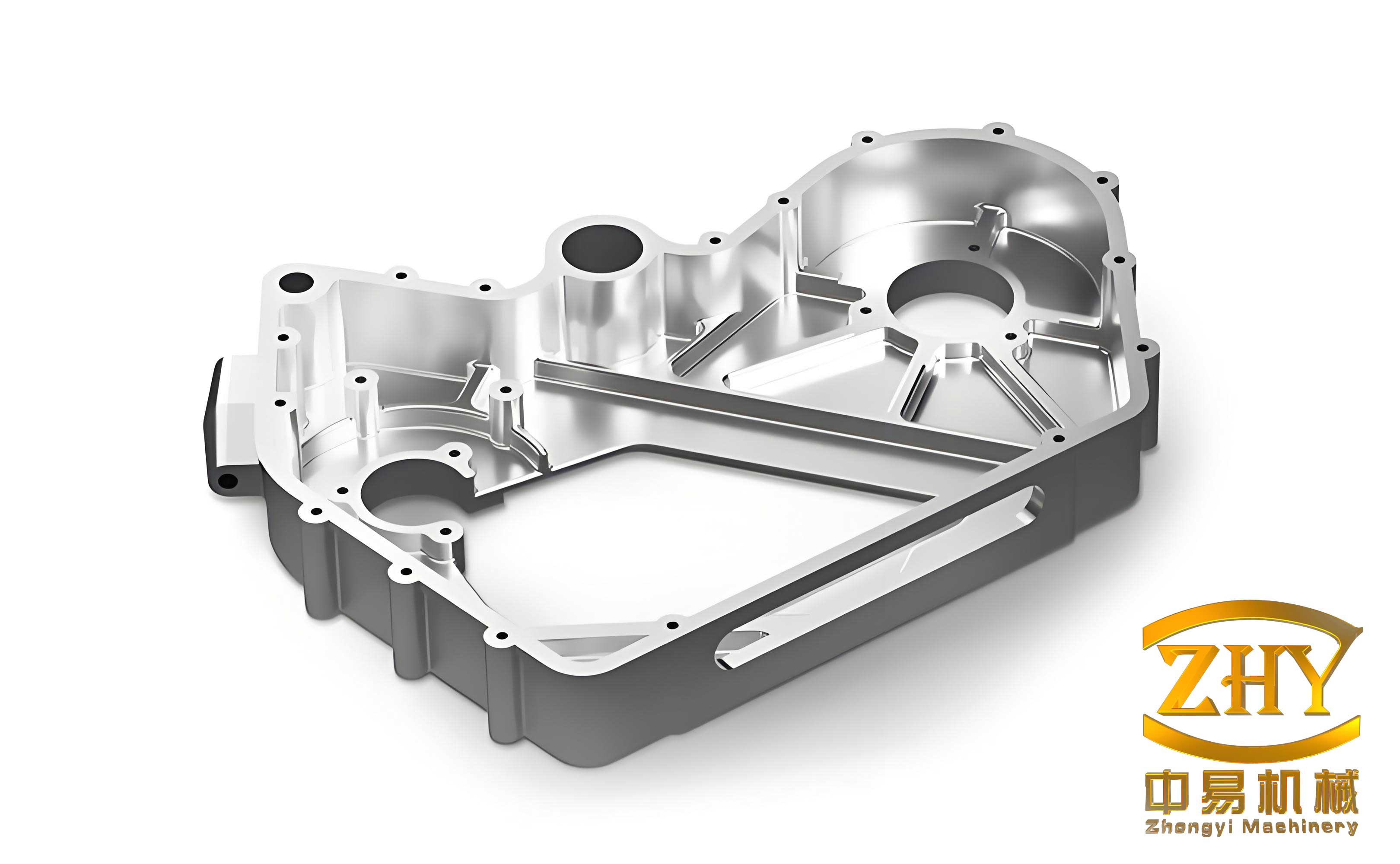
The sand core for the shell castings was fabricated using a monolithic clay sand process, incorporating a central core bar to vent gases generated during pouring, thereby preventing gas porosity and slag entrapment. In critical areas such as ribs, bosses, and regions near the vertical slot gates, specialized chills and chilling sand were placed to accelerate cooling and mitigate shrinkage defects. The effectiveness of these chills relies on heat transfer principles, where the rate of heat extraction $q$ is governed by Fourier’s law:
$$ q = -k \frac{dT}{dx} $$
In this equation, $k$ is the thermal conductivity of the chill material, and $\frac{dT}{dx}$ is the temperature gradient. By selecting appropriate chill materials and geometries, I enhanced the solidification sequence, ensuring that hot spots solidify last and are adequately fed.
To simulate the casting process, I employed ProCAST software, a finite element-based tool for modeling fluid flow, heat transfer, and solidification in metal casting. The three-dimensional geometry was created using Pro/E and imported into ProCAST’s Visual-Mesh module for discretization. The mesh comprised 221,810 nodes and 3,410,192 elements, providing sufficient resolution to capture thermal and flow phenomena. The material used is VW63Z heat-resistant rare-earth magnesium alloy, with chemical composition and thermophysical properties detailed below. The alloy’s high-temperature performance is critical for shell castings operating in elevated temperature environments.
| Element | Composition (wt.%) |
|---|---|
| Gd | 5.0–6.4 |
| Y | 2.5–3.7 |
| Zr | 0.3–1.0 |
| Mg | Balance |
The thermophysical parameters, including thermal conductivity, density, enthalpy, and solid fraction, are functions of temperature and are essential for accurate simulation. These properties were input into ProCAST to model the phase change during solidification. The following equations describe key aspects of the simulation:
1. Heat conduction during solidification: $$ \rho C_p \frac{\partial T}{\partial t} = \nabla \cdot (k \nabla T) + L \frac{\partial f_s}{\partial t} $$ where $\rho$ is density, $C_p$ is specific heat, $T$ is temperature, $t$ is time, $k$ is thermal conductivity, $L$ is latent heat, and $f_s$ is solid fraction.
2. Solid fraction model: $$ f_s = \frac{T_l – T}{T_l – T_s} $$ for a simple linear approximation, where $T_l$ is liquidus temperature and $T_s$ is solidus temperature. In practice, a more complex relationship based on alloy phase diagram was used.
3. Fluid flow during filling: The Navier-Stokes equations for incompressible flow: $$ \rho \left( \frac{\partial \mathbf{v}}{\partial t} + \mathbf{v} \cdot \nabla \mathbf{v} \right) = -\nabla P + \mu \nabla^2 \mathbf{v} + \rho \mathbf{g} $$ where $\mathbf{v}$ is velocity vector, $P$ is pressure, $\mu$ is dynamic viscosity, and $\mathbf{g}$ is gravitational acceleration. These equations were solved alongside the energy equation to simulate coupled flow and heat transfer.
The initial process parameters for the low-pressure casting simulation were set based on empirical data: pouring temperature of 700–710°C, lift pressure rate of 1.2 kPa/s, filling pressure rate of 1.1 kPa/s, holding pressure rate of 1.0 kPa/s, and holding pressure of 35 kPa. The heat transfer coefficients between casting and sand mold, casting and chills, and chills and mold were defined as 500, 1000, and 750 W·m⁻²·K⁻¹, respectively, with natural convection on the mold surface. The simulation progressed through filling, solidification, and cooling stages, with outputs analyzed for defect prediction.
The filling simulation revealed a stable process, with the molten metal rising uniformly through the vertical slot gates and filling the cavity without noticeable turbulence. The temperature distribution during filling indicated that the alloy in the slot gates remained hotter than in the cavity at the same height, preserving a thermal gradient conducive to directional solidification. This is vital for feeding the shell castings effectively. The solidification simulation highlighted areas prone to defects, particularly at the ribs and regions adjacent to the slot gates, where solid fraction lagged behind thinner sections. The critical solid fraction for shrinkage formation is around 0.7%, and locations with delayed solidification exhibited higher risks. The table below summarizes simulated defect locations and causes:
| Defect Type | Location in Shell Castings | Probable Cause |
|---|---|---|
| Shrinkage Porosity | Near vertical slot gates and annular ribs | Hot spots due to overheating and inadequate feeding pressure |
| Hot Tears | Thin-thick transitions | Thermal stresses from uneven cooling |
| Gas Porosity | Internal cavities | Insufficient venting from sand core |
To address these issues, I optimized the process parameters by increasing the holding pressure to 50 kPa and extending the holding time to 360 s. This adjustment enhances feeding during the final stages of solidification, reducing shrinkage porosity. The modified parameters were validated through a second simulation, which showed significant improvement: defect-prone areas solidified more uniformly, with minimal predicted shrinkage. The optimization is grounded in the feeding pressure equation:
$$ P_f = P_h + \rho g h – \Delta P_{loss} $$
where $P_f$ is the feeding pressure at the solidification front, $P_h$ is the holding pressure, $\rho g h$ is the metallostatic pressure, and $\Delta P_{loss}$ accounts for pressure losses in the gating system. By increasing $P_h$, $P_f$ rises, improving feeding efficiency for the shell castings.
The optimized parameters were applied in actual low-pressure casting trials. The pouring temperature was maintained at 700–710°C, with a lift pressure rate of 1.2 kPa/s, filling pressure rate of 1.1 kPa/s, holding pressure rate of 5 kPa/s, and holding pressure of 50 kPa. The cast shell castings were inspected using X-ray and fluorescent methods, revealing no超标 defects and compliance with Class I standards. This success underscores the value of numerical simulation in refining casting processes for complex geometries like shell castings.
Further analysis involved statistical evaluation of process variables. I conducted a sensitivity study to determine the impact of key parameters on casting quality. Using a factorial design approach, variations in pouring temperature, pressure rates, and chill placement were simulated. The results were analyzed via regression models to identify optimal settings. For instance, the relationship between holding pressure and shrinkage volume $V_s$ can be expressed as:
$$ V_s = \beta_0 + \beta_1 P_h + \beta_2 T_p + \epsilon $$
where $\beta$ coefficients are derived from simulation data, $T_p$ is pouring temperature, and $\epsilon$ is error. This empirical model aids in predicting defect reduction for future shell castings production.
In addition to process optimization, I explored material enhancements for the magnesium alloy. Microstructural control through grain refinement can improve mechanical properties and reduce hot tearing. The Hall-Petch equation relates yield strength $\sigma_y$ to grain size $d$:
$$ \sigma_y = \sigma_0 + \frac{k_y}{\sqrt{d}} $$
where $\sigma_0$ and $k_y$ are material constants. By optimizing casting parameters to achieve finer grains, the integrity of shell castings can be further enhanced. Simulation of grain growth using cellular automaton models in ProCAST provided insights into microstructure evolution, linking process conditions to final properties.
The economic and environmental implications of this work are also noteworthy. Low-pressure casting reduces metal waste compared to traditional methods, and simulation minimizes trial-and-error, saving energy and resources. For large-scale production of shell castings, such efficiencies translate to cost savings and reduced carbon footprint. Lifecycle assessment models can quantify these benefits, but that extends beyond the current scope.
In conclusion, this study demonstrates the efficacy of numerical simulation in optimizing the low-pressure casting process for large heat-resistant magnesium alloy shell castings. Through detailed analysis of gating design, sand core configuration, and chilling systems, coupled with iterative simulation using ProCAST, I have developed a robust methodology that ensures stable filling, effective feeding, and high-quality shell castings. The optimized parameters, particularly increased holding pressure and time, significantly reduce defects like shrinkage porosity. Future work will focus on integrating advanced microstructural models and real-time monitoring for adaptive control during casting. The insights gained here are broadly applicable to other complex casting geometries, advancing the field of lightweight materials for aerospace and beyond. The successful production of defect-free shell castings validates the simulation-driven approach, highlighting its critical role in modern manufacturing.
To summarize key findings in a comprehensive table:
| Aspect | Initial Design | Optimized Design | Impact on Shell Castings |
|---|---|---|---|
| Gating System | Basic runner with slot gates | Enhanced runner with trapezoidal sections and even gate distribution | Improved flow uniformity and reduced turbulence |
| Sand Core | Monolithic clay sand with core bar | Added chills and chilling sand at hot spots | Better heat extraction and reduced shrinkage |
| Holding Pressure | 35 kPa | 50 kPa | Enhanced feeding, lower porosity |
| Holding Time | 300 s | 360 s | Extended feeding duration |
| Simulation Validation | Initial run predicted defects | Secondary run showed defect reduction | Increased confidence in process reliability |
| Casting Quality | Potential defects in ribs/gates | No超标 defects per Class I standards | High-integrity shell castings achieved |
The mathematical models and simulation techniques employed here provide a framework for ongoing research. For example, further optimization could involve multi-objective algorithms to balance filling time, temperature gradients, and residual stresses. Equations such as the cost function $J$ for optimization might be:
$$ J = w_1 \cdot T_{fill} + w_2 \cdot \max(\Delta T) + w_3 \cdot \sigma_{res} $$
where $T_{fill}$ is filling time, $\Delta T$ is temperature difference, $\sigma_{res}$ is residual stress, and $w_i$ are weighting factors. By minimizing $J$, overall casting performance for shell castings can be enhanced.
Ultimately, this work contributes to the broader goal of advancing magnesium alloy applications in demanding environments. The synergy between simulation and practical casting ensures that shell castings meet rigorous performance criteria, paving the way for their expanded use in aerospace, automotive, and other high-tech industries. As materials science evolves, continued refinement of these methods will enable even larger and more complex shell castings with superior properties.