
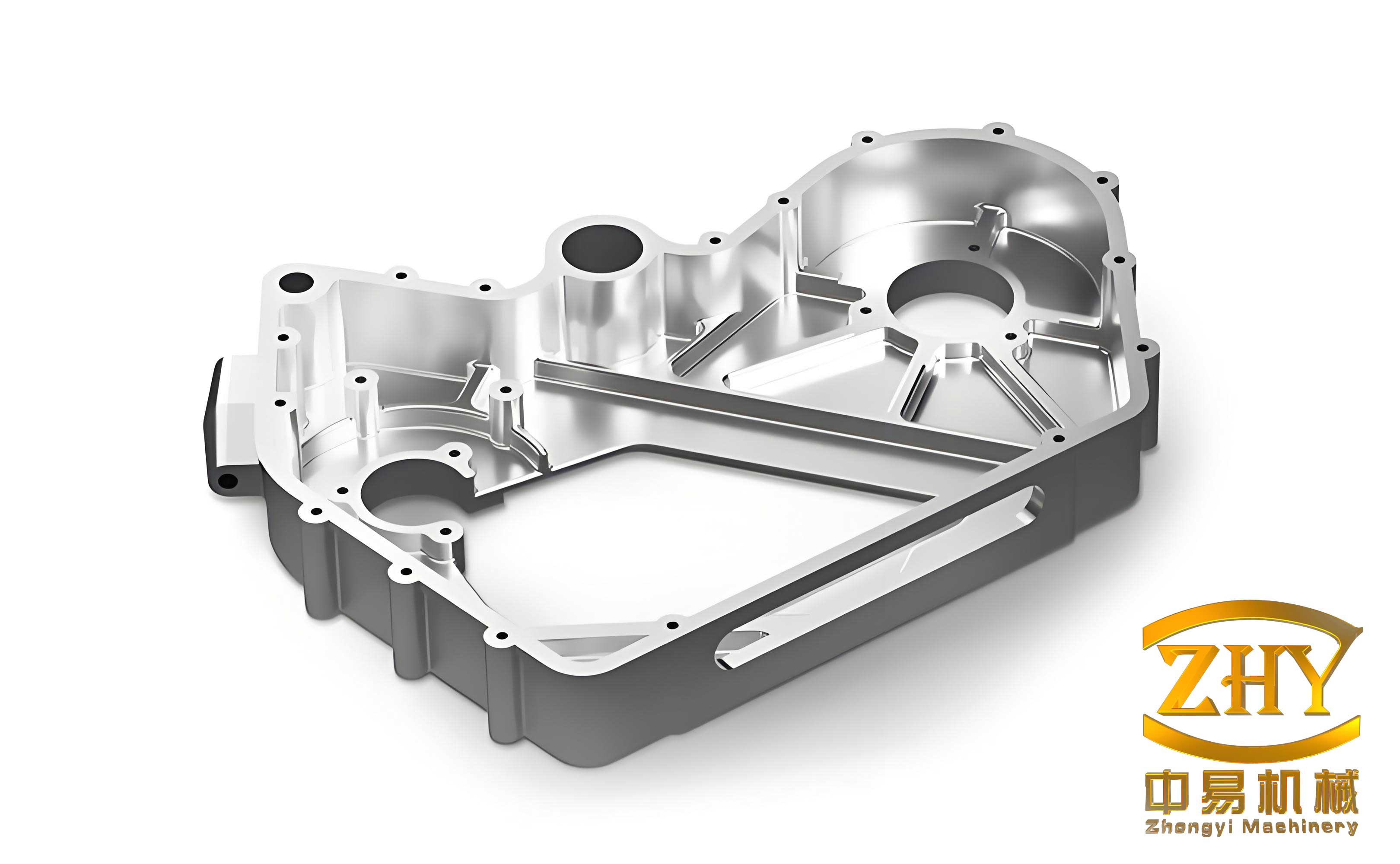
The pursuit of lightweight, high-integrity components in the electric vehicle (EV) sector has placed significant demands on casting technologies, particularly for critical housings like the On-Board Charger (OBC). The OBC shell castings are complex, thin-walled structures that must provide hermetic sealing, electromagnetic shielding, structural support for power electronics, and efficient thermal management. Failures in these shell castings can compromise the entire charging system’s safety and functionality. Among the various casting defects, cold shuts are particularly pernicious for shell castings, as they create inherent weaknesses in the structural continuum, acting as stress concentrators and potential leak paths.
Cold shuts occur when two advancing fronts of molten metal within the die cavity cool below the fusion temperature before meeting, resulting in a poorly bonded seam or fold. This defect is frequently observed in intricate shell castings with deep recesses, sharp corners, or isolated thick sections, such as those surrounding mounting bosses or screw holes. The root cause is often localized premature heat loss from the molten alloy to the cooler die steel. Traditional straight-drilled cooling or heating channels in mold inserts are ineffective for addressing these issues in complex geometries, as they cannot follow the contour of the casting surface, leading to uneven thermal management.
The advent of metal Additive Manufacturing (AM), specifically Selective Laser Melting (SLM), has revolutionized mold design by enabling the fabrication of inserts with Conformal Cooling or Heating Channels (CCHCs). This study investigates the design, fabrication, and implementation of a conformal heating insert to eliminate a persistent cold shut defect in a production-scale aluminum OBC shell casting. A comprehensive performance characterization of the SLM-fabricated insert material is presented, alongside empirical validation of its efficacy in improving casting quality.
Problem Identification: Cold Shut in OBC Shell Castings
The subject of this study is a high-pressure die-cast aluminum OBC housing. During routine quality inspection via X-ray radiography, a consistent linear discontinuity was identified on the external surface of a deep, blind screw boss feature. This boss, critical for assembly, has a depth exceeding 65 mm, creating a challenging filling scenario.
The defect manifests as a distinct, non-fused seam. Analysis of the filling pattern and thermal conditions indicated that the molten aluminum alloy (AISi10MgMg) splits into multiple flow fronts around this boss. As these thin streams traverse the elongated core pin surface, they lose heat rapidly to the conventionally cooled insert. By the time the flow fronts converge on the opposite side of the boss, the material at their leading edges has solidified to form a “solid skin,” preventing proper metallurgical bonding upon contact. This results in a cold shut, significantly weakening the boss structure in the final shell castings. The problem is fundamentally thermal: the local die temperature at the point of flow front meeting is too low.
Design and Manufacturing of the Conformal Heating Insert
The proposed solution replaces the conventional solid core pin with an SLM-fabricated insert featuring an internal conformal heating channel. The design philosophy shifts from merely shaping the cavity to actively managing its thermal profile.
2.1 Insert and Conformal Channel Design
The insert was designed as a block to be fitted into the moving half of the die. Its external dimensions were dictated by the existing mold base pocket and the required core geometry for the screw boss. The key innovation lies internally: a single, continuous channel with a diameter of 8 mm was designed to contour closely to the internal surface of the insert, particularly focusing on the region where the cold shut defect occurred. The channel follows a serpentine path to maximize heat exchange surface area near the problem zone. Heating fluid (oil) enters at one port, travels through the conformal path, and exits at another, creating a controlled, localized hot spot in the die.
The thermal advantage of a conformal channel over a straight-bored one can be conceptualized. The heat transfer rate $Q$ is governed by:
$$Q = \frac{\Delta T}{R_{th}}$$
where $\Delta T$ is the temperature difference between the fluid and the die surface, and $R_{th}$ is the total thermal resistance. For a channel, $R_{th}$ is a sum of convective resistance inside the channel and conductive resistance through the mold steel:
$$R_{th} = \frac{1}{h_c A_c} + \frac{L}{k_s A_s}$$
Here, $h_c$ is the convective heat transfer coefficient, $A_c$ is the internal channel surface area, $L$ is the distance from channel to mold surface, $k_s$ is the steel’s thermal conductivity, and $A_s$ is the conduction cross-section. A conformal channel minimizes $L$ and maximizes $A_c$ relative to the target mold surface, drastically reducing $R_{th}$ and allowing for more efficient heating (or cooling) compared to a distant straight channel.
2.2 SLM Fabrication and Post-Processing
The insert was manufactured using a bi-material strategy to optimize cost and performance. The base block was built from gas-atomized H13 tool steel powder, providing a robust and economical foundation. The upper section containing the intricate conformal channels and the precise core geometry was built using maraging steel 18Ni300 powder, prized for its excellent strength and good SLM processability. The SLM parameters were optimized for density: laser power of 200 W, scan speed of 1000 mm/s, layer thickness of 0.05 mm, and a focused beam spot.
After fabrication, the insert was separated from the build platform via wire Electrical Discharge Machining (EDM). Critical surfaces were finish-machined. The H13 section underwent a standard quench (1020-1060°C) and triple temper (540-650°C) to achieve a hardness of 48-52 HRC. The 18Ni300 section was solution-annealed at 840°C and age-hardened (aged) at 490°C for 6 hours to precipitate intermetallic compounds, achieving its peak strength. Non-destructive testing confirmed the integrity and cleanliness of the internal channels.
Comprehensive Performance Characterization of SLM Materials
To ensure the insert’s reliability under cyclic thermal and mechanical loads during die-casting of shell castings, a comparative analysis of the SLM-produced 18Ni300 and conventional wrought H13 was conducted.
3.1 Microstructural Analysis
Metallographic examination revealed distinct differences. The SLM 18Ni300 exhibited a very fine, homogeneous cellular solidification structure with uniformly distributed precipitates after aging, indicative of a high-quality, dense build. In contrast, the wrought H13 showed a more heterogeneous structure with banded carbides; the SLM version of H13, while generally sound, occasionally displayed minor porosity, highlighting the greater suitability of 18Ni300 for defect-sensitive AM processes.
3.2 Tensile and Impact Properties
Mechanical testing provided quantitative performance data. Specimens were machined according to ASTM standards and tested at room temperature.
| Property | SLM 18Ni300 (Aged) | Wrought H13 (Hardened) |
|---|---|---|
| Yield Strength (0.2% Offset), $R_{p0.2}$ | ~1600 MPa | ~1310 MPa |
| Ultimate Tensile Strength, $R_m$ | ~1700 MPa | ~1500 MPa |
| Elongation at Break, $A$ | ~4.9% | ~6.3% |
| Reduction of Area, $Z$ | ~17% | ~19% |
| Charpy Impact Energy, $K_V$ | ~28 J | ~27 J |
| Calculated Impact Toughness, $\sigma_k = \frac{K_V}{A}$ | ~28.3 J/cm² | ~27.3 J/cm² |
The data shows that SLM 18Ni300 offers a significant strength advantage over H13, with approximately 22% higher yield strength and 13% higher tensile strength. This superior strength directly translates to greater resistance to deformation (e.g., soldering, erosion) and thermal fatigue cracking during the production of shell castings. While H13 shows marginally higher ductility (elongation), the impact toughness values are comparable, with 18Ni300 being slightly higher. This indicates sufficient fracture resistance for the insert application.
Scanning Electron Microscopy (SEM) of fracture surfaces revealed a dimpled, micro-void coalescence morphology in 18Ni300, characteristic of ductile fracture. The H13 sample exhibited a mixed mode with quasi-cleavage facets, suggesting a somewhat more brittle failure mechanism under tensile load.
3.3 Electrochemical Corrosion Behavior
Given the potential for coolant corrosion, potentiodynamic polarization tests were performed in a 3.5 wt.% NaCl solution. The corrosion current density $i_{corr}$ was estimated using the Tafel extrapolation method. The 18Ni300 steel exhibited a nobler corrosion potential ($E_{corr}$) and a lower $i_{corr}$ compared to H13, indicating better inherent corrosion resistance. This property is crucial for ensuring the long-term stability and cleanliness of the conformal channels, preventing clogging or surface degradation that could affect the thermal performance for shell castings production.
Industrial Validation: Defect Elimination in Shell Castings
The final validation was conducted on a production-scale 1600-ton cold chamber die-casting machine. The new SLM-fabricated conformal heating insert replaced the original solid core. The conformal channels were connected to a high-temperature oil circulator (die tempering unit), maintaining the insert’s active core surface at a precisely elevated temperature (~200°C), significantly higher than the adjacent mold areas.
4.1 Process Parameters and Casting
The alloy used was AlSi10MgMg. Key process parameters were maintained constant between the old and new insert trials to isolate the effect of the conformal heating:
$$ P_{injection} = 80 \text{ MPa},\quad v_{gate} \approx 45 \text{ m/s},\quad T_{melt} = 660^\circ\text{C} $$
The mold temperature in the general cavity area was controlled at ~180°C via conventional cooling lines. Only the temperature of the new conformal-heated insert was altered.
4.2 Quality Assessment Results
Multiple casting cycles were run to ensure process stability. Shell castings produced with both the traditional and the new insert were subjected to identical X-ray radiographic inspection. The results were definitive.
| Evaluation Criterion | Shell Castings with Traditional Insert | Shell Castings with Conformal Heating Insert |
|---|---|---|
| Visual Inspection of Boss | Visible surface line/notch | Smooth, continuous surface |
| X-ray Radiography | Clear linear discontinuity at boss root (Cold Shut) | No detectable linear discontinuity |
| Leak Test (on sampled parts) | Potential leak path indicated | Passed pressure decay test |
| Estimated Scrap Rate for this Defect | >15% | <1% |
The localized heating provided by the conformal channel effectively retarded the solidification of the advancing metal fronts. This ensured that when the flows met around the boss, the material was still above the solidus temperature, allowing for complete fusion and the formation of a sound, integral structure in the shell castings. The thermal energy input $E_{heat}$ required can be approximated by considering the heat needed to raise the insert surface temperature:
$$ E_{heat} \approx m_{steel} \cdot c_p \cdot \Delta T + \dot{q}_{loss} \cdot t_{cycle} $$
where $m_{steel}$ is the mass of the heated insert zone, $c_p$ is the specific heat of steel, $\Delta T$ is the temperature increase, $\dot{q}_{loss}$ is the rate of heat loss to the surrounding mold, and $t_{cycle}$ is the cycle time. The conformal system’s efficiency minimized $\dot{q}_{loss}$ and delivered $E_{heat}$ precisely where needed.
Conclusion
This study successfully demonstrated a targeted engineering solution for eliminating a critical cold shut defect in complex aluminum shell castings. The integration of SLM technology enabled the fabrication of a high-performance, dual-material insert with optimized conformal heating channels. Comprehensive material characterization confirmed that the SLM-processed 18Ni300 steel used for the critical insert section possesses superior tensile strength, good impact toughness, and better corrosion resistance compared to conventional H13 tool steel, making it highly suitable for demanding die-casting applications.
The industrial trial provided conclusive evidence: the actively heated conformal insert fundamentally altered the local thermal conditions during mold filling, ensuring complete fusion of metal flow fronts and thereby eradicating the cold shut defect in the produced OBC shell castings. This approach resulted in a dramatic reduction in scrap rate and enhanced the structural integrity of the final component. The methodology presents a generalizable framework for solving similar thermally-induced defect challenges in the high-pressure die-casting of other intricate shell castings, leveraging the design freedom of additive manufacturing for superior thermal management.