
In the field of industrial valve manufacturing, the demand for large-scale, high-performance components has grown significantly, driven by sectors such as hydropower, petrochemicals, and mining. Among these components, butterfly valves stand out due to their compact design, ease of operation, and efficient flow control. The heart of such a valve is the butterfly plate, a critical part that must withstand substantial mechanical stresses and corrosive environments. Traditionally, materials like cast steel or welded steel were used, but in recent decades, nodular cast iron has emerged as a superior alternative for many applications. This material, also known as ductile iron, offers a unique combination of strength, ductility, and cost-effectiveness, making it ideal for heavy-section castings. However, producing large, thick-walled nodular cast iron components presents formidable challenges, including graphite degeneration, segregation, and shrinkage defects, which can compromise mechanical properties. In this article, I will share my firsthand experience in the production of an oversize nodular cast iron butterfly plate, weighing 24 tons with a maximum wall thickness exceeding 100 mm. Through a systematic approach involving advanced simulation, meticulous process design, and rigorous quality control, we achieved a casting that meets stringent international standards. The focus here is on the practical aspects of manufacturing such a massive nodular cast iron part, with an emphasis on the methodologies that ensured success.
The production of thick-section nodular cast iron castings requires a deep understanding of solidification dynamics and material science. Nodular cast iron derives its name from the spherical graphite nodules embedded in a metallic matrix, typically ferritic or pearlitic, which impart excellent toughness and fatigue resistance. The formation of these nodules is controlled through the addition of nodularizing elements like magnesium and cerium, followed by inoculation to refine the graphite structure. For heavy sections, the slow cooling rate can lead to issues such as graphite flotation, chunk graphite formation, and carbide precipitation, all of which degrade performance. Therefore, every step—from pattern making to final inspection—must be optimized. In our case, the butterfly plate had an eccentric geometry with a maximum dimension of 4,062 mm, necessitating a robust casting design. We employed a bottom-gating system with open risers to ensure smooth filling and effective feeding. The gating ratio was carefully calculated based on the principle of minimizing turbulence and slag inclusion. Specifically, we used the relationship: $$ \Sigma A_{\text{inner}} : \Sigma A_{\text{runner}} : \Sigma A_{\text{sprue}} = 1.8 : 1.23 : 1 $$, where $$ \Sigma A $$ represents the total cross-sectional areas of the respective channels. This ratio promotes laminar flow and reduces oxidation during pouring.
To address the thermal challenges inherent in thick sections, we incorporated chills and insulating risers in the mold. Chills, made of cast iron, were strategically placed to accelerate cooling in critical areas, thereby reducing local solidification time and minimizing shrinkage porosity. The insulating risers, crafted from specialized materials with low thermal conductivity, were used to prolong feeding and trap impurities. The design was validated using ProCAST simulation software, which solves the heat transfer equation during solidification: $$ \frac{\partial T}{\partial t} = \alpha \nabla^2 T + \frac{L}{c_p} \frac{\partial f_s}{\partial t} $$, where $$ T $$ is temperature, $$ t $$ is time, $$ \alpha $$ is thermal diffusivity, $$ L $$ is latent heat, $$ c_p $$ is specific heat, and $$ f_s $$ is solid fraction. By simulating the entire process, we predicted defect locations and optimized the placement of chills and risers. The simulation results indicated that shrinkage defects were confined to the risers and minor dispersed porosity in chill gaps, confirming the feasibility of our design. Below is a summary of key casting parameters used in the process:
| Parameter | Value | Description |
|---|---|---|
| Cast Weight | 24,000 kg | Total weight of the butterfly plate |
| Maximum Wall Thickness | 160 mm | Thickest section of the casting |
| Pouring Temperature | 1,320–1,360 °C | Temperature range for pouring |
| Gating Ratio | 1.8:1.23:1 | Inner:Runner:Sprue area ratio |
| Riser Type | Insulating | Used for improved feeding |
| Chill Material | Cast Iron | Accelerates cooling in thick sections |
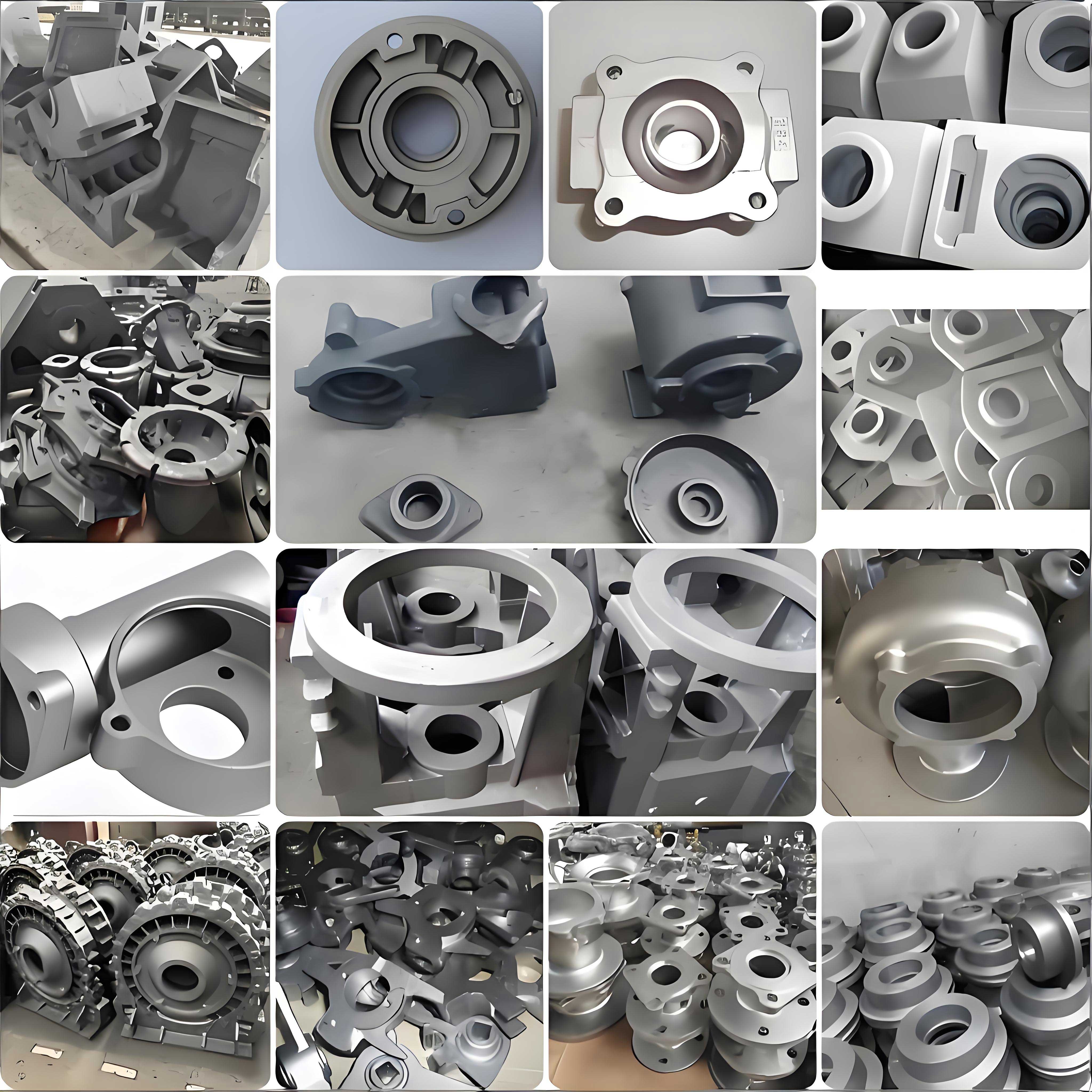
The mold was prepared using phenolic-modified furan resin sand, which offers good collapsibility and surface finish. A alcohol-based coating was applied to the pattern before molding to facilitate easy stripping. After shakeout, the casting underwent extensive cleaning and fettling. One of the cleaned castings is shown below, illustrating the complex geometry and substantial size of the nodular cast iron butterfly plate. This image highlights the quality achieved through careful process control.
Melting and nodularizing treatment are pivotal in determining the final properties of nodular cast iron. We started with high-purity pig iron, which constituted 80% of the charge, and low-manganese carbon steel scrap making up the remaining 20%. This selection minimized trace elements that could interfere with nodularization, such as lead, antimony, and bismuth, keeping their total below 0.1%. The chemical composition was designed to balance fluidity, graphite formation, and mechanical strength. Carbon equivalent (CE) is a critical parameter, defined as: $$ CE = C + \frac{Si + P}{3} $$. For nodular cast iron, we aimed for a CE near the eutectic point (around 4.3%) to enhance fluidity and self-feeding via graphite expansion, while avoiding graphite flotation. Silicon content was controlled to promote ferrite formation without inducing brittleness, and manganese was kept low to prevent segregation and carbide networks. Phosphorus and sulfur were restricted to minimize embrittlement and slag formation. The target composition is detailed in the following table:
| Element | Target Range (wt%) | Role in Nodular Cast Iron |
|---|---|---|
| Carbon (C) | 3.4–3.6 | Promotes graphite formation, improves fluidity |
| Silicon (Si) | 2.3–2.5 | Enhances ferrite, aids inoculation |
| Manganese (Mn) | ≤0.3 | Minimized to reduce segregation |
| Sulfur (S) | ≤0.02 | Low to prevent nodularizing agent consumption |
| Phosphorus (P) | ≤0.04 | Low to avoid phosphide eutectics |
| Magnesium (Mg) | 0.04–0.06 | Nodularizing element for spherical graphite |
| Rare Earth (RE) | 0.01–0.02 | Aids in nodularization and desulfurization |
Melting was conducted in a 30-ton medium-frequency induction furnace. After melting, the iron was superheated to 1,500 °C and held for 5–10 minutes to ensure homogeneity and reduce gas content. Then, it was cooled to 1,360–1,380 °C for nodularizing treatment. We employed the wire-feeding method, which involves injecting cored wires containing nodularizing and inoculating agents into the ladle. This technique offers precise control over treatment efficiency and minimizes magnesium fade. The nodularizing wire, with a diameter of 9–13 mm, had a high magnesium core, while the inoculating wire contained ferrosilicon alloy. The reaction kinetics can be described by: $$ [Mg]_{\text{residual}} = [Mg]_{\text{added}} \cdot \eta \cdot e^{-k t} $$, where $$ \eta $$ is the recovery rate, $$ k $$ is the decay constant, and $$ t $$ is time. By optimizing wire feed rate and depth, we achieved consistent residual magnesium levels. After treatment, the ladle was covered with charcoal powder to insulate and slag off impurities. Pouring was done at 1,320–1,360 °C with a “slow-fast-slow” sequence to minimize turbulence. During pouring, we added 0.1% silicon-barium inoculant for stream inoculation, further refining the graphite structure.
The microstructure and mechanical properties of the nodular cast iron butterfly plate were evaluated using attached test blocks, which were cast alongside the main component. These blocks, with dimensions as per standard specifications, were subjected to metallographic analysis and tensile testing. The graphite nodularity exceeded 90%, with a size rating of 6 according to ASTM A247, indicating well-formed spherical graphite. The matrix consisted predominantly of ferrite, which imparts high ductility. This structure is achieved through careful control of cooling rate and inoculation, as described by the Johnson-Mehl-Avrami-Kolmogorov equation for phase transformation: $$ f = 1 – \exp(-k t^n) $$, where $$ f $$ is the transformed fraction, $$ k $$ is a rate constant, and $$ n $$ is the Avrami exponent. The mechanical properties met the requirements of QT450-10 grade nodular cast iron, as shown in the table below. All values are averages from three samples, demonstrating excellent consistency.
| Property | Required Value | Measured Value | Unit |
|---|---|---|---|
| Tensile Strength | ≥390 | 430 | MPa |
| Yield Strength | ≥260 | 285 | MPa |
| Elongation | >8 | 15.5 | % |
| Hardness | 160–210 | 185 | HB |
Non-destructive testing was performed extensively to ensure integrity. The entire casting underwent 100% ultrasonic inspection per EN12680-3, achieving Grade 2 acceptance, and all machined surfaces were magnetic particle inspected per EN1369, also meeting Grade 2. The nodularity on the casting body was verified to be above 90%, corresponding to Grade 3 or better. Surface roughness was assessed per GB6060.1, confirming a smooth finish. Importantly, no welding repairs were allowed, emphasizing the need for defect-free production. These results underscore the success of our approach in manufacturing a high-quality nodular cast iron component for critical applications.
The production of such an oversize nodular cast iron butterfly plate involves multiple interdependent factors. One key aspect is the solidification time, which must be controlled to prevent graphite degeneration. For thick sections, the solidification time $$ t_s $$ can be estimated using Chvorinov’s rule: $$ t_s = B \left( \frac{V}{A} \right)^2 $$, where $$ B $$ is a mold constant, $$ V $$ is volume, and $$ A $$ is surface area. In our case, by using chills, we reduced $$ t_s $$ to under 2 hours, mitigating risks. Another factor is the inoculation effectiveness, which influences graphite nucleation. The number of graphite nodules per unit area, $$ N_v $$, relates to inoculant addition and cooling rate: $$ N_v = C \cdot \Delta T^{-m} $$, where $$ C $$ and $$ m $$ are material constants, and $$ \Delta T $$ is undercooling. Multiple inoculations—during wire feeding and pouring—ensured a high nodule count.
Furthermore, the role of residual elements cannot be overstated. In nodular cast iron, elements like titanium and aluminum can form oxides that hinder nodularization. We maintained strict control over charge materials to keep these below harmful levels. The thermodynamic stability of graphite nodules is governed by the interfacial energy between graphite and the matrix, which is affected by trace elements. The Gibbs free energy change for graphite nucleation, $$ \Delta G^* $$, is given by: $$ \Delta G^* = \frac{16 \pi \gamma^3}{3 (\Delta G_v)^2} $$, where $$ \gamma $$ is interfacial energy and $$ \Delta G_v $$ is volumetric free energy change. By optimizing chemistry and treatment, we promoted favorable nucleation conditions.
In terms of process economics, nodular cast iron offers significant advantages over steel for large valves. The lower melting point reduces energy consumption, and the inherent castability allows for complex shapes without extensive machining. However, the cost of nodularizing agents and quality control measures must be factored in. Our experience shows that with proper design and execution, nodular cast iron can deliver reliable performance in demanding environments. The butterfly plate produced here is now in service at a hydropower plant, where it operates under cyclic loads and wet conditions, demonstrating the durability of nodular cast iron.
To summarize, the successful production of an oversize nodular cast iron butterfly plate hinges on a holistic approach. It begins with advanced simulation to optimize feeding and cooling, continues with meticulous control of melting and nodularizing, and ends with rigorous testing to verify properties. The use of insulating risers, chills, and wire-feeding technology proved effective in overcoming the challenges of thick sections. The final casting exhibited excellent microstructure and mechanical properties, fully complying with international standards. This practice reaffirms that nodular cast iron is a viable material for heavy-duty industrial components, provided that process parameters are carefully tailored. Future work could explore further refinements, such as automated pouring systems or real-time monitoring of nodularization, to enhance consistency and efficiency in manufacturing nodular cast iron castings.