
The global transportation sector, encompassing vehicles such as trains, cars, airplanes, and ships, contributes approximately 24% of the world’s total carbon dioxide emissions, based on statistics from the International Energy Agency. Among these, road vehicles, particularly cars, represent the largest share, with this proportion correlating strongly with regional economic development. For instance, in economically advanced regions like the European Union, road transport accounts for up to 72% of the transportation sector’s emissions. Consequently, reducing vehicular emissions is a primary strategy for decarbonizing developed economies. A key enabler for this reduction is vehicle lightweighting—the process of reducing the weight of automotive components to lower energy consumption and, thereby, CO2 emissions. This study focuses on the lightweighting of a core engine component, the crankshaft, through structural optimization without altering the base material or installation dimensions. Using a mature four-cylinder engine’s nodular cast iron crankshaft as a case study, I will detail the analysis, improvement strategies, and validation processes, providing a reference for industry practitioners.
The subject of this work is a four-cylinder engine with a market presence exceeding a decade and a fleet of over 500,000 units. A specific requirement was to reduce the crankshaft weight by more than 10%. Given the engine’s mature status, modifications had to consider aftersales service, manufacturing costs, and validation timelines, precluding extensive redesign. Therefore, the lightweighting effort was constrained to optimizing the geometric shape of the existing crankshaft. The base material is QT800-6 nodular cast iron, produced via the iron mold covered sand casting process. This material offers excellent mechanical properties: a tensile strength greater than 800 MPa, an elongation exceeding 6%, and a density of approximately 7.1 g/cm³. The original crankshaft featured a fully balanced design with eight counterweights, solid main journals (85 mm diameter), and solid crankpins (70 mm diameter). The manufacturing process included journal quenching and fillet rolling for strengthening. The design safety factor for the nodular cast iron crankshaft in operation must exceed 1.8. The initial forging blank weight was 50.6 kg.
From a functional analysis, the crankshaft’s primary role is to convert the reciprocating motion of the pistons into rotational torque while managing inertial and combustion forces. The counterweights are crucial for balancing rotating and reciprocating masses. In production, dynamic balancing operations revealed that imbalance and material removal were predominantly concentrated on the first and eighth counterweights. This observation suggested that reducing the number of counterweights could be a viable path to weight reduction, provided the engine’s torsional vibration characteristics remained within limits and dynamic balancing in production remained feasible. This formed the first pillar of the structural improvement strategy.
The second pillar involved optimizing the counterweight geometry itself. The original cast blanks had a draft angle on the counterweight sides, resulting in a machining allowance. By minimizing this allowance—specifically, setting the machining allowance at the casting’s highest point to 0 mm, while maintaining a 1.4 mm allowance at the parting line—additional unnecessary mass could be eliminated from the final machined part.
The third and most significant pillar was the introduction of hollow journals. Published research indicates that suitably designed hollow journal structures can enhance the bending fatigue strength of crankshafts. However, the optimal hollow geometry is highly dependent on specific journal dimensions and the layout of oblique oil holes. For this crankshaft, I analyzed the structure to determine a suitable hollow design that would achieve weight reduction without compromising integrity. The proposed design called for hollowing the main journals and all crankpins. The main journal hollow was designed with ends of φ30 mm and a central section of φ50 mm. The crankpin hollow featured ends of φ25 mm and a central section of φ35 mm. Crucially, the hollow profile was carefully shaped to avoid interference with the oblique oil drillings, requiring localized adjustments to the hollow’s contour.
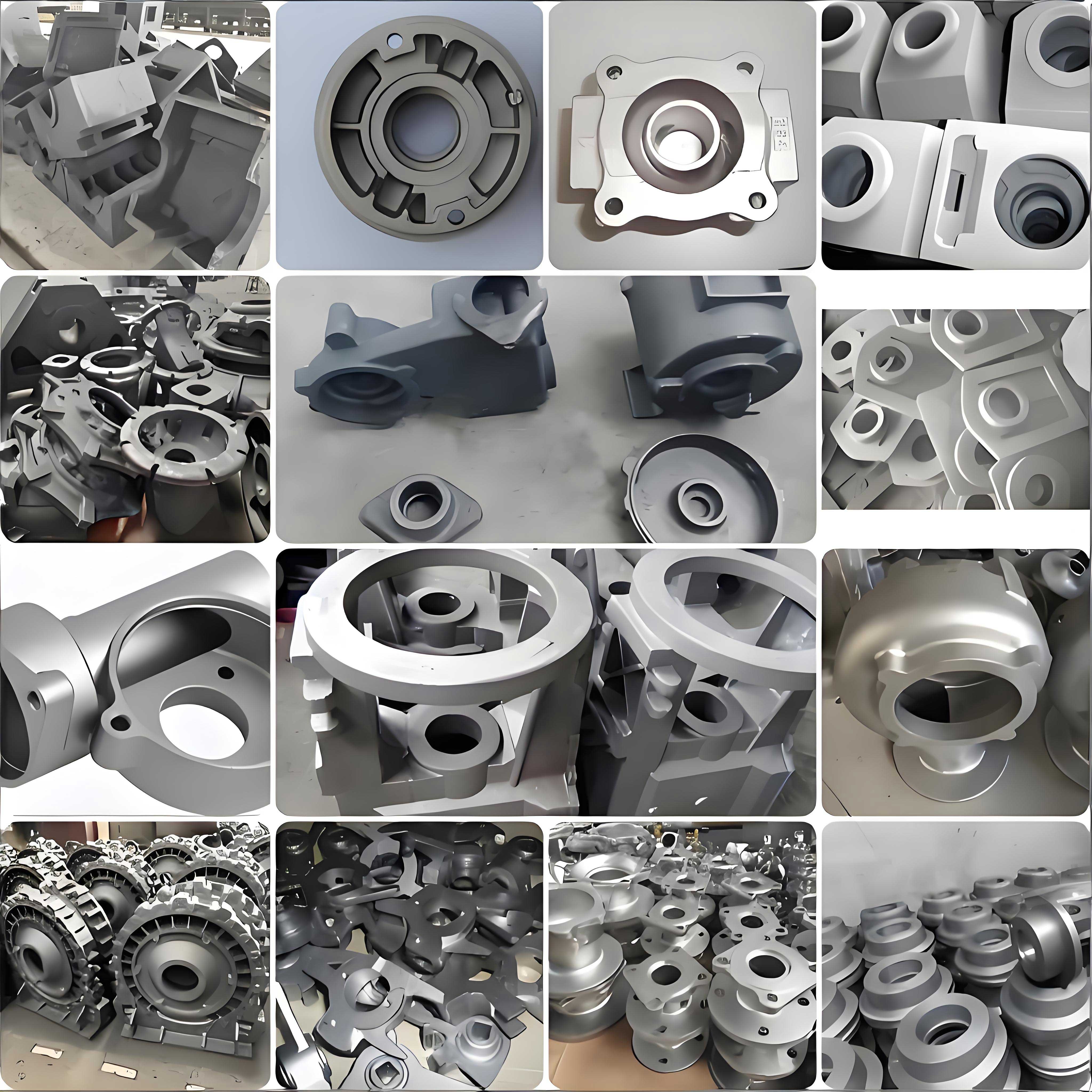
The successful casting of such complex hollow structures in nodular cast iron demands precise foundry control. It necessitates using high-strength, low-gas evolution core sands, typically based on epoxy resins and triethylamine, to ensure a core tensile strength above 1.6 MPa after mixing. Furthermore, cores must be designed with anti-rotation features to prevent floating during pouring, which could lead to uneven wall thickness.
To validate the combined structural improvements, a batch of 200 crankshafts was manufactured and subjected to a comprehensive testing regimen. The validation covered four critical aspects: weight reduction effectiveness, dynamic balance, torsional vibration, and bending fatigue strength.
Detailed Improvement Analysis and Validation
The structural modifications were implemented in a phased manner. First, the counterweight configuration was changed from eight to four, strategically removing the counterweights that showed minimal contribution to dynamic balance in the original design. Concurrently, the radius of the remaining four counterweights was reduced from R93 mm to R91 mm. To ensure the crankshaft’s mass center remained aligned with its geometric center—a critical factor for smooth operation—a 3D CAD software was used for simulation. The calculated offset between the mass center and geometric center for the modified design was within 0.02 mm, satisfying the design requirement. This can be expressed by ensuring the moment of inertia imbalance is minimized. The principle of dynamic balance requires that the sum of imbalance vectors is zero:
$$ \sum_{i=1}^{n} (m_i \cdot \vec{r}_i) = 0 $$
where \( m_i \) is the mass of the \(i\)-th segment and \( \vec{r}_i \) is its position vector from the rotation axis. The software simulation confirmed this condition was met post-modification.
The second major change was the implementation of hollow journals. The volume of metal removed by hollowing significantly contributes to weight savings. The volume \(V\) of a hollow cylinder can be calculated as:
$$ V = \pi L (R_{\text{outer}}^2 – R_{\text{inner}}^2) $$
where \(L\) is the length, \(R_{\text{outer}}\) is the outer radius, and \(R_{\text{inner}}\) is the effective inner radius (which varies along the length in this design). The total weight reduction \(\Delta W\) is the sum of savings from counterweight removal and journal hollowing:
$$ \Delta W = \rho \left( \sum V_{\text{cw, removed}} + \sum (V_{\text{j, solid}} – V_{\text{j, hollow}}) \right) $$
with \(\rho\) being the density of nodular cast iron (≈7.1 g/cm³).
The results of the weight reduction initiative are summarized in the table below:
| Parameter | Original Design | Modified Design | Change |
|---|---|---|---|
| Number of Counterweights | 8 | 4 | -50% |
| Counterweight Max Radius | 93 mm | 91 mm | -2.15% |
| Main Journal Structure | Solid (φ85 mm) | Hollow (ends φ30 mm, center φ50 mm) | – |
| Crankpin Structure | Solid (φ70 mm) | Hollow (ends φ25 mm, center φ35 mm) | – |
| Blank Weight | 50.6 kg | 44.1 kg | -6.5 kg |
| Weight Reduction Rate | – | – | 12.84% |
The weight reduction rate is calculated as:
$$ \eta = \frac{W_i – W_f}{W_i} \times 100\% = \frac{50.6 – 44.1}{50.6} \times 100\% \approx 12.84\% $$
This comfortably exceeded the 10% target.
Comprehensive Experimental Validation
1. Dynamic Balance Validation: All 200 modified crankshafts underwent dynamic balancing. The initial unbalance before correction was recorded. The results showed that 165 crankshafts (82.5%) had an initial unbalance of ≤300 g·cm, which was slightly higher than the 86% rate for the original design. However, after the standard balancing procedure (material removal), all 200 units met the specified dynamic balance requirement of ≤20 g·cm. This confirmed that the reduced-counterweight design did not introduce prohibitive balancing challenges.
2. Torsional Vibration Testing: Following the standard “GB/T15371 – Measurement and evaluation method for torsional vibration of crankshaft systems,” the engine was tested on a dynamometer with the modified crankshafts installed. Torsional vibration amplitude was measured across various engine orders (harmonics). The critical parameter is the single-order amplitude, which must remain below a design limit of 0.2° to ensure reliable operation. The test data is presented below:
| Harmonic Order | Maximum Amplitude (°) | Speed at Maximum (rpm) |
|---|---|---|
| 2 | 0.072 | 2948 |
| 4 | 0.037 | 2900 |
| 4.5 | 0.026 | 2813 |
| 5.5 | 0.036 | 2855 |
| 6 | 0.044 | 2800 |
| 6.5 | 0.020 | 2760 |
| 8 | 0.076 | 2699 |
The maximum single-order amplitude was 0.076° at the 8th harmonic (2699 rpm), which is significantly below the 0.2° limit. This conclusively demonstrated that the modified, lighter crankshaft did not adversely affect the engine’s torsional vibration behavior. The system’s natural frequency and damping characteristics remained acceptable.
3. Bending Fatigue Strength Validation: This is the most critical test for assessing the structural integrity of the hollow journal design. The bending fatigue strength of the modified nodular cast iron crankshaft was evaluated using a resonant fatigue testing machine (DXP-200). The test applies a symmetrical sinusoidal bending load at a frequency of approximately 78 Hz. The fatigue limit bending moment was determined using the staircase (up-and-down) method, with a run-out criterion set at 10⁷ cycles.
The test procedure involved calibrating the load application system to ensure a bending moment error of less than 1.5% within the test range. Specimens were tested at different stress levels around the expected fatigue limit. The results are tabulated below:
| Specimen ID | Frequency (Hz) | Bending Moment (N·m) | Cycles to Failure or Run-out | Result |
|---|---|---|---|---|
| 1-1 | 78 | 3400 | 10,521 | Failure |
| 1-4 | 78 | 3300 | 10,000,000 | Run-out (Pass) |
| 2-1 | 78 | 3400 | 3,486 | Failure |
| 2-4 | 78 | 3300 | 10,000,000 | Run-out (Pass) |
| 3-4 | 78 | 3400 | 13,274 | Failure |
| 3-1 | 78 | 3300 | 4,742 | Failure |
| 4-4 | 78 | 3300 | 10,000,000 | Run-out (Pass) |
| 4-1 | 78 | 3400 | 2,022 | Failure |
| 5-4 | 78 | 3300 | 10,000,000 | Run-out (Pass) |
| 5-1 | 78 | 3400 | 2,673 | Failure |
| 6-4 | 78 | 3300 | 10,000,000 | Run-out (Pass) |
| 6-1 | 78 | 3400 | 6,182 | Failure |
| 7-4 | 78 | 3300 | 45,750 | Failure |
| 7-2 | 78 | 3300 | 10,000,000 | Run-out (Pass) |
| 8-1 | 78 | 3400 | 1,038 | Failure |
| 8-3 | 78 | 3300 | 2,077 | Failure |
| 8-4 | 78 | 3300 | 10,000,000 | Run-out (Pass) |
| 8-2 | 78 | 3400 | 8,457 | Failure |
Applying the staircase method analysis to the valid data points (excluding clear outliers from the expected trend), the fatigue limit bending moment \(M_{-1}\) can be estimated. The safety factor \(n\) is then calculated by comparing this fatigue limit to the maximum working bending moment \(M_{\text{work}}\) experienced in the engine:
$$ n = \frac{M_{-1}}{M_{\text{work}}} $$
Based on the test data and engine load analysis, the calculated safety factor for the modified nodular cast iron crankshaft was \(n = 1.87\). This satisfies the fundamental requirement for nodular cast iron crankshafts of having a safety factor greater than 1.8. This result is significant as it proves that the hollow journal design, when properly executed, does not degrade the bending fatigue performance of the QT800-6 nodular cast iron material; in fact, the stress concentration factors were managed effectively through the hollow geometry and the maintained fillet rolling process.
Material and Process Considerations for Nodular Cast Iron
Throughout this project, the base material remained QT800-6 nodular cast iron. The decision against upgrading to a higher-grade material like QT1000-5 was based on a holistic assessment of cost, supply chain stability, and the extensive re-validation that would be required. The existing material, with its proven compatibility with the “journal quenching + fillet rolling” strengthening process, offered a reliable foundation. The focus was instead on maximizing the performance potential of QT800-6 through superior process control in casting the complex hollow structures.
The successful production of these lightweight crankshafts hinges on advanced foundry techniques for nodular cast iron. The casting process must ensure not only the correct nodular graphite morphology (spheroidal graphite) for ductility and strength but also the precise formation of the internal hollow cavities. This requires meticulous control of mold design, pouring temperature, and inoculation practice. The use of high-performance core sands is non-negotiable to withstand the molten metal pressure and prevent core shift or breakage, which would compromise the journal wall thickness and the crankshaft’s structural integrity. The repeatable production of such high-integrity castings from nodular cast iron is a testament to modern foundry capabilities.
Conclusion and Broader Implications
In conclusion, the lightweighting initiative for the four-cylinder engine crankshaft was a resounding success. By implementing a three-pronged structural optimization strategy—reducing the number of counterweights from eight to four, minimizing counterweight machining allowances, and introducing optimally designed hollow main journals and crankpins—a weight reduction of 12.84% was achieved, surpassing the 10% target. The modified crankshaft, made from QT800-6 nodular cast iron, successfully passed all critical validation tests:
- Dynamic balance remained within specification after standard correction procedures.
- Torsional vibration amplitudes for all significant engine orders were well below the permissible limit of 0.2°.
- Bending fatigue testing confirmed a safety factor of 1.87, exceeding the minimum requirement of 1.8 for nodular cast iron crankshafts.
This case study demonstrates that significant lightweighting of mature engine components is feasible through intelligent structural redesign, even within the constraints of an existing material system like nodular cast iron. The keys to success are a deep understanding of the component’s function (leading to the safe removal of underutilized mass like certain counterweights) and the application of advanced design principles (like hollow structures) that leverage the material’s properties. The nodular cast iron’s excellent castability and good strength-to-weight ratio were essential enablers.
However, this approach does introduce new challenges, primarily in the manufacturing domain. Ensuring the cleanliness of the hollow passages to prevent debris from blocking oil holes and managing the increased complexity and cost of core production are important considerations that must be addressed in parallel by process engineers.
Vehicle lightweighting remains an enduring trend in the automotive industry. For powertrain components like the crankshaft, this study highlights that opportunities exist beyond material substitution. Future research could explore the synergy between advanced high-strength nodular cast iron grades (e.g., QT1000-5 or ADI) and even more aggressive lightweight geometries, potentially enabled by additive manufacturing or hybrid casting-forging processes. Continuous improvement in simulation tools for fatigue life prediction, torsional vibration analysis, and casting process simulation will further empower engineers to push the boundaries of lightweight design for critical components like the crankshaft, all while leveraging the versatile and cost-effective foundation provided by nodular cast iron.