
The pursuit of enhanced performance in high-temperature applications has led to the widespread adoption of silicon-molybdenum (Si-Mo) heat-resistant nodular cast iron. This material exhibits exceptional resistance to thermal fatigue and shock, alongside maintained strength at elevated temperatures, making it indispensable for critical components such as automotive turbocharger housings. These housings often feature intricate geometries with significant variations in wall thickness. Consequently, production demands stringent control over every stage, from raw material selection to melting, nodularizing, inoculation, and pouring. Despite rigorous protocols, a persistent and detrimental defect known as fragmentary or chunky graphite frequently leads to batch rejections, posing a significant challenge for foundries. The formation mechanism and definitive countermeasures for this defect in high-silicon nodular cast iron remain subjects of ongoing research within the foundry community. This article presents a comprehensive investigation from a practical, first-hand perspective, analyzing the root causes related to molten metal activity, chemical composition, treatment processes, and solidification conditions. The implementation of targeted corrective actions, derived from this analysis, has proven effective in suppressing fragmentary graphite in Si-Mo nodular cast iron castings.
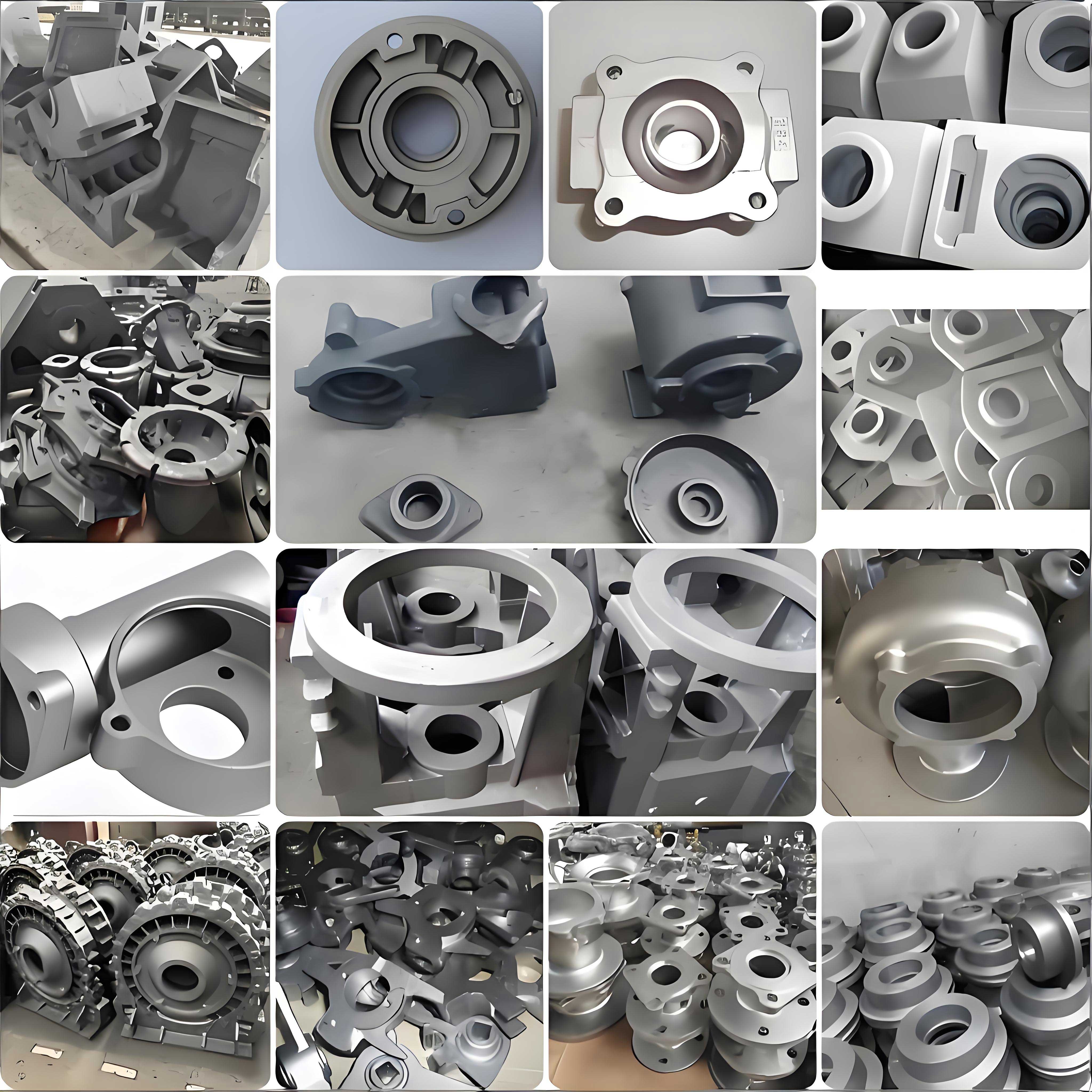
The superior high-temperature properties of Si-Mo nodular cast iron are primarily achieved through specific alloying strategies. Silicon content is significantly elevated to promote a fully ferritic matrix, which improves microstructural stability and oxidation resistance by raising the austenite transformation temperature. Molybdenum is added to enhance high-temperature tensile strength, creep resistance, and thermal fatigue performance. However, this alloying design inherently increases the susceptibility to graphite degeneration. Typical chemical composition ranges for such grades are detailed in the table below.
| Grade Designation | C | Si | Mn | P | S | Mo | Ni | Mgres |
|---|---|---|---|---|---|---|---|---|
| Medium-Si Mo | 3.0-3.4 | 3.75-4.25 | ≤0.6 | ≤0.07 | ≤0.02 | 0.5-0.7 | ≤0.5 | ≤0.06 |
| High-Si Mo | 3.0-3.4 | 4.4-4.9 | ≤0.6 | ≤0.07 | ≤0.02 | 0.5-0.7 | ≤0.5 | ≤0.06 |
Table 1: Typical Chemical Composition Ranges for Si-Mo Heat-Resistant Nodular Cast Iron (wt.%).
Fragmentary graphite in these alloys predominantly manifests in thermal centers of the casting, such as heavy sections, hot spots, and areas under feeders or risers. Macroscopically, it can lead to a dull fracture surface. Microstructurally, it appears as an aggregation of fine, irregular graphite particles dispersed within the matrix. At lower magnifications, these aggregates might be mistaken for under-nodularized graphite. However, higher magnification reveals that within a eutectic cell, these graphite particles are often interconnected, forming a coral-like structure. They are frequently surrounded by well-formed spheroidal graphite, creating a “cluster” effect. This degenerate graphite morphology severely degrades mechanical properties, particularly toughness and thermal conductivity, which is catastrophic for cyclically loaded components like turbocharger housings. A key microstructural observation is the strong association of fragmentary graphite with developed austenite dendrites; the degenerate graphite tends to form along the inter-dendritic regions, suggesting a solidification-driven phenomenon.
Systematic Analysis of Contributing Factors
Extensive analysis of multiple production batches affected by fragmentary graphite points to several interconnected factors that disrupt the stable growth of spheroidal graphite in Si-Mo nodular cast iron.
1. Molten Metal Activity and Nucleation Potency: The “activity” or “quality” of the base iron before treatment is paramount. High melting temperatures (exceeding 1550°C) combined with prolonged holding times can dissolve critical nucleation sites, effectively “killing” the iron. This reduces the eutectic cell count and undercooling, creating conditions favorable for graphite degeneration. Furthermore, the use of high-purity charge materials (low-sulfur pig iron, steel scrap) results in extremely low base sulfur levels, often below 0.008%. While low sulfur is generally desired for efficient magnesium use, an excessively low level (<0.010%) severely impoverishes the melt of potential nucleation substrates for graphite, as sulfides are potent sites for later oxide/silicate formation that act as nuclei for graphite. This nucleation deficiency is a primary enabler for fragmentary graphite formation.
2. Chemical Composition: The Role of CE, Si, and Trace Elements: The carbon equivalent (CE) is a critical parameter. It is calculated using the formula:
$$ CE = \%C + \frac{\%Si + \%P}{3} $$
For Si-Mo nodular cast iron, when the CE exceeds approximately 4.7% (often driven by Si content above 4.6%), the tendency for graphite flotation and microsegregation increases dramatically. The high silicon content, while beneficial for ferritization, significantly expands the solidification range and alters the graphite/liquid interfacial energy, promoting branching and unstable growth. Trace elements play a disproportionate role. Rare earth (RE) elements, commonly introduced via nodularizing alloys, are particularly influential. Their low melting point leads to the formation of low-temperature eutectics (e.g., Fe-Ce at ~1060°C) in the solidifying melt. This can cause local re-melting of the austenite shell enveloping a growing graphite spheroid, creating open channels for carbon diffusion and resulting in dendritic, fragmentary growth. The sensitivity of high-silicon melts to residual RE is markedly higher than in standard ductile iron.
3. Inoculation Efficacy and Method: Inoculation is the most direct tool to combat degenerate graphite by increasing nucleation sites. However, not all inoculants are equally effective in heavy-section Si-Mo nodular cast iron. Standard barium-containing inoculants, while effective for general purposes, often fail to prevent fragmentary graphite in thermal centers. Inoculants containing bismuth or high levels of rare earths can be detrimental in these slow-cooling regions, as their nucleating effect fades over long solidification times. The choice of inoculant and the method of addition are therefore critical.
4. Solidification Dynamics and Cooling Rate: The location of the defect is unequivocally linked to slow cooling. In thick sections and hot spots, the prolonged solidification time allows for extensive diffusion and interaction of elements at the solid/liquid interface. The large thermal mass reduces undercooling, leading to a coarse austenite dendritic network. Graphite grows in a loosely coupled manner with this austenite, and the extended presence of liquid in the inter-dendritic regions provides a spatial template for the development of branched, fragmentary graphite instead of compact spheroids.
| Factor | Problematic Condition | Effect on Graphite Formation |
|---|---|---|
| Molten Metal Activity | High superheat (>1550°C) + long hold; Very low base S (<0.008%) | Dissolves nuclei; Depletes nucleation sites, reduces cell count. |
| Composition | High CE (>4.7%) & High Si; Residual RE (Ce, La) > 0.01% | Promotes segregation & unstable growth; Causes austenite shell re-melting, enabling branched growth. |
| Inoculation | Unsuitable inoculant (e.g., Bi-type); Poor addition method (only ladle) | Ineffective nucleation in thermal centers; Fading effect, insufficient nuclei in last-to-freeze areas. |
| Cooling Rate | Slow cooling in thick sections/hot spots | Promotes coarse dendrites, loose graphite-austenite coupling, and inter-dendritic graphite growth. |
Table 2: Key Factors Promoting Fragmentary Graphite in Si-Mo Nodular Cast Iron.
Integrated Mitigation Strategies for Robust Production
Addressing fragmentary graphite requires a holistic approach targeting all identified factors. The following strategies, implemented in concert, form a robust production methodology for sound Si-Mo nodular cast iron.
1. Optimizing Melt Preparation and Nucleation Potency:
* Control charge materials to include a consistent portion of high-quality, low-trace element pig iron, limiting recycled returns.
* Avoid excessive superheating and minimize holding time at high temperature.
* Actively manage base sulfur content. For electric melting of high-purity charges, consider a pre-conditioning step to maintain a base sulfur level between 0.011% and 0.016%. This provides essential sulfur for forming potent (Mn,X)S-type nucleation sites after inoculation.
* Implement furnace pre-inoculation or late addition of high-quality silicon carbide (SiC). SiC acts as a powerful graphite nucleation agent and improves the overall metallurgical quality of the iron.
2. Precision Control of Chemistry:
* Target a Carbon Equivalent (CE) in the range of 4.5% to 4.6%, favoring the lower end of the silicon specification.
* Select a low-rare earth (RE ≤ 0.8%) or rare-earth-free magnesium ferrosilicon nodularizing alloy. This minimizes the risk of RE-induced graphite degeneration. The following table compares the effects of different nodularizers.
* Consider the controlled addition of stabilizing elements like antimony (Sb) or tin (Sn) at very low levels (0.002-0.005%). These elements segregate to the graphite/liquid interface, inhibiting carbon diffusion and stabilizing the spheroidal form. Their use must be carefully weighed against their strong pearlite-promoting effect and potential to increase shrinkage tendency.
| Nodularizer Type | Typical Composition (Mg-RE-Si) | Observed Effect in High-Si Mo Iron | Risk of Fragmentary Graphite |
|---|---|---|---|
| Standard | 5.8% Mg, 1.8% RE | Adequate nodularity, but RE-induced degeneration in thermal centers. | High |
| Low-RE | 5.5% Mg, 0.7% RE | Improved graphite sphericity in thick sections, higher nodule count. | Moderate to Low |
| RE-Free | 5.2-5.6% Mg, <0.01% RE | Best graphite shape stability in thermal centers, requires precise S/O control. | Very Low |
Table 3: Influence of Nodularizer Type on Graphite Morphology in Si-Mo Nodular Cast Iron.
3. Advanced Inoculation Practice:
* Select an inoculant specifically designed for heavy-section and high-silicon irons. Inoculants containing Zirconium (Zr), with or without Strontium (Sr), have shown remarkable efficacy. Zr forms stable, high-melting-point carbonitrides (e.g., ZrN, ZrC) that serve as excellent, long-lasting nucleation substrates throughout solidification.
* Employ a multi-stage inoculation strategy. While ladle inoculation is standard, the decisive step is a late stream inoculation during pouring. This introduces fresh, active nuclei directly into the metal stream, maximizing their effectiveness in the last areas to solidify.
* The inoculant for stream addition must be of fine grade (0.2-0.7 mm) and high quality to ensure rapid dissolution and avoid slag defects. The added nucleation potency can be modeled conceptually by the increase in potential nucleation sites per unit volume, $N_v$:
$$ N_v \propto f(\text{[Inoculant]}, \text{Particle Efficacy}, \text{Fading Time}) $$
Late stream inoculation maximizes the term $\text{Particle Efficacy}$ and minimizes $\text{Fading Time}$.
4. Manipulating Solidification through Design and Tooling:
* Redesign gating systems to distribute metal flow more evenly, avoiding direct impingement and localized overheating of thick sections.
* Implement active cooling in thermal centers. This can be achieved through the strategic use of internal chills (e.g., iron chills) or by lining mold cavities with exothermic/conductive materials like chromite sand in specific areas.
* Optimize feeder placement and size to minimize their thermal effect on the casting. The local solidification time, $t_f$, which is inversely related to the cooling rate, is a key parameter to minimize:
$$ t_f \propto \frac{V}{A}^{n} $$
where $V$ is volume, $A$ is surface area, and $n$ is a constant (~1.5 to 2 for sand castings). Increasing the local $A/V$ ratio via chills or fins reduces $t_f$, suppressing conditions for fragmentary graphite.
Conclusion
The formation of fragmentary graphite in Si-Mo heat-resistant nodular cast iron is a multifactorial challenge rooted in the interplay between composition, nucleation potential, and solidification kinetics. The high silicon and molybdenum content, while essential for service performance, inherently shifts the solidification behavior towards instability in slowly cooled regions. Successful mitigation requires moving beyond standard ductile iron practices. A systematic approach is mandatory: rigorously controlling molten metal activity and base sulfur; precisely managing carbon equivalent and minimizing residual rare earths; selecting and applying high-potency zirconium-bearing inoculants via late stream addition; and fundamentally improving the cooling dynamics in thermal centers through mold design. This integrated methodology ensures the reliable production of high-integrity Si-Mo nodular cast iron components, free from the detrimental effects of fragmentary graphite, thereby guaranteeing their performance in demanding high-temperature applications.