
As a researcher in the field of materials engineering, I have dedicated significant efforts to studying the numerical simulation of microstructure formation in nodular cast iron. This material, often referred to as ductile iron, is a critical engineering material due to its high strength, low cost, and excellent castability. It finds widespread applications in automotive components, agricultural machinery, pipeline systems, and various industrial sectors. However, the casting process for nodular cast iron is inherently complex, leading to quality issues such as shrinkage defects, which are prominent challenges in production. Numerical simulation of solidification processes, leveraging computer technology, provides a visual means to optimize product design and enhance quality, thereby advancing foundry technology. In this article, I will share my insights and research on developing defect analysis systems, exploring shrinkage mechanisms, and validating simulation predictions for nodular cast iron components.
The foundry industry is a traditional pillar of the national economy, with a history spanning thousands of years. As part of the manufacturing sector, it plays a vital role in economic development. However, ensuring product quality and reducing scrap rates remain persistent issues. With the rapid advancement of computer technology, numerical simulation of solidification processes has become extensively applied in practical production, emerging as a forefront research topic in casting science. The trend in material forming and casting is to replace empirical methods with computer simulation and modeling. Studying the growth process of graphite spheroids through simulation holds great significance for improving production efficiency. The solidification of nodular cast iron involves a phase transformation from liquid to solid, encompassing macroscopic phenomena like heat transfer and microscopic processes such as nucleation and growth. This process is complex, involving mixed phase transformation thermodynamics, solidification kinetics, and high-temperature conditions. The solidification of nodular cast iron determines the morphology of grains in castings, and controlling this process has long been a goal for engineers and scientists.
Grain formation consists of nucleation and growth stages. In the liquid metal, nuclei form and gradually aggregate surrounding atoms to grow into grains. The formation of stable solid particles with a critical size, known as nuclei, initiates this process. The overall result of nucleation and growth is the solidified microstructure. In nodular cast iron, graphite nucleation is heterogeneous, often occurring on impurity particles or inoculants. The nucleation models include instantaneous and continuous nucleation, with the continuous model being more realistic for practical scenarios. When the cooling rate reaches a certain range, the number of nuclei increases dramatically, a phenomenon considered as a nucleation threshold. The chemical composition of nodular cast iron primarily includes high carbon and silicon content, along with residual magnesium elements. Solidification occurs near the eutectic point, where graphite precipitates, and carbon transfer from the liquid to the initial graphite involves diffusion and interfacial reactions.
Nodular cast iron exhibits unique solidification characteristics compared to steels, such as prolonged eutectic solidification time and different pressure changes during solidification. After molten iron is poured into the mold, the surface cools rapidly, and heat exchange with the mold stabilizes. The surface solidified layer in nodular cast iron is thinner than in gray iron. The long eutectic solidification time is due to the non-cooperative growth mode, where carbon atoms diffuse through the solid austenite shell to the graphite spheroids, which is slower than diffusion in the liquid. This, combined with the lower thermal conductivity of nodular cast iron, results in slow graphite growth and extended solidification. Microstructure simulation research is still exploratory, with significant deviations between simulation results and experiments for large castings. Current microsimulation models are insufficient, often limited to small, simple-shaped castings, indicating an early stage of development in this area.
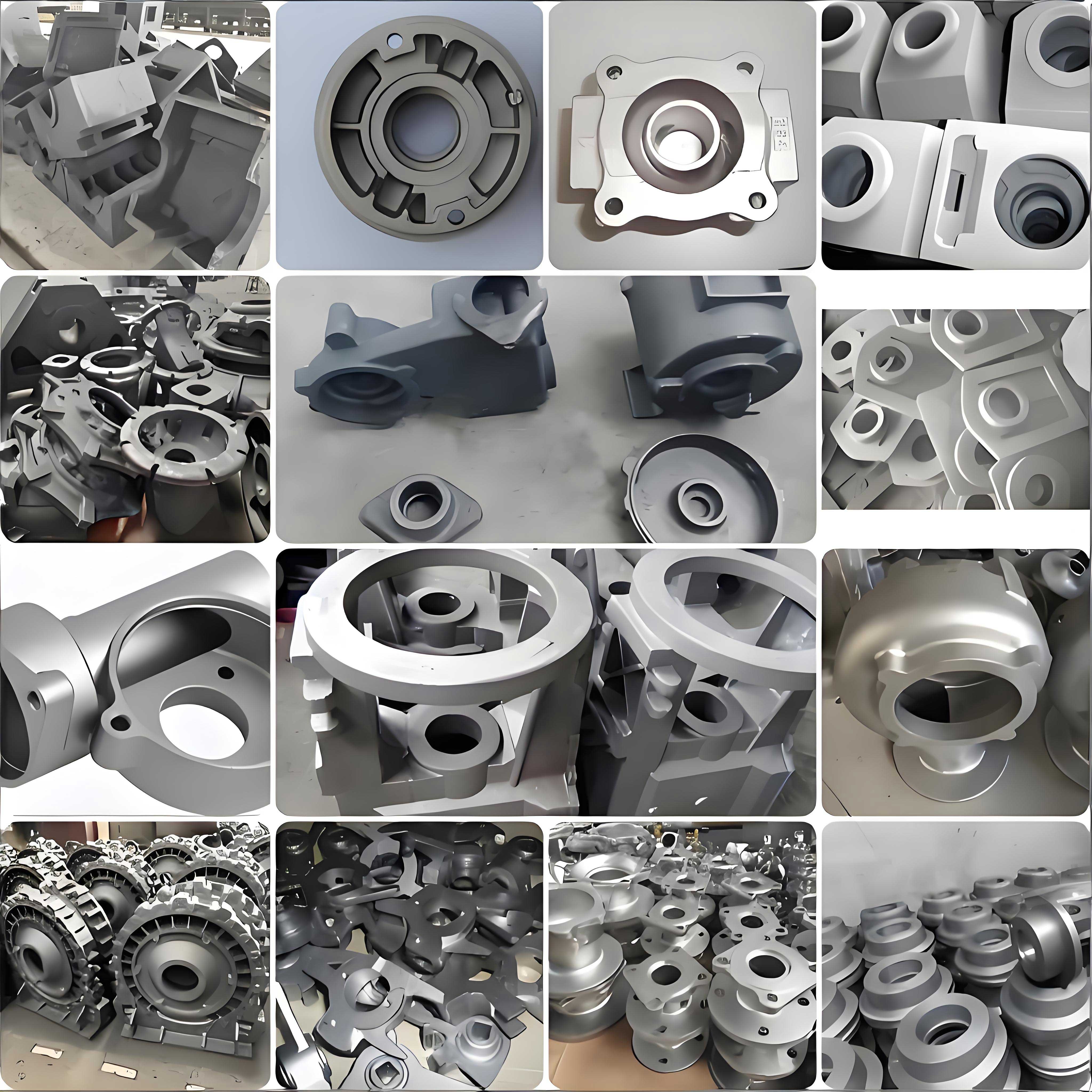
In my research, I focus on numerical simulation technologies for nodular cast iron. This material boasts excellent mechanical properties, making it essential in mechanical products. As demand for high-quality nodular cast iron castings increases, especially for large components where shrinkage porosity is less concentrated, process design requirements become more stringent. The gradual solidification of nodular cast iron often hinders liquid feeding, and reducing shrinkage relies on the self-feeding effect due to graphite expansion. Investigating the influence of process factors on shrinkage and proposing improvements are crucial for enhancing product quality. Numerical simulation of casting processes involves geometric discretization of the forming system and numerical analysis of physical field changes. Solidification microstructure simulation includes both macroscopic and microscopic aspects.
Solidification process simulation began with temperature field numerical simulation, and researchers worldwide have conducted extensive studies. In my country, numerical simulation started later but developed rapidly, with national initiatives promoting CAD research in casting processes. Macroscopic numerical simulation methods include finite element and direct finite difference techniques, aimed at calculating temperature fields and handling phase transformations. However, simplified models for heat flow calculations cannot predict microstructural parameters, which are key to controlling internal quality and performance. Empirical and experimental methods are often combined to predict casting quality, but incorporating growth kinetics into simulation models is essential. Traditionally, casting process numerical simulation referred to flow filling and temperature field simulations, but microstructural simulation is now vital for predicting mechanical properties and optimizing production processes.
At the microscopic scale, solidification is viewed as a nucleation and growth process. International researchers have proposed various models to predict nucleation and growth in eutectic alloys. Many microstructural parameters are directly related to the macroscopic temperature field, such as the growth velocity of columnar structures being linked to isotherm movement. It is necessary to independently examine microstructural formation mechanisms and couple models with macroscopic continuum equations. Currently, microstructural simulation of casting alloys is a hotspot in materials science, with methods including deterministic approaches and phase-field models. Under current computer hardware and software constraints, it is impractical to separate macroscopic and microscopic simulations entirely, as microscopic simulation requires smaller cells, leading to excessive computational demands for large castings. A common approach is to combine macro- and micro-simulations for specific regions of large castings, using data from macroscopic simulation files to reduce computational time. While progress has been made in microstructural simulation of castings, it remains exploratory, with notable deviations for large components.
In my work on microstructural simulation program design for nodular cast iron, I address the volume expansion caused by graphite precipitation during solidification, which leads to mold wall deformation and shrinkage defects. Shrinkage defects are a primary cause of casting scrap, and numerical simulation technology aims to optimize casting process design, with porosity prediction being a key aspect. Predicting shrinkage in castings helps improve unreasonable processes, control internal quality, and reduce costs. Deriving specific finite difference equations from mathematical models is foundational for writing simulation programs. The solute distribution at the solid-liquid interface significantly affects heat transfer and interface morphology, and accurate calculation of the solute field is critical for simulating micro-grain growth.
Microstructural simulation of nodular cast iron requires expressing models and algorithms in computer language. Before programming, I outline implementation plans. The simulation program should have a user-friendly interface, with main functions including extracting data from macroscopic temperature fields for microstructural simulation to inform process improvements. I selected the Visual C++ 6.0 platform for numerical simulation of nodular cast iron microstructure. During design, I prioritized an intuitive interface with dialog boxes for various functions. For instance, the main interface includes pre-processing menu items for loading temperature field files, implemented using the CFileDialog class. Initial condition dialogs provide default settings based on experimental conditions, allowing user modifications. The OnOK function updates program memory with user settings. The main interface also features a command to halt computations, with a display box for program speed, managed via the OnTimer function.
The simulation program comprises multiple functions for different tasks. The Mainfunction serves as the primary function, executing commands and creating threads to call other functions for temperature field acquisition, austenite nucleation, and growth processes. It concludes by closing threads. Initialization is handled through dialog classes like CFileDialog. For user convenience, I designed display sections to monitor parameter changes during computation. The CSetshoDlg class manages display settings, allowing dynamic visualization of microstructural formation, with options to save and display files continuously. The interface shows solidification time and other parameters. During simulation, users can pause computations to preserve thread states. Before releasing memory, the Save3File function saves current data.
Nodular cast iron is a crucial metal material in modern industry, valued for its cost-effectiveness and widespread use in shipbuilding, pipeline engineering, and other sectors. However, shrinkage defects remain a significant issue in production. With advances in solidification simulation technology, it has become a vital tool for analyzing solidification processes and optimizing casting processes, ensuring scientific process design. In my research, I adopted a modular programming structure, where functional modules integrate via interfaces, allowing for easy expansion. The software system includes simulation computation programs and pre- and post-processing software. Pre-processing handles CAD/CAM STL model interfaces, while post-processing displays results. Data files serve as interfaces between modules, and object-oriented programming methods are employed. I used Chinese information techniques for a friendly interface and an explicit finite difference method for temperature field computation to save memory. Post-processing software uses 3D color graphics to display mesh partitions, providing an intuitive basis for defect prediction.
Numerical simulation of microstructure in nodular cast iron castings is essential because the mechanical and physical properties of metals and alloys are closely tied to their solidified microstructures. Controlling the solidification process is paramount. Computer applications support foundry industry development, and microstructural simulation aims to predict mechanical properties. Nodular cast iron holds a prominent position in industrial applications, and recent modeling research has advanced significantly. In my studies, I designed experimental specimens and developed 3D numerical simulation programs based on a local unit substitution and amplification method. Simulation results align well with actual microstructures. The microstructural model for nodular cast iron includes nucleation and growth models. Nucleation encompasses instantaneous and continuous types, and primary graphite spheroid growth is controlled by carbon diffusion and interfacial reactions. Below, I summarize key parameters used in simulation calculations.
| Parameter | Value | Description |
|---|---|---|
| Carbon Content | 3.76% | Primary element in nodular cast iron |
| Silicon Content | 2.5% | Typical range for nodular cast iron |
| Residual Magnesium | 0.04% | For graphite spheroidization |
| Inoculant Addition | 0.2% | Silicon-based inoculant |
| Cooling Rate | 10-50 K/s | Range for nucleation threshold |
| Simulation Cell Size | 0.1 mm | For microscopic simulation |
The austenite shell around graphite spheroids forms instantaneously, with carbon diffusing through it to the graphite. Experimental setups in my research included optical microscopy, an IAS4 image analysis system, and a KGPS-500 medium-frequency induction furnace. Specimen composition was 3.76% C, with inoculant containing 73% Si and less than 1.0% Al. Nodularization treatment occurred at 1460°C to 1480°C, with 0.2% inoculant and 0.2% secondary inoculant added. Specimen dimensions were 10 mm × 10 mm × 20 mm. In program development, I proposed the local unit substitution and amplification method for microstructural simulation. This involves enlarging macroscopic mesh units, constructing substitute blocks for microsimulation based on macroscopic unit information, and performing computations. This approach allows flexible simulation of microstructural formation in any casting region. Using designed specimens, I conducted simulations with the developed program, and results matched experimental values well.
I applied mathematical models to simulate experimental specimens and actual nodular cast iron castings produced via green sand molding in production lines. The number and diameter of graphite nodules from simulations correlated well with experiments, as nucleation and growth are primarily related to undercooling. For example, during the eutectoid stage, lower temperatures at certain points facilitate pearlite nucleation and growth. Quantitative analysis showed that pearlite volume fraction was lower at some points, consistent with hardness values. When eutectic graphite nodules are abundant, pearlite nucleation and growth become difficult. The pearlite volume fraction in the matrix relates to eutectoid undercooling, and quantitative analysis aligned with hardness measurements, though errors indicated model areas for improvement.
Dynamic display of microstructural formation in nodular cast iron, based on interface tracking, lacks experimental foundation. Instead, I used computer graphics techniques to simulate behaviors like contact and collision during growth. For instance, graphite spheroid growth is simulated using a dodecagon representation, where the shell expands from vertices. Encounters with adjacent spheroids or different growth conditions cause some vertices to stop growing. By selecting appropriate parameters, I simulated the matrix structure of nodular cast iron, and program results aligned with experiments. To validate the developed system, I employed commercial software like Flow-3D for comparative analysis. My system simulated a defect micro-porosity volume of -90.76 cm³ at 1350°C, while other software showed no shrinkage at junction points, and Flow-3D indicated small pits at the top. Secondary shrinkage values from my system were minimal, suggesting accuracy.
The solidification process numerical simulation is core to casting CAD, aiming to control and predict casting quality. Building on temperature field calculations, shrinkage prediction enables iterative process optimization. In my research, I established physical-mathematical models for graphite spheroid formation in nodular cast iron and used the local unit substitution algorithm for flexible and practical microstructural simulation. Through precise computation and development, I successfully completed a 3D numerical simulation program for nodular cast iron microstructure. This program displays microstructural formation processes, including random growth phenomena like collisions, in 2D dynamic visuals. Comparisons between simulation results and experiments confirm the rationality of the models and algorithms.
In conclusion, numerical simulation of microstructure in nodular cast iron is a powerful tool for advancing foundry technology. My work highlights the importance of integrating macroscopic and microscopic simulations to address shrinkage defects and improve casting quality. The developed program, with its modular design and user-friendly interface, offers a foundation for further research. Future directions include refining nucleation and growth models, enhancing computational efficiency for large castings, and incorporating multi-scale simulations. As nodular cast iron continues to be vital in industrial applications, ongoing innovation in simulation methodologies will drive quality and efficiency in production processes.
To summarize key equations used in my simulation, consider the following for nucleation rate and growth kinetics in nodular cast iron. The nucleation rate $N$ can be expressed as a function of undercooling $\Delta T$: $$N = N_0 \exp\left(-\frac{\Delta G^*}{k_B T}\right)$$ where $N_0$ is a pre-exponential factor, $\Delta G^*$ is the activation energy for nucleation, $k_B$ is Boltzmann’s constant, and $T$ is temperature. For graphite growth, the diffusion-controlled growth velocity $v$ is given by: $$v = D \frac{\Delta C}{\delta}$$ where $D$ is the diffusion coefficient, $\Delta C$ is the concentration gradient, and $\delta$ is the boundary layer thickness. In the context of heat transfer during solidification, the Fourier equation is fundamental: $$\frac{\partial T}{\partial t} = \alpha \nabla^2 T$$ where $\alpha$ is thermal diffusivity. These equations, combined with finite difference discretization, form the basis of my simulation algorithms for nodular cast iron microstructure prediction.