
As a premier engineering material developed in the latter half of the 20th century, Austempered Ductile Iron (ADI), derived from nodular cast iron, has captivated global research and industrial interest due to its exceptional combination of high strength, toughness, and superior wear resistance. This unique set of properties positions it as a material of immense potential for the 21st century, particularly for components subjected to severe sliding and rolling contact conditions such as gears, crankshafts, and wear plates. The foundational microstructure of ADI, consisting of bainitic ferrite and carbon-enriched retained austenite, is primarily dictated by the austempering heat treatment process. Consequently, a profound understanding of how specific austempering parameters influence this microstructure and, in turn, the material’s tribological performance is crucial for optimizing component life and reliability. This article provides a comprehensive, first-person examination of the effects of austempering temperature on the phase evolution, mechanical properties, and the underlying wear mechanisms of ADI, offering detailed insights supported by extensive data, formulas, and analyses.
1. Foundational Principles and Microstructural Evolution
The journey of nodular cast iron to becoming high-performance ADI begins with its unique graphite morphology. The spheroidal graphite nodules, achieved through magnesium or cerium treatment, act as natural “crack arresters,” providing inherent toughness not found in other cast irons. The transformative step is the austempering heat treatment, a two-stage process involving austenitization followed by rapid quenching to and holding at a temperature within the bainitic transformation range (typically 250°C to 400°C).
During the isothermal hold, a diffusion-controlled reaction occurs. Carbon-supersaturated austenite (γ) decomposes into carbide-free bainitic ferrite (α) and carbon-enriched austenite:
$$ \gamma_{high-C} \rightarrow \alpha_{bainite} + \gamma_{enriched-C} $$
This stage is critical. The carbon rejected during the formation of bainitic ferrite stabilizes the surrounding austenite, preventing its transformation to martensite upon final cooling to room temperature. The final microstructure is, therefore, a two-phase composite of acicular or feathery bainitic ferrite interlaced with films of high-carbon retained austenite. The morphology and proportion of these phases are exquisitely sensitive to the austempering temperature (Ta).
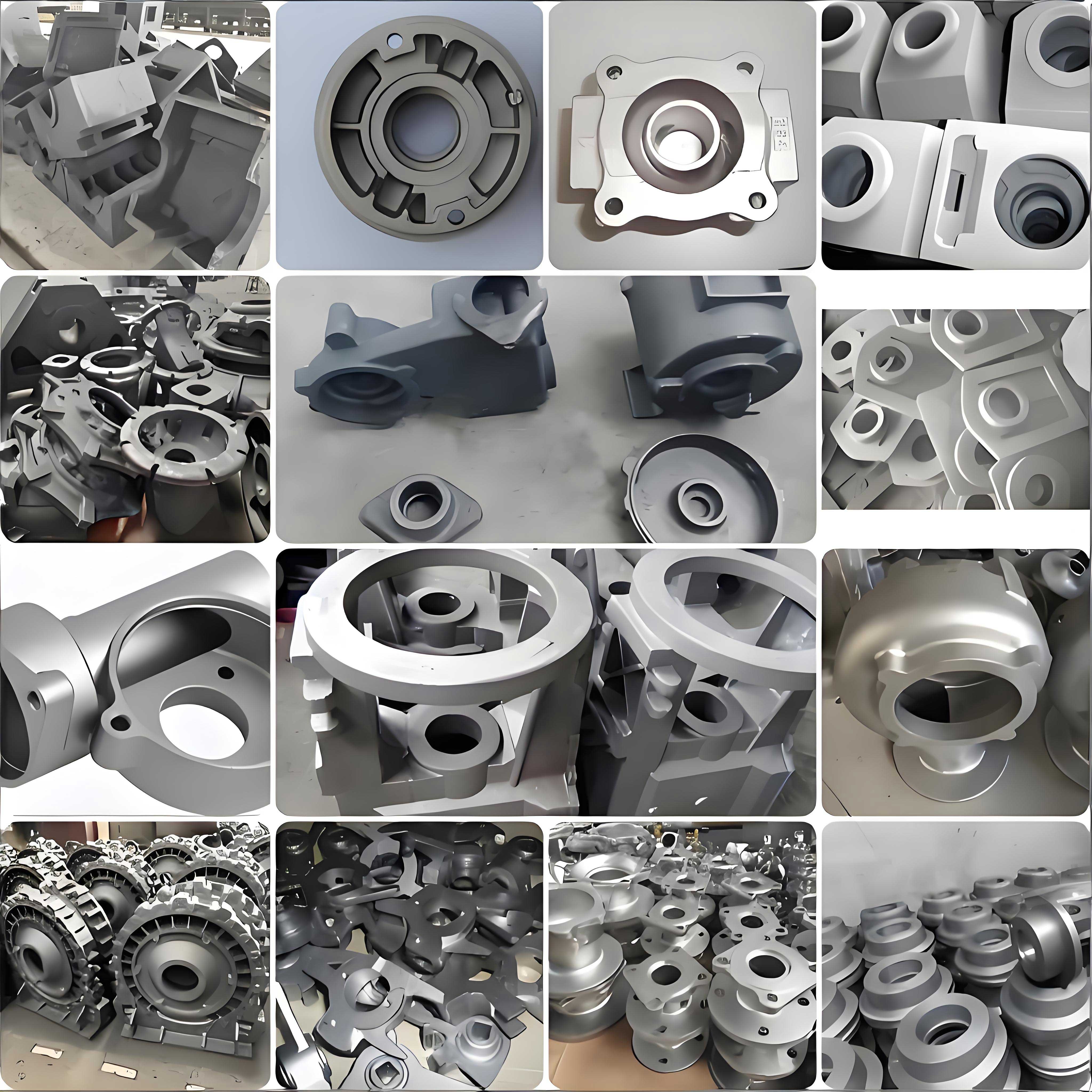
My investigation focused on systematically varying Ta while holding other parameters constant. The base material was a low-alloy nodular cast iron with the following composition, crucial for ensuring hardenability and facilitating the bainitic reaction:
| C | Si | Mn | Cu | Mo | Mg | S | P | Fe |
|---|---|---|---|---|---|---|---|---|
| 3.6 | 2.4 | 0.4 | 0.8 | 0.1 | 0.04 | 0.015 | 0.05 | Bal. |
The heat treatment cycle consisted of austenitizing at 900°C for 90 minutes, followed by rapid transfer to a salt bath maintained at one of four isothermal temperatures: 290°C, 320°C, 350°C, or 380°C, each for a duration of 90 minutes before air cooling.
2. Microstructural and Mechanical Response to Austempering Temperature
The microstructural evolution observed across the temperature range was striking and followed established transformation kinetics. At the lowest temperature of 290°C, the driving force for ferrite nucleation is high, but carbon diffusion is sluggish. This results in a very fine, acicular microstructure known as lower bainite. The bainitic ferrite plates are thin and closely spaced, with thin films of retained austenite separating them. As the austempering temperature increases to 320°C and 350°C, carbon diffusion is enhanced. This allows for the growth of broader ferrite sheaves and a coarser, more feather-like upper bainitic structure. Concurrently, the films of retained austenite become thicker and more interconnected.
This progression culminates at 380°C, where the microstructure is distinctly coarse upper bainite. The most significant microstructural parameter affected is the volume fraction of retained austenite (Vγ). Its variation with Ta can be conceptually linked to the stability of austenite, which increases with its carbon content (Cγ). The average carbon content in austenite is inversely related to the transformation temperature; at lower temperatures, less carbon diffuses away from the ferrite interface, leading to a lower Cγ and thus less stable austenite that may partially transform. At higher Ta, carbon has more time to diffuse, enriching the austenite and stabilizing a larger fraction of it against transformation.
The direct mechanical consequence of this microstructural coarsening and increased Vγ is a marked decrease in hardness. Hardness (H), a key indicator of resistance to plastic deformation and wear, can be semi-empirically related to the microstructural constituents. A simplified composite rule-of-mixtures model can be considered:
$$ H_{ADI} \approx V_{\alpha} \cdot H_{\alpha} + V_{\gamma} \cdot H_{\gamma} $$
where Hα and Hγ are the hardnesses of bainitic ferrite and retained austenite, respectively, with Hα >> Hγ. As Vγ increases with Ta, the overall hardness decreases. The quantitative data I obtained are summarized below:
| Austempering Temperature, Ta (°C) | Microstructure Description | Retained Austenite, Vγ (%) | Hardness, H (HV100) |
|---|---|---|---|
| 290 | Fine acicular lower bainite | 26.4 | 435.6 |
| 320 | Intermediate bainite | 30.1 | 385.2 |
| 350 | Feathery upper bainite | 34.8 | 332.7 |
| 380 | Coarse upper bainite | 38.6 | 288.1 |
This inverse relationship between Ta and H is fundamental to understanding the subsequent wear behavior of the nodular cast iron in its austempered condition.
3. Tribological Performance: Wear Rate and Frictional Response
To evaluate wear resistance, sliding wear tests were conducted under controlled conditions (150 N load, 200 rpm speed, 3600 s duration) against a hardened steel counterface. The wear rate (ν) was calculated from the mass loss, providing a direct measure of material loss per unit sliding distance:
$$ \nu = \frac{m_1 – m_2}{l} $$
where \( m_1 \) and \( m_2 \) are the initial and final masses, and \( l \) is the total sliding distance.
The results unequivocally demonstrated that the wear resistance of the austempered nodular cast iron is highly dependent on its initial microstructure and hardness. The wear rate increased monotonically with increasing austempering temperature. The ADI treated at 290°C exhibited the lowest wear rate, showcasing its superior resistance to material removal. In contrast, the sample treated at 380°C, with its coarse, soft microstructure, suffered the highest wear rate.
| Ta (°C) | Wear Rate, ν (×10-3 mg/m) | Steady-State Friction Coefficient, μ |
|---|---|---|
| 290 | 2.64 | 0.806 |
| 320 | 2.88 | 0.711 |
| 350 | 3.15 | 0.698 |
| 380 | 3.34 | 0.672 |
Parallel to wear rate, the frictional behavior also evolved. The friction coefficient (μ) typically started at a lower value, increased during a run-in period as surfaces conformed, and then stabilized. The steady-state μ displayed a clear decreasing trend with increasing Ta. This can be attributed to two interrelated factors. First, the decreasing hardness makes the surface more prone to plastic deformation and real area-of-contact changes, which can alter friction. Second, and more specific to nodular cast iron, the softer matrix at higher Ta facilitates the extrusion and smearing of graphite from the subsurface onto the wear track. This graphite acts as a solid lubricant, reducing the shear strength of the interface and consequently lowering the friction coefficient. This relationship can be conceptually framed as μ being influenced by the material’s shear strength (τ) and hardness (H), often related through adhesive friction models: \( \mu \propto \frac{\tau}{H} \). While τ also changes, the dominant effect of the sharp decrease in H and the lubricating graphite leads to the observed reduction in μ.
4. Phase Transformation and Hardening During Wear
A remarkable and defining characteristic of ADI is its ability to work-harden during service. This phenomenon was explicitly confirmed by comparing the phase constitution and hardness of the material before and after the wear test. X-ray diffraction analysis revealed a drastic reduction in the intensity of austenite peaks on the worn surface compared to the bulk. This indicates that the metastable, high-carbon retained austenite in the surface layers undergoes a strain-induced transformation to martensite (α’) under the severe plastic deformation and high contact stresses of the sliding process:
$$ \gamma_{retained} \xrightarrow[\text{Strain}]{} \alpha’_{martensite} $$
This transformation is highly desirable from a wear perspective, as it creates a hard, wear-resistant surface layer in situ, while the tougher, untransformed core maintains component integrity.
Measurement of microhardness on the wear scar validated this transformation. The post-wear surface hardness was significantly higher than the bulk hardness for all conditions. Furthermore, the absolute increase in hardness was greatest for the samples with the highest initial Vγ (i.e., those austempered at higher temperatures), as they possessed a larger reservoir of transformable austenite. This strain-hardening capacity is a critical advantage of austempered nodular cast iron over conventional hardened steels, which lack this adaptive surface response.
| Ta (°C) | Bulk Hardness (HV) | Worn Surface Hardness (HV) | Hardness Increase ΔH (HV) |
|---|---|---|---|
| 290 | 435.6 | 510.3 | 74.7 |
| 320 | 385.2 | 483.1 | 97.9 |
| 350 | 332.7 | 452.6 | 119.9 |
| 380 | 288.1 | 425.8 | 137.7 |
5. Evolution of Dominant Wear Mechanisms
The wear mechanism, or the fundamental process by which material is removed, is not constant for ADI but evolves with its microstructure. Examination of the wear scars using advanced microscopy techniques allows us to delineate these mechanisms for each austempering condition.
For the ADI austempered at 290°C and 320°C, characterized by high hardness and fine microstructure, the primary wear mechanisms were micro-cutting and oxidative wear. The hard surface primarily interacted with hard asperities or debris via cutting and ploughing actions, producing shallow, parallel grooves. Energy-dispersive spectroscopy (EDS) on these surfaces showed high oxygen content, confirming the formation of tribo-oxides. At these temperatures, wear proceeds by the mechanical removal of material and the subsequent formation and spallation of oxide layers.
At 350°C, with intermediate hardness and coarser bainite, the mechanism shifted. Ploughing and micro-cutting became more pronounced, leading to deeper and more defined grooves, as the softer matrix offered less resistance to penetration. Oxidative wear was still present but played a lesser role.
The most dramatic shift occurred at 380°C. Here, the relatively soft and coarse microstructure could not support high contact stresses without significant subsurface plastic deformation. Repeated cyclic loading led to crack nucleation below the surface, typically at graphite-matrix interfaces or shear bands. These cracks propagated and eventually interconnected, causing large-scale detachment of material in the form of flakes or pits. This mechanism is classic surface fatigue wear, accompanied by severe ploughing. The worn surface exhibited deep grooves, spallation pits, and evidence of plastic deformation and delamination.
| Austempering Temperature Regime | Microstructural State | Dominant Wear Mechanisms | Key Surface Features |
|---|---|---|---|
| Low (290-320°C) | Fine lower bainite, High Hardness | Micro-cutting, Oxidative Delamination | Shallow grooves, Oxidized patches |
| Intermediate (350°C) | Upper bainite, Medium Hardness | Ploughing, Micro-cutting | Deeper, defined grooves |
| High (380°C) | Coarse upper bainite, Low Hardness | Surface Fatigue, Severe Ploughing | Deep grooves, Delamination pits, Spalled regions |
6. Synthesis and Practical Implications
This systematic investigation elucidates the profound and interconnected effects of the austempering process on austempered nodular cast iron. The austempering temperature serves as a master variable, dictating a cascade of properties:
- Microstructure: \( T_a \uparrow \Rightarrow \) Bainite coarseness \( \uparrow \), Retained Austenite (\( V_γ \)) \( \uparrow \).
- Hardness: \( T_a \uparrow \Rightarrow \) Bulk Hardness (\( H \)) \( \downarrow \).
- Wear Resistance: \( T_a \uparrow \Rightarrow \) Wear Rate (\( \nu \)) \( \uparrow \).
- Friction: \( T_a \uparrow \Rightarrow \) Steady-State Friction Coefficient (\( \mu \)) \( \downarrow \) (due to graphite lubrication and plasticity).
- Work-Hardening: \( T_a \uparrow \Rightarrow \) Strain-induced Transformation Potential \( \uparrow \Rightarrow \) Worn Surface Hardening (\( \Delta H \)) \( \uparrow \).
- Wear Mechanism: Transitions from abrasive/oxidative to fatigue-dominated with increasing \( T_a \).
The practical implication is clear: the selection of the austempering temperature for a component made of nodular cast iron must be a deliberate compromise based on the service requirements. For applications demanding maximum wear resistance and load-bearing capacity under sliding or rolling contact, such as heavily loaded gears or bearings, a lower austempering temperature (e.g., 290-320°C) is optimal. This yields the hard, fine lower bainitic structure that best resists material removal, even though it may exhibit a slightly higher friction coefficient.
Conversely, for components where shock absorption, machinability, or controlled friction are priorities, and wear is a secondary concern, a higher austempering temperature might be acceptable to gain higher toughness and better damping capacity inherent to the larger retained austenite volume. However, it is crucial to recognize that the superior wear performance of the lower-temperature treated ADI, combined with its inherent strain-hardening capability, makes it the unequivocal choice for severe wear applications. This work underscores the versatility of austempered nodular cast iron and provides a foundational framework for tailoring its properties through precise control of the heat treatment process.