
The relentless pace of modern manufacturing demands ever-shorter product development and production cycles. In this context, the traditional paradigms of tooling and prototyping often become bottlenecks. My research focuses on bridging this gap by developing rapid and durable tooling solutions specifically for sand casting, a foundational manufacturing process. The ultimate goal is to accelerate the delivery of high-integrity, complex sand casting parts to the market. The core challenge lies not just in speeding up the mold pattern creation, but in ensuring these patterns possess sufficient surface durability to withstand the abrasive nature of the sand molding process. This article details my comprehensive investigation into the rapid preparation of sand casting molds using advanced additive manufacturing and the subsequent development of tailored wear-resistant coatings to enhance their operational lifespan.
The foundation of this approach is Rapid Prototyping (RP), or Additive Manufacturing (AM), a layer-based fabrication technology. Among the various RP techniques, Selective Laser Sintering (SLS) has proven exceptionally suitable for creating complex, three-dimensional patterns directly from digital models. The SLS process, as implemented in my work, functions on the principle of discrete deposition and consolidation. A thin layer of thermoplastic powder, typically polystyrene (PS), is spread across a build platform. A computer-controlled CO2 laser then selectively scans the powder bed, tracing the cross-section of the part as defined by its sliced CAD model. The laser energy raises the temperature of the powder particles at the scan points slightly above their glass transition temperature, causing them to soften, fuse, and bond at their contacts. Once a layer is completed, the build platform lowers by one layer thickness, a new layer of powder is recoated, and the process repeats, building the part layer-by-layer. The unsintered powder naturally supports overhanging structures, eliminating the need for dedicated supports. After completion, the “green” part is excavated from the powder bed. While these SLS-fabricated polystyrene patterns can capture intricate geometries rapidly, their mechanical strength and surface hardness in the as-sintered state are inadequate for the rigors of repeated sand compaction and handling in a foundry environment.
Therefore, a critical post-processing step is essential to transform the fragile polystyrene pattern into a robust sand casting mold. My research has identified epoxy resin systems as the most effective infiltrants for this purpose. The resin permeates the porous sintered structure, filling voids and inter-particle spaces, and upon curing, forms a continuous, reinforcing matrix that dramatically enhances the pattern’s structural integrity. The specific formulation I optimized consists of epoxy resin CYD-128 as the base, a reactive diluent 660A to adjust viscosity for deep penetration, and a blended amine-based curing agent system to ensure a controlled, low-exotherm cure cycle. The mechanical properties of the infiltrated pattern can be summarized as follows:
| Property | As-Sintered Polystyrene | After Epoxy Infiltration |
|---|---|---|
| Tensile Strength | Low (< 5 MPa) | ≥ 15 MPa |
| Flexural Strength | Brittle | ≥ 33 MPa |
| Dimensional Stability | Good | Excellent (Minimal Shrinkage) |
| Handleability | Poor | Good |
While infiltration solves the bulk strength problem, the surface wear resistance remains a key concern for producing consistent, high-quality sand casting parts. The repeated cycles of sand ramming and pattern draw can abrade the pattern surface, leading to dimensional inaccuracies and poor surface finish on the final castings. To address this, I developed a functional composite coating applied to the surface of the resin-infiltrated pattern. The coating is based on the same epoxy matrix but is modified with hard ceramic particles to act as a protective wear-resistant layer. Alumina (Al2O3) particles in the size range of 2-10 μm were selected as the reinforcing phase due to their high hardness, chemical inertness, and favorable cost. The coating slurry, comprising the epoxy resin, diluent, curing agent, and varying weight percentages of Al2O3 particles, is manually applied to the pattern surface, allowed to impregnate, and then thermally cured.
The central part of my study was a systematic investigation into the effect of Al2O3 particle content on the tribological properties of the composite coating. This is crucial for determining the optimal formulation that yields durable molds for long production runs of sand casting parts. A series of coatings with particle loadings of 0 wt%, 1 wt%, 3 wt%, 5 wt%, 8 wt%, and 10 wt% were prepared and tested. The wear resistance was evaluated under dry sliding conditions using a pin-on-disk configuration (modified for a flat specimen). The counter-body was a hardened GCr15 steel ball (60 HRC). The wear test parameters were kept constant: a sliding speed of 0.1 m/s, a normal load of 10 N, and a total sliding distance of 180 m. The wear rate, \( W \), was calculated from the mass loss, \( \Delta m \), the density of the coating \( \rho \), the normal load \( F_N \), and the sliding distance \( L \), using the Archard wear equation in its specific form:
$$ W = \frac{\Delta m}{\rho \cdot F_N \cdot L} $$
The coefficient of friction (COF) was recorded in real-time throughout the tests. Furthermore, the surface hardness was measured using a Rockwell superficial hardness scale (15Y). The results are comprehensively presented in the table below:
| Al2O3 Content (wt%) | Superficial Hardness (HR15Y) | Wear Rate, \( W \) (×10-5 mm³/N·m) | Average Coefficient of Friction (COF), \( \mu \) |
|---|---|---|---|
| 0 | 56 | 32.0 | 0.38 |
| 1 | 93 | 3.2 | 0.40 |
| 3 | 108 | 1.8 | 0.42 |
| 5 | 118 | 1.1 | 0.44 |
| 8 | 129 | 2.1 | 0.47 |
| 10 | 135 | 2.5 | 0.50 |
The data reveals clear trends. The surface hardness increases monotonically with Al2O3 content, as expected from the rule of mixtures, where the hard ceramic phase reinforces the softer polymer matrix. The wear resistance, however, shows a distinct optimum. The wear rate decreases sharply with initial particle addition, reaching a minimum at 5 wt% Al2O3. Beyond this optimal point, further addition of particles leads to a gradual increase in the wear rate. The coefficient of friction exhibits a steady increase with particle loading.
To understand these trends, a detailed analysis of the wear mechanisms was conducted using Scanning Electron Microscopy (SEM) and Atomic Force Microscopy (AFM). The worn surface of the un-filled epoxy coating (0 wt%) was relatively smooth but covered with large patches of deformed and torn material, characteristic of severe adhesive wear and plastic smearing. The primary mechanism was the cyclic adhesion and shear of epoxy material to the steel counterface.
With the incorporation of 1-3 wt% Al2O3 particles, the wear morphology changed significantly. The adhesive patches became less pronounced, and shallow, discontinuous grooves appeared on the surface. This indicates a transition in the dominant wear mechanism from adhesion to a mixed mode, where the hard Al2O3 particles begin to act as load-bearing elements, protecting the epoxy matrix from direct contact with the steel ball. The particles also hinder the large-scale plastic flow of the matrix. At the optimal 5 wt% loading, the worn surface showed a well-defined pattern of fine, shallow ploughing grooves with minimal adhesive failure. The particles are sufficiently numerous to effectively shield the matrix and carry the load, leading to mild abrasive wear as the primary mechanism. This state corresponds to the lowest wear rate.
At higher loadings (8-10 wt%), the surface became rougher again, with evidence of deeper and more numerous grooves. Crucially, SEM analysis revealed cavities where particles had been debonded and pulled out of the matrix. This suggests that with excessive particle content, the epoxy matrix becomes insufficient to firmly bind all particles. These loose or poorly bonded particles can be easily removed during sliding. Once detached, they become third-body abrasives, trapped between the sliding surfaces, and contribute to severe three-body abrasive wear, leading to an increased wear rate. This phenomenon also explains the continued rise in the coefficient of friction; the increasing number of hard, protruding particles and loose abrasives creates greater resistance to sliding motion.
The relationship between particle content (\( C \)), wear rate (\( W \)), and friction coefficient (\( \mu \)) can be qualitatively described by a piecewise model. For low to optimal content (\( C \leq C_{opt} \)), the wear rate decreases due to enhanced load-bearing capacity, while friction increases due to more particle-asperity interactions:
$$ W(C) \approx W_0 – k_1 C \quad \text{and} \quad \mu(C) \approx \mu_0 + k_2 C \quad \text{for} \quad C \leq C_{opt} $$
where \( W_0 \) and \( \mu_0 \) are the wear rate and COF of the neat epoxy, \( k_1 \) and \( k_2 \) are positive constants, and \( C_{opt} \) is the optimal particle content (≈5 wt%). For content above the optimum (\( C > C_{opt} \)), particle debonding leads to increased three-body abrasion, causing the wear rate to rise again, while friction continues to increase at a potentially different rate:
$$ W(C) \approx W_{min} + k_3 (C – C_{opt}) \quad \text{and} \quad \mu(C) \approx \mu_{opt} + k_4 (C – C_{opt}) \quad \text{for} \quad C > C_{opt} $$
Here, \( W_{min} \) and \( \mu_{opt} \) are the values at \( C_{opt} \), and \( k_3 \), \( k_4 \) are positive constants.
Therefore, the optimal formulation for the wear-resistant coating was conclusively determined to be the epoxy system reinforced with 5 wt% of micro-sized Al2O3 particles. This coating provides the best compromise, offering the highest wear resistance (lowest wear rate) while maintaining a manageable increase in friction. Patterns treated with this specific coating demonstrate exceptional durability during the sand molding process. They can withstand numerous cycles of sand compaction and ejection without significant surface degradation, ensuring consistent dimensional accuracy and surface finish across a production batch of sand casting parts. This integrated approach—combining the geometric freedom of SLS-based rapid tooling with the tailored performance of a particle-reinforced functional coating—presents a robust and efficient pathway for the rapid manufacturing of complex, high-quality sand casting parts. It significantly compresses the lead time from design to functional cast prototype or even short-run production.
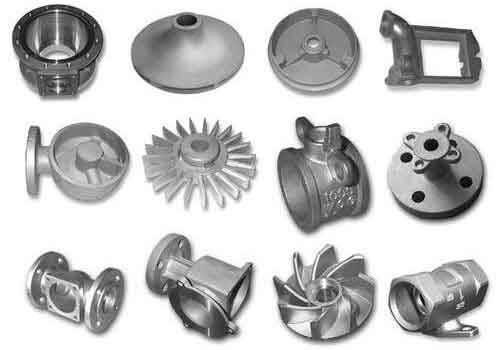
In summary, my work establishes a viable and effective methodology for rapid sand casting mold preparation. The process chain involves: 1) Digital design and slicing of the pattern, 2) SLS fabrication using polystyrene powder, 3) Bulk strengthening via epoxy resin infiltration, and 4) Surface engineering via application of an Al2O3-epoxy composite coating optimized at 5 wt% particle loading. This methodology directly addresses the core needs of modern foundries seeking agility. It enables the rapid validation of designs through physical prototypes and facilitates the swift transition to low-volume production of metal components. The durability imparted by the composite coating ensures that the benefits of rapid tooling are not offset by premature tool failure, making it a practical and reliable solution for producing demanding sand casting parts in a time-sensitive environment. Future work may explore other ceramic phases like silicon carbide or zirconia, different particle size distributions, and the application of this coating technology to other AM-based tooling processes for die casting or injection molding.