
In my research, I have extensively investigated the heat treatment of nodular cast iron, a material renowned for its excellent castability and cost-effectiveness since its inception in 1946. Nodular cast iron, also known as ductile iron, finds widespread applications in automotive components, mining machinery, and wind power equipment due to its unique graphite nodule structure. However, compared to carbon steels, nodular cast iron often exhibits higher brittleness, lower strength, reduced corrosion resistance, and inferior wear performance, which limits its use in more demanding environments. To expand the applicability of nodular cast iron, enhancing its mechanical properties is crucial. Generally, two primary approaches are employed: alloying, where elements like copper, manganese, or silicon are added to improve performance, and heat treatment, which modifies the matrix microstructure to achieve better comprehensive properties. Common heat treatments for nodular cast iron include quenching and tempering, annealing, thermomechanical processing, and austempering. Among these, the quenching and partitioning (Q&P) process, originally developed for advanced high-strength steels, presents a novel method to potentially enhance the performance of nodular cast iron by stabilizing retained austenite and optimizing the matrix. This study focuses on systematically exploring the effects of quenching temperature during the Q&P process on the microstructure and mechanical properties of nodular cast iron, aiming to provide a deeper understanding of the underlying mechanisms.
The fundamental principle behind the Q&P process involves initial quenching to a temperature between the martensite-start (Ms) and martensite-finish (Mf) points to form a controlled amount of primary martensite, followed by a partitioning step at a higher temperature where carbon diffuses from the carbon-supersaturated martensite into the untransformed austenite. This enriches the austenite with carbon, increasing its stability and allowing it to be retained at room temperature. The retained austenite, being a ductile phase, can improve toughness and ductility through transformation-induced plasticity (TRIP) effects. For nodular cast iron, the presence of graphite nodules complicates the phase transformations, as carbon can also be sourced from or interact with the graphite. Therefore, optimizing parameters like quenching temperature is essential to maximize the benefits of the Q&P process. In this work, I conducted experiments to examine how varying the quenching temperature influences the volume fraction of retained austenite, its carbon content, and the resulting hardness in nodular cast iron.
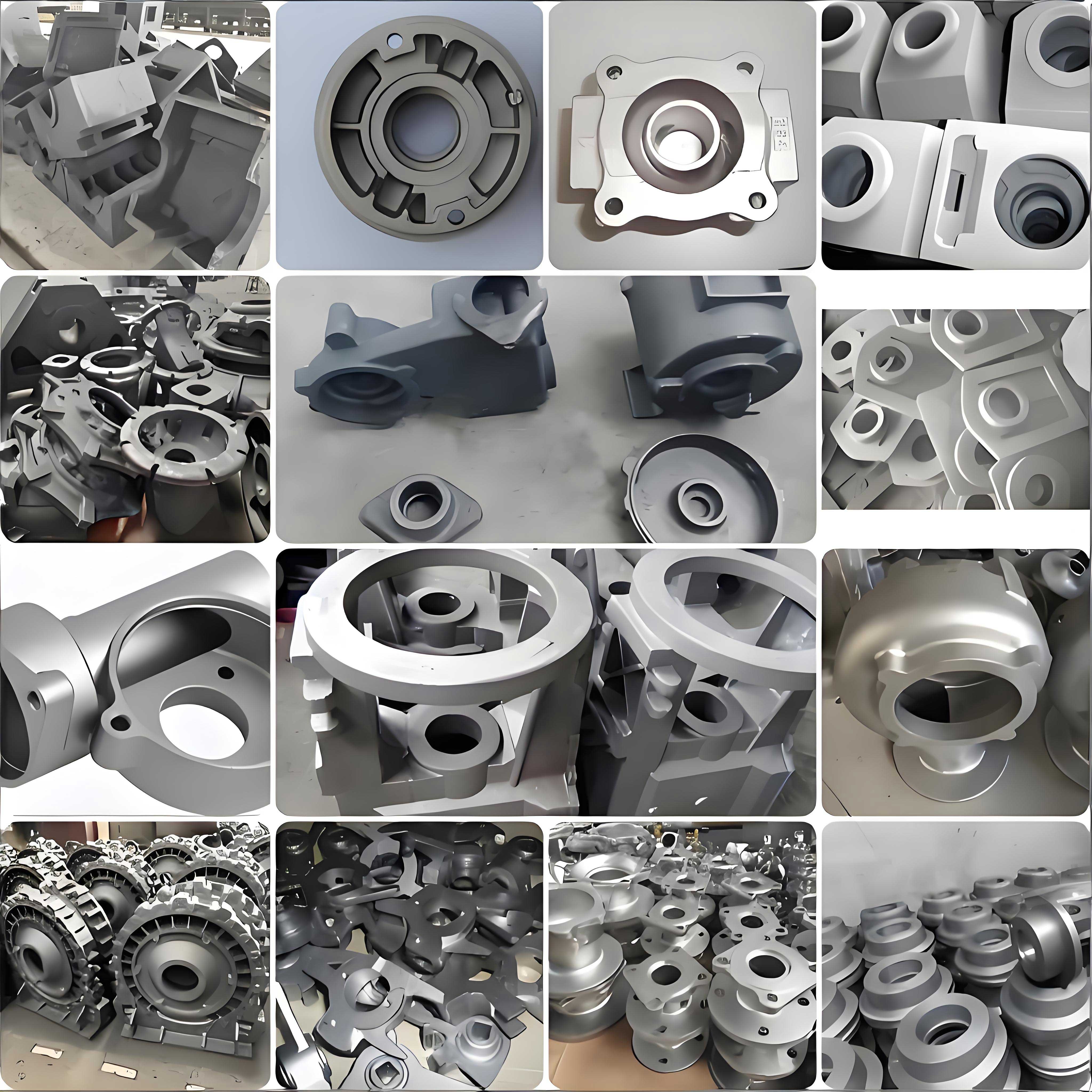
To prepare the nodular cast iron specimens, I used Q10 pig iron as the base material, along with high-purity copper (99.99%), ferromanganese, and 75% ferrosilicon as alloying additives. The melting was carried out in an air environment using a LHM-35 medium-frequency induction melting furnace with a power of 30 kW and a capacity of 30 kg. Initially, the pig iron was melted, and after reaching a molten state, other alloys were added sequentially based on their absorption rates. The molten metal was maintained at approximately 1450°C, measured with a portable thermometer. Following complete melting and a holding period of 3–5 minutes, a rare-earth magnesium alloy was introduced for nodulizing treatment over about 2 minutes. After slag removal, ferrosilicon inoculant was added for inoculation. Subsequently, molten metal was poured into a copper mold to rapidly solidify samples for composition analysis, and at 1380°C, it was cast into standard Y-block molds. The Y-block castings were removed from the mold after cooling below 200°C. The chemical composition of the nodular cast iron was determined using optical emission spectrometry and elemental analysis, with results summarized in Table 1. The matrix composition was estimated by accounting for the graphite content, assuming all alloying elements are distributed in the matrix.
| Element | C | Si | Mn | P | S | Cu | Mg | RE | Fe |
|---|---|---|---|---|---|---|---|---|---|
| Content | 3.6–3.8 | 2.40 | 0.259 | 0.015 | 0.015 | 0.762 | 0.044 | 0.027 | Balance |
The as-cast microstructure of the nodular cast iron was examined prior to heat treatment. Unetched samples revealed spherical graphite nodules uniformly distributed, with sizes below 30 μm, indicating good nodulization. According to ASTM A247 standards, the nodularity grade was above 2, and the graphite size distribution reached grade 6 or higher. Image analysis software estimated the graphite volume fraction to be approximately 10%. Upon etching, the matrix comprised pearlite and ferrite, with ferrite forming a “bull’s-eye” structure around graphite nodules and pearlite occupying the intermodular regions. The matrix composition was calculated as shown in Table 2, which is critical for understanding phase transformations during heat treatment.
| Element | C | Si | Mn | P | S | Cu | Mg | RE | Fe |
|---|---|---|---|---|---|---|---|---|---|
| Content | ~0.55 | ~2.72 | ~0.32 | ~0.018 | ~0.018 | ~0.78 | ~0.046 | ~0.029 | Balance |
For the Q&P heat treatment, samples were sectioned from the Y-block castings using wire electrical discharge machining. The heat treatment protocol involved austenitization at 900°C for 2 hours, followed by quenching in preheated oil baths at various temperatures ranging from 100°C to 260°C (373 K to 533 K) for 2 minutes. Subsequently, a partitioning step was conducted at 300°C in a salt bath for 0 minutes (i.e., no partitioning) or 30 minutes, after which all samples were air-cooled to room temperature. The specific parameters for each sample are detailed in Table 3, which I designed to systematically study the effect of quenching temperature.
| Sample Group | Austenitization Temperature (°C) | Austenitization Time (min) | Quenching Temperature (°C) | Quenching Time (min) | Partitioning Temperature (°C) | Partitioning Time (min) |
|---|---|---|---|---|---|---|
| No Partitioning | 900 | 120 | 100–260 | 2 | – | 0 |
| With Partitioning | 900 | 120 | 100–260 | 2 | 300 | 30 |
Microstructural characterization was performed using optical microscopy (OM) and field emission scanning electron microscopy (FESEM). Phase analysis was conducted via X-ray diffraction (XRD) with Cu Kα radiation. The volume fraction of retained austenite (Vγ) was calculated from XRD patterns using the direct comparison method, based on the integrated intensities of martensite and austenite peaks. The formula is given by:
$$ V_{\gamma} = \frac{1}{1 + \frac{I_{\alpha} \cdot K_{\gamma}}{I_{\gamma} \cdot K_{\alpha}}} \times 100\% $$
where \( I_{\alpha} \) and \( I_{\gamma} \) are the integrated intensities of martensite and austenite peaks, respectively, and \( K_{\alpha} \) and \( K_{\gamma} \) are the reflection coefficients for martensite and austenite. For body-centered cubic (bcc) martensite and face-centered cubic (fcc) austenite, typical values were used in calculations. The carbon content in retained austenite (Cγ) was estimated from the lattice parameter (aγ) derived from XRD peak positions. Two empirical relationships were considered:
$$ C_{\gamma} = \frac{a_{\gamma} – 3.547}{0.0467} $$
and
$$ C_{\gamma} = \frac{a_{\gamma} – 3.578 – 0.00095\text{Mn}_{\gamma} – 0.002\text{Ni}_{\gamma} – 0.0006\text{Cr}_{\gamma} – 0.0031\text{Mo}_{\gamma} – 0.0018\text{V}_{\gamma}}{0.033} $$
where alloying element contents are in weight percent. Given the low alloy content in this nodular cast iron, the first formula was primarily applied, but corrections for silicon and copper were considered based on literature data. Mechanical property assessment focused on hardness measurements using a Rockwell hardness tester (scale C), with at least five indentations per sample to ensure reproducibility.
The XRD analysis of samples subjected to Q&P treatment with a partitioning time of 30 minutes revealed distinct peaks corresponding to martensite (bcc) and retained austenite (fcc). All samples, regardless of quenching temperature, exhibited both phases, confirming the effectiveness of the Q&P process in stabilizing austenite in nodular cast iron. The diffraction patterns showed prominent martensite {110}, {200}, {211} peaks and austenite {111}, {200}, {220} peaks. As the quenching temperature increased, the relative intensity of austenite peaks varied non-monotonically, indicating changes in retained austenite volume fraction. Quantitative analysis using the formula above yielded the results plotted in Figure 1 (described textually, as images are not referenced by number). The volume fraction of retained austenite initially increased with quenching temperature, reaching a maximum of approximately 27.1% at 200°C (473 K), and then decreased at higher quenching temperatures. This trend can be explained by the balance between primary martensite formation and carbon partitioning. At low quenching temperatures, a high fraction of primary martensite forms upon quenching, but the untransformed austenite volume is small. During partitioning, carbon from the martensite enriches this limited austenite, resulting in high carbon content but low overall retained austenite due to limited starting austenite. At high quenching temperatures, less primary martensite forms, leaving a larger volume of untransformed austenite. However, the carbon available from the scarce martensite is insufficient to fully stabilize all austenite, leading to partial transformation to secondary martensite upon final cooling, thus reducing retained austenite. The optimum quenching temperature around 200°C strikes a balance, providing enough martensite to supply carbon and enough austenite to retain.
Concurrently, the carbon content in retained austenite, derived from lattice parameter calculations, showed an inverse relationship with the volume fraction. It decreased as quenching temperature rose to the 180–220°C range, then increased at lower and higher temperatures. This behavior is summarized in Table 4. The lower carbon content in the mid-temperature range may be attributed to the onset of bainitic transformation during partitioning at 300°C, where carbon partitions from bainitic ferrite into austenite, but the carbon content in bainite is lower than in martensite, leading to less enrichment. At low quenching temperatures, martensite is carbon-rich, so partitioned carbon levels are high; at high temperatures, the austenite is less enriched due to limited carbon source, but the measured carbon content might appear higher due to compositional inhomogeneities or calculation artifacts.
| Quenching Temperature (°C) | Quenching Temperature (K) | Retained Austenite Volume Fraction, Vγ (%) | Carbon Content in Retained Austenite, Cγ (wt%) |
|---|---|---|---|
| 100 | 373 | ~16.5 | ~2.0 |
| 120 | 393 | ~18.2 | ~1.9 |
| 140 | 413 | ~20.1 | ~1.7 |
| 160 | 433 | ~22.8 | ~1.5 |
| 180 | 453 | ~25.3 | ~1.3 |
| 200 | 473 | ~27.1 | ~1.2 |
| 220 | 493 | ~24.6 | ~1.4 |
| 240 | 513 | ~21.4 | ~1.6 |
| 260 | 533 | ~19.0 | ~1.8 |
Microstructural observations via OM and FESEM supported the XRD findings. The matrix of Q&P-treated nodular cast iron consisted of martensite, retained austenite, and possibly some bainite, given the partitioning temperature of 300°C. The retained austenite appeared as bright regions in etched samples, often located between martensite laths or near graphite nodules. With increasing quenching temperature, the martensite lath size tended to increase, and grain boundaries became more distinct. This is because higher quenching temperatures reduce the driving force for martensite transformation, leading to fewer nucleation sites and larger martensite units. Additionally, the amount of retained austenite visually correlated with the quantitative data, showing a peak at intermediate quenching temperatures. The presence of graphite nodules remained unchanged, acting as carbon reservoirs or sinks during heat treatment, but their role in carbon diffusion during Q&P is complex and warrants further study.
Hardness testing provided insights into the mechanical response of the nodular cast iron after Q&P treatment. The results for samples with no partitioning (0 min) and with partitioning (30 min) are compared in Table 5. For samples without partitioning, hardness decreased slightly but steadily with increasing quenching temperature, from about 60 HRC at 100°C to 52 HRC at 260°C. This decline is due to the reduced amount of primary martensite formed at higher quenching temperatures, as martensite is the primary hardening phase. The relationship can be modeled using a rule-of-mixtures approach, where hardness (H) depends on the volume fractions of martensite (Vm) and austenite (Vγ):
$$ H = H_m \cdot V_m + H_{\gamma} \cdot V_{\gamma} $$
with \( H_m \) and \( H_{\gamma} \) being the hardness of martensite and austenite, respectively. Since martensite hardness is much higher, a decrease in Vm leads to lower overall hardness.
For samples with 30 minutes of partitioning, hardness values were consistently lower than their non-partitioned counterparts, highlighting the softening effect of carbon partitioning. Hardness decreased from about 58 HRC at 100°C to 48 HRC at 260°C, with a more pronounced drop in the mid-temperature range. This aligns with the higher retained austenite volume fraction, as austenite is softer. The trend can be expressed by expanding the hardness model to include carbon content effects:
$$ H = H_m(C_m) \cdot V_m + H_{\gamma}(C_{\gamma}) \cdot V_{\gamma} $$
where \( C_m \) and \( C_{\gamma} \) are carbon contents in martensite and austenite. During partitioning, carbon depletion from martensite reduces \( H_m \), while carbon enrichment in austenite may slightly increase \( H_{\gamma} \), but the net effect is often softening. The data suggest that optimizing quenching temperature can tailor hardness and potentially toughness in nodular cast iron.
| Quenching Temperature (°C) | Hardness with 0 min Partitioning (HRC) | Hardness with 30 min Partitioning (HRC) |
|---|---|---|
| 100 | 60.2 ± 0.5 | 58.1 ± 0.6 |
| 120 | 59.5 ± 0.4 | 56.8 ± 0.5 |
| 140 | 58.8 ± 0.6 | 55.3 ± 0.7 |
| 160 | 57.9 ± 0.5 | 53.9 ± 0.6 |
| 180 | 56.5 ± 0.4 | 51.2 ± 0.5 |
| 200 | 55.1 ± 0.6 | 49.8 ± 0.6 |
| 220 | 54.3 ± 0.5 | 50.1 ± 0.5 |
| 240 | 53.2 ± 0.7 | 49.5 ± 0.7 |
| 260 | 52.4 ± 0.6 | 48.6 ± 0.6 |
The kinetics of carbon diffusion during partitioning play a crucial role in determining the final microstructure of nodular cast iron. The carbon flux from martensite to austenite can be described by Fick’s laws, and for simplification, the carbon concentration profile over time (t) can be approximated for a semi-infinite system. The diffusion coefficient D of carbon in austenite is temperature-dependent, following an Arrhenius equation:
$$ D = D_0 \exp\left(-\frac{Q}{RT}\right) $$
where \( D_0 \) is a pre-exponential factor, Q is the activation energy, R is the gas constant, and T is the absolute temperature. At the partitioning temperature of 300°C (573 K), D is relatively high, allowing significant carbon redistribution within 30 minutes. However, the presence of graphite nodules in nodular cast iron introduces additional complexity, as carbon may also diffuse to or from graphite interfaces, affecting the overall carbon mass balance. This interaction can be modeled by considering the graphite as a carbon source/sink with a boundary condition. The carbon content in austenite as a function of time and position might be expressed as:
$$ C(x,t) = C_0 + (C_s – C_0) \cdot \text{erfc}\left(\frac{x}{2\sqrt{Dt}}\right) $$
where \( C_0 \) is the initial carbon concentration, \( C_s \) is the surface concentration (e.g., at graphite interface), and erfc is the complementary error function. In practice, for nodular cast iron, the system is not one-dimensional, and numerical simulations may be required for accurate predictions.
Furthermore, the phase transformation during quenching can be analyzed using the Koistinen-Marburger equation for martensite formation, which relates the volume fraction of martensite (Vm) to undercooling below Ms:
$$ V_m = 1 – \exp\left(-\alpha (M_s – T_q)\right) $$
where \( \alpha \) is a material constant, \( M_s \) is the martensite-start temperature, and \( T_q \) is the quenching temperature. For nodular cast iron, Ms depends on composition; based on the matrix chemistry, it can be estimated using empirical formulas like:
$$ M_s (°C) = 539 – 423C – 30.4Mn – 17.7Ni – 12.1Cr – 7.5Mo + 10Co – 7.5Si $$
Substituting values from Table 2 gives an Ms around 300–350°C, which aligns with the quenching temperature range used. This equation helps explain why lower quenching temperatures yield higher martensite fractions. During partitioning, some of this martensite may temper or decompose, but in Q&P, the goal is to retain carbon-enriched austenite.
In summary, this investigation demonstrates that quenching temperature significantly influences the microstructure and properties of nodular cast iron processed via the Q&P route. The volume fraction of retained austenite peaks at an intermediate quenching temperature of 200°C, reaching about 27.1%, while its carbon content shows an inverse trend. Hardness decreases with increasing quenching temperature, and partitioning further reduces hardness due to carbon redistribution and austenite retention. These findings underscore the potential of Q&P heat treatment to engineer the microstructure of nodular cast iron for enhanced performance. Future work could explore varying partitioning times or temperatures, or incorporating additional alloying elements to further optimize the trade-offs between strength and ductility. The integration of computational thermodynamics and kinetics models, such as CALPHAD-based simulations, could provide deeper insights into phase transformations specific to nodular cast iron systems. Overall, the Q&P process offers a promising avenue for advancing the application of nodular cast iron in demanding industrial sectors.
To conclude, the processing of nodular cast iron via quenching and partitioning is a complex interplay of phase transformations and carbon diffusion, heavily influenced by quenching temperature. By carefully selecting this parameter, one can tailor the balance between martensite and retained austenite, thereby adjusting mechanical properties like hardness. This study contributes to the growing body of knowledge on heat treatment of nodular cast iron and highlights the importance of systematic parameter optimization. As industries continue to seek materials with improved performance and sustainability, nodular cast iron, through innovative treatments like Q&P, remains a viable and versatile candidate for a wide range of engineering applications.