
In modern industrial applications, the demand for valves that can withstand harsh corrosive environments—such as those found in chemical processing, wastewater treatment, and seawater cooling systems—has intensified. Traditional materials like duplex stainless steel offer excellent corrosion resistance but come with high costs, extended production cycles, and maintenance challenges. For instance, in a typical chemical plant, annual downtime and repair expenses due to valve corrosion can exceed millions. This has driven the pursuit of alternative materials that balance performance, affordability, and manufacturability. Nodular cast iron, often referred to as ductile iron, has emerged as a promising candidate due to its inherent strength, ductility, and cost-effectiveness. By alloying with elements like nickel and chromium, its corrosion resistance can be significantly enhanced, making it suitable for demanding applications. In this study, I explore the development of a high-performance NiCr corrosion-resistant nodular cast iron specifically for butterfly valves, detailing the compositional design, processing techniques, and performance validation. The focus is on achieving a material that meets stringent mechanical and corrosion-resistance standards while remaining economically viable.
Nodular cast iron is a type of cast iron where the graphite is present as spheroidal nodules, rather than flakes, due to inoculation and spheroidization treatments. This microstructure imparts a combination of high strength, good ductility, and fatigue resistance, often likened to steel. The global production of nodular cast iron has surged, with China leading at approximately 30% of the world’s output. However, in corrosive environments, standard nodular cast iron may degrade due to electrochemical and chemical corrosion mechanisms. Corrosion in cast iron primarily involves galvanic cells formed between graphite (cathodic) and the metallic matrix (anodic), as well as chemical attacks from aggressive media. To improve corrosion resistance, three strategies are commonly employed: alloying to adjust electrochemical potentials and promote passivation, fostering the formation of protective surface films, and optimizing graphite morphology and matrix uniformity to reduce galvanic coupling. This research integrates these approaches through the addition of nickel and chromium, aiming to create a nodular cast iron variant with superior durability in saline and acidic conditions.
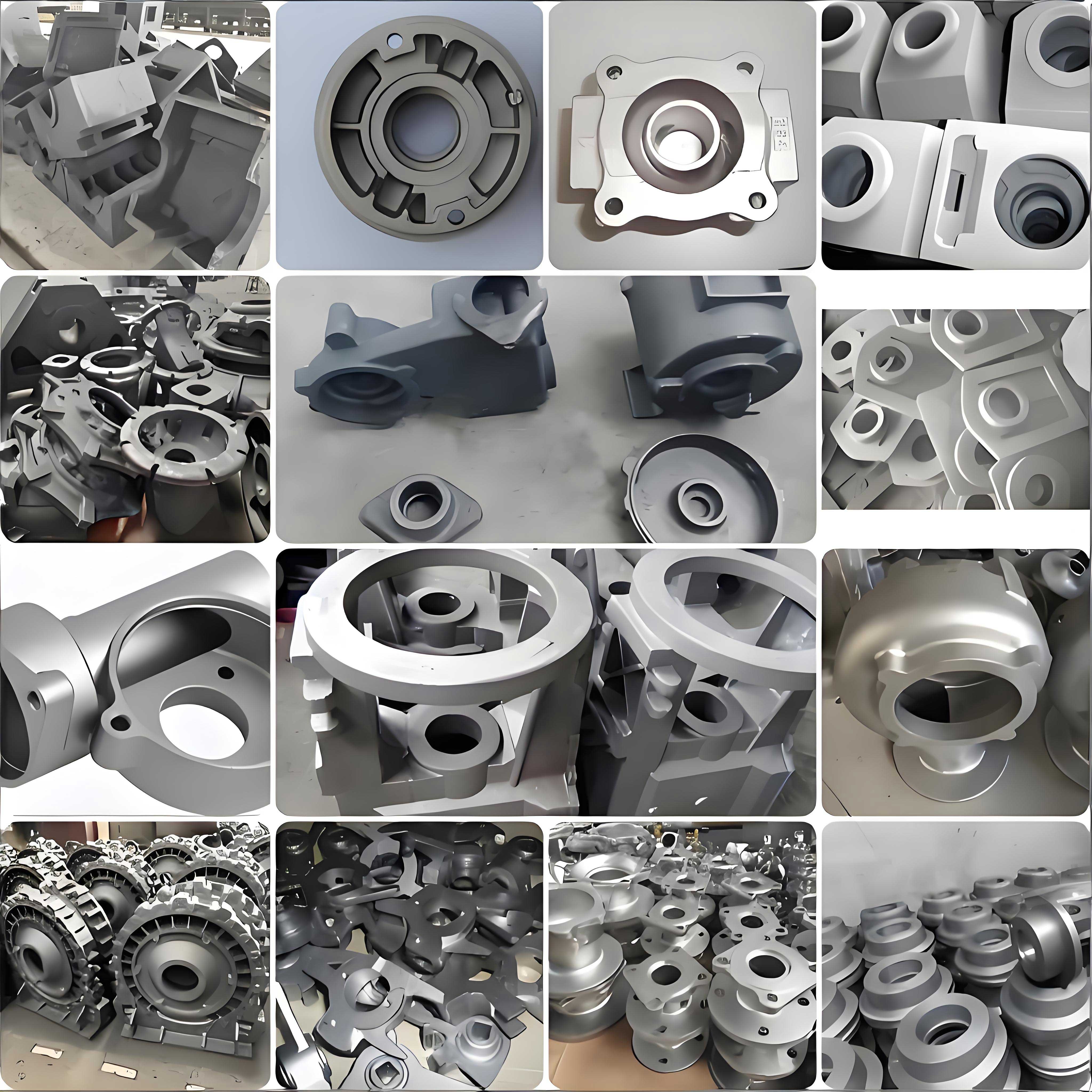
The butterfly valve components under investigation include a valve body and a disc, with masses of 6.9 tons and 7.8 tons, respectively. These are large-scale castings with wall thicknesses exceeding 60 mm and maximum dimensions up to 3400 mm in diameter. Such size necessitates careful control of casting processes to avoid defects like shrinkage porosity, cracks, or cold shuts. The material specifications require an alloyed nodular cast iron with a graphite spheroidization rate of at least 90%, carbide content below 1%, and a corrosion rate not exceeding 0.25 mm/year in a 3.5% NaCl solution. Additionally, the assembled valve must pass a hydrostatic pressure test at 2.4 MPa for 30 minutes without leakage. These criteria set a high bar for both material properties and manufacturing consistency, driving the need for optimized alloy composition and heat treatment.
Designing the chemical composition is critical to achieving the desired performance in nodular cast iron. Each element plays a specific role in microstructure formation and corrosion behavior. Carbon and silicon are fundamental to graphite formation and matrix stability. Carbon content influences fluidity and graphite nucleation, while silicon enhances graphite promotion and solid-solution strengthening in ferrite. However, excessive silicon can increase brittleness and reduce toughness. Manganese, though a pearlite stabilizer, tends to segregate at grain boundaries, impairing ductility. Phosphorus and sulfur are detrimental impurities; phosphorus forms brittle phosphide eutectics, and sulfur consumes spheroidizing agents, leading to defects. The strategic addition of nickel and chromium is key to enhancing corrosion resistance. Nickel, being austenite stabilizer, refines the microstructure and promotes the formation of a protective passive film. Chromium increases the electrode potential of the matrix and also aids in forming oxide layers. The designed composition ranges are summarized in the table below.
| Element | Composition Range (wt%) | Role in Nodular Cast Iron |
|---|---|---|
| C | 3.4–3.8 | Promotes graphite formation, affects fluidity and strength. |
| Si | 2.2–2.8 | Enhances graphite promotion, solid-solution strengthens ferrite. |
| Mn | ≤0.3 | Stabilizes pearlite but can segregate, reducing ductility. |
| P | ≤0.04 | Harmful; forms brittle phosphide eutectics. |
| S | ≤0.025 | Harmful; consumes spheroidizers, causes defects. |
| Ni | 2–4 | Improves corrosion resistance, refines microstructure, promotes passivation. |
| Cr | 0.2–0.5 | Enhances corrosion resistance, increases electrode potential. |
| Mg | 0.03–0.06 | Essential for graphite spheroidization. |
| RE | 0.02–0.04 | Light rare earths aid in spheroidization and inoculation. |
The relationship between alloy content and properties can be expressed through empirical formulas. For instance, the effect of silicon on elongation can be approximated as: $$ \delta \approx \delta_0 + k_{\text{Si}} \cdot ([\text{Si}] – [\text{Si}]_0) $$ where $\delta$ is the elongation percentage, $\delta_0$ is the baseline elongation, $k_{\text{Si}}$ is a coefficient (approximately 2–3% per 0.1% Si increase), and $[\text{Si}]$ is the silicon content. Similarly, the corrosion rate $R$ in mm/year might be modeled as: $$ R = R_0 \cdot \exp\left(-\alpha [\text{Ni}] – \beta [\text{Cr}]\right) $$ where $R_0$ is the base corrosion rate of unalloyed nodular cast iron, and $\alpha$ and $\beta$ are constants dependent on the environment. These formulas, though simplified, highlight the synergistic effects of nickel and chromium in reducing corrosion.
Melting and spheroidization treatments were conducted using medium-frequency induction furnaces. Raw materials included high-purity pig iron (C: 4.2–4.5%, Si: 1.2–1.5%), low-sulfur steel scrap, graphite carburizers, electrolytic nickel plates (Ni ≥ 99.9%), nickel-iron alloys, and high-carbon ferrochromium. The charge order was pig iron, steel scrap, carburizer, alloys, and returns. After melting to 1400–1430°C, samples were taken for compositional adjustment, followed by heating to 1500–1530°C for 5–10 minutes to homogenize. The spheroidization process employed the sandwich method in a ladle. The ladle was preheated to 300–500°C, and a mixture of spheroidizer (1.3–1.6% of light rare-earth magnesium alloy) and inoculant (1.0–1.3% of silicon-barium-calcium and 75% ferrosilicon) was placed in the pocket. At 1450–1480°C, the molten iron was poured into the ladle, initiating spheroidization. During pouring, additional inoculant was added to enhance nucleation. After slag removal, the temperature was lowered to 1350–1380°C for pouring, with stream inoculation using fine silicon-barium-calcium inoculant (0.2–0.5 mm, 0.13–0.14%) to further refine the microstructure and mitigate fading.
Post-casting, the components underwent a low-temperature graphitization annealing at 720 ± 10°C for 10–12 hours. This treatment aims to decompose any metastable carbides and promote a ferritic matrix, which improves ductility and corrosion resistance by reducing microgalvanic cells. The annealed castings were then cleaned and inspected. Microstructural analysis of attached test blocks revealed a spheroidization grade of 2 (90–95% nodularity), graphite size of 6, ferrite content exceeding 70%, and carbide content below 1%. Mechanical properties were evaluated, and the results are summarized in the following table. All values meet or exceed the specified requirements, demonstrating the efficacy of the alloy design and processing.
| Property | Requirement | Measured Value |
|---|---|---|
| Tensile Strength (MPa) | ≥ 450 | 560 |
| Yield Strength (MPa) | ≥ 310 | 420 |
| Elongation (%) | ≥ 3 | 16 |
| Hardness (HB) | 160–260 | 208 |
The enhanced mechanical properties can be correlated with the microstructure through Hall-Petch type relationships for strength: $$ \sigma_y = \sigma_0 + k_y \cdot d^{-1/2} $$ where $\sigma_y$ is the yield strength, $\sigma_0$ is the friction stress, $k_y$ is a constant, and $d$ is the grain size. The fine graphite nodules and ferritic matrix contribute to high elongation, while the alloying elements provide solid-solution strengthening. For nodular cast iron, the tensile strength often relates to the nodule count and matrix composition, which were optimized in this study.
Corrosion resistance was evaluated via full-immersion tests in a 3.5% NaCl aqueous solution, simulating seawater environments. Twelve parallel specimens (divided into two groups, QT1 and QT2) were prepared, with six subjected to 72-hour tests and the other six to 168-hour tests. Specimens were cleaned with acetone, dried, weighed, and immersed. After exposure, they were cleaned of corrosion products, dried, and reweighed to determine weight loss. The corrosion rate $R$ in mm/year was calculated using the formula: $$ R = \frac{K \cdot \Delta W}{A \cdot T \cdot D} $$ where $K$ is a constant (8.76 × 10⁴ for mm/year when $\Delta W$ is in grams, $A$ in cm², $T$ in hours, and $D$ in g/cm³), $\Delta W$ is the weight loss, $A$ is the exposed surface area, $T$ is the exposure time, and $D$ is the density of the nodular cast iron (approximately 7.1 g/cm³). The results are tabulated below, showing excellent consistency and performance.
| Group | Sample ID | Exposure Time (h) | Initial Weight (g) | Final Weight (g) | Corrosion Rate (mm/year) |
|---|---|---|---|---|---|
| QT1 | QT1-1 | 72 | 35.6566 | 35.6458 | 0.066 |
| QT1-2 | 72 | 35.3440 | 35.3327 | 0.069 | |
| QT1-3 | 72 | 35.4596 | 35.4489 | 0.066 | |
| QT1-4 | 168 | 34.6551 | 34.6286 | 0.069 | |
| QT1-5 | 168 | 35.8876 | 35.8618 | 0.067 | |
| QT1-6 | 168 | 32.7184 | 32.6949 | 0.062 | |
| QT2 | QT2-1 | 72 | 34.5422 | 34.5319 | 0.064 |
| QT2-2 | 72 | 35.2375 | 35.2296 | 0.065 | |
| QT2-3 | 72 | 35.1325 | 35.1219 | 0.065 | |
| QT2-4 | 168 | 34.7622 | 34.7385 | 0.063 | |
| QT2-5 | 168 | 35.0206 | 34.9967 | 0.063 | |
| QT2-6 | 168 | 34.1457 | 34.1221 | 0.062 |
The data indicate an average corrosion rate of approximately 0.065 mm/year, well below the 0.25 mm/year threshold. Statistical analysis using a t-test confirms no significant difference between the 72-hour and 168-hour groups (p > 0.05), suggesting stable passivation film formation. The low standard deviation across batches underscores the reproducibility of the processing. This corrosion performance is attributed to the synergistic effect of nickel and chromium. Nickel enriches the surface layer, facilitating the formation of a dense, adherent oxide film, while chromium increases the electrochemical nobility of the matrix. The ferritic base, with minimal carbides, reduces microgalvanic couples, further lowering corrosion rates. In comparison, unalloyed nodular cast iron typically exhibits corrosion rates above 0.5 mm/year in similar environments, highlighting the improvement achieved.
The successful application of this NiCr corrosion-resistant nodular cast iron in butterfly valves represents a significant advancement in valve technology. The material offers a cost-effective alternative to duplex stainless steel, with raw material costs estimated at 20–30% lower and production cycles shortened by several weeks. Field trials in seawater cooling systems have shown no signs of premature failure, and the valves have passed hydrostatic tests without leakage. The combination of high strength, good ductility, and exceptional corrosion resistance makes this nodular cast iron suitable for a wide range of aggressive environments, including offshore platforms, desalination plants, and chemical processing units. Future work could focus on optimizing the alloy for even higher temperatures or more acidic media, as well as exploring additive manufacturing techniques for complex valve geometries.
In conclusion, the development of high-performance NiCr corrosion-resistant nodular cast iron for butterfly valves demonstrates the potential of alloy design and processing optimization in enhancing material properties. By carefully balancing elements like nickel and chromium, and employing controlled spheroidization and heat treatments, a nodular cast iron with tensile strength of 560 MPa, yield strength of 420 MPa, elongation of 16%, hardness of 208 HB, and corrosion rate of 0.065 mm/year was achieved. This material not only meets stringent industrial requirements but also offers economic and manufacturing advantages. As industries continue to seek durable and affordable solutions for corrosive environments, such advanced nodular cast iron variants are poised to play a pivotal role in valve and other component applications, driving innovation in materials engineering.