
In the fields of engineering and mining machinery, there is a pervasive demand for wear-resistant materials that can endure harsh operational conditions while offering extended service life. Nodular cast iron, known for its excellent castability, cost-effectiveness, and balanced mechanical properties, has found widespread application across various industries. However, its wear resistance, though adequate for many purposes, may fall short in extreme abrasive environments. Conversely, cemented carbide, often referred to as the “teeth of industry,” exhibits exceptional hardness and wear resistance but suffers from poor toughness, leading to premature failure under impact or shock loading. This inherent limitation restricts its standalone use in many demanding applications. To bridge this gap, composite materials that combine the toughness of nodular cast iron with the wear resistance of cemented carbide have been explored. One promising method is insert casting, where a cemented carbide preform is placed into a mold and molten nodular cast iron is poured around it, forming a metallurgical bond at the interface. This study delves into the microstructure and mechanical properties of such a composite, focusing on the interface formed between nodular cast iron and tungsten carbide-cobalt (WC-Co) cemented carbide. The primary objective is to understand the bonding mechanisms, characterize the transitional zone, and evaluate key mechanical properties like hardness and shear strength, ultimately contributing to the development of more durable and cost-effective wear-resistant components.
The fundamental premise behind creating a successful composite lies in achieving a strong, reliable interface. For nodular cast iron and cemented carbide, this involves intricate interactions during the casting process. When molten iron contacts the cemented carbide insert, several phenomena occur simultaneously: heat transfer, potential surface melting of the carbide, chemical reactions, and elemental diffusion. The composition of nodular cast iron, primarily iron with carbon in the form of spheroidal graphite and alloying elements like silicon and magnesium, plays a crucial role. The cemented carbide, typically a composite of hard WC particles embedded in a ductile cobalt binder, presents a different chemical and physical landscape. The processing parameters, such as preheating temperature of the insert, pouring temperature of the iron, and the volume ratio between the two materials, are critical in determining the final interface quality. This research systematically examines these aspects, employing metallographic analysis, scanning electron microscopy (SEM), and mechanical testing to provide a comprehensive understanding of the composite system.
Materials and Experimental Methodology
The base material used in this investigation was a standard grade nodular cast iron, QT500-7, which possesses a tensile strength of 500 MPa and an elongation of 7%. Its typical chemical composition includes approximately 3.6-3.8% Carbon, 2.0-2.5% Silicon, 0.1-0.2% Manganese, and trace amounts of Magnesium for graphite nodulization. The wear-resistant component was a commercial WC-Co cemented carbide, containing about 90% WC and 10% Co by weight. The insert casting process was meticulously designed to ensure a proper metallurgical bond. Prior to casting, the cemented carbide blocks were cut to dimensions of 3 mm in thickness, followed by thorough cleaning and drying to eliminate surface contaminants like oils and oxides. A crucial preparatory step involved preheating the inserts to a specific temperature to reduce thermal shock and facilitate interfacial reactions. The inserts were then securely fixed within the mold cavity. A key design consideration was maintaining a volume ratio of cemented carbide to nodular cast iron below 1/10 to 1/8, as excessive carbide volume can lead to cracking or poor bonding due to differential thermal contraction.
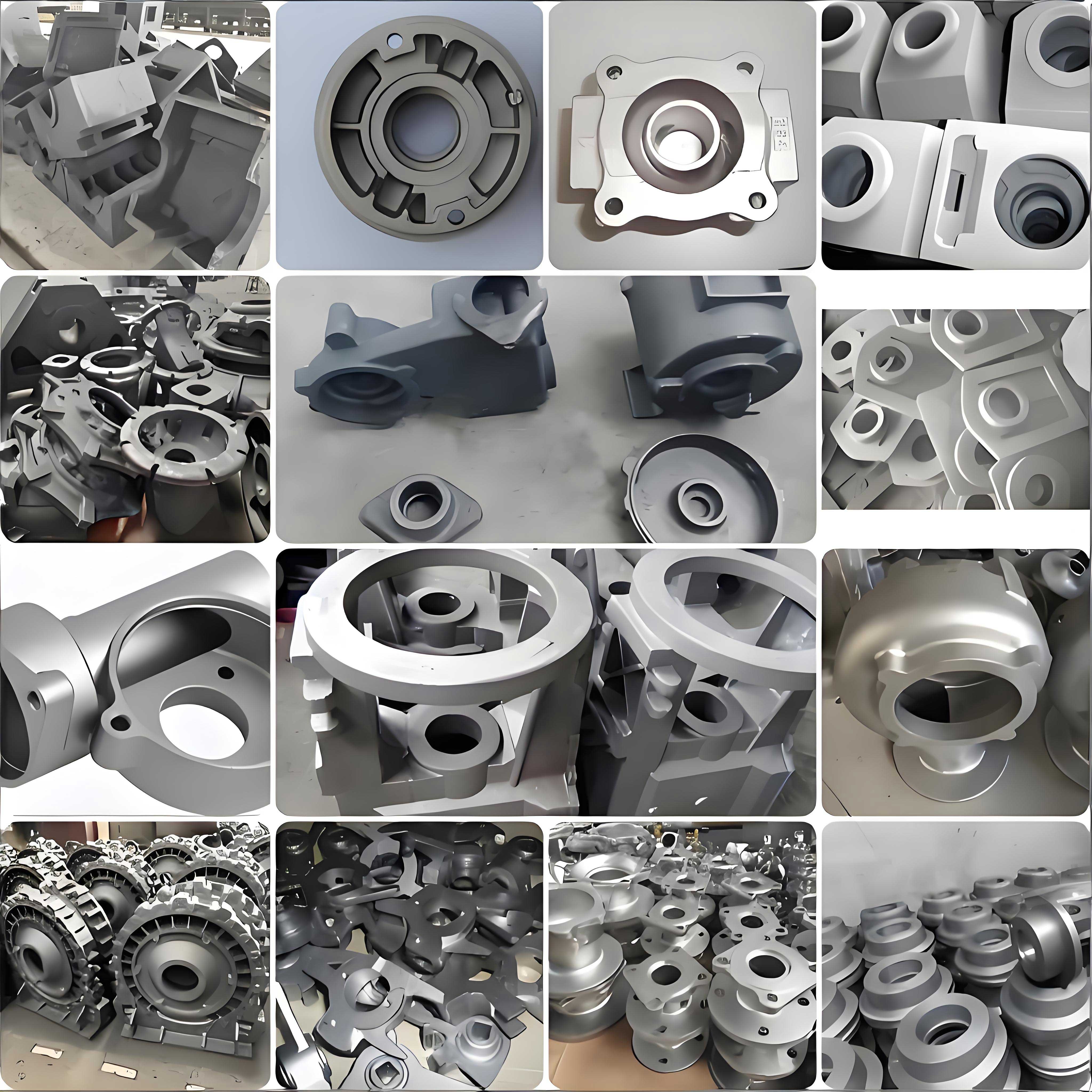
The melting of nodular cast iron was conducted in a 500 kg medium-frequency induction furnace. The charge materials were carefully proportioned, melted, and subjected to stirring and slag removal. The temperature of the molten iron was monitored closely. Upon reaching approximately 1360°C, the iron was tapped into a transfer ladle where inoculation and spheroidization treatments were performed using a Fe-Si-Mg alloy. The treated molten iron was then poured into the mold containing the pre-placed cemented carbide inserts. The casting was allowed to solidify and cool to room temperature. Samples for analysis were sectioned from the cast composite using precision cutting equipment. The experimental parameters are summarized in Table 1.
| Parameter | Description / Value |
|---|---|
| Base Matrix Material | Nodular Cast Iron (QT500-7) |
| Insert Material | WC-10%Co Cemented Carbide |
| Insert Pre-treatment | Cutting, Cleaning, Drying, Preheating |
| Insert Dimensions (Thickness) | 3 mm |
| Volume Ratio (Insert : Matrix) | < 1:8 |
| Pouring Temperature | ~1360 °C |
| Mold Type | Sand Mold (Y-block configuration) |
| Sample Analysis | Metallography, SEM/EDS, Microhardness, Shear Test |
For microstructural characterization, samples were mounted, ground, polished, and etched using a 2% nital solution. Optical microscopy was employed to examine the general interface morphology and the matrix structure of the nodular cast iron. Scanning Electron Microscopy (SEM) coupled with Energy Dispersive X-ray Spectroscopy (EDS) was used for high-resolution imaging and elemental analysis across the interface. Microhardness measurements were taken using a Vickers hardness tester with a load of 500 gf, tracing a path from the nodular cast iron matrix, through the interface, and into the cemented carbide. Shear strength of the bond was evaluated by performing push-shear tests on rectangular specimens (10 mm x 10 mm x 60 mm) using a universal testing machine. The shear strength (\(\tau\)) was calculated using the formula:
$$ \tau = \frac{F}{A} $$
where \(F\) is the maximum shear force recorded at failure and \(A\) is the cross-sectional area of the interface (10 mm x 10 mm = 100 mm²).
Results and Discussion: Microstructural Evolution at the Interface
Optical microscopy revealed a well-defined, continuous, and straight interfacial zone between the nodular cast iron and the cemented carbide insert, indicative of a sound metallurgical bond. The average thickness of this composite transition layer was measured to be (107 ± 14) µm. The matrix of the nodular cast iron away from the interface exhibited a typical microstructure of spheroidal graphite nodules uniformly dispersed in a matrix consisting of approximately 45% pearlite and the remainder ferrite. However, within a region approximately 70 µm from the interface on the nodular cast iron side, noticeable microstructural alterations were observed. The graphite nodules in this zone appeared irregular and degenerated, classified as abnormal spheroidal graphite. This phenomenon is attributed to the depletion of active magnesium (Mg) near the interface. During the casting process, the preheated cemented carbide surface may have a thin oxide layer. The Mg from the spheroidizing treatment in the molten iron can react with this oxide, reducing it but consequently being consumed itself. This localized loss of Mg compromises the nodulizing effect, leading to the observed graphite degeneration. This highlights the sensitivity of the nodular cast iron’s graphite morphology to process conditions near dissimilar material interfaces.
The transition layer itself presented a complex microstructure. Under higher magnification, it was evident that this layer contained uniformly distributed WC particles originating from the partially dissolved cemented carbide insert. The matrix within this transition layer was not homogeneous. It could be delineated into two distinct sub-zones based on compositional and microstructural gradients. Adjacent to the nodular cast iron side, the matrix consisted predominantly of the pearlite-ferrite mixture characteristic of the iron matrix. Closer to the original cemented carbide side, the matrix was a mixture of the original cobalt (Co) binder from the carbide and the infiltrated iron-based phase (pearlite-ferrite). This gradient structure is a direct consequence of the interaction mechanisms during casting.
The bonding mechanism is a synergistic combination of fusion bonding and diffusion bonding. The pouring temperature of the nodular cast iron (~1360°C) exceeds the eutectic temperature of the WC-Co cemented carbide (typically around 1300-1350°C depending on composition). This causes the surface layer of the cemented carbide to undergo partial melting or liquation. The molten iron from the nodular cast iron simultaneously wets and mixes with this liquefied layer, leading to fusion bonding. Subsequently, in this molten or semi-molten state, rapid interdiffusion of elements occurs. SEM-EDS line scans across the interface confirmed significant interdiffusion of Fe from the nodular cast iron and Co from the cemented carbide binder. The diffusion process can be described by Fick’s laws. The interdiffusion coefficient (\(D\)) at the interface, which governs the rate of mixing, is temperature-dependent and can be expressed empirically as:
$$ D = D_0 \exp\left(-\frac{Q}{RT}\right) $$
where \(D_0\) is the pre-exponential factor, \(Q\) is the activation energy for diffusion, \(R\) is the universal gas constant, and \(T\) is the absolute temperature at the interface. The high local temperature during pouring facilitates this rapid diffusion, contributing to the formation of a compositionally graded interface. The resulting microstructure is thus a hybrid zone containing WC particles in a matrix whose composition varies from iron-rich to cobalt-rich. The presence of both fusion and diffusion bonding mechanisms ensures a robust interfacial integrity. The microstructural features are summarized in Table 2.
| Zone | Dominant Features | Key Observations |
|---|---|---|
| Nodular Cast Iron Matrix | Spheroidal graphite in pearlite-ferrite matrix | Uniform graphite distribution; ~45% pearlite. |
| Affected Nodular Cast Iron Zone (~70 µm) | Abnormal graphite nodules | Caused by Mg depletion due to surface reactions. |
| Transition Layer (Avg. 107 µm) | WC particles in a dual-phase matrix | Graded composition from Fe-base to Co-base. |
| Sub-zone 1: Near Nodular Cast Iron | Matrix: Pearlite-Ferrite | Iron-rich matrix surrounding WC particles. |
| Sub-zone 2: Near Cemented Carbide | Matrix: Co + Pearlite-Ferrite mixture | Cobalt binder intermixed with iron from melt. |
| Cemented Carbide Core | WC particles in Co binder | Original microstructure of the insert. |
Mechanical Properties: Hardness and Shear Strength
The microhardness profile across the interface provides critical insight into the property gradient. The Vickers hardness (HV) of the bulk nodular cast iron matrix was measured to be approximately 308 HV. The cemented carbide insert exhibited a significantly higher hardness of about 1116 HV. The transition layer displayed an intermediate and graded hardness, ranging from 960 HV to 1104 HV. The hardness values are plotted conceptually in Figure 1, showing a smooth transition rather than an abrupt jump. The hardness within the transition layer is influenced by two main factors: the volume fraction of the hard WC particles and the composition/hardness of the metallic binder matrix. In regions closer to the cemented carbide side, the binder retains a higher proportion of cobalt, which in its alloyed state (often with W and C from dissolved WC) provides substantial hardness. Additionally, the WC particle distribution remains dense. As one moves towards the nodular cast iron side, the matrix becomes predominantly the softer pearlite-ferrite iron, leading to a gradual decrease in hardness despite the presence of WC particles. The relationship between composite hardness and constituent properties can be approximated by rule-of-mixtures models, though for such a complex graded structure, more sophisticated models accounting for particle distribution and matrix strengthening are required. The hardness (\(H\)) at any point in the transition zone can be considered a function of the volume fraction of WC (\(V_{WC}\)) and the hardness of the binder phase (\(H_{binder}\)), which itself varies with Fe/Co ratio:
$$ H \approx f(V_{WC}, H_{binder}) $$
where \(H_{binder}\) is higher for Co-rich compositions and lower for Fe-rich compositions. The successful creation of this hardness gradient is beneficial for service performance, as it mitigates abrupt property changes that could act as stress concentrators under load.
The shear strength of the interface is a direct measure of the bond quality. Push-shear tests yielded an average shear force of (24 ± 3) kN. Using the interface area of 100 mm², the average interfacial shear strength (\(\tau\)) is calculated as:
$$ \tau = \frac{24 \times 10^3 \, \text{N}}{100 \times 10^{-6} \, \text{m}^2} = 240 \times 10^6 \, \text{Pa} = 240 \, \text{MPa} $$
This value of 240 MPa indicates a strong bond. Examination of the fracture surfaces revealed that failure primarily occurred within the body of the cemented carbide insert itself, not at the interface or within the transition layer. This is a clear testament to the fact that the bond strength exceeds the cohesive strength of the cemented carbide material under shear loading. In other words, the interface is stronger than one of the parent materials. This is a highly desirable outcome for a composite, as it ensures that under shear stresses, the component would fail in a predictable manner within the harder, more wear-resistant material rather than debonding. The shear strength of the interface is influenced by the microstructure, the absence of defects like voids or cracks, and the chemical bonding achieved. The combination of fusion and diffusion bonding, resulting in the graded transition layer, effectively transfers stress and prevents interfacial failure. Table 3 summarizes the key mechanical properties obtained.
| Property | Value / Range | Remarks |
|---|---|---|
| Microhardness of Nodular Cast Iron | ~308 HV | Base matrix property. |
| Microhardness of Transition Layer | 960 – 1104 HV | Graded, increasing towards carbide. |
| Microhardness of Cemented Carbide | ~1116 HV | Original insert property. |
| Average Interfacial Shear Strength | 240 MPa | Failure occurred in the carbide, not at the interface. |
| Failure Mode in Shear Test | Cohesive failure within carbide | Indicates bond strength > carbide shear strength. |
Extended Analysis and Implications
The successful fabrication of this nodular cast iron-cemented carbide composite opens avenues for designing components with tailored property gradients. The process parameters identified—such as controlling the preheat temperature of the insert to manage thermal stress and interfacial reactions, maintaining an optimal volume ratio to prevent cracking, and ensuring a sufficiently high pouring temperature to promote surface liquation and diffusion—are critical for reproducibility. The formation of the transition layer can be modeled as a transient diffusion problem with a moving boundary (the melting front of the carbide). The thickness (\(x\)) of this layer can be related to processing time (\(t\)) and an effective interdiffusion coefficient (\(\tilde{D}\)) by a parabolic growth law often seen in similar processes:
$$ x \propto \sqrt{\tilde{D} t} $$
During the short time the interface is in a molten or semi-molten state, this diffusion-controlled growth establishes the foundation of the bond. Upon solidification, the resulting microstructure is locked in.
From an application perspective, components like wear plates, crusher liners, or cutting tools can benefit from this composite approach. The tough nodular cast iron body absorbs impact and supports the structure, while the hard cemented carbide insert provides the primary wear resistance. The graded interface ensures a gradual transition in thermal expansion coefficient and modulus, reducing residual stresses and enhancing thermal fatigue resistance. Compared to other joining methods like brazing, the insert casting technique offers the potential for a seamless, defect-free bond over complex geometries without the need for additional filler materials. However, challenges remain, such as controlling graphite degeneration near the interface, which might slightly reduce local ductility. Future work could explore the use of different inoculants or process modifications to mitigate this effect, or investigate the role of other alloying elements in the nodular cast iron on the interfacial reactions. Furthermore, wear testing under simulated service conditions would be essential to quantify the actual performance enhancement offered by this composite structure over monolithic materials.
Conclusion
This investigation demonstrates the feasibility and effectiveness of producing a metallurgically bonded composite through the insert casting of cemented carbide into nodular cast iron. The interface is characterized by a distinct transition layer with an average thickness of approximately 107 µm, formed via the combined mechanisms of fusion bonding (due to partial melting of the carbide surface) and subsequent rapid interdiffusion of Fe and Co. The microstructure within this layer is complex and graded, featuring WC particles embedded in a matrix that evolves from a pearlite-ferrite structure on the nodular cast iron side to a mixture of cobalt binder and pearlite-ferrite on the cemented carbide side. This microstructural gradient results in a corresponding gradient in mechanical properties. The microhardness transitions smoothly from about 308 HV in the nodular cast iron to 1116 HV in the cemented carbide, with the interface region exhibiting values between 960 and 1104 HV. Most significantly, the interfacial shear strength was measured to be 240 MPa, with failure occurring cohesively within the cemented carbide body, unequivocally proving that the bond strength surpasses the shear strength of one of the constituent materials. This strong bond, coupled with the property gradient, makes the nodular cast iron-cemented carbide composite a promising candidate for demanding wear-resistant applications where both toughness and hardness are required. The insights gained into the processing-structure-property relationships provide a valuable foundation for optimizing this insert casting technique for various engineering applications involving nodular cast iron as a matrix material.