
In the pursuit of high-performance materials for demanding applications, my research focuses on the development of advanced nodular cast iron. The impetus for this work stems from the need for a cost-effective yet high-performing alternative to alloy steels in specific components, such as vanes in rotary vane compressors used in environmental control systems. These components require exceptional wear resistance, good toughness, and corrosion resistance to ensure longevity and reliability. While alloy steels subjected to complex heat and surface treatments meet these requirements, their high cost and intricate processing hinder widespread adoption. Nodular cast iron, with its graphite spheroids in a metallic matrix, offers a compelling combination of castability, mechanical properties, and potential for enhancement through alloying and heat treatment. This study systematically investigates the influence of molybdenum (Mo) addition and isothermal quenching parameters on the microstructure and mechanical properties of a specific variant: Carbidic Austempered Ductile Iron (CADI), aiming to optimize its performance for such rigorous duties.
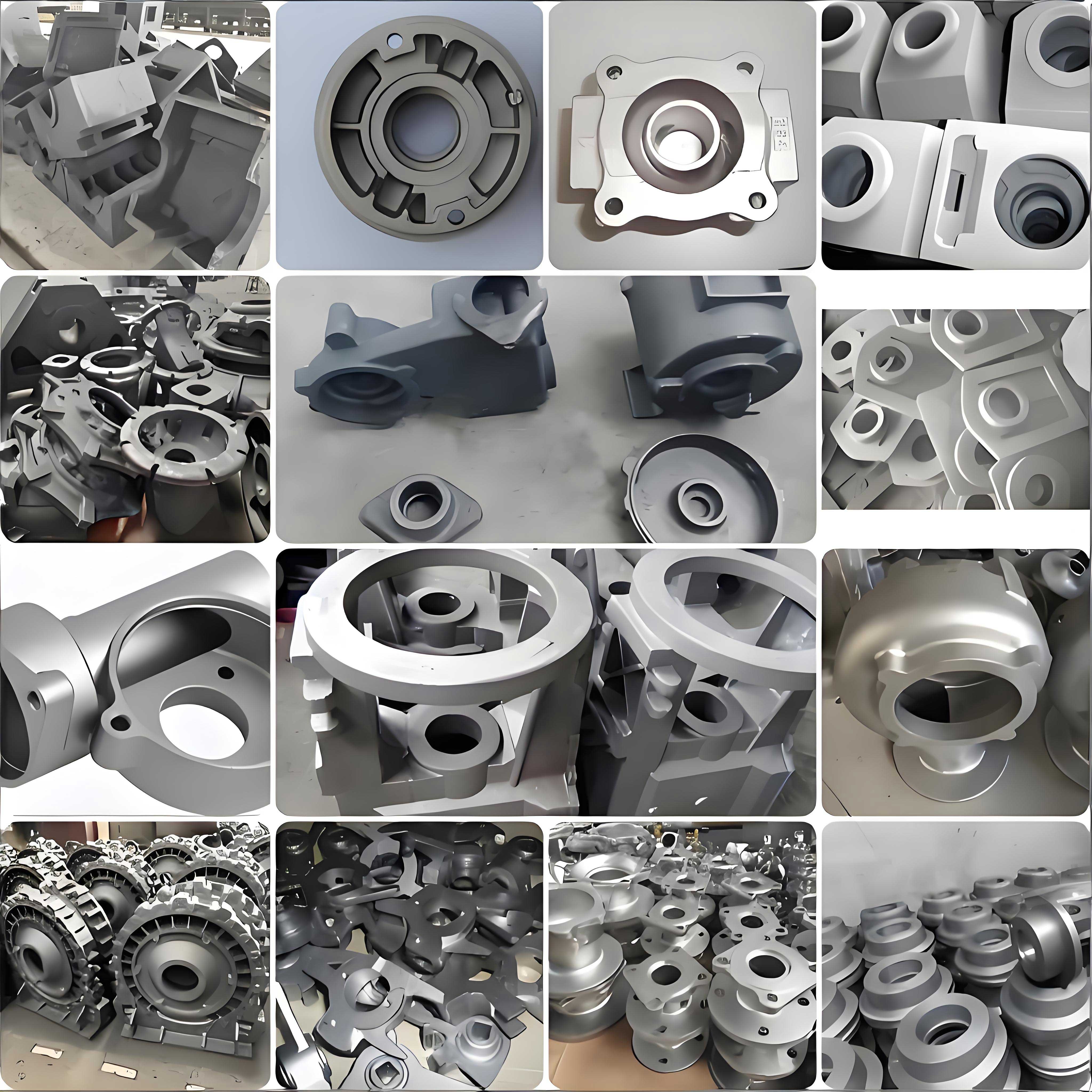
The superior mechanical properties of nodular cast iron over other cast irons primarily arise from its unique microstructure. The presence of spheroidal graphite nodules, rather than flakes, drastically reduces the stress-concentration effect and crack initiation propensity. The matrix surrounding these nodules can be manipulated through composition and heat treatment to achieve a wide range of properties. Austempering, a critical heat treatment for nodular cast iron, involves austenitizing followed by rapid quenching to and holding at a temperature in the bainitic transformation range. This process yields a matrix of acicular ferrite (bainitic ferrite) and carbon-enriched retained austenite, known as “ausferrite.” This microstructure provides an excellent balance of strength, ductility, and wear resistance. The specific variant studied here, CADI, intentionally incorporates stable carbides within this ausferritic matrix to further enhance abrasion resistance. The role of alloying elements like molybdenum is crucial in modulating both the as-cast structure and the response to austempering. Mo is a potent ferrite stabilizer and strong carbide former. Its effects are multifaceted: it increases hardenability, suppresses the transformation of austenite to pearlite during cooling, promotes bainite formation, and can lead to the precipitation of secondary carbides. However, excessive Mo can also promote the formation of brittle, segregated carbides or intermetallics, potentially degrading toughness. Therefore, optimizing the Mo content is a central theme of this research.
Experimental Methodology
To conduct this investigation, I prepared a series of nodular cast iron melts with systematically varied Mo contents. The base charge consisted of high-purity materials including pig iron, along with master alloys for introducing chromium, manganese, and copper. The chemical compositions of the five developed alloys are detailed in Table 1. Molybdenum was added in the form of pure metal or ferro-molybdenum to achieve target levels from 0 to 0.85 wt.%. All melts were subjected to standard Mg-based spheroidization and Si-based inoculation treatments in an induction furnace before being poured into Y-block sand molds to produce test castings conforming to relevant standards.
| Alloy Designation | C | Si | Mn | P | S | Cr | Cu | Mo | Fe |
|---|---|---|---|---|---|---|---|---|---|
| CADI-1 | 3.52 | 2.37 | 1.07 | 0.011 | 0.005 | 0.58 | 0.57 | – | Bal. |
| CADI-2 | 3.54 | 2.40 | 1.06 | 0.010 | 0.005 | 0.59 | 0.56 | 0.24 | Bal. |
| CADI-3 | 3.58 | 2.39 | 1.05 | 0.010 | 0.006 | 0.61 | 0.55 | 0.43 | Bal. |
| CADI-4 | 3.60 | 2.41 | 1.07 | 0.011 | 0.007 | 0.60 | 0.57 | 0.64 | Bal. |
| CADI-5 | 3.55 | 2.38 | 1.08 | 0.012 | 0.004 | 0.60 | 0.55 | 0.85 | Bal. |
The heat treatment protocol was a two-step austempering process. Specimens cut from the Y-blocks were first austenitized at 900°C for 1.5 hours to achieve a homogeneous austenitic matrix saturated with carbon. Subsequently, they were rapidly quenched into a molten salt bath maintained at specific isothermal temperatures. The primary comparative study was conducted at 275°C with a holding time of 1 hour. To investigate the temperature effect, the alloy with intermediate Mo content (CADI-3, 0.43% Mo) was additionally austempered at 225°C and 325°C for the same duration. The salt bath composition (45% KNO3 + 30% NaNO3 + 25% NaNO2) was selected to minimize thermal gradients and distortion.
Microstructural characterization was performed on both as-cast and austempered samples using optical microscopy (OM) after standard metallographic preparation and etching with nital. Graphite nodule characteristics (nodularity, size, count) and matrix constituents were evaluated according to ASTM standards. Mechanical property assessment included:
1. Hardness: Rockwell C scale (HRC) measurements, averaging five indentations.
2. Impact Toughness: Unnotched Charpy impact tests at room temperature, with results reported as the average of three specimens.
3. Abrasive Wear Resistance: Conducted using a pin-on-disk type abrasive wear tester under a fixed load (20N) and sliding distance (400m) against 100-grit Al2O3 abrasive paper. The wear rate $W_r$ was calculated from the mass loss $\Delta m$, density $\rho$, normal load $F_N$, and sliding distance $s$:
$$ W_r = \frac{\Delta m}{\rho \cdot F_N \cdot s} $$
This provides a normalized measure of material loss per unit load-distance.
Influence of Molybdenum on As-Cast Microstructure
The initial state of the material, the as-cast microstructure, sets the stage for subsequent heat treatment. My analysis revealed that Mo addition significantly alters the matrix structure of the nodular cast iron even before austempering. All alloys exhibited good graphite spheroidization with nodularity grades between 2-3 and nodule sizes of 6-7. However, a clear trend was observed: increasing Mo content led to a measurable decrease in the number of graphite nodules per unit area. This can be attributed to Mo’s role as a carbide stabilizer. During solidification, Mo partitions preferentially to the liquid and austenite, reducing the activity and diffusion rate of carbon. This suppresses the growth of graphite nodules from the melt, leading to a lower nodule count. The more profound effect was on the metallic matrix. The as-cast matrix transformed from a predominantly ferritic-pearlitic structure in the Mo-free alloy to one increasingly dominated by pearlite and carbides. Quantitative image analysis results are summarized in Table 2.
| Alloy Designation | Approx. Pearlite Content (vol.%) | Approx. Carbide Content (vol.%) | Primary Matrix Description |
|---|---|---|---|
| CADI-1 | >65 | >15 | Pearlite + Carbides + Ferrite |
| CADI-2 | 65-75 | 15-20 | Pearlite + Carbides + Little Ferrite |
| CADI-3 | 75-85 | 20-25 | Pearlite + Carbides |
| CADI-4 | 85-95 | 25-30 | Pearlite + Carbides (increased, coarser) |
| CADI-5 | 85-95 | 25-30 | Pearlite + Carbides (coarse, networked) |
Mo strongly suppresses the ferrite transformation zone in the CCT diagram, favoring pearlite formation upon cooling. Consequently, pearlite content increased steadily with Mo. Simultaneously, the amount and morphology of carbides changed drastically. In low-Mo alloys, carbides appeared as fine, dispersed particles. With higher Mo levels (e.g., CADI-4 and CADI-5), carbides became more numerous, coarser, and began to interconnect, forming a semi-continuous network, particularly at intercellular boundaries. These are likely complex carbides of the type (Fe,Mo)3C or (Fe,Mo)23(C,B)6. The formation of these hard, brittle phases in the as-cast state is a critical factor influencing the final properties after heat treatment, as they remain largely undissolved during austenitization.
Microstructural Evolution After Isothermal Quenching
The austempering heat treatment fundamentally transformed the matrix. For specimens austempered at 275°C, the pearlitic structure was completely replaced by the characteristic ausferritic microstructure, regardless of Mo content. The microstructure consisted of: dark, spherical graphite nodules; a matrix of fine, acicular ferrite (bainitic ferrite); thin films of high-carbon retained austenite located between the ferrite needles; and the persistent, blocky primary carbides from the as-cast state. The influence of Mo was evident in the scale and proportion of the ausferritic constituents. With increasing Mo content, the acicular ferrite became finer and more densely packed, while the volume fraction of retained austenite appeared to decrease. Mo enhances the hardenability, allowing the full section to transform to bainite at this temperature without forming pearlite. Furthermore, Mo in solution slows down the carbon diffusion during the bainitic transformation, refining the ferrite substructure and potentially reducing the amount of austenite that can be stabilized.
The effect of isothermal quenching temperature (I.Q.T.) was studied in detail for the CADI-3 alloy (0.43% Mo). The microstructures at three different temperatures are pivotal:
• 225°C (Low Temperature): The microstructure was very fine, with a high density of very thin, short acicular ferrite needles. Retained austenite films were thin and less conspicuous. The driving force for transformation is high at this low temperature, leading to a high nucleation rate for bainitic ferrite but limited growth due to slow diffusion, resulting in a very fine scale.
• 275°C (Intermediate Temperature): The ferrite needles were noticeably coarser and longer than at 225°C. The interlath films of retained austenite were broader and more continuous. The balance between nucleation and growth shifts at this higher temperature.
• 325°C (High Temperature): The transformation product was significantly coarser. The ferrite developed a more feathery, upper bainite morphology. The regions of retained austenite were larger and blockier in appearance. This structure is closer to the classical upper bainite, with aggregates of ferrite and carbides.
The microstructural changes with temperature can be related to the bainite transformation kinetics. The growth rate of a bainitic ferrite subunit can be described by a simplified equation considering diffusion and interface mobility:
$$ v \approx D_C \cdot \frac{\Delta G_{chem}}{RT \cdot x} \cdot \exp\left(-\frac{Q}{RT}\right) $$
where $v$ is the growth velocity, $D_C$ is the carbon diffusivity in austenite, $\Delta G_{chem}$ is the chemical driving force, $x$ is a characteristic diffusion distance, $Q$ is an activation energy, $R$ is the gas constant, and $T$ is the absolute temperature. At lower I.Q.T., $\Delta G_{chem}$ is large but $D_C$ is very small, limiting growth and refining the structure. At higher I.Q.T., $D_C$ increases exponentially, allowing for much faster growth and coarsening of the microstructure, despite a smaller driving force.
Mechanical Properties: Hardness, Toughness, and Wear
The tailored microstructures directly translated into distinct mechanical property profiles. The properties for samples austempered at 275°C with varying Mo are consolidated in Table 3.
| Alloy Designation | Impact Toughness (J/cm²) | Hardness (HRC) | Avg. Wear Loss (mg) | Calculated Wear Rate (mg/m) |
|---|---|---|---|---|
| CADI-1 (0% Mo) | 12.7 | 50.27 | 106.12 | 0.265 |
| CADI-2 (0.24% Mo) | 14.2 | 51.57 | 96.16 | 0.240 |
| CADI-3 (0.43% Mo) | 17.8 | 52.63 | 94.22 | 0.236 |
| CADI-4 (0.64% Mo) | 14.5 | 53.19 | 92.99 | 0.232 |
| CADI-5 (0.85% Mo) | 12.9 | 53.77 | 92.16 | 0.230 |
Impact Toughness: The relationship between Mo content and impact energy was non-linear, showing a peak at 0.43% Mo. The initial increase can be attributed to Mo’s role in refining the ausferritic matrix and suppressing blocky, transformation-induced ferrite or pearlite. The finer structure can absorb more energy during crack propagation. However, beyond the optimum, the increasing volume fraction and interconnectedness of coarse, brittle carbides (as seen in as-cast CADI-4 and CADI-5) act as potent stress concentrators and crack initiation sites, drastically reducing toughness. The optimum composition achieves a balance between matrix refinement and detrimental carbide formation.
Hardness: A steady increase in HRC hardness was observed with Mo addition. This strengthening arises from several concurrent mechanisms:
1. Solid Solution Strengthening: Mo atoms in the ferrite lattice cause lattice strain, impeding dislocation motion. The strengthening increment $\Delta \sigma_{ss}$ can be approximated by:
$$ \Delta \sigma_{ss} = k_{Mo} \cdot [Mo]^{n} $$
where $k_{Mo}$ is a strengthening coefficient for Mo and $n$ is often near 0.5-1.
2. Microstructural Refinement: The Hall-Petch effect, where finer microstructural features (like bainitic ferrite packets) increase strength:
$$ \sigma_y = \sigma_0 + k_{HP} \cdot d^{-1/2} $$
where $\sigma_y$ is the yield strength, $\sigma_0$ is the lattice friction stress, $k_{HP}$ is the Hall-Petch constant, and $d$ is the effective grain size (ferrite lath/packet size).
3. Carbide Dispersion: The hard (Fe,Mo) carbides provide Orowan strengthening and act as direct barriers to wear.
Abrasive Wear Resistance: Wear performance, crucial for vane applications, improved consistently with Mo addition. The wear rate decreased, and mass loss was lower. This is a direct consequence of the increased bulk hardness and the presence of hard, wear-resistant carbides that protrude from the surface, protecting the softer matrix. The refined ausferrite matrix also provides better support for these carbides, preventing their premature pull-out.
Effect of Isothermal Quenching Temperature on CADI-3
For the optimized 0.43% Mo nodular cast iron (CADI-3), varying the austempering temperature provided a means to trade off between different properties, as summarized in Table 4.
| Isothermal Temp. (°C) | Impact Toughness (J/cm²) | Hardness (HRC) | Avg. Wear Loss (mg) | Calculated Wear Rate (mg/m) |
|---|---|---|---|---|
| 225 | 8.0 | 55.43 | 89.52 | 0.224 |
| 275 | 17.8 | 52.63 | 94.22 | 0.236 |
| 325 | 18.7 | 48.47 | 102.52 | 0.256 |
The trends are clear and inversely related between toughness and hardness/wear resistance. Lowering the I.Q.T. to 225°C produced an extremely fine, hard ausferrite with very high hardness (55.4 HRC) and the best wear resistance. However, this came at the expense of severely degraded impact toughness (8.0 J/cm²), likely due to the high hardness and potentially lower stability of the very fine retained austenite, which may transform to brittle martensite under impact stress. Raising the I.Q.T. to 325°C coarsened the microstructure, increased the amount and carbon content of the more stable retained austenite, and thus significantly improved toughness. The corresponding decrease in hardness, however, made the material more susceptible to abrasive wear, as evidenced by the higher wear rate. The intermediate temperature of 275°C struck an optimal balance, offering high toughness (17.8 J/cm²) coupled with good hardness (52.6 HRC) and wear resistance, making it the most suitable condition for components requiring a combination of these properties.
Discussion and Synergistic Effects
The development of high-performance nodular cast iron through this study hinges on understanding the synergistic interactions between Mo alloying and the isothermal quenching process. Molybdenum’s primary functions are to ensure sufficient hardenability to avoid pearlite formation during quenching and to refine the bainitic transformation product. The refined ausferrite provides the base for good toughness and strength. The carbides, both those inherited from the as-cast structure and any fine secondary ones that may precipitate during austempering, contribute directly to wear resistance. The key is to avoid the regime where Mo promotes excessive, coarse primary carbide networks that embrittle the material. In this study, that threshold appears between 0.43% and 0.64% Mo for the given base composition and casting conditions.
The isothermal quenching temperature acts as a precise dial to fine-tune the final microstructure and property balance. It controls the trade-off described by the classic strength-toughness relationship. For CADI materials, an additional dimension is wear resistance, which generally follows hardness. Therefore, the selection of I.Q.T. is application-specific. For a component like a compressor vane, which might face occasional impact loads alongside constant sliding wear, the balanced properties at 275°C are superior to the brittle-but-very-hard material from 225°C or the tough-but-softer material from 325°C. The performance of this optimized nodular cast iron can be benchmarked. Its combination of ~18 J/cm² impact energy and >50 HRC hardness with excellent wear resistance positions it as a viable and cost-effective substitute for heat-treated low-alloy steels in many wear applications, potentially offering significant savings in material and processing costs without compromising service life.
Conclusions
Based on my comprehensive investigation into the effects of molybdenum addition and isothermal quenching parameters on Carbidic Austempered Ductile Iron (CADI), the following conclusions can be drawn:
- Molybdenum significantly influences the as-cast microstructure of nodular cast iron, increasing pearlite content, promoting carbide formation, and reducing graphite nodule count. Above approximately 0.6 wt.%, Mo leads to the formation of coarse, interconnected carbide networks.
- Austempering at 275°C transforms the matrix into an ausferritic structure (acicular ferrite + retained austenite) with embedded primary carbides. Mo refines this ausferritic structure.
- The mechanical properties of CADI austempered at 275°C show a strong dependence on Mo content. Impact toughness peaks at an intermediate Mo level of 0.43 wt.%, while hardness increases monotonically and wear resistance improves with Mo addition.
- For a fixed Mo content (0.43 wt.%), the isothermal quenching temperature allows for property tailoring: lower temperatures (225°C) yield high hardness and wear resistance but poor toughness; higher temperatures (325°C) yield high toughness but lower hardness and wear resistance; an intermediate temperature (275°C) provides an optimal balance.
- For applications such as air conditioning compressor vanes requiring a combination of good impact toughness, high hardness, and superior abrasive wear resistance, the optimal material specification developed in this study is a nodular cast iron with a molybdenum content of 0.43 wt.%, subjected to an austempering heat treatment comprising austenitization at 900°C followed by isothermal holding at 275°C.
This research demonstrates the high potential of alloyed and heat-treated nodular cast iron as an engineered material capable of meeting stringent performance criteria in demanding mechanical applications, offering a valuable alternative to more expensive traditional materials.