
As a researcher deeply immersed in the field of metal casting, I have long been fascinated by the complexities involved in producing high-quality gray iron castings. These materials are ubiquitous in industrial applications due to their excellent machinability, damping capacity, and cost-effectiveness. However, the production of sound gray iron castings, especially those with intricate geometries or varying wall thicknesses, is often plagued by defects such as shrinkage porosity, cold shuts, and misruns. In this article, I will elaborate on my extensive experience and methodology for leveraging numerical simulation to optimize casting processes, ensuring the reliability and performance of gray iron castings. The focus will be on a comprehensive technical exploration, incorporating theoretical principles, simulation protocols, and practical optimization strategies, all aimed at enhancing the manufacturing of gray iron castings.
The fundamental challenge with gray iron castings stems from their solidification behavior. Gray iron, primarily an iron-carbon-silicon alloy, solidifies with a graphite eutectic, which can lead to expansion during solidification under certain conditions. However, in sections with significant thermal mass or uneven cooling, the contraction of the metal matrix can still result in shrinkage defects. This is particularly critical for castings like bearing liners, pump housings, or engine blocks, where structural integrity is paramount. My work primarily involves using advanced simulation software to predict and mitigate these issues before physical prototyping, thereby reducing costs and iteration time. The core philosophy is to achieve controlled filling and directional solidification, which are the pillars of defect-free gray iron castings.
To understand the simulation-driven approach, one must first grasp the governing equations of heat transfer and fluid flow during casting. The process is modeled using the Navier-Stokes equations for fluid flow and the energy equation for heat transfer. For the filling stage, the flow of molten metal is treated as an incompressible, viscous fluid. The continuity and momentum equations are:
$$ \nabla \cdot \vec{u} = 0 $$
$$ \frac{\partial \vec{u}}{\partial t} + (\vec{u} \cdot \nabla) \vec{u} = -\frac{1}{\rho} \nabla p + \nu \nabla^2 \vec{u} + \vec{g} $$
where \( \vec{u} \) is the velocity vector, \( p \) is pressure, \( \rho \) is density, \( \nu \) is kinematic viscosity, and \( \vec{g} \) is gravitational acceleration. During solidification, the energy equation incorporates the latent heat release:
$$ \rho c_p \frac{\partial T}{\partial t} = \nabla \cdot (k \nabla T) + \rho L \frac{\partial f_s}{\partial t} $$
Here, \( T \) is temperature, \( c_p \) is specific heat, \( k \) is thermal conductivity, \( L \) is latent heat of fusion, and \( f_s \) is the solid fraction. For gray iron castings, the evolution of \( f_s \) is complex due to the graphite precipitation, often modeled using specific eutectic growth models. The Niyama criterion is frequently employed to predict shrinkage porosity, given by:
$$ N_y = \frac{G}{\sqrt{\dot{T}}} $$
where \( G \) is the temperature gradient and \( \dot{T} \) is the cooling rate. Locations with a Niyama value below a critical threshold are prone to microporosity. This criterion, while originally developed for steel, has been adapted with modifications for gray iron castings, considering their unique solidification characteristics.
In my simulations, I utilize a commercial finite element-based casting simulation software (akin to the ViewCast mentioned in the reference). The workflow begins with creating a detailed 3D CAD model of the casting, including all gating and risering systems. The model is then discretized into a fine mesh, typically comprising several million elements, to ensure accuracy. The material properties for the gray iron and mold media are critical inputs. Below is a table summarizing typical thermophysical properties used for HT200 gray iron and green sand mold in my simulations.
| Material | Density (kg/m³) | Specific Heat (J/kg·K) | Thermal Conductivity (W/m·K) | Latent Heat (kJ/kg) | Solidus Temperature (°C) | Liquidus Temperature (°C) |
|---|---|---|---|---|---|---|
| HT200 Gray Iron | 7200 | 460 | 46 (at 20°C, varying with T) | 270 | 1130 | 1260 |
| Green Sand Mold | 1500 | 1130 | 0.8 | N/A | N/A | N/A |
The boundary conditions are set to mimic the actual foundry environment: an initial mold temperature of 25-30°C, a pouring temperature for gray iron castings typically between 1300-1350°C, and atmospheric cooling. The pouring velocity is defined based on the gating system design to ensure non-turbulent filling. The simulation then runs sequentially, first solving the filling phase and then the solidification phase, often requiring significant computational resources for large gray iron castings.
A pivotal case in my research involved a sizable bearing liner casting, a classic example of a challenging gray iron component. Its geometry featured a curved shape with a thick central section flanked by thinner walls, creating pronounced thermal centers. The initial process design employed a bottom-gating system with a top riser to promote feeding. However, preliminary simulations revealed a critical flaw: the riser solidified prematurely, leaving an isolated liquid pool in the thick section, destined to form macro-shrinkage. The defect prediction aligned perfectly with actual scrapped castings, validating the simulation’s accuracy. This underscored a common issue in producing heavy-section gray iron castings: inadequate riser efficacy due to unfavorable solidification sequencing.
The optimization strategy I devised centered on manipulating the thermal field to enforce directional solidification towards the riser. For gray iron castings, direct chilling with iron chills can induce undesirable white iron or chilled edges at the contact surface. Therefore, I opted for sand-coated chills, also known as “hung sand” chills. These are metallic chills (often cast iron or graphite) covered with a layer of sand of controlled thickness. This layer moderates the chilling power, preventing sudden heat extraction while still significantly accelerating cooling in targeted zones. The chill design parameters—thickness, length, and sand coating thickness—are crucial. I derived an empirical relationship for the effective chill modulus \( M_{chill} \):
$$ M_{chill} = \frac{V_{chill}}{A_{chill-contact}} \cdot \zeta_{sand} $$
where \( V_{chill} \) is the chill volume, \( A_{chill-contact} \) is the area in contact with the casting, and \( \zeta_{sand} \) is a damping factor (between 0 and 1) representing the insulating effect of the sand layer. For the bearing liner, I designed a contoured chill plate matching the casting’s curvature, placed beneath the thick section. Its dimensions were 100mm thick, 2700mm long, with a 5-8mm sand coating. This was coupled with a modestly sized open top riser. The modified system was re-simulated.
The filling simulation for the optimized process showed a marked improvement. Metal entered the cavity from two sides simultaneously via the bottom gates, creating a smooth, upward-filling front without turbulence or air entrapment. This is vital for gray iron castings to avoid oxide film formation and cold shuts. The temperature distribution at the end of fill was uniform, a prerequisite for controlled solidification. The subsequent solidification analysis was revealing. The chill acted as a heat sink, initiating solidification from the bottom of the thick section. The thermal gradient was effectively redirected. A timeline extracted from the simulation results is presented in the table below, comparing key events between the initial and optimized processes for this gray iron casting.
| Solidification Event | Initial Process (Time in seconds) | Optimized Process (Time in seconds) |
|---|---|---|
| Gating system fully solid | ~1200 s | ~1100 s |
| Riser begins to solidify | ~1900 s | ~3300 s |
| Last liquid pool in casting (defect site) | ~26000 s | Eliminated |
| Complete solidification of casting body | ~28000 s | ~16000 s |
| Final solidification location | Cast-riser junction in casting | Upper part of the riser |
The data clearly indicates that the optimized process delayed riser solidification, allowing it to remain liquid and functional as a feeder for a longer duration. More importantly, the last point to solidify shifted entirely into the riser body, successfully evacuating shrinkage from the critical gray iron casting. The defect prediction map for the optimized design showed a clean casting body with all isolated liquid regions confined to the riser, which is subsequently removed during machining. This outcome is a testament to the power of synergistic use of chills and risers in governing the solidification of gray iron castings.
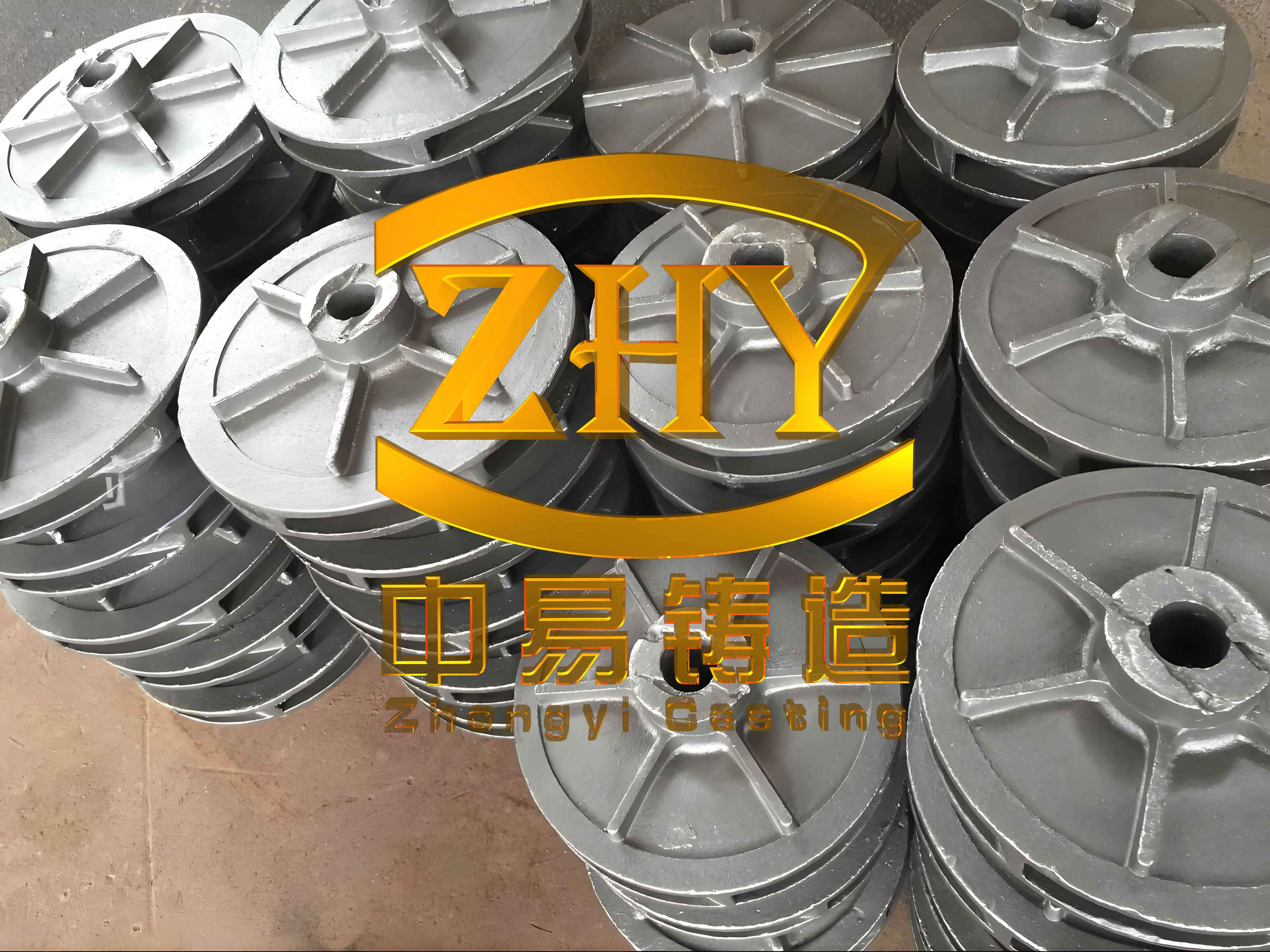
The successful virtual trial gave me the confidence to implement this optimized process in a production foundry. The results were excellent: the cast bearing liners were sound, dense, and free from shrinkage defects upon radiographic and ultrasonic inspection. The mechanical properties, including tensile strength and hardness, met the HT200 specifications uniformly across the casting. This practical validation reinforces the reliability of simulation as a tool for process design, especially for complex gray iron castings. It is worth noting that the properties of gray iron castings are highly sensitive to cooling rates; the controlled cooling afforded by the sand-coated chill also helped maintain a desirable ferritic-pearlitic matrix with well-dispersed graphite flakes, avoiding localized hard spots.
Beyond this specific case, the methodology is broadly applicable. I have extended this approach to other families of gray iron castings, such as valve bodies, gearbox cases, and heavy machine bases. The general principles remain: a thorough simulation to identify thermal nodes, followed by strategic application of cooling aids (chills, cooling fins, or alloying adjustments) and feeding aids (risers, padding). For instance, in thin-walled, intricate gray iron castings, the focus shifts more towards ensuring complete filling and minimizing temperature gradients to prevent mistruns, often requiring simulation of mold preheating or altered gating designs. The mathematical modeling of the ductile iron solidification, while sharing similarities, has distinct differences in graphite nucleation and growth, which I account for by adjusting the latent heat release model and the solid fraction curve in the simulation software.
To systematize the optimization process for various gray iron castings, I have developed a decision flowchart that incorporates simulation feedback. It starts with geometry analysis to identify potential hot spots. The initial gating and risering are designed based on empirical rules like the modulus method. After the first simulation run, the results are analyzed for filling velocity, temperature distribution, and solidification sequence. If defects are predicted, modifications are made. Common adjustments include: resizing risers, relocating or redesigning chills, changing pouring temperature, or altering the gating ratio. Each change is iteratively simulated until the criteria for sound gray iron castings are met. This loop is far more efficient and cost-effective than the traditional trial-and-error method on the shop floor.
In conclusion, the integration of numerical simulation into the manufacturing workflow of gray iron castings represents a paradigm shift. It allows for a deep, predictive understanding of the physical phenomena during casting, enabling precise control over the process. The case study detailed herein illustrates how a combination of simulation-driven insight and traditional foundry wisdom—like the use of sand-coated chills—can solve persistent quality issues. The ability to virtually test and optimize processes for gray iron castings not only enhances product quality and consistency but also contributes significantly to sustainability by reducing material waste and energy consumption from repeated melts and scrapped castings. As simulation software becomes more sophisticated, incorporating microstructure prediction and mechanical property calculation, its role in the holistic design of high-performance gray iron castings will only become more indispensable.
The future directions in this field are exciting. I am currently exploring the coupling of macroscopic casting simulation with microscopic models to predict the graphite morphology and matrix structure in gray iron castings directly from the cooling conditions. This would enable true “property-by-design” for these components. Furthermore, the advent of additive manufacturing for sand molds allows for previously impossible cooling channel geometries, opening new frontiers for optimizing the thermal management in producing complex gray iron castings. The journey towards perfecting the art and science of casting gray iron continues, with numerical simulation as a trusted compass.