
In my experience as an industrial engineer working on advanced manufacturing systems, the integration of multi-axis CNC machining and specialized repair techniques for high-strength materials like nodular cast iron has become paramount. With the national push toward smart manufacturing as a core industrial strategy, technologies such as multi-axis programming and automated welding are gradually replacing traditional methods. This article, based on my first-hand involvement in projects, delves into two critical aspects: the automated programming and machining of complex parts like spiral blades, and the welding repair of damaged nodular cast iron components. I will explore these topics from a practical perspective, emphasizing the use of software simulations, material science, and process optimization to achieve feasible strategies. Throughout, I will highlight the importance of nodular cast iron due to its widespread use in heavy machinery, and I will incorporate tables and formulas to summarize key data and theoretical underpinnings.
To begin, let me discuss the machining of spiral blades, which are often used in pumps, conveyors, and other industrial equipment. In a recent project, I focused on developing a machining strategy for a spiral blade component using multi-axis CNC technology. The process started with 3D modeling in CAD software, where I designed the blade with precise geometrical parameters. The spiral profile can be mathematically represented using parametric equations. For instance, the helical path of a spiral blade can be described by:
$$ x = R \cos(\theta), \quad y = R \sin(\theta), \quad z = \frac{h \theta}{2\pi} $$
where \( R \) is the radius, \( \theta \) is the angle parameter, and \( h \) is the pitch. This formulation allows for accurate toolpath generation in CAM software. I employed automated programming tools to simulate the machining process, which involved roughing, semi-finishing, and finishing operations. For roughing, I used a large-diameter end mill to remove bulk material, followed by a smaller tool for semi-finishing to achieve near-net shape. The finishing step required precise toolpaths to ensure surface quality, with particular attention to clearing corners and roots to avoid stress concentrations. The toolpaths were then post-processed into NC code and sent to a four-axis machining center for actual production. The simulated machining result showed a smooth spiral blade geometry, validating the strategy.
To summarize the machining parameters, I have compiled key data in the following table. This includes tool types, cutting speeds, feed rates, and depths of cut, which are critical for optimizing the process:
| Operation | Tool Type | Diameter (mm) | Cutting Speed (m/min) | Feed Rate (mm/rev) | Depth of Cut (mm) |
|---|---|---|---|---|---|
| Roughing | End Mill | 20 | 120 | 0.3 | 5 |
| Semi-Finishing | Ball Nose Mill | 10 | 150 | 0.2 | 2 |
| Finishing | Ball Nose Mill | 6 | 180 | 0.1 | 0.5 |
The success of this machining approach relies on understanding material behavior, especially when dealing with tough alloys. In many cases, components like spiral blades are made from materials such as nodular cast iron for their durability. Nodular cast iron, with its spherical graphite microstructure, offers superior strength and toughness compared to other cast irons, making it ideal for high-stress applications. However, its properties also pose challenges during repair when damage occurs.
Now, let me shift to a critical repair case involving nodular cast iron. In one instance, a diesel engine block made of nodular cast iron (specifically QT500-7 grade) suffered significant damage due to an impact, resulting in a large irregular hole. The material composition and mechanical properties of nodular cast iron are key to understanding its weldability. The chemical composition of QT500-7 nodular cast iron typically includes elements like carbon, silicon, manganese, and magnesium, as shown in the table below:
| Element | C | Si | Mn | P | S | Mg | RE |
|---|---|---|---|---|---|---|---|
| Content (%) | 3.0–4.0 | 2.0–3.0 | 0.2–0.9 | <0.1 | <0.04 | 0.03–0.08 | 0.02–0.06 |
Here, RE denotes rare earth elements used as nodularizers. The mechanical properties, such as tensile strength and elongation, are given by:
$$ \sigma_b \geq 500 \, \text{MPa}, \quad \sigma_s \geq 320 \, \text{MPa}, \quad \delta \geq 7\% $$
where \( \sigma_b \) is the tensile strength, \( \sigma_s \) is the yield strength, and \( \delta \) is the elongation. These properties make nodular cast iron weldable but prone to issues like white iron formation and hardening in the heat-affected zone (HAZ). The welding analysis involves considering the graphite nodule morphology, which reduces stress concentration but increases sensitivity to thermal cycles. The welding transformation can be modeled using thermal diffusion equations:
$$ \frac{\partial T}{\partial t} = \alpha \nabla^2 T + \frac{Q}{\rho c} $$
where \( T \) is temperature, \( t \) is time, \( \alpha \) is thermal diffusivity, \( Q \) is heat input, \( \rho \) is density, and \( c \) is specific heat. This equation helps predict temperature gradients during welding, which influence phase transformations in nodular cast iron.
For the repair, I selected a heterogeneous welding approach using nickel-based electrodes for the transition layer and low-hydrogen electrodes for filling. The choice of welding materials is crucial to avoid cracking and ensure compatibility. The nickel-based electrode, such as Z408, provides a ductile weld metal with high nickel content, which reduces the risk of white iron formation. Its deposited metal composition and properties are summarized in the following tables:
| Element | Ni | Fe | C | Mn | Si | Others |
|---|---|---|---|---|---|---|
| Content (%) | 45–60 | Balance | ≤2.00 | ≤2.5 | ≤4.0 | ≤1.00 |
Mechanical properties include tensile strength of 390–540 MPa and elongation of 18–23%. For the filling layers, I used E5015 (J507) electrodes, which offer good strength and low hydrogen content to prevent porosity. The welding parameters were carefully controlled, as detailed in this table:
| Welding Layer | Electrode | Diameter (mm) | Current (A) | Voltage (V) | Speed (mm/s) |
|---|---|---|---|---|---|
| Transition | Z408 | 3.2 | 100–110 | 22–23 | 7–8 |
| Filling | J507 | 3.2 | 115–120 | 23–24 | 5–6 |
| Cover | J507 | 3.2 | 110–115 | 22–23 | 5–6 |
Pre-weld preparations included machining a low-carbon steel patch to fit the hole, with beveled edges and stress-relief grooves. I also installed steel studs on the nodular cast iron base to enhance adhesion and prevent peeling. During welding, I employed techniques like short-segment, dispersed welding with immediate peening to relieve stresses. The thermal cycle was managed to keep interpass temperatures below 60°C, minimizing HAZ hardening. The welding sequence followed a symmetric pattern to distribute heat evenly, reducing distortion.
To illustrate the microstructure of nodular cast iron, which is central to this discussion, consider the following image that shows typical spherical graphite nodules in a ferritic-pearlitic matrix. This visual aids in understanding why nodular cast iron requires specialized handling during repair:
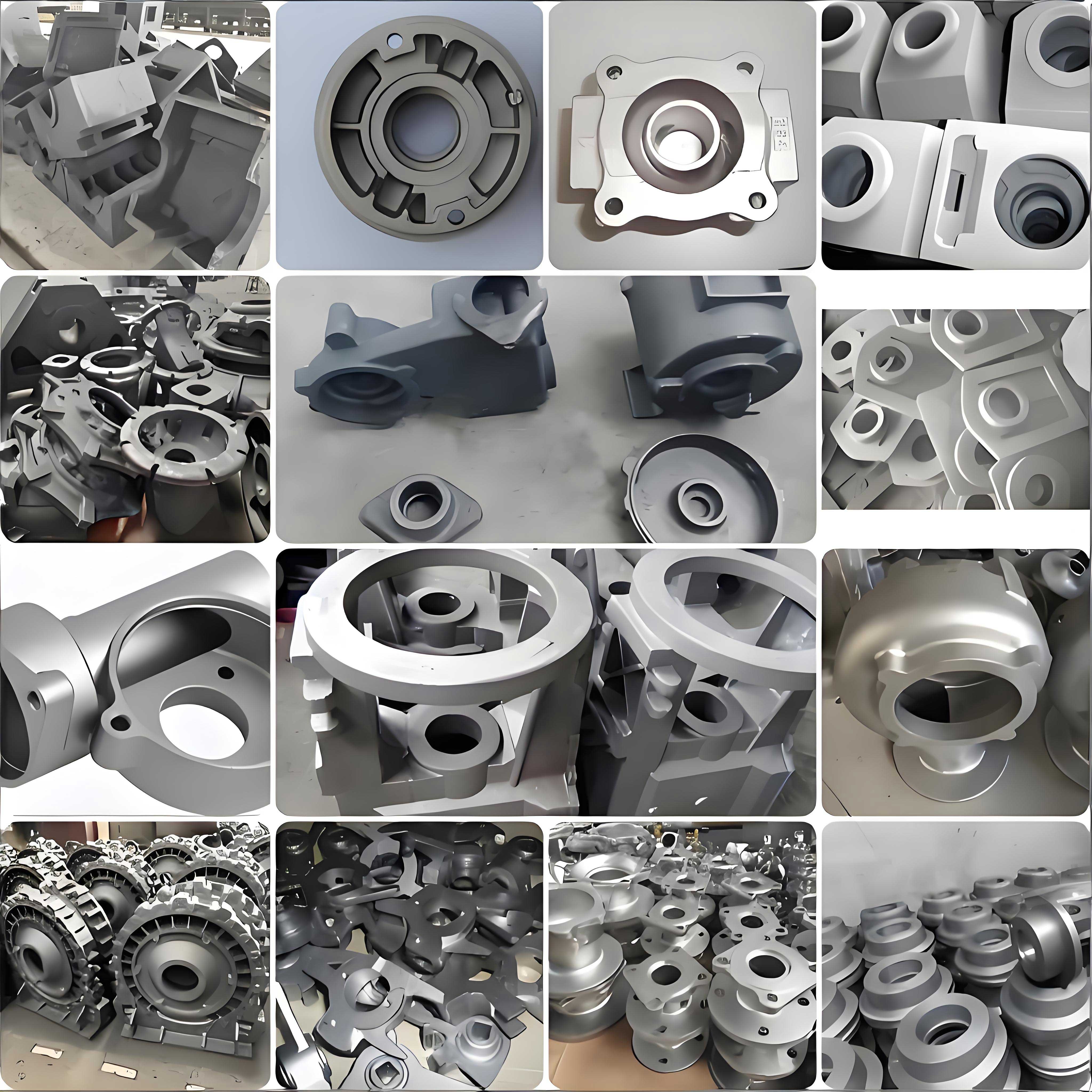
The spherical graphite morphology, achieved through magnesium or rare earth treatment, imparts high toughness but also influences weld pool dynamics. During welding, the heat input must be optimized to avoid excessive graphite dissolution, which can lead to carbide formation. The relationship between heat input \( Q \) and cooling rate \( \dot{T} \) can be expressed as:
$$ \dot{T} = \frac{2\pi k (T – T_0)^2}{Q} $$
where \( k \) is thermal conductivity and \( T_0 \) is ambient temperature. This formula helps in setting parameters to control microstructural changes in nodular cast iron.
Post-weld inspection involved visual examination and dye penetrant testing to ensure no cracks or defects. The repaired engine block performed satisfactorily in service, demonstrating the effectiveness of the strategy. This experience underscores the importance of integrating advanced machining with robust repair methodologies for nodular cast iron components. In smart manufacturing systems, such approaches can be automated using AI-driven process planning, where algorithms optimize toolpaths and welding parameters based on real-time sensor data. For instance, adaptive control systems can adjust feed rates during machining or heat input during welding to maintain quality.
Furthermore, the combination of multi-axis machining and welding repair highlights the versatility required in modern industry. Nodular cast iron, due to its excellent properties, is often used in critical parts like engine blocks, gears, and heavy-duty frames. Its repair not only saves costs but also aligns with sustainability goals by extending component life. In my work, I have developed predictive models for wear and fatigue in nodular cast iron, using equations like the Paris law for crack growth:
$$ \frac{da}{dN} = C (\Delta K)^m $$
where \( a \) is crack length, \( N \) is cycle count, \( \Delta K \) is stress intensity factor range, and \( C \) and \( m \) are material constants. Such models inform repair decisions, ensuring that welded joints meet performance standards.
In conclusion, through first-hand application, I have shown that automated programming for complex geometries and heterogeneous welding for nodular cast iron repair are viable strategies in the era of smart manufacturing. The key lies in meticulous process design, material science understanding, and the use of simulation tools. Nodular cast iron, with its unique microstructure, demands careful handling, but when addressed correctly, it offers reliable service in demanding environments. Future directions include integrating these techniques with digital twins and IoT platforms for real-time monitoring, further enhancing efficiency and reliability in industrial applications involving nodular cast iron.