
Nodular cast iron, also known as ductile iron, is widely utilized in engineering applications due to its excellent combination of strength, ductility, and castability. However, in thick-section castings, a specific defect termed “grey-speckle” or “black spot” often emerges under certain conditions, characterized by banded greyish patterns that significantly reduce material hardness. This study investigates the microstructural and compositional anomalies associated with this defect, employing scanning electron microscopy (SEM) and energy-dispersive X-ray spectroscopy (EDS) to elucidate its origins. The findings indicate that a carbon equivalent (CE) below 4.3%, severe compositional segregation, and a thick, relatively enclosed casting geometry are primary contributors. Under these conditions, slow-cooling dendrites form, leading to silicon (Si) enrichment within austenite dendrites that promotes ferrite formation, while manganese (Mn) and copper (Cu) segregate to interdendritic regions, favoring pearlite development. The hardness disparity between these matrix structures results in macroscopic grey-speckle appearance after machining. This paper delves into the underlying mechanisms, presents quantitative analyses via tables and formulas, and proposes practical solutions to mitigate the defect in industrial production of nodular cast iron components.
The grey-speckle defect predominantly occurs in heavy-section nodular cast iron parts, such as piston skirts for large-bore diesel engines, where wall thickness can exceed 90 mm. Initially, to enhance fluidity and reduce casting defects like cold shuts or gas porosity in thin-walled sections, a high carbon equivalent (typically 4.6–4.7%) is often adopted. However, this approach can induce graphite flotation in thick regions due to prolonged solidification times. To counteract graphite flotation, the carbon equivalent is frequently reduced to hypoeutectic levels (CE ≤ 4.3%), but this adjustment inadvertently fosters the grey-speckle defect. The defect manifests as grey bands extending 30–40 mm from the casting surface inward, with hardness values plummeting to 100–150 HB, compared to the as-cast normal range of 225–305 HB. Microstructural analysis reveals that the grey-speckle zones consist of flake graphite within a ferritic matrix, while adjacent normal areas exhibit spheroidal graphite in a pearlitic matrix. A distinct boundary separates these regions, often accompanied by vermicular graphite transitions. This anomaly not only compromises mechanical performance but also poses challenges for quality control in nodular cast iron manufacturing.
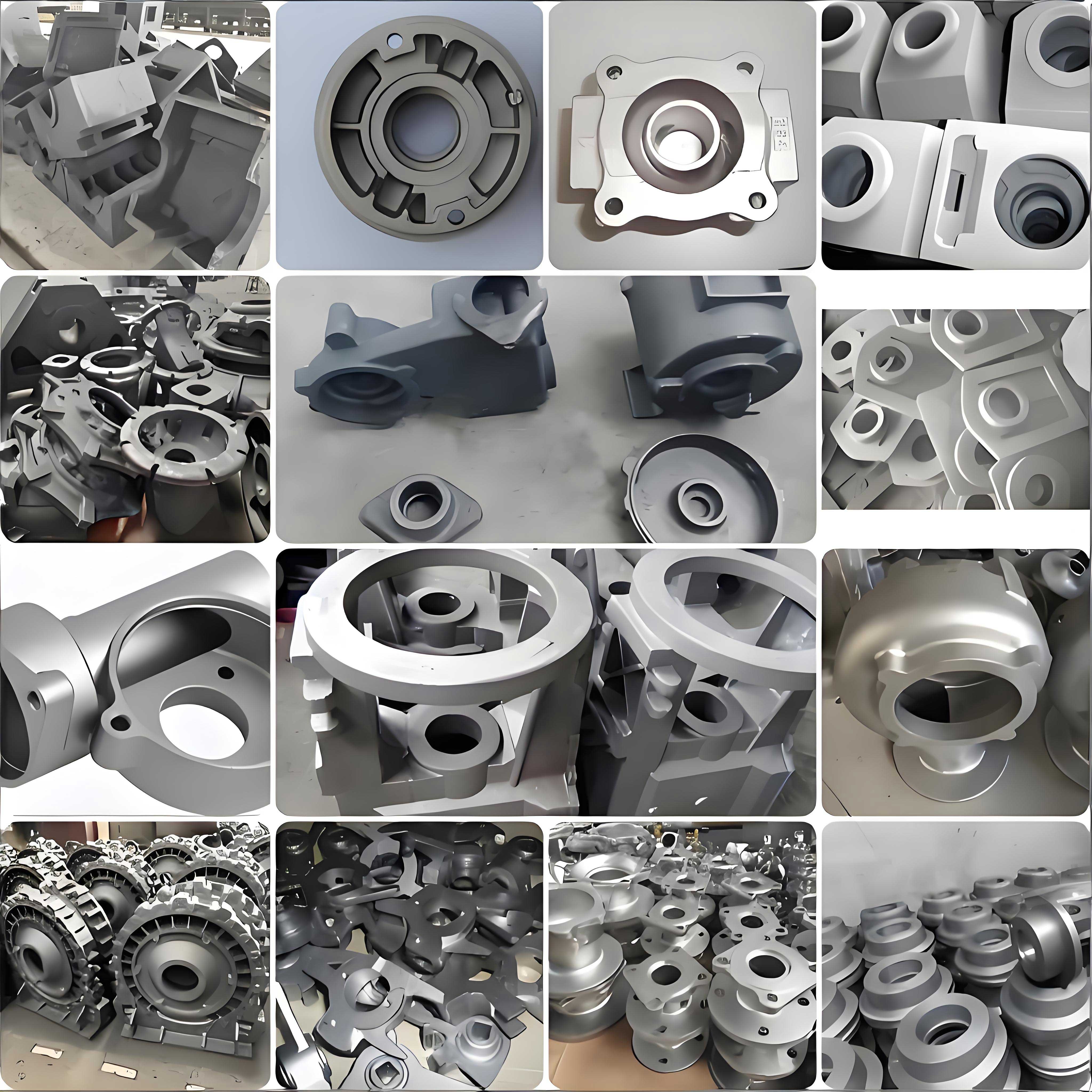
To understand the defect formation, it is essential to review the solidification behavior of nodular cast iron. The carbon equivalent (CE) is a critical parameter defined as: $$CE = C + \frac{1}{3}Si + \frac{1}{4}P$$ where C, Si, and P are the weight percentages of carbon, silicon, and phosphorus, respectively. For nodular cast iron, a CE near the eutectic point (approximately 4.3–4.4%) optimizes graphite nodularity and minimizes undesired phases. When CE falls below 4.3%, the melt becomes hypoeutectic, causing austenite to act as the leading phase during eutectic reaction. This promotes dendritic growth of austenite, which can template the formation of flake graphite due to crystallographic matching between the austenite {111} planes and graphite {0001} planes. The relationship can be expressed as: $$\Delta G = \gamma_{interface} – \Delta G_{chemical}$$ where $\Delta G$ is the Gibbs free energy change, $\gamma_{interface}$ is the interfacial energy, and $\Delta G_{chemical}$ is the chemical driving force for nucleation. Under slow cooling conditions in thick sections, austenite dendrites grow extensively from the solidified shell toward the casting center, creating long bands that facilitate flake graphite development.
Compositional segregation plays a pivotal role in matrix formation within the grey-speckle zones. Most graphitizing elements (e.g., Si, Al, Cu, Ni) exhibit negative segregation (Kef > 1), concentrating in austenite dendrites, while anti-graphitizing elements (e.g., Mn, Cr, Mo, V, Mg, Ce) show positive segregation (Kef < 1), enriching in interdendritic liquid. The segregation coefficient Kef is defined as: $$K_{ef} = \frac{C_s}{C_l}$$ where $C_s$ is the solute concentration in the solid phase and $C_l$ is that in the liquid phase. For nodular cast iron, this segregation leads to heterogeneous microstructures. In grey-speckle areas, Si enriches within austenite dendrites, accelerating graphite precipitation and ferrite formation upon cooling, whereas Mn and Cu accumulate in outer regions, stabilizing pearlite. The hardness difference arises from the contrasting matrix phases: ferrite (soft) versus pearlite (hard). To quantify this, the hardness H can be approximated by a rule-of-mixtures model: $$H = f_{\alpha}H_{\alpha} + f_{p}H_{p}$$ where $f_{\alpha}$ and $f_{p}$ are the volume fractions of ferrite and pearlite, respectively, and $H_{\alpha}$ and $H_{p}$ are their respective hardness values.
Experimental investigations involved analyzing a nodular cast iron piston skirt with a chemical composition adjusted to prevent graphite flotation. The adjusted composition is summarized in Table 1, showing a hypoeutectic CE. EDS measurements across grey-speckle and normal zones are presented in Table 2, highlighting segregation trends.
| Sample | C | Si | Mn | P | Mg | Cu | CE* |
|---|---|---|---|---|---|---|---|
| 1 | 3.40 | 2.38 | 0.49 | 0.025 | 0.037 | 0.50 | 4.21 |
| 2 | 3.45 | 2.28 | 0.46 | 0.024 | 0.038 | 0.47 | 4.18 |
*CE calculated as CE = C + Si/3 + P/4 (assuming negligible P effect).
| Location | Fe | Si | Mn | Cu |
|---|---|---|---|---|
| Outer Grey-speckle Zone | 94.06 | 2.13 | 0.85 | 1.09 |
| Inner Grey-speckle Zone | 97.20 | 2.43 | 0.18 | 0.21 |
| Transition Zone | 97.26 | 2.43 | — | 0.33 |
The data reveal significant segregation: in outer grey-speckle zones, Mn and Cu contents are approximately double the bulk average, promoting pearlite; conversely, inner zones show Si enrichment and Mn depletion, favoring ferrite. This compositional variance directly correlates with microstructural observations. The dendritic growth velocity v can be modeled using the Ivanstov solution for diffusion-limited growth: $$v = \frac{D \Delta T}{\Gamma k}$$ where D is the diffusion coefficient, $\Delta T$ is the undercooling, $\Gamma$ is the Gibbs-Thomson coefficient, and k is the segregation coefficient. In thick nodular cast iron sections, slow cooling reduces $\Delta T$, allowing ample time for dendritic extension and solute redistribution.
The formation process of grey-speckle defects in nodular cast iron involves sequential stages. Initially, upon pouring, the melt near the mold wall cools rapidly, forming a solid shell of austenite and graphite. As the mold heats up, cooling rate diminishes, enabling austenite dendrites to grow inward. In hypoeutectic compositions (CE < 4.3%), austenite is primary, and its dendritic arms provide substrates for graphite precipitation. The crystallographic epitaxy between austenite and graphite favors flake graphite formation along dendrite boundaries. Concurrently, solute redistribution occurs: Si, with a segregation coefficient KSi > 1, enriches in austenite dendrites, lowering carbon solubility and encouraging graphite precipitation and subsequent ferritization during solid-state transformation. Conversely, Mn and Cu, with KMn < 1 and KCu < 1, enrich in interdendritic liquid, which solidifies as pearlite-rich regions. The banded morphology stems from the directional growth of dendrites, often exacerbated in enclosed thick sections where melt convection is minimal, allowing uninterrupted dendritic advancement.
To mitigate grey-speckle defects in nodular cast iron, several strategies are proposed based on the identified mechanisms. First, carbon equivalent control is paramount. Maintaining CE within 4.3–4.4% ensures near-eutectic solidification, suppressing primary austenite dendrites and promoting homogeneous graphite nodularity. The optimal CE range can be derived from thermal analysis curves, where the eutectic plateau temperature $T_{eu}$ relates to CE via: $$T_{eu} = A – B \cdot CE$$ where A and B are material constants. For typical nodular cast iron, targeting $T_{eu}$ around 1150–1160°C corresponds to CE ~4.35%. Second, minimizing segregation involves adjusting alloying elements. While Si is necessary for graphitization, excessive amounts (e.g., >2.5%) can exacerbate negative segregation; thus, balancing Si with neutral elements like Ni is advised. Mn content should be limited, as it intensifies pearlite stabilization in segregated zones. A recommended composition for thick-section nodular cast iron is: C: 3.5–3.7%, Si: 2.2–2.4%, Mn: <0.3%, Cu: <0.5%, yielding CE ~4.3–4.4%. Third, casting design and process optimization are crucial. Implementing overflow risers in thick sections enhances solute homogenization by disrupting dendritic growth and promoting liquid mixing. Controlled cooling through chills or mold design can reduce solidification time, limiting dendritic extent. The effect of cooling rate $\dot{T}$ on dendrite arm spacing $\lambda$ is given by: $$\lambda = a \dot{T}^{-n}$$ where a and n are constants (typically n ≈ 0.3–0.5 for nodular cast iron). Faster cooling reduces $\lambda$, minimizing segregation scale. Additionally, pouring temperature should be moderated (e.g., 1350–1370°C) to avoid excessive superheat that prolongs solidification.
Further analytical insights can be gained from phase-field simulations of dendritic growth in nodular cast iron. The phase-field variable $\phi$ represents the solid fraction, evolving according to: $$\frac{\partial \phi}{\partial t} = M_{\phi} \left[ \nabla \cdot ( \epsilon^2 \nabla \phi ) – \frac{\partial f}{\partial \phi} \right]$$ where $M_{\phi}$ is mobility, $\epsilon$ is gradient energy coefficient, and f is free energy density. Coupled with solute diffusion equations, such models predict segregation patterns and grey-speckle susceptibility. For instance, simulations show that low CE and slow cooling amplify dendritic branching, creating conditions for grey-speckle formation. Empirical validation through industrial trials confirms that adjusting CE to 4.35% combined with optimized gating systems reduces defect incidence by over 80% in heavy nodular cast iron castings.
In conclusion, the abnormal grey-speckle defect in nodular cast iron stems from a confluence of factors: hypoeutectic carbon equivalent (<4.3%), pronounced compositional segregation of Si, Mn, and Cu, and thick, enclosed casting geometries that foster slow-cooling dendrites. The defect manifests as ferritic bands with flake graphite, severely lowering hardness. Through SEM/EDS analysis and theoretical modeling, this study elucidates the mechanisms, emphasizing the roles of dendritic growth and solute partitioning. Mitigation requires precise CE control, segregation minimization via alloy design, and process modifications to disrupt dendritic structures. Implementing these strategies enhances the reliability and performance of nodular cast iron in demanding applications, ensuring consistent microstructure and mechanical properties across thick sections. Future work could explore real-time monitoring during solidification and advanced inoculation techniques to further suppress grey-speckle formation in nodular cast iron components.