
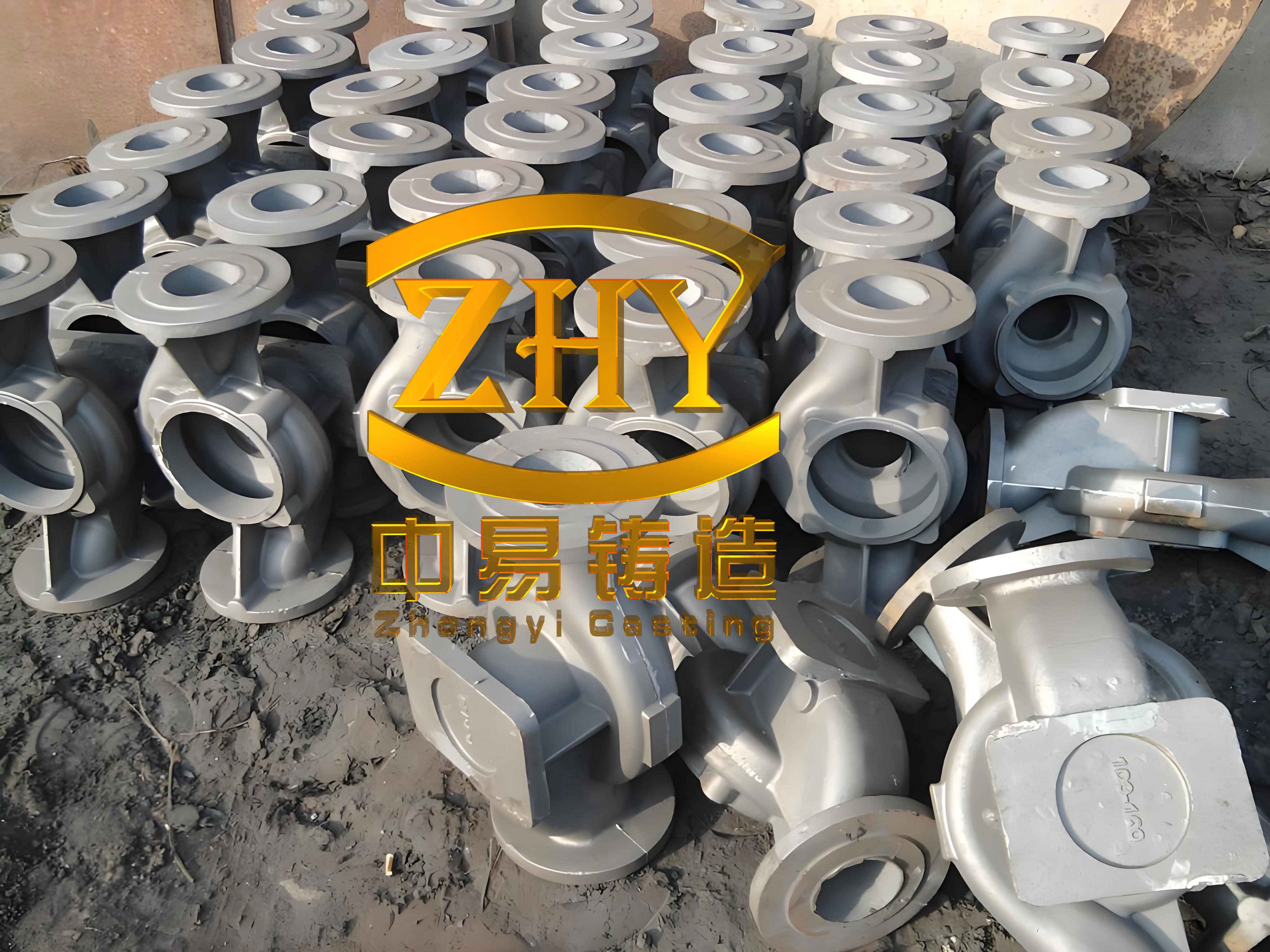
The production of high-integrity grey iron castings is a cornerstone of modern manufacturing, yet it is perpetually challenged by internal defects that compromise mechanical properties and lead to costly scrap. Among these, a particularly insidious defect is the fissure-type nitrogen blowhole. This defect manifests internally, often in the last-to-solidify regions of a casting such as hot spots, heavy sections, and beneath risers. Its irregular, crack-like morphology bears a superficial resemblance to shrinkage porosity, leading to frequent misdiagnosis. Such misidentification directs corrective actions towards feeding and solidification control, which are utterly ineffective because the root cause is metallurgical, originating from excessive nitrogen content in the molten iron. This article provides a comprehensive, first-principles analysis of fissure-type nitrogen blowholes in grey iron castings, detailing their formation mechanism, distinguishing characteristics, and, most importantly, a suite of proven preventive and remedial measures.
1. The Fundamental Mechanism: Nitrogen Solubility and Precipitation
To understand fissure-type blowholes, one must first understand nitrogen’s behavior in iron. Nitrogen (N) is an interstitial element that can dissolve in liquid and solid iron. In controlled amounts, it acts as a potent strengthener for grey iron castings. However, its solubility is not constant; it is a function of temperature and composition.
The solubility of nitrogen in liquid iron decreases sharply as temperature falls. During the solidification of a grey iron casting, the liquid metal is progressively enriched in solute elements, including nitrogen, as the solid phase (austenite) forms. The critical event occurs when the concentration of nitrogen in the remaining liquid exceeds its instantaneous solubility limit at that local temperature and composition. At this supersaturation point, nitrogen gas (N₂) nucleates and forms bubbles.
The solidification sequence of hypo-eutectic grey iron castings is key to the defect’s shape. Solidification begins with the formation of austenite dendrites. In the final stages, the interdendritic liquid is rich in carbon, silicon, and, if problematic, nitrogen. When nitrogen precipitation is triggered in these confined, tortuous channels between the austenite arms, the forming gas bubbles cannot coalesce into spheres nor float out. Instead, they are forced to occupy the available interdendritic space, resulting in the characteristic jagged, fissure-like morphology upon complete solidification. The internal surfaces of these cavities often retain an imprint of the austenite dendrite structure, visible under high magnification.
The solubility of nitrogen in liquid iron can be influenced by several factors. A simplified representation of the temperature dependence is given by an Arrhenius-type relationship:
$$ S_N = A \cdot \exp\left(-\frac{Q}{RT}\right) $$
where $S_N$ is the nitrogen solubility (in ppm or wt%), $A$ is a pre-exponential factor, $Q$ is the activation energy, $R$ is the gas constant, and $T$ is the absolute temperature. More practically, the solubility is depressed by elements like carbon and silicon and increased by certain alloying elements. This leads to a critical threshold concept: for a given grey iron casting composition and section size, there exists a critical nitrogen level, $[N]_{crit}$, above which the risk of blowhole formation becomes high. For medium-section grey iron castings, this threshold is often around 100-120 ppm; for heavy-section grey iron castings, it can be as low as 80-100 ppm.
2. Distinctive Characteristics of Fissure-Type Nitrogen Blowholes
Accurate identification is the first step towards resolution. Fissure-type nitrogen blowholes in grey iron castings possess specific features that differentiate them from other defects like shrinkage or slag inclusions.
| Characteristic | Description | Key Differentiator from Shrinkage |
|---|---|---|
| Nature | Endogenous, precipitation-type gas defect. Arises from gas within the melt. | |
| Location | Primarily in the upper portions of castings, under risers, at thermal centers, and in heavy sections. | |
| Morphology | Irregular, sharp, branched, or crack-like cavities. Walls are often smooth and shiny. | |
| Microfeature | Under microscope, cavity walls reveal the outline of primary austenite dendrites. |
Higher-grade grey iron castings (e.g., Class 40, 50) with lower carbon equivalent are more susceptible. This is because lower CE promotes a more developed austenite dendritic network, providing the confined space for fissure formation, and often involves higher scrap steel charges, which increases initial nitrogen input.
3. The Primary Source: Nitrogen Input from Charge Materials
The paramount cause of excessive nitrogen in grey iron castings is the charge materials used in melting, especially in modern induction furnaces which do not provide a nitrogen-scavenging environment like cupolas do. The nitrogen contribution from each component must be managed.
| Charge Material | Typical Nitrogen Content (ppm) | Comments |
|---|---|---|
| Pig Iron | 10 – 30 | |
| Steel Scrap (Low Alloy) | 50 – 140 | |
| Returns (Gates, Risers, Scrap Castings) | Varies Widely (30 – 100+) | |
| Carburizers | Widely Variable |
The choice of carburizer is particularly crucial in steel-scrap-based melts for producing synthetic grey iron castings. The nitrogen contribution can differ by orders of magnitude.
| Carburizer Type | Fixed Carbon (min. %) | Nitrogen Content (ppm, max. typical) | Sulfur Content (% max.) |
|---|---|---|---|
| Graphitized Crucible Scrap | 99.7 | 100 | 0.02 |
| High-Temperature Graphitized | 99.0 | 300 | 0.05 |
| Medium-Temperature Graphitized | 98.0 | 500 – 800 | 0.30 – 0.50 |
| Calcined Petroleum Coke | 98.0 | ~8,000 | 0.30 |
| Calcined Coal/Anthracite | 90.0 | ~5,000 | 0.30 |
A secondary, situational source is the molding process. When grey iron castings are produced in chemically-bonded sands using nitrogen-containing binders (e.g., furan no-bake, phenolic urethane), nitrogen can be absorbed by the molten metal at the mold/metal interface. This “pick-up” is more severe with high-nitrogen resins, low permeability molds, and in heavy-section grey iron castings with long contact times.
4. A Systematic Framework for Prevention and Solution
Combating fissure-type blowholes requires a systematic approach targeting both the primary nitrogen input and the state of nitrogen in the melt. The strategies are ranked from fundamental (most effective) to tactical.
4.1 Foundational Preventive Measures
1. Rational Charge Design: This is the most direct control. Reduce the proportion of high-nitrogen materials.
$$ \text{Target Charge} = \text{Maximize Pig Iron} + \text{Minimize High-N Steel Scrap} + \text{Control Returns} $$
Regularly audit scrap sources. Avoid rusted, painted, or contaminated scrap. Consider using low-nitrogen or “synthetic pig iron” briquettes as a steel scrap substitute.
2. Strategic Carburizer Selection: Never select a carburizer based on sulfur content or price alone when producing grey iron castings. For critical castings or those with a history of defects, specify and use only high-temperature graphitized carburizers with guaranteed low nitrogen content (<300 ppm). The cost premium is negligible compared to the cost of scrap.
3. Meticulous Returns Management: All returns (gates, risers, scrap castings) must be thoroughly cleaned via shot blasting before remelting, especially if produced with organic resin sands. This removes sand residues that are a direct source of nitrogen pickup. Implement a controlled returns ratio to prevent the gradual buildup of nitrogen in the closed-loop system.
4. Process Hygiene: Ensure all charge materials are dry. Moisture leads to hydrogen pickup, which can synergistically worsen gas defect severity. The reaction is:
$$ \text{H}_2\text{O} + \text{Fe} \rightarrow \text{FeO} + 2[\text{H}] $$
Hydrogen, like nitrogen, has decreasing solubility upon solidification and can co-precipitate.
5. Melting and Holding Practice: Add carburizer early in the melt cycle to allow maximum dissolution and time for any associated gases to escape. Avoid “ladle carburizing” as a standard practice. If late additions are unavoidable, ensure a sufficient holding time at temperature (e.g., 1470-1500°C for 5-10 minutes) before tapping to promote nitrogen degassing. The degassing rate can be conceptually modeled by a first-order rate equation:
$$ \frac{d[N]}{dt} = -k ([N] – [N]_{eq}) $$
where $k$ is a rate constant dependent on stirring and temperature, and $[N]_{eq}$ is the equilibrium solubility.
4.2 Remedial Metallurgical Measures (When Prevention Fails)
When the total nitrogen input cannot be sufficiently reduced, or when analyzing a problematic heat, the strategy shifts to modifying the state of nitrogen in the melt. The goal is to convert free, soluble nitrogen $[N]$ into stable, solid nitride particles that cannot form bubbles.
1. Nitride Stabilization with Reactive Elements: Elements with a high affinity for nitrogen, such as Titanium (Ti), Zirconium (Zr), and Aluminum (Al), can effectively “tie up” nitrogen. The reaction for titanium is:
$$ [\text{Ti}] + [\text{N}] \rightarrow \text{TiN}_{(s)} \quad \Delta G^\circ \ll 0 $$
The Gibbs free energy $\Delta G^\circ$ is highly negative, making the reaction favorable.
Implementation:
- Use High-Titanium Pig Iron: A straightforward method to introduce 0.05-0.15% Ti.
- Add Ferro-Titanium: Added to the ladle during tapping. A typical addition might be 0.1-0.2% to yield 0.05-0.10% Ti in the final grey iron casting.
- Use Zirconium-Bearing Inoculants: Certain specialized inoculants contain 1-2% Zr. This provides both inoculation and nitrogen stabilization benefits. The nitride-forming power of Zr is even stronger than that of Ti.
A key advantage of this method is that the nitrides (TiN, ZrN) can also act as heterogeneous nucleation sites for graphite, potentially improving the microstructure of the grey iron casting. However, excessive additions can lead to hard nitride inclusions, so treatment levels must be optimized.
2. Molding Process Adjustment: For grey iron castings made in chemically-bonded sands:
- Select binders with lower nitrogen content (e.g., 3-5% N for mixed production lines, rather than 7-10% N).
- Optimize sand-to-metal ratio and use permeable coatings to minimize gas pressure at the interface.
- Implement effective sand reclamation to prevent the buildup of nitrogen in the system sand.
5. The Imperative of Process Control: Nitrogen Measurement
A proactive quality program for producing premium grey iron castings must include periodic monitoring of molten metal nitrogen. Relying on visual defect inspection is a reactive and costly strategy.
Methods: Laboratory analysis using inert gas fusion (LECO) provides the most accurate results. Faster, less precise methods like thermal analysis with specific sensors can be used for trend monitoring on the foundry floor.
Frequency: Test at least once per shift or per major charge makeup change. The data is used to:
- Establish a baseline for your process.
- Quality incoming scrap and carburizer batches.
- Verify the effectiveness of corrective actions like charge changes or Ti additions.
By plotting nitrogen levels against casting quality, a foundry can define its own safe operating window for producing sound grey iron castings.
6. Summary and Final Recommendations
Fissure-type nitrogen blowholes are a distinct defect in grey iron castings, fundamentally caused by the precipitation of nitrogen gas in the interdendritic regions during the final stages of solidification. Its confusion with shrinkage leads to wasted effort on ineffective solutions.
| Focus Area | Primary Action | Expected Outcome |
|---|---|---|
| Charge Design | ||
| Carburizer | ||
| Process Control | ||
| Remediation | ||
| Molding Process |
The successful production of heavy-section or high-strength grey iron castings demands respect for the dual role of nitrogen: a beneficial strengthener at controlled levels and a destructive force when in excess. By understanding its sources, behavior, and methods of control, foundries can harness its benefits while completely eliminating the costly scrap associated with fissure-type nitrogen blowholes. The cornerstone of this control is a disciplined approach to charge materials, coupled with routine analytical verification, ensuring that every grey iron casting produced meets its intended quality and performance standards.