
In the competitive landscape of engine manufacturing, achieving superior quality and reliability in core components is paramount. Among these, the engine block serves as the foundational structure, housing critical systems. A persistent and costly quality issue encountered in the production of our A-series engine blocks has been internal water leakage. This defect is only identified after extensive processing, including machining and pressure testing (air and water), leading to significant scrap losses given the high cumulative costs of casting, handling, machining, and partial assembly. Statistical analysis from our 2022 production data revealed that scrap attributed to water leakage constituted approximately 45% of the total scrap cost for the A-engine program, underscoring the urgent need for a targeted technical solution to drive cost reduction and operational efficiency.
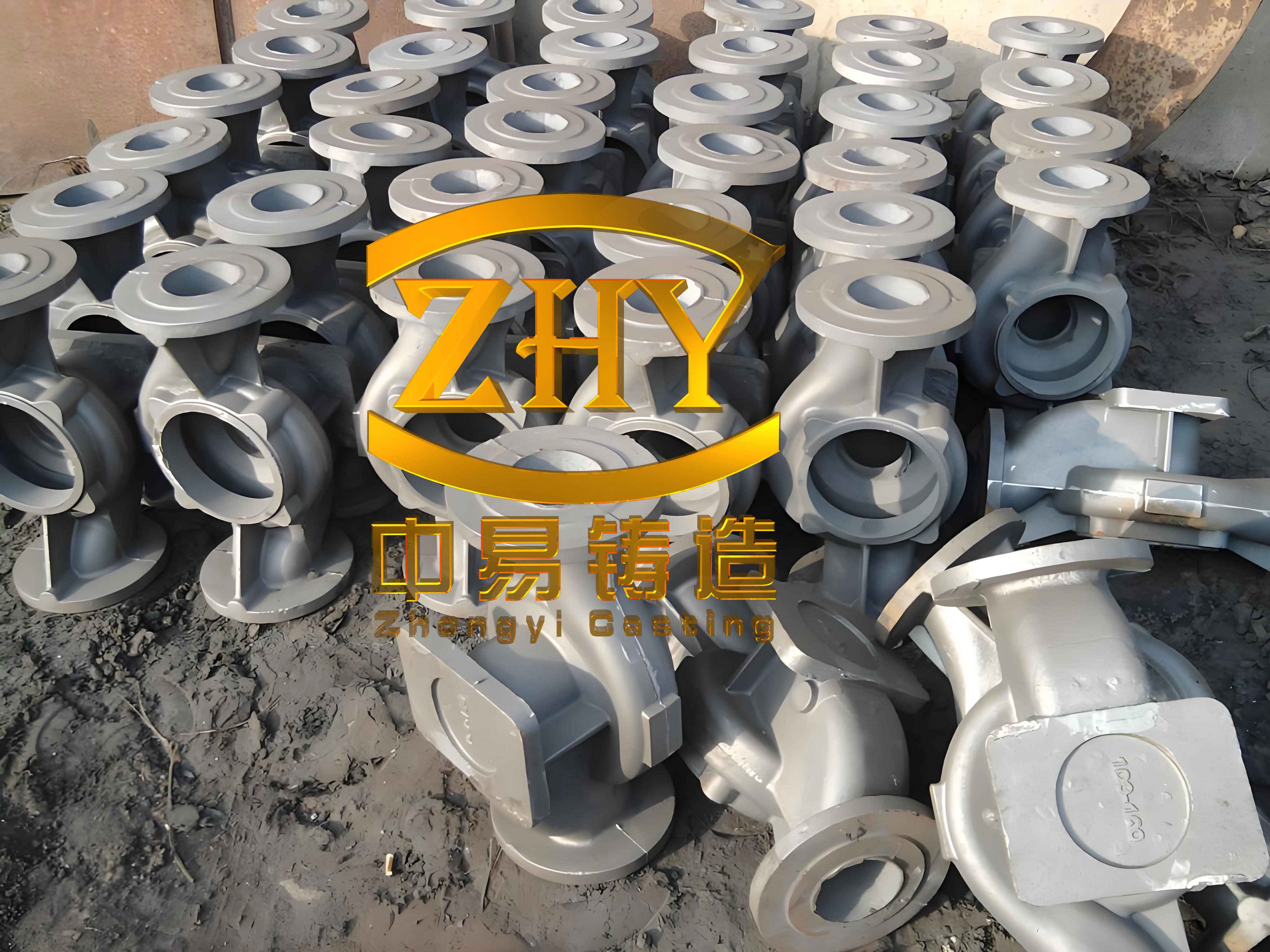
The A-block is a thin-walled, high-strength grey iron casting with complex internal geometry. The foundry process utilizes a German KW molding line with a stepped gating system designed for平稳充型 (steady filling). Cores are produced using cold-box and hot-box processes. Despite a stable overall process, the leakage rate was recorded at 3.3%. A Pareto analysis of leak locations was conducted to focus improvement efforts, with the results summarized below.
| Leakage Location | Percentage Contribution (%) | Primary Defect Type Identified |
|---|---|---|
| Tappet Bore Area | 38 | Poor Fusion of Core Supports / Chills |
| ø6 mm Oil Gallery | 32 | Nitrogen Porosity |
| ø20 mm Oil Gallery | 18 | Nitrogen Porosity |
| Other Locations | 12 | Varied |
This analysis directed our investigation towards two primary failure modes: nitrogen-induced gas porosity in the oil galleries and inadequate metallurgical fusion of inserted core supports and chills in the tappet bore region. The following sections detail the root cause analysis and the systematic implementation of corrective measures for these high-strength grey iron castings.
Deep Dive into Failure Modes and Root Causes
1. Nitrogen Porosity in Oil Galleries (ø6 mm & ø20 mm)
The ø6 mm and ø20 mm oil galleries are machined into solid, heavy sections of the casting. These sections act as thermal hotspots, where slower solidification promotes the formation of shrinkage and gas porosity. Dissection of leaking blocks and subsequent Scanning Electron Microscope (SEM) analysis confirmed the presence of interconnected nitrogen blowholes linking the water jacket to the oil gallery bore.
Nitrogen solubility in molten iron is temperature-dependent. During the solidification of grey iron castings, dissolved nitrogen can be rejected from the solution as the temperature falls below its solubility limit. If the nitrogen content is sufficiently high, it can nucleate and form gas pores. The solubility relationship can be conceptually described by Sieverts’ law, although for complex iron alloys it is influenced by multiple factors:
$$ [N] = K_N \sqrt{P_{N_2}} $$
Where $[N]$ is the dissolved nitrogen concentration, $K_N$ is the equilibrium constant (temperature-dependent), and $P_{N_2}$ is the partial pressure of nitrogen at the melt surface.
The local solidification time ($t_f$) in these thick sections is significantly longer, as approximated by Chvorinov’s rule:
$$ t_f = B \left( \frac{V}{A} \right)^n $$
where $V/A$ is the modulus (volume-to-surface-area ratio), $B$ and $n$ are constants. A higher modulus in the oil gallery sections leads to a longer $t_f$, providing an extended time window for nitrogen bubble nucleation, growth, and coalescence into detrimental porosity within the grey iron castings.
2. Poor Fusion of Core Supports and Chills
Leakage in the tappet bore area was traced to two specific sub-causes related to inserted metallic components:
- Core Support (Chaplet) Fusion: Thin-walled,工-shaped tin-plated低碳钢 core supports are used to hold internal sand cores in position. Leaks occurred along the cylindrical stem of these supports due to incomplete melting and bonding with the parent iron.
- Chill Sleeve Fusion: Thin-walled chill sleeves (initially 1.5 mm thick) placed in the water jacket core to locally accelerate solidification around the ø6 mm oil gallery also exhibited poor fusion, creating a leakage path.
The fusion of these components is critically dependent on the thermal balance between the molten iron and the insert. The insert acts as a heat sink, potentially causing localized premature solidification. The governing heat transfer can be modeled by the instantaneous heat flux $q$:
$$ q = h (T_{melt} – T_{insert}) $$
where $h$ is the heat transfer coefficient and $T$ represents temperature. A low pouring temperature ($T_{melt}$) or a high thermal mass of the insert exacerbates the chilling effect, preventing complete fusion. Furthermore, for tin-plated supports, the plating can vaporize or form oxides at the interface, creating micro-gaps that hinder a sound metallurgical bond in the final grey iron castings.
Implemented Corrective Actions and Validation
A multi-pronged approach was adopted to address the identified root causes. The measures and their targeted effects are summarized in the following table.
| Target Defect | Corrective Action | Mechanism / Purpose | Validated Outcome |
|---|---|---|---|
| Nitrogen Porosity | Ferro-Titanium (FeTi) Addition | Ti reacts with dissolved N to form stable TiN particles, effectively reducing the free nitrogen available for gas pore formation during solidification. | Significant reduction in porosity-related leaks. |
| Chill Sleeve Optimization (ø20 mm gallery) | Redesigned chill sleeve to be more conformal (“shell-shaped”) to the water jacket core, extending its protective coverage over a larger area of the potential defect zone. | ||
| Poor Fusion | Pouring Temperature Optimization | Systematically increased the lower limit of the pouring temperature range to ensure sufficient superheat to melt inserts. | Defined an optimal window (e.g., ~1410-1423°C) for proper fusion without causing core distortion. |
| Core Support Redesign | Reduced the overall dimensions (foot diameter, stem diameter) to decrease its chilling severity and modified vent hole pattern to improve gas evacuation from the fusion interface. | Improved metallurgical bonding, reducing leak paths. | |
| Chill Sleeve Thickness Reduction (ø6 mm gallery) | Reduced wall thickness from 1.5 mm to 1.2 mm to lower its thermal mass and improve its ability to fuse completely with the iron. |
Detailed Analysis of Key Process Changes
Ferro-Titanium Addition: The addition of titanium is a critical method for controlling nitrogen in grey iron castings. The reaction is:
$$ Ti + N \rightarrow TiN_{(s)} \quad (\Delta G < 0) $$
The free energy change $\Delta G$ is negative, indicating a spontaneous reaction. The formation of solid TiN inclusions effectively “ties up” nitrogen. The required Ti addition can be estimated based on the initial nitrogen content and stoichiometry, though practical foundry additions are optimized empirically. Let $[N]_0$ be the initial nitrogen content and $[N]_t$ be the target content. The theoretical Ti needed (weight %) is approximately:
$$ \%Ti_{req} \approx \frac{([N]_0 – [N]_t) \times (Atomic\;Weight\;Ti)}{Atomic\;Weight\;N} \times 100 $$
Considering efficiency losses, the actual addition is higher. This process significantly reduced the frequency of nitrogen porosity defects.
Pouring Temperature Window Definition: A designed experiment was executed to quantify the effect of pouring temperature on core support fusion. Batches of castings were poured at controlled temperature intervals. The quality of fusion was inspected using borescopes. The data led to the establishment of a strict operating window.
| Pouring Temperature Range (°C) | Number of Castings | Castings with Poor Fusion | Observation & Conclusion |
|---|---|---|---|
| 1396 – 1399 | 6 | 6 | Unacceptable. Severe lack of fusion. |
| 1400 – 1403 | 6 | 5 | Unacceptable. |
| 1404 – 1407 | 6 | 4 | Unacceptable. |
| 1408 – 1411 | 6 | 3 | Marginal. |
| 1412 – 1415 | 6 | 1 | Acceptable. |
| 1416 – 1419 | 6 | 0 | Optimal Range. Good fusion. |
| 1420 – 1423 | 6 | 0 | Optimal Range. Good fusion. |
| 1424 – 1427 | 6 | 0* | Fusion excessive; support melted completely, leading to core movement defects. |
*Result indicated complete melting of the support, causing a different defect mode (core shift). Therefore, the optimal window for producing sound grey iron castings was defined as 1410°C – 1423°C.
Quantitative Results and Conclusion
The implementation of the combined corrective measures yielded substantial improvements in the quality of our high-strength grey iron castings. The leakage rate, which served as our primary Key Performance Indicator (KPI), showed a marked decrease.
The overall water leakage rate was reduced from the baseline of 3.3% to a final validated rate of 1.95%. This represents a total reduction of approximately 40.9% in scrap attributed to this defect. The contribution of each major leak location was diminished as follows, based on post-implementation monitoring data:
- ø6 mm Oil Gallery Leaks: Reduced by ~43%.
- ø20 mm Oil Gallery Leaks: Reduced by ~74%.
- Tappet Bore Area Leaks: Reduced by ~44%.
In conclusion, the water leakage problem in thin-walled, high-strength grey iron castings for engine blocks was successfully mitigated through a systematic root-cause analysis followed by targeted process interventions. The key findings and validated solutions are:
- The application of a ferro-titanium alloying practice is an effective method to lower the active nitrogen content in the melt, thereby drastically reducing the risk of nitrogen porosity formation in critical sections.
- Pouring temperature exerts a profound and quantifiable influence on the metallurgical fusion of inserted chills and core supports. Maintaining the temperature within a precisely defined optimal window (e.g., 1410-1423°C) is crucial for achieving a sound bond without inducing other defects.
- The strategic use of conformal chills is highly effective in managing localized solidification and shielding against micro-porosity. The design parameters of these chills, including geometry, wall thickness, and placement, are critical variables that must be optimized for each specific application to ensure both function and fusability.
This comprehensive approach has resulted in a more robust and stable manufacturing process, delivering significant cost savings through reduced scrap and ensuring higher reliability for the final engine assembly. The methodologies developed are applicable to similar quality challenges in the production of complex, high-performance grey iron castings across the automotive and heavy machinery sectors.