
In my extensive experience working with ferrous foundry processes, I have consistently observed that cold cracking remains one of the most challenging and costly defects affecting grey iron castings. This defect typically manifests after solidification, when the casting is in the elastic state, and it arises precisely when the internally generated casting stresses exceed the material’s ultimate tensile strength. For many engineering components, such cracks can lead to catastrophic failure, especially in applications demanding structural integrity or pressure tightness. The phenomenon is particularly critical for complex, heavy-section grey iron castings like those used in power generation equipment, where repair via welding is often impractical or insufficient to restore the required hermetic seal. Therefore, a deep understanding of the cold crack formation mechanism and the implementation of robust preventive strategies are paramount for enhancing the quality, reliability, and service life of these components. This article, drawn from my practical involvement in the field, delves into the root causes of cold cracking and outlines a comprehensive, multi-faceted approach to its mitigation.
The fundamental driver of cold cracking is casting stress. This is not a single entity but a complex summation of stresses generated during the cooling and solidification process due to hindered dimensional changes. We can categorize the total casting stress, $ \sigma_{total} $, as a superposition of three primary components:
$$ \sigma_{total} = \sigma_{thermal} + \sigma_{phase} + \sigma_{mechanical} $$
Where $ \sigma_{thermal} $ is thermal stress, $ \sigma_{phase} $ is phase transformation stress, and $ \sigma_{mechanical} $ is mechanical (or shrinkage) stress. Cracking occurs when $ \sigma_{total} > \sigma_{UTS} $, the ultimate tensile strength of the material at the prevailing temperature.
Thermal Stress ($ \sigma_{thermal} $): This originates from differential cooling rates within a casting. Sections with varying wall thickness cool and contract at different rates. The thinner sections, which cool faster, attempt to contract but are restrained by the still-hot, slower-cooling thicker sections. This interaction sets up internal stresses. In grey iron castings, the thicker sections often end up in residual tension upon final cooling, which is particularly dangerous as cast iron has much lower tensile strength than compressive strength. We can model the thermal stress development conceptually. The strain due to thermal contraction, $ \epsilon_{th} $, is given by $ \epsilon_{th} = \alpha \cdot \Delta T $, where $ \alpha $ is the coefficient of thermal expansion and $ \Delta T $ is the temperature difference. When this strain is constrained, stress develops according to Hooke’s Law in the elastic region: $ \sigma_{thermal} = E \cdot \epsilon_{th} $, where E is Young’s modulus. In reality, the situation is more complex due to temperature-dependent material properties and plastic deformation at higher temperatures, but this illustrates the principle.
Phase Transformation Stress ($ \sigma_{phase} $): This is specific to alloys undergoing solid-state phase changes during cooling. For grey iron castings, the most relevant transformation is the eutectoid reaction where austenite transforms to ferrite and graphite (or pearlite). This transformation is accompanied by a volume expansion. If different regions of the casting undergo this transformation at different times due to temperature gradients, the expanding regions can be constrained by the non-transforming or already-transformed regions, generating stress. The magnitude relates to the volume change per unit volume, $ \Delta V/V $, associated with the transformation. While the graphite expansion during solidification is often beneficial to counteract liquid shrinkage, the solid-state eutectoid expansion can be a significant source of internal stress if not managed properly.
Mechanical or Shrinkage Stress ($ \sigma_{mechanical} $): This is an externally imposed stress arising from the resistance of the mold or core to the casting’s natural, linear solid-state shrinkage. As the casting cools in the elastic range, it contracts. If a sand core or a rigid part of the mold does not collapse or offer sufficient “give,” it physically restrains the casting, putting it in tension. This stress is always tensile in nature and is a direct function of the mold/core material’s high-temperature strength and deformability (its “collapsibility” or “yield”). The stress can be approximated by the force required to compress or shear the molding sand at the interface.
The characteristic appearance of a cold crack—a straight or smoothly curved fracture path with a clean, metallic, sometimes slightly oxidized appearance—is a direct result of these stresses acting on the brittle matrix of the iron. The crack often propagates transgranularly, following the path of maximum principal stress rather than along grain boundaries.
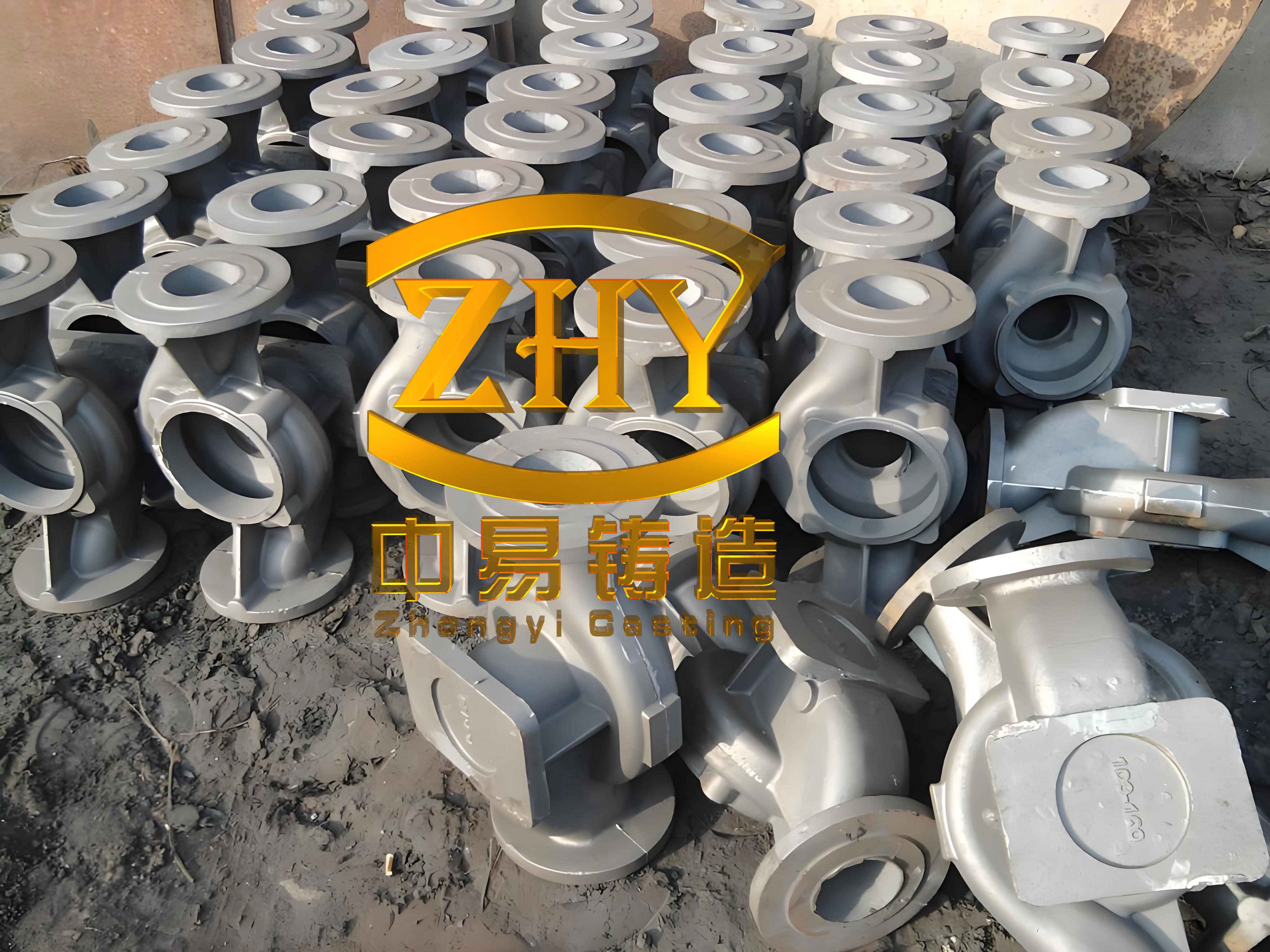
Having established the mechanistic framework, I will now analyze the key metallurgical and process factors that amplify these stresses and thus increase the propensity for cold cracking in grey iron castings. The following table summarizes the primary influencing factors and their mode of action on the stress components.
| Factor | Typical Effect | Primary Stress Component Affected | Mechanism |
|---|---|---|---|
| Excessive Superheating & Holding Time | Increases crack tendency | $ \sigma_{thermal} $ | Destroys heterogeneous nucleation sites, leading to coarse microstructure, increased total liquid contraction, and larger thermal gradients. |
| Inadequate or Inefficient Inoculation | Increases crack tendency | $ \sigma_{phase} $, $ \sigma_{thermal} $ | Reduces graphite nodule count, promotes directional solidification (increased temp gradient), and can lead to undercooled graphite forms (e.g., D-type) which affect transformation behavior. |
| Chemical Composition (C, P, etc.) | Critical influence | All components | Carbon affects liquid shrinkage and graphite expansion balance. Phosphorus forms brittle, continuous phosphide networks which act as stress concentrators and crack initiators. |
| High Pouring Temperature | Increases crack tendency | $ \sigma_{thermal} $ | Increases total heat content, leading to steeper thermal gradients and greater overall contraction. |
| Charge Make-up (High Steel Scrap%) | Increases crack tendency | $ \sigma_{thermal} $, $ \sigma_{phase} $ | Increases melting point, reduces carbon equivalent, reduces graphitization potential, and increases overall shrinkage. |
| Poor Mold/Core Collapsibility | Increases crack tendency | $ \sigma_{mechanical} $ | Provides external mechanical restraint to solid-state shrinkage. |
| Complex Geometry with Sharp Transitions | Increases crack tendency | All components | Creates inherent stress concentration points (notches) and severe thermal gradients. |
Let’s elaborate on some of these critical factors with more quantitative perspective, particularly focusing on the chemistry of grey iron castings.
1. The Role of Carbon and Liquid Contraction: The carbon content is arguably the most vital compositional variable. It profoundly influences the volume changes during cooling. The liquid contraction, which occurs from pouring temperature down to the liquidus, is a direct contributor to the formation of shrinkage porosity and also sets the stage for thermal stress. This contraction value, $ \beta_L $, can be estimated as a function of carbon content and superheat. Empirical data suggests a relationship akin to:
$$ \beta_L \approx k_1 \cdot (T_{pour} – T_{liquidus}) + k_2 \cdot (\%C – \%C_{ref}) $$
Where $ k_1 $ and $ k_2 $ are coefficients, $ T_{pour} $ is pouring temperature, $ T_{liquidus} $ is the liquidus temperature (itself a function of composition), and $ \%C_{ref} $ is a reference carbon level. For typical grey iron castings, the liquid contraction increases with both superheat and carbon content within certain ranges. However, during solidification, the graphite precipitation causes a volume expansion (graphitization expansion) that can counteract the contraction. The net effect is governed by the Carbon Equivalent (CE):
$$ CE = \%C + \frac{1}{3}(\%Si + \%P) $$
A higher CE generally promotes more graphite expansion, better feeding, and lower residual stress. Therefore, for crack-prone castings, maintaining an optimal, slightly higher CE is beneficial, provided other properties (like strength) are not compromised.
2. The Deleterious Effect of Phosphorus: Phosphorus is a notorious element for promoting brittleness. When its concentration exceeds approximately 0.03-0.05% in many grey iron castings, it tends to form a ternary phosphide eutectic (steadite) that solidifies at the very end in the interdendritic and grain boundary regions. This network is extremely hard and brittle, providing easy paths for crack propagation and dramatically reducing the effective tensile strength and ductility of the iron. The stress concentration factor, $ K_t $, at these networks can be very high, effectively reducing the fracture stress. Thus, the condition for cracking modifies to:
$$ \sigma_{total} > \frac{\sigma_{UTS}}{K_t} $$
Where $ K_t $ is significantly elevated by the presence of continuous phosphide films. Therefore, stringent control of phosphorus is non-negotiable for crack-sensitive castings.
3. Inoculation Practice: Effective inoculation is not merely about achieving a certain graphite form; it is a powerful tool to control solidification mode and minimize stress. A well-inoculated iron solidifies with a more eutectic, mushier mode, promoting simultaneous solidification across sections and reducing thermal gradients. The number of graphite nodules per unit area, $ N_g $, is a direct indicator of inoculation effectiveness. A higher $ N_g $ leads to finer eutectic cells and a more uniform microstructure, which helps in distributing internal stresses more evenly. The effectiveness of an inoculant fades with time due to fading (dissolution or oxidation of nuclei), so the inoculation process must be carefully timed and potentially supplemented with late-stream or mold inoculation techniques.
Based on the mechanistic understanding and factor analysis, a holistic prevention strategy must be deployed. In my practice, I advocate for a simultaneous attack on both the metallurgical and the casting process fronts. The table below consolidates the major preventive measures.
| Category | Specific Measure | Technical Rationale & Target |
|---|---|---|
| Melting & Metallurgy | Optimize Superheating: Maintain temperature between 1500-1550°C with minimal holding time. | Minimizes nucleation site destruction and liquid contraction. Balances necessary slag removal/refinement with grain growth risk. |
| Robust, Controlled Inoculation: Use efficient inoculants (e.g., FeSi75 with Sr, Ca, Al), ensure homogeneous addition, employ late inoculation methods to combat fade. | Maximizes $ N_g $, promotes simultaneous solidification, refines graphite, reduces undercooling, and lowers thermal and phase transformation stresses. | |
| Precise Chemistry Control: Aim for C% in the upper range of specification (e.g., 3.2-3.4%), keep P% < 0.04%, optimize Si/Mn ratio. Adjust CE for section size. | Enhances graphitization expansion to offset shrinkage, eliminates brittle phosphide networks, and ensures adequate ferrite/pearlite matrix strength. | |
| Pouring Practice | Control Pouring Temperature: Use the lowest temperature consistent with complete mold filling and good surface finish (e.g., 1300-1350°C for medium sections). | Reduces total heat input and subsequent thermal gradients and contraction. |
| Optimize Charge Make-up: Limit steel scrap addition, use high-quality pig iron and returns to maintain high CE and good inherent nucleation. | Preserves good innate graphitization potential and lower solidification range. | |
| Casting Design & Process | Improve Mold/Core Collapsibility: Use organic binders that degrade at appropriate temperatures, add combustibles or hollow cores. | Drastically reduces $ \sigma_{mechanical} $ by allowing the mold to yield during the critical solid-state shrinkage phase. |
| Strategic Use of Chills: Place chills at heavy sections or hot spots adjacent to thin walls. | Modifies the natural thermal gradient, promoting more uniform cooling and reducing $ \sigma_{thermal} $. | |
| Eliminate Stress Concentrators: Design generous fillet radii at junctions, avoid sharp re-entrant corners. Use strain-relief features like curving ribs instead of straight ones. | Lowers the local stress concentration factor ($ K_t $), making the casting less sensitive to internal stresses. | |
| Employ Anti-Cracking Reinforcements: Add temporary “tie bars” or “cooling fins” (also known as crack prevention ribs) in high-stress areas during casting. These are removed during cleaning. | Physically strengthens the vulnerable region during the critical cooling period, preventing crack initiation. They are designed to solidify first. | |
| Control Shakeout Timing: Delay shakeout (knockout) to allow the casting to cool slowly and uniformly within the insulating sand mold. This may mean 48-168 hours for large castings. | Allows for more stress relaxation at elevated temperatures and prevents introducing new thermal shocks from rapid, uneven cooling in air. | |
| Post-Casting Treatment | Stress Relief Annealing: Perform a proper thermal cycle (heat to 500-550°C, hold for 2-4 hours per inch of section, furnace cool). | Actively reduces residual stresses ($ \sigma_{total} $) through creep and microplasticity mechanisms at elevated temperature. This is often essential for critical grey iron castings. |
The interplay of these measures can be conceptualized through a “Cracking Index” ($ CI $) model, a qualitative metric I often use for risk assessment:
$$ CI = f(CE, T_{pour}, t_{hold}, \text{Inoculation Index}, \text{Geometry Factor}, \text{Mold Yield}) $$
The goal of process optimization is to minimize this $ CI $. Each factor in the function can be assigned a weighted score based on empirical data from the specific foundry operation.
To illustrate the practical application of these principles, I recall a project involving a large, complex steam turbine cylinder—a classic example of a high-integrity grey iron casting where cold cracking would be disastrous. The casting weighed approximately 20 tonnes and featured a massive, enclosed interior crisscrossed with substantial reinforcing ribs, creating severe variations in wall thickness. The initial production runs experienced cold cracks. The fracture originated at a flash or fin on a cope-drag parting line—a natural stress concentrator due to its thin, often slightly oxidized geometry—and propagated inwards along the junction between a heavy internal rib and the thinner cylinder wall. This location was a textbook stress concentration point under tensile thermal stress.
Our corrective action plan, derived from the framework above, was multi-pronged:
1. Metallurgical Adjustments: We tightened the carbon control to 3.15-3.25% and imposed a strict phosphorus limit of <0.04%. The superheating practice was revised to a maximum of 1520°C with a hold time not exceeding 10 minutes for slag removal. We switched to a stronger, fade-resistant inoculant and implemented a dual-inoculation process: a base treatment in the transfer ladle followed by a precision stream inoculation during pouring.
2. Process Modifications: The pouring temperature was standardized to 1305±5°C. On the mold side, we improved the core sand formulation by increasing the percentage of wood flour to enhance collapsibility. We inserted internal chills made of cast iron at the hot spots where the ribs met the cylinder wall to force more simultaneous solidification. Furthermore, we added temporary steel tie bars (which were removed by grinding after shakeout) across the potential crack path to mechanically restrain the area during cooling.
3. Cooling Cycle Management: The shakeout time was extended from 120 hours to a full 168 hours (7 days) to ensure the casting was cool enough to handle without generating new thermal shock stresses. Finally, the stress relief annealing cycle was rigorously validated using temperature profiling to ensure the entire casting reached the required soak temperature uniformly.
The result was the complete elimination of the cold cracking defect in subsequent casts. This case underscores that there is rarely a single “silver bullet” for preventing cold cracks in demanding grey iron castings. Success lies in a systematic approach that addresses all contributors to the total stress state, from the chemistry of the molten metal to the design of the mold and the post-casting handling.
In conclusion, cold cracking in grey iron castings is a preventable defect, but its prevention demands a scientific understanding coupled with disciplined process control. The mechanism is rooted in the exceeding of the material’s tensile strength by the sum of thermally, transformationally, and mechanically induced stresses. Key leverage points include maximizing graphitization potential through carbon control and inoculation, minimizing external restraint via mold design, and carefully managing thermal history through pouring temperature and cooling rate. For high-value, critical-component grey iron castings, a comprehensive strategy encompassing melting, molding, and heat treatment is not an option but a necessity. Continuous monitoring and refinement of these parameters, perhaps aided by numerical simulation tools for stress prediction, form the bedrock of reliable, high-quality production. The goal is always to engineer the process such that the magnificent but complex solidification journey of a grey iron casting concludes not with a fracture, but with a sound and service-ready engineering component.