
The pursuit of high-performance machine tool components has consistently driven the evolution of casting technologies. Among various materials, grey iron castings with a high carbon equivalent (CE) have garnered significant attention due to their superior comprehensive mechanical properties, excellent wear resistance, and inherent damping capacity. These characteristics make them ideally suited for large, complex, and critical parts such as machine tool beds, columns, and tables, where dimensional stability under load is paramount. However, the production of high-CE grey iron castings is fraught with challenges, including a heightened susceptibility to casting defects like shrinkage porosity, graphite flotation, and cracking, which can severely compromise final quality and performance. Therefore, the optimization of the production process is not merely beneficial but essential for enhancing product reliability and advancing technological progress in precision manufacturing.
In this context, the development and implementation of a short-flow production process represent a pivotal innovation. This approach aims to streamline manufacturing stages, reduce energy consumption, improve material yield, and ultimately lower costs while simultaneously elevating the quality of the grey iron castings. Our research and application focus on a holistic optimization strategy encompassing material selection, melting, molding, pouring, and post-processing. This article delves into the specifics of producing high-CE grey iron machine tool castings via a refined short-flow route, presenting experimental data, metallurgical analysis, and practical results that validate the efficacy of our methodology.
Characteristics of High Carbon Equivalent Grey Iron
High carbon equivalent grey iron, typically defined with a CE greater than 3.85%, possesses a unique set of properties derived from its chemical composition and solidification behavior. The carbon equivalent is calculated using the classic formula that accounts for the graphitizing influence of silicon and phosphorus:
$$CE = C + \frac{1}{3}(Si + P)$$
This high CE directly translates to several advantageous foundry characteristics. Primarily, it significantly improves the fluidity of the molten iron, allowing it to fill intricate and complex mold cavities effectively, thereby reducing mistruns and cold shuts. Furthermore, during solidification, the expansion associated with graphite precipitation (graphitization expansion) can counteract the shrinkage of the iron matrix, helping to minimize internal shrinkage porosity and macro-shrinkage defects. This self-compensating mechanism is crucial for producing sound, dense grey iron castings, especially in heavy sections.
Metallurgically, achieving high strength in grey iron castings with high CE requires careful balancing. While high CE promotes good castability and reduces shrinkage, it can also lead to the formation of coarse graphite flakes and a ferritic matrix if not properly controlled, resulting in lower tensile strength. The key lies in manipulating the solidification structure through precise inoculation and mild alloying. Inoculation treatments refine the graphite morphology, promoting a uniform distribution of Type A graphite. Concurrently, the use of pearlite-stabilizing elements ensures a predominantly pearlitic matrix, which is necessary for achieving the desired hardness and strength levels, such as those required for Grade HT300 or higher. Thus, the production of high-performance grey iron castings is an exercise in leveraging the benefits of high CE while meticulously managing its potential drawbacks through process control.
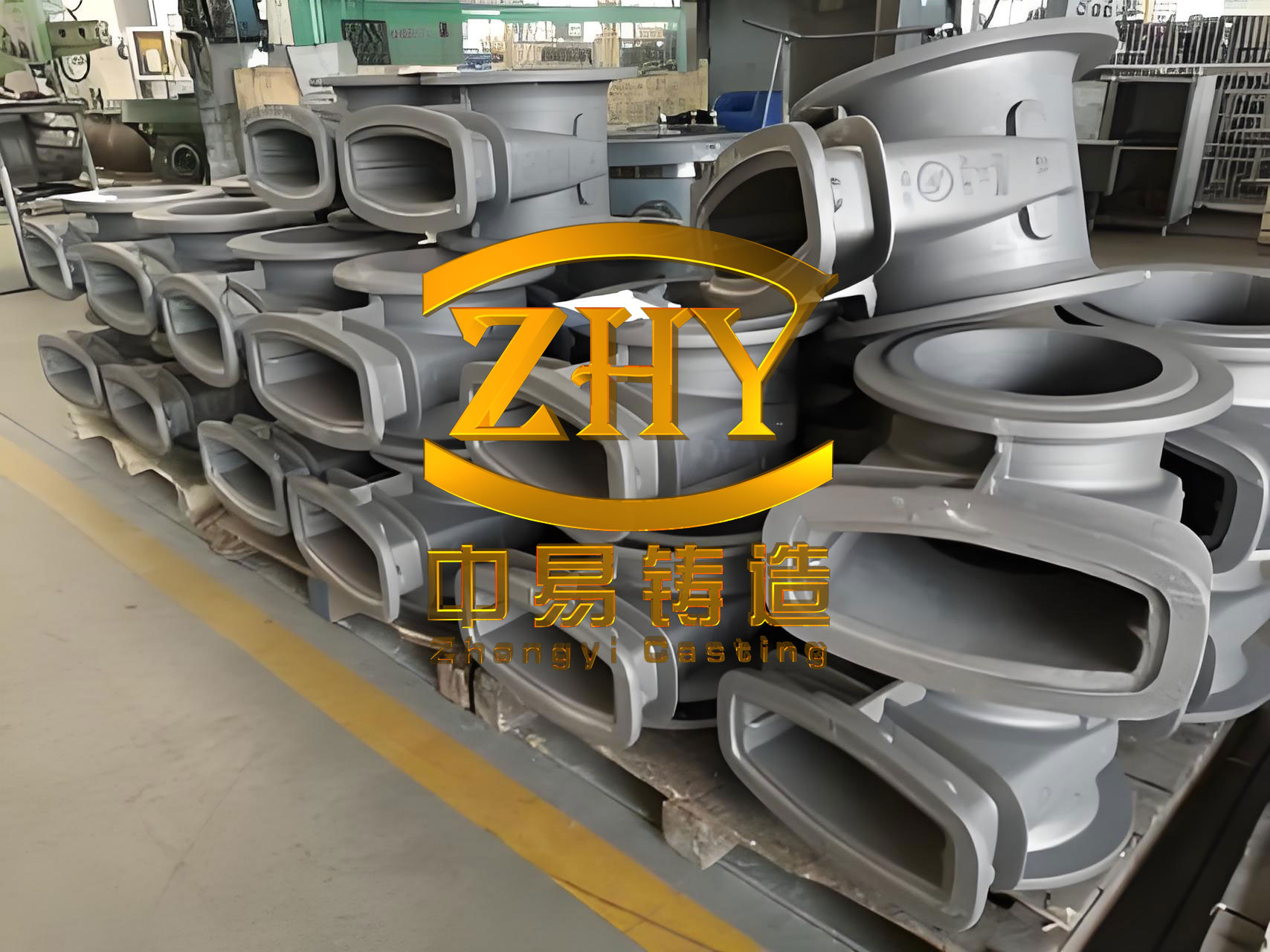
The Short-Flow Production Process for Grey Iron Castings
Our developed short-flow process was applied to manufacture a large horizontal machining center bed casting (material: HT300). The process integrates several innovative steps designed for efficiency and quality.
1. Material Selection and Charge Design
The foundation of consistent grey iron castings lies in the purity and consistency of charge materials. Our charge composition was strategically designed to leverage cost-effective materials without compromising quality.
| Charge Material | Proportion (%) | Purpose & Requirement |
|---|---|---|
| Pretreated Blast Furnace Hot Metal | 45 | Base iron source; pre-desulfurized and heated. |
| Steel Scrap | 30 | To adjust composition and increase strength; must be clean and of known chemistry. |
| Returns (Internal) | 20 | Improves yield; must be properly segregated and cleaned. |
| Alloying Additions | 5 | For final composition tuning (e.g., FeMn, Cr, etc.). |
The use of pretreated blast furnace hot metal in a dual process (blast furnace + medium frequency induction furnace) is a cornerstone of this short-flow route. It reduces the melting energy required in the induction furnace and provides a consistent, high-quality base iron.
2. Melting and Composition Control
Precise control over melting parameters and final chemistry is non-negotiable for high-quality grey iron castings. Melting was conducted in a medium-frequency coreless induction furnace, which offers excellent temperature homogeneity and composition control.
Key Process Parameters:
- Melting Temperature Range: 1480°C – 1550°C
- Tapping Temperature: ~1480°C
- Target Pouring Temperature: 1380°C – 1410°C
Chemical Composition Strategy: The target was to achieve high performance with a high carbon equivalent and a high silicon-to-carbon (Si/C) ratio, supported by microalloying and nitrogen addition.
| Element/Parameter | Target | Base Iron (Pre-inoculation) | Final Iron (Post-inoculation) |
|---|---|---|---|
| CE | 3.80 – 3.85% | 3.41% | 3.84% |
| C | 3.00 – 3.05% | 3.04% | 3.02% |
| Si | 2.40 – 2.50% | 1.07% | 2.44% |
| Si/C Ratio | > 0.75 | 0.35 | 0.81 |
| Mn | 0.80 – 1.00% | 0.51% | 0.86% |
| P | < 0.04% | 0.023% | 0.026% |
| S | 0.04 – 0.08% | 0.029% | 0.051% |
| Cr | 0.10 – 0.20% | 0.094% | 0.150% |
| Sn | 0.04 – 0.06% | 0.0076% | 0.047% |
| N | 90 – 110 ppm | 33 ppm | 119 ppm |
The philosophy of a high Si/C ratio (>0.75) at a high CE is critical. It enhances the metallurgical quality indices (discussed later) and improves casting soundness. The combination of nitrogen (via nitrogen-bearing alloys) and tin is particularly effective in ensuring a fully pearlitic matrix even at this high Si/C ratio, preventing the formation of excessive ferrite which would lower strength. Chromium further supports pearlite formation and contributes to hardness and wear resistance.
Inoculation Practice: A multi-stage inoculation process was employed to maximize graphite nucleation and refinement, which is vital for the mechanical properties of grey iron castings.
- Pre-inoculation: 0.1% silicon carbide (SiC, 0.2-1 mm) was added to the molten bath. SiC acts as a potent inoculant by providing heterogeneous nucleation sites for graphite.
- Stream Inoculation: During tapping, 0.4% FeSi-Ba-Ca inoculant was added to the ladle. This provides the primary inoculation effect, ensuring a fine, Type A graphite structure.
- Late Inoculation: A final addition of 0.1% FeSi75 (0.2-0.7 mm) was made during pouring (in-mold or flow-through). This counters inoculation fade and guarantees effective nucleation until solidification begins.
3. Molding and Core Making
The complexity and size of machine tool grey iron castings demand high-precision molds. We utilized a furan resin-bonded sand system combined with 3D printing technology for core production.
3D Printed Sand Cores: This technology allows for the direct fabrication of complex, high-accuracy sand cores from a digital model. It eliminates the need for pattern equipment for cores, significantly reduces lead time, and enables geometries that are difficult or impossible with traditional methods. This is a key enabler for the short-flow production of intricate grey iron castings.
Mold Quality Control: Critical parameters for the furan resin sand were strictly monitored to ensure mold strength, stability, and good stripping behavior after casting:
- Resin Addition: 1.0 – 1.1%
- Catalyst Addition: 30 – 50% of resin weight (Toluene sulfonic acid)
- Compressive Strength: 0.8 – 1.2 MPa
- Tensile Strength: 0.4 – 0.5 MPa
- Mold Hardness: 70 – 90 (shore scale)
- Permeability: 120 – 200
A specialized refractory coating with a controlled viscosity of 38°Bé was applied uniformly to the mold cavity. This coating is essential to prevent metal penetration, improve surface finish, and facilitate clean shakeout of the final grey iron castings.
4. Gating, Pouring, and Solidification Control
A properly designed gating system is crucial for delivering clean, tranquil metal into the mold cavity. For these large grey iron castings, a pressurized gating system was designed with the following choke area ratio:
$$ \Sigma S_{\text{sprue}} : \Sigma S_{\text{runner}} : \Sigma S_{\text{ingate}} = 1.2 : 1.0 : 0.9 $$
This design promotes a rapid fill to avoid premature chilling while maintaining a non-turbulent flow. The pouring temperature was tightly controlled between 1380°C and 1410°C, and the total pour time for the approximately 12-ton casting was managed between 60 and 90 seconds. Controlled cooling after pouring is equally important to prevent thermal stresses and cracking. The cooling rate was managed to avoid both “hot tears” (from too rapid cooling and high thermal stress) and “cold cracks” (from excessive residual stress due to constraints during cooling).
5. Post-Casting Processes
After shakeout, the grey iron castings underwent standard fettling to remove gates, risers, and sand residues. A stress-relief annealing was performed. This heat treatment is vital for large, complex machine tool castings to minimize residual stresses that could cause dimensional instability during subsequent machining and service. Finally, the castings were subjected to rigorous inspection, including visual examination, dimensional checks, and mechanical testing of separately cast samples.
Performance and Metallurgical Quality of the Grey Iron Castings
The success of the production process is ultimately judged by the properties and internal quality of the grey iron castings.
Mechanical and Physical Properties
Tests on separately cast keel blocks yielded excellent results:
- Tensile Strength, Rm: 310.9 MPa (Exceeding HT300 requirement)
- Elastic Modulus: 124 GPa
- Hardness (on casting, multiple points): 201 – 216 HBW (Average: 207 HBW)
Residual stress measurements on the actual bed casting at various locations showed values generally within an acceptable low-to-moderate range, confirming the effectiveness of the process controls and the subsequent stress-relief annealing. The consistent hardness across the casting indicates uniform microstructure and cooling.
Metallographic Analysis
Microstructural evaluation is the most direct indicator of the quality of grey iron castings. The sample exhibited:
- Graphite Morphology: > 96% Type A (uniformly distributed, random flake).
- Graphite Size: ASTM Size 4 (a well-refined, medium flake size).
- Matrix Structure: > 98% Pearlite with minimal ferrite.
This microstructure perfectly explains the achieved mechanical properties: the fine, Type A graphite ensures good strength and thermal conductivity, while the fully pearlitic matrix provides the necessary hardness and wear resistance.
Assessment of Metallurgical Quality Indices
Beyond standard properties, several calculated indices provide a deeper insight into the overall “quality” and potential performance of the grey iron castings. These indices relate composition to expected properties.
1. Eutectic Saturation (Sc): Indicates how close the composition is to the eutectic point. A higher Sc (up to 1.0) generally implies better castability and lower stress.
$$ S_c = \frac{C}{4.26 – \frac{1}{3}(Si+P)} = \frac{3.02}{4.26 – \frac{1}{3}(2.44+0.026)} = 0.88 $$
2. Relative Strength (RG – Maturity Degree): Compares the actual tensile strength to the “normal” strength expected for its carbon equivalent. RG > 1.0 indicates a higher-than-expected strength, signifying effective inoculation and process control.
$$ RG = \frac{R_m}{1000 – 800 \times S_c} = \frac{310.9}{1000 – 800 \times 0.88} = 1.05 $$
3. Relative Hardness (RH – Hardening Degree): Compares the actual hardness to the “normal” hardness for its carbon equivalent. RH < 1.0 indicates a lower-than-expected hardness, which is highly desirable for machinability.
$$ RH = \frac{HBW}{530 – 344 \times S_c} = \frac{207}{530 – 344 \times 0.88} = 0.91 $$
4. Quality Index (QI): The ratio of RG to RH. This is a comprehensive index; a value significantly greater than 1.0 indicates the ideal combination of high strength with relatively low hardness.
$$ Q_I = \frac{RG}{RH} = \frac{1.05}{0.91} = 1.19 $$
5. Machinability Factor (m): A practical index relating strength to hardness. A higher m-value suggests better machinability.
$$ m = \frac{R_m}{HBW} = \frac{310.9}{207} = 1.50 $$
The summary of these indices for our produced grey iron castings is presented below:
| Index | Symbol | Calculated Value | Interpretation & Benefit |
|---|---|---|---|
| Eutectic Saturation | Sc | 0.88 | High castability, lower inherent stress. |
| Relative Strength (Maturity) | RG | 1.05 | Strength exceeds expectation for its CE. |
| Relative Hardness | RH | 0.91 | Hardness is lower than expectation, good for machining. |
| Quality Index | QI | 1.19 | Excellent balance of high strength and low hardness. |
| Machinability Factor | m | 1.50 | Superior machinability (comparable to high-grade GG30). |
These indices confirm that the developed short-flow process does not merely meet the standard grade requirements but produces premium grey iron castings with an optimized set of properties: easy casting, high strength, good damping, and excellent machinability.
Conclusion and Outlook
The research and application detailed herein demonstrate a successful and optimized short-flow production process for high-carbon equivalent, high-performance grey iron castings. By integrating pretreated blast furnace hot metal, precise compositional control targeting a high Si/C ratio with microalloying (N, Sn, Cr), advanced multi-stage inoculation, and modern molding techniques like 3D printed cores, we have consistently produced large machine tool castings that exceed standard mechanical property requirements while exhibiting superior metallurgical quality indices.
The key outcomes are:
- High strength (HT300+) is achieved at a high carbon equivalent (3.84%) and high Si/C ratio (0.81), countering the traditional trade-off between castability and strength in grey iron castings.
- The synergistic use of nitrogen and tin ensures a fully pearlitic matrix (>98%) despite the high silicon content, preventing ferrite formation and strength loss.
- The calculated quality index (QI = 1.19) and machinability factor (m = 1.50) prove that these grey iron castings offer an exceptional combination of durability and manufacturability.
- The short-flow approach enhances overall efficiency, reduces energy consumption, and shortens the production cycle for these critical components.
This methodology provides a robust theoretical and practical framework for the batch production of high-grade grey iron castings. Future work will focus on further refining alloying strategies, exploring the use of other potent inoculants, and integrating real-time process monitoring and data analytics to push the consistency and performance boundaries of grey iron castings even further. As the demands on machine tools and other precision machinery intensify, the evolution of such advanced foundry processes for grey iron will remain central to manufacturing innovation.